
Free visual inspection and a written scope of work before any mitigation begins - photos, moisture readings, and drying logs go in your claim file
The scope we write is the scope we bill. Anything new gets shown to you, in writing, before we touch it.
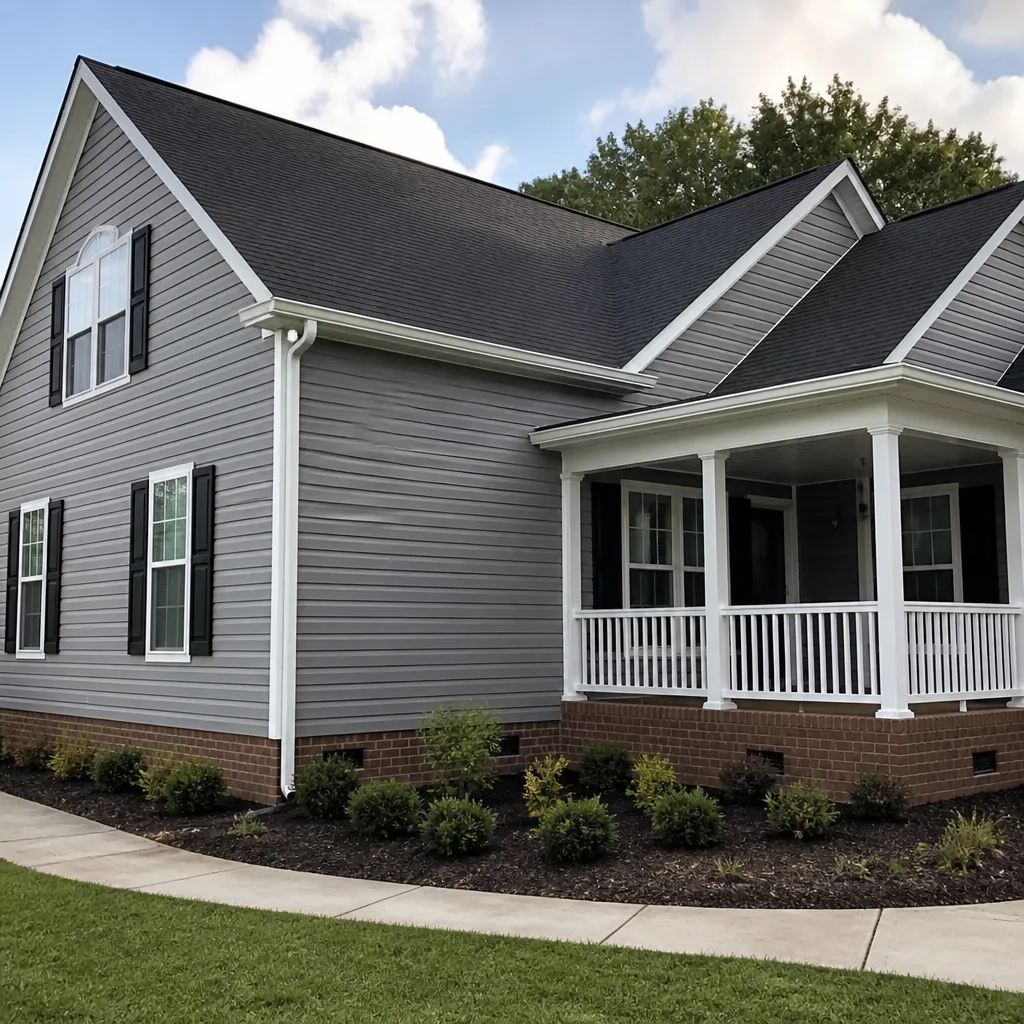
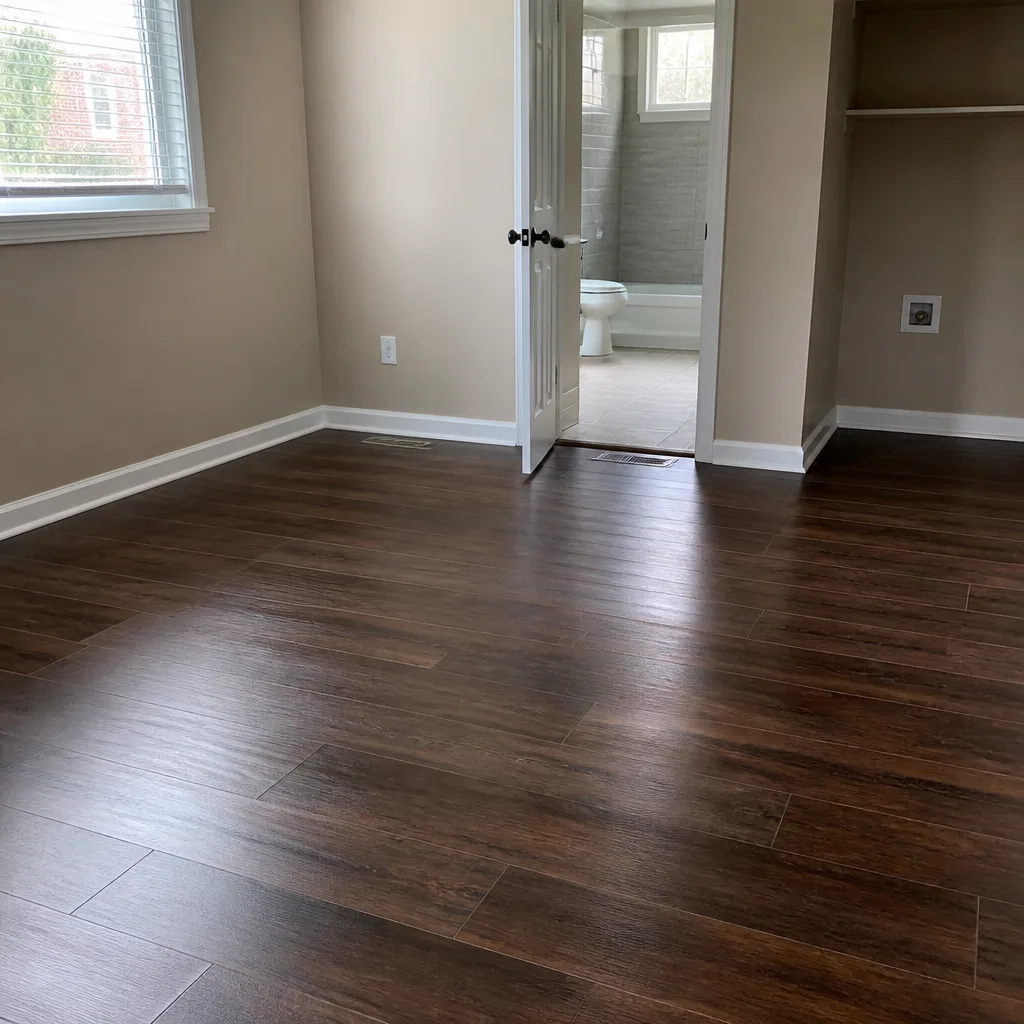

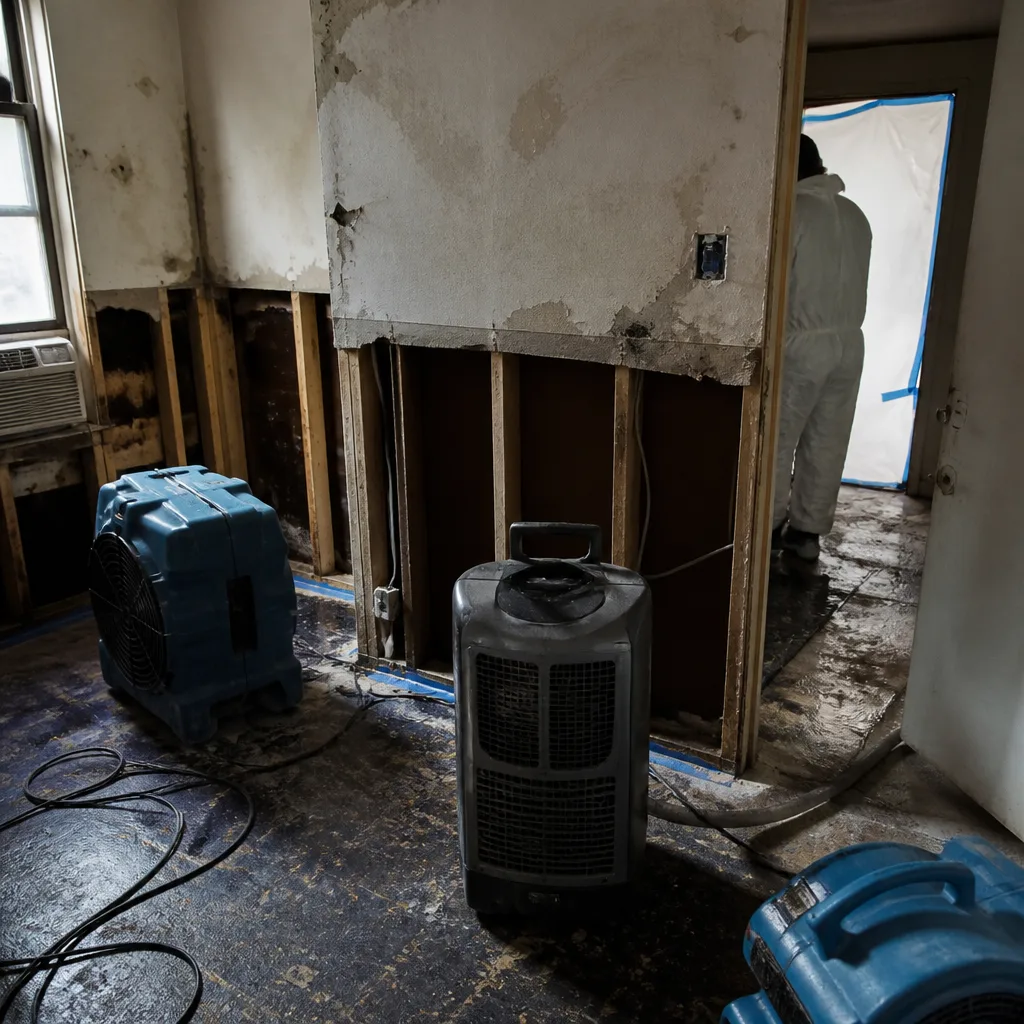 Before
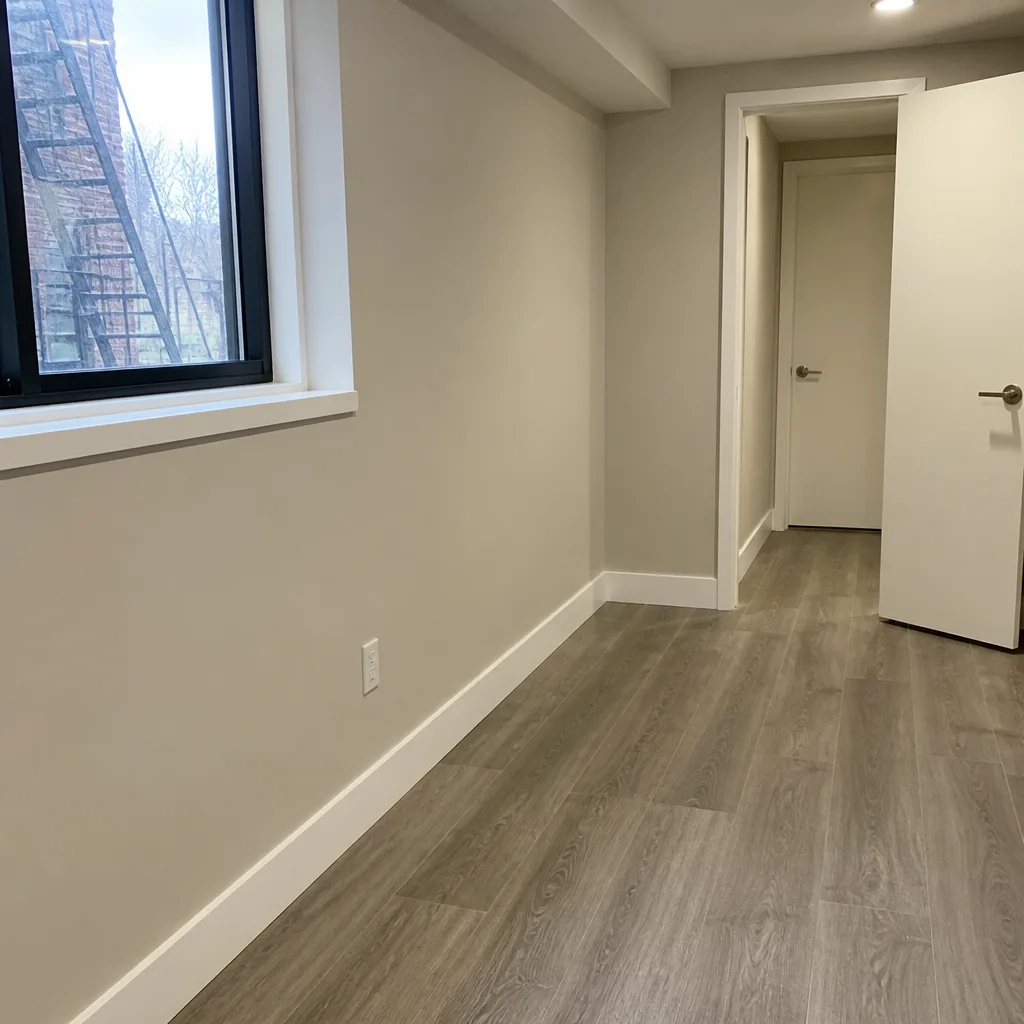 After
After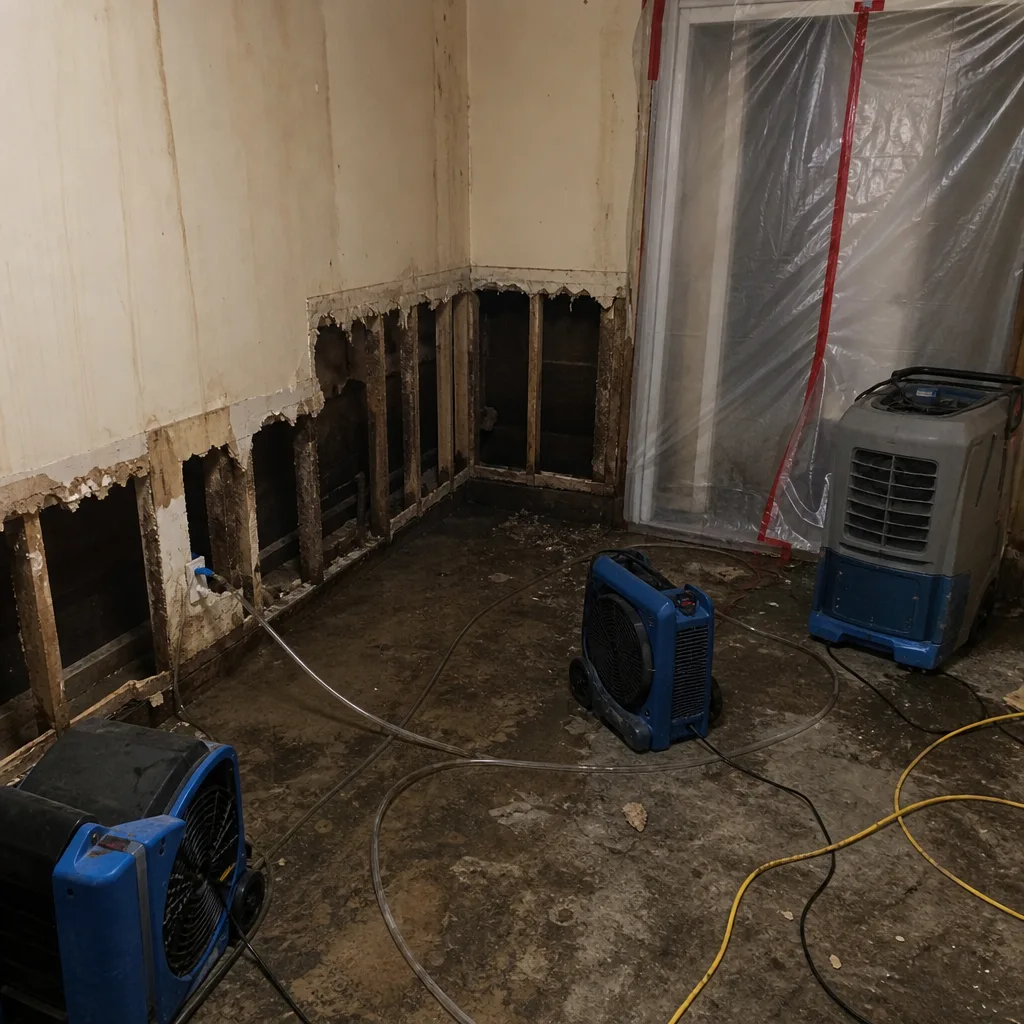 Before
 After
After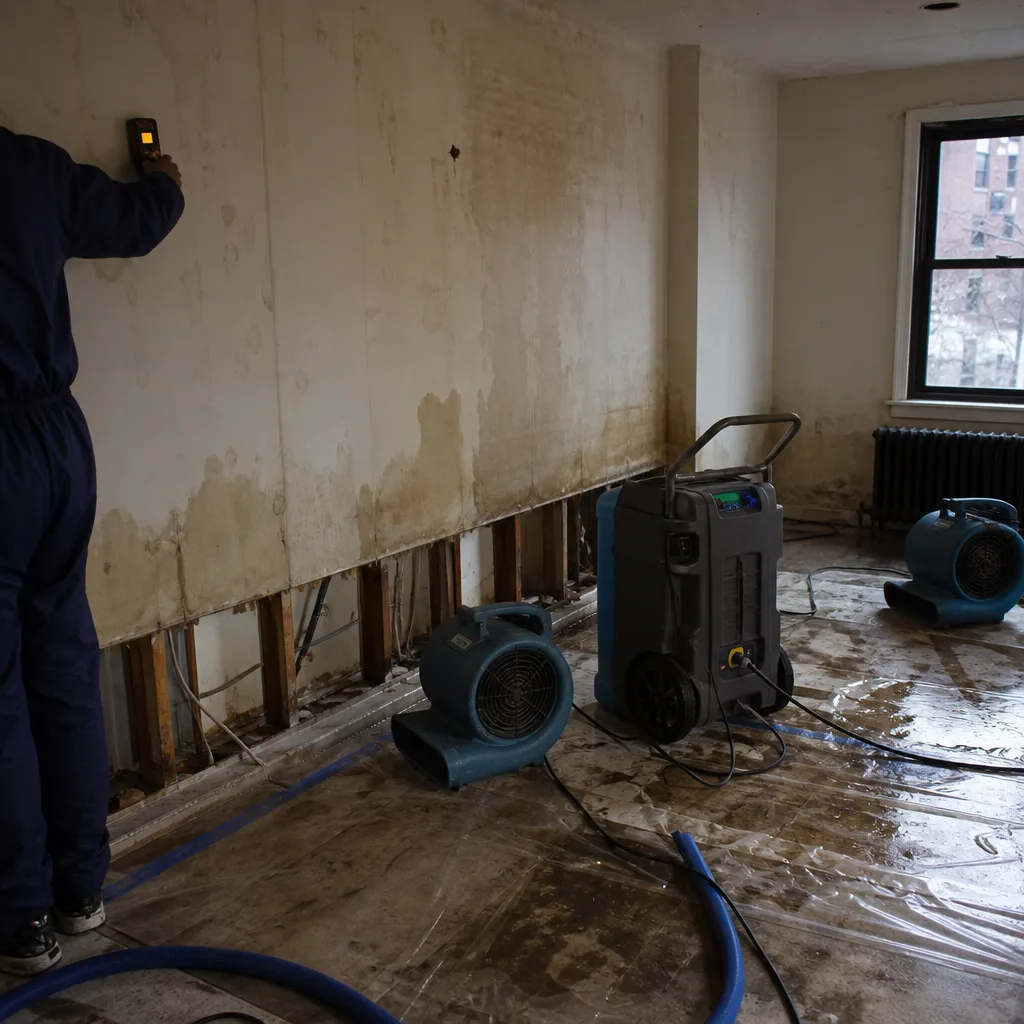 Before
 After
After24/7 Emergency Fire & Smoke Damage Restoration in Long Island City
Fire and smoke damage in Long Island City needs a response that matches the neighborhood’s pace and its buildings. We answer the phone live at (716) 452-0798 every hour of the day and night, and we’ll have a crew headed toward your block in Long Island City within 45 minutes of your call. The first hour after a fire matters most because smoke keeps working its way into porous surfaces, drywall, ductwork, and electrical fixtures, and the residue turns more acidic and harder to remove the longer it sits. We’ll start with a free visual inspection, so you know exactly what you’re facing before any work begins. No recording, no answering service, just a dispatcher who knows the difference between a Court Square loft and a Hunters Point tower and can get the right equipment rolling immediately.
Understanding Fire & Smoke Damage Restoration Severity in Long Island City Properties
Fire damage in Long Island City rarely follows a single pattern. The severity of smoke residue depends on what burned, how hot it got, and how far the smoke traveled. We classify soot by type: dry soot from fast-burning paper and wood, oily soot from plastics and synthetic furnishings, and protein residue from kitchen fires, which is nearly invisible but clings to painted surfaces and carries a stubborn odor. Smoke migration is the hidden problem. In LIC’s converted pre-war buildings, shared chaseways and original ductwork give smoke a path from one unit into a dozen others. In the newer towers around Center Boulevard, a fire on one floor can push smoke into pressurized hallways and stairwells. Restoration in these two building types looks nothing alike. The materials, the containment strategy, and the equipment plan all change based on the construction. We assess soot type, migration path, and surface porosity before we ever place a fan, because a loft with brick and timber absorbs smoke differently than a high-rise unit with gypsum board and glass.
Why Long Island City Property Owners Choose Floodline Restoration Co.
- 45-minute response commitment: We’re not coming from another borough. Our Long Island City crews are staged locally, and we commit to a dispatch window we can actually keep.
- 24/7 live answer, every call: A real person picks up at 2 a.m. Curt Bowman built this company around a dispatch board, not a sales desk, and that has not changed since 2010.
- IICRC-certified crews: Our technicians carry FSRT and OCT certifications, and they work in uniform, background-checked, and trained to RIA and IFA standards.
- Free visual inspection: You get an honest read on the damage and a written scope before anything gets torn out or plugged in. No obligation, no pressure.
- Direct insurance billing: We bill your carrier directly and talk to your adjuster ourselves. You never play messenger between us and the insurance company.
- One team, start to finish: From the first board-up through structural repair and final coat of paint, the same Fire & Smoke Damage Restoration crew handles your job. No mid-job handoff, no inherited crew.
Our Fire & Smoke Damage Restoration Process
Inspection & Assessment
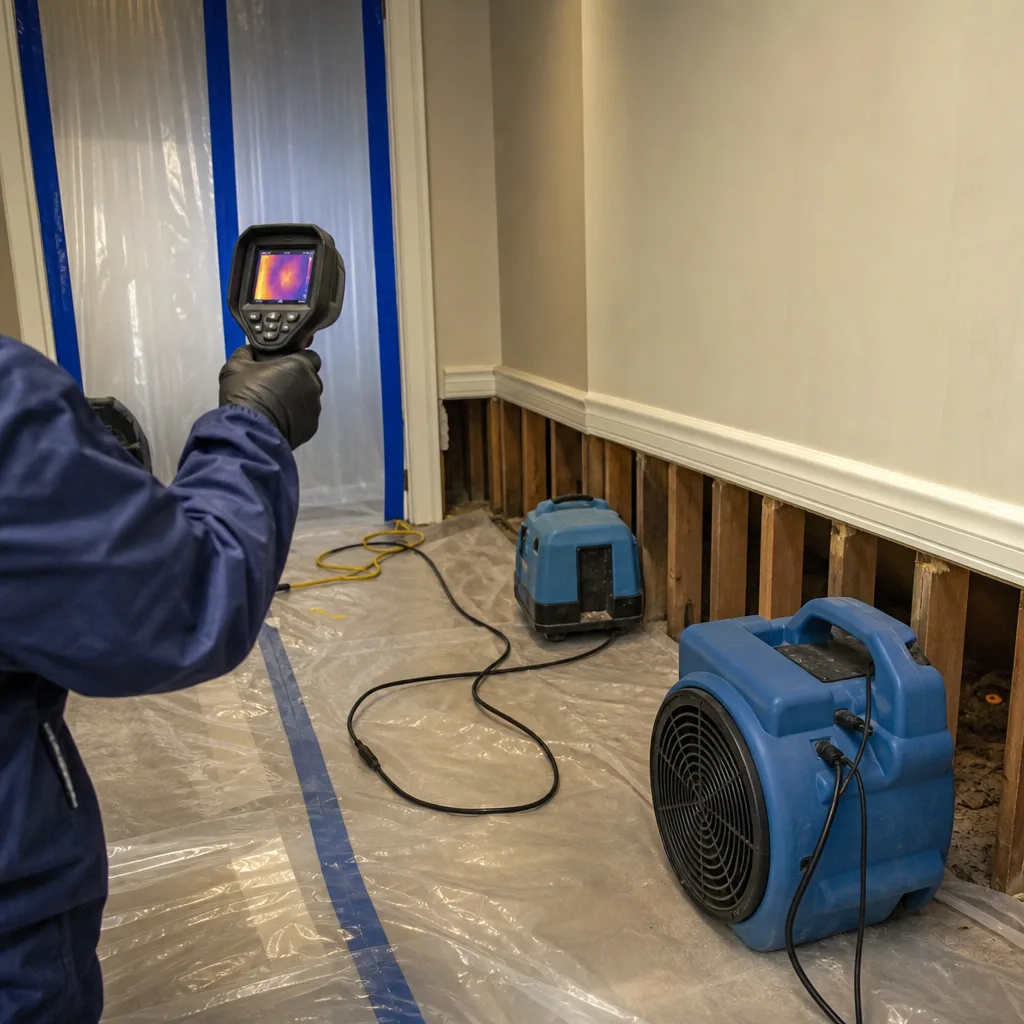
We walk the property room by room, identifying soot type, smoke migration paths, and hidden damage behind walls and above ceilings. Thermal imaging shows us heat travel that the eye misses. We document everything with photos and a written scope before work begins.
Stabilization & Board-Up
Windows, doors, and roof openings get secured the same day. In Long Island City’s street-facing ground units and exposed loft windows, boarding up is security, not just weather protection. We tarp roofs and seal openings so the property holds overnight.
Soot & Residue Removal
Dry sponges, HEPA vacuums, and chemical sponges remove soot from walls, ceilings, fixtures, and framing. We work surface by surface because the residue varies by material and burn temperature. No spraying and hoping.
Odor Removal & Deodorization
Hydroxyl generators and ozone treatments neutralize smoke odor in the air and inside porous surfaces. Thermal fogging gets into the cavities where smoke traveled. In LIC’s shared-duct buildings, this step is where soot smell either dies or lingers for a year.
Contents Cleaning & Pack-Out
We inventory, pack, and clean salvageable contents off site, then store them until your space is ready. Textiles, electronics, and paper all get different treatment. You get a line-item inventory, not a vague promise.
Structural Repair & Restoration
Drywall, flooring, cabinetry, paint, and trim are rebuilt in place. The same crew that did the extraction does the finish work, so there is no gap between mitigation and reconstruction and no argument about who owns a mistake. Done right, and backed in writing.
Need Emergency Fire & Smoke Damage Restoration in Long Island City Now?
Crews minutes away, answering live 24 hours a day. The sooner we start, the less it costs.
Working With Your Insurance Company
Fire claims in Long Island City move faster when the documentation is airtight from the first hour. We photograph every room before we move anything, log moisture readings from the fire-hose water, and build a line-item scope using the same estimating standards your carrier uses. When your adjuster calls, we talk to them directly. You don’t carry paperwork back and forth, and you don’t get stuck interpreting whether a line item was approved. If the carrier pushes back on a necessary step, we explain why it’s required and back it with documentation. We’ve worked hundreds of fire claims in this city, from small kitchen fires in Jackson Avenue condos to whole-floor losses in converted warehouses. Direct insurance billing means the carrier pays us for covered work, and you see every number before it’s submitted. A square deal: no surprises on the bill.
What We Provide Your Insurer
- Thorough documentation of the loss
- Photos of all damage, room by room
- Moisture readings and drying logs
- A detailed, line-item scope of work
- Direct coordination with your carrier
Built for Long Island City’s Loss Calendar
Long Island City’s fire season does not read like the rest of the country. January and February bring space heaters and overtaxed outlets in older loft conversions along 44th Drive and Vernon Boulevard, where original wiring was never meant for modern loads. Summer thunderstorms send water through roofs and open windows, but they also trigger electrical fires when lightning hits older service panels near Newtown Creek. The waterfront blocks around Hunters Point sit in FEMA AE and VE flood zones, so a fire that starts as a flood, when the water reaches an electrical panel, becomes both disasters at once. Nor’easters in late fall knock branches against windows in street-facing townhome units, and we’ve boarded up more than a few broken windows on 47th Avenue after a storm. The one constant across every season in Long Island City is smoke migration through shared building cavities. In a neighborhood where a four-story factory shares a wall with a thirty-story tower, fire does not respect the property line. Our Long Island City crews plan for that every time.
Fire & Smoke Damage Restoration Across Long Island City’s Neighborhoods
Hunters Point sits low against the East River, and its converted warehouses and newer towers all respond differently to fire. In the warehouse lofts off 47th Avenue, fire moves vertically through open stairwells and freight elevator shafts. On Center Boulevard, the high-rises confine fire to a single unit but push smoke through pressurized corridors and shared mechanical rooms. Court Square mixes century-old masonry buildings with glass curtain-wall offices, and a kitchen fire in a Jackson Avenue condo sends residue into hallway drop ceilings. Dutch Kills, tucked north toward the Sunnyside Yards, holds older frame townhomes with tighter room layouts and fewer shared walls, where fires tend to stay contained but smoke saturates every surface in the house. The response routes differ, the parking constraints differ, and the building access differs. We know that a crew truck can’t idle double-parked on 21st Street while another building’s freight elevator is reserved for a move-in. That’s the kind of detail that keeps drying equipment running on schedule.
Specialized Fire & Smoke Damage Restoration Services We Offer in Long Island City
Fire Damage Cleanup
Primary fire damage cleanup in Long Island City means removing charred materials, damaged drywall, burned cabinetry, and compromised flooring. In pre-war lofts, this step stops the moment demolition reveals transite panels or pipe insulation from the building’s industrial era, because those materials require licensed asbestos abatement before we can continue. We handle that stop properly, seal the area, and bring in a licensed abatement team rather than pushing through and contaminating the entire unit.
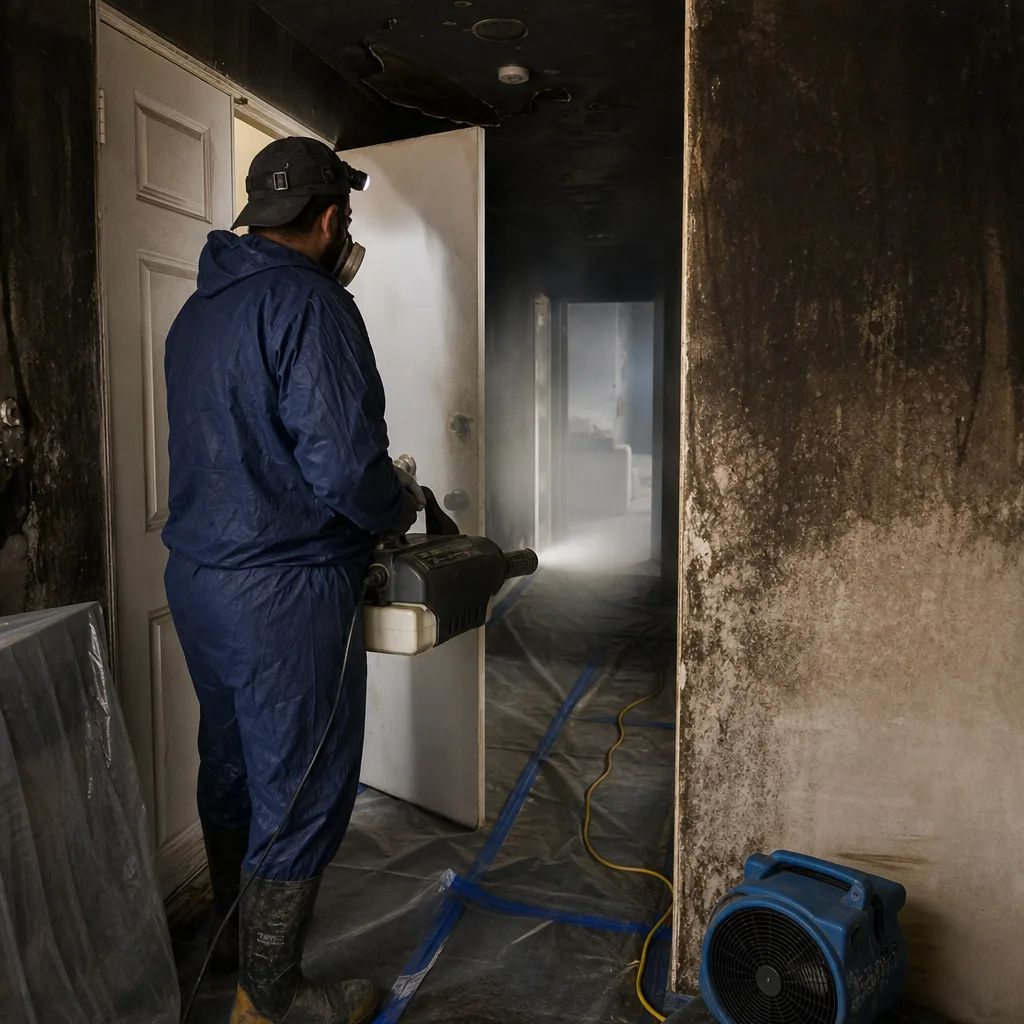
Smoke & Soot Removal
Smoke and soot removal in LIC’s tightly packed buildings is a surface-by-surface job. Oily soot from burning synthetics does not wipe off with a damp rag; it smears and sets unless treated with the right chemical sponge and technique. Protein residue from kitchen fires is nearly invisible but bonds to paint and varnish. We treat walls, ceilings, trim, fixtures, and duct grilles individually, and we test surfaces before we call them clean.
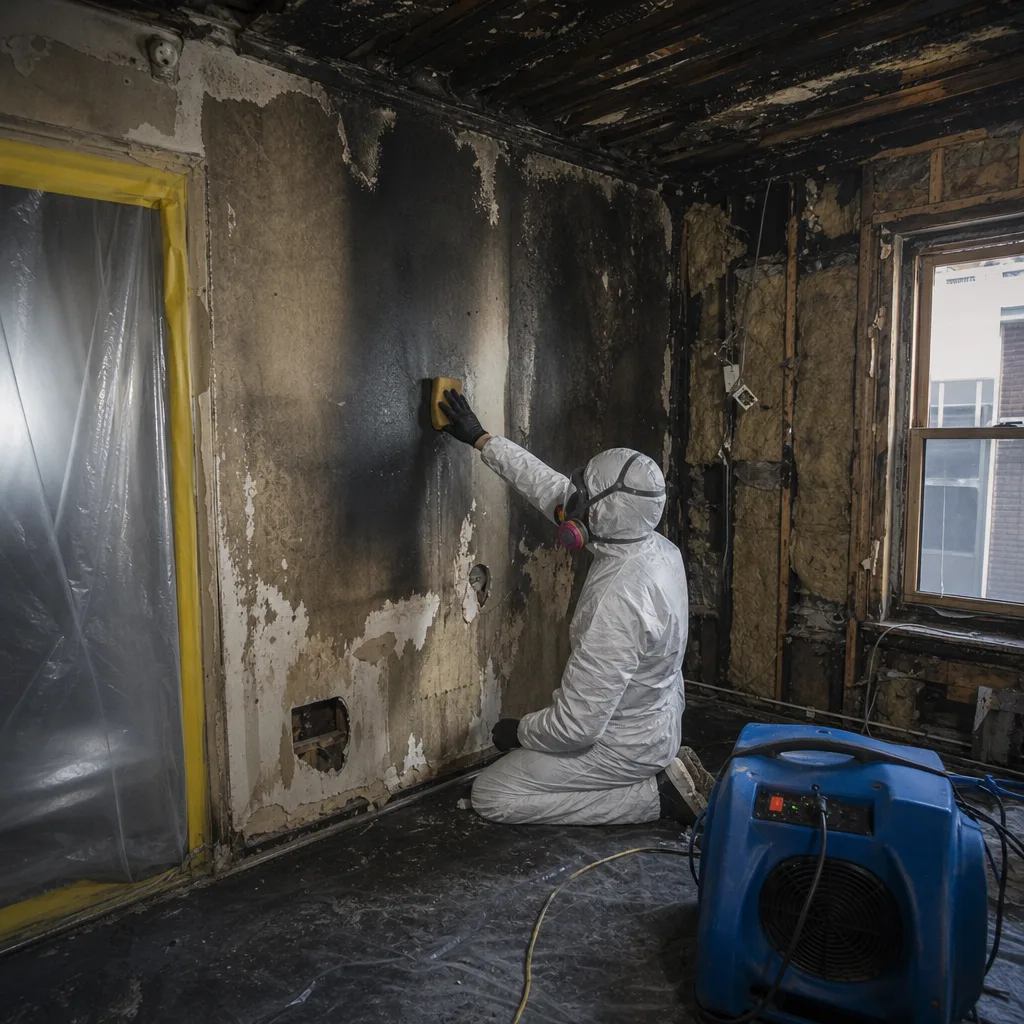
Odor Removal & Deodorization
In Long Island City’s converted factory buildings, smoke odor hides inside brick, timber beams, and original ductwork. Hydroxyl generators and thermal fogging reach what surface cleaning cannot. In high-rises, we seal off the affected unit and treat the shared duct runs where smoke traveled before it lingers in neighboring apartments. The goal is not masking the smell; it is removing it at the source so it does not return the first humid week of July.
Contents Cleaning & Pack-Out
We pack out salvageable contents, inventory every item, and clean them off site under controlled conditions. Electronics need ultrasonic cleaning and careful drying. Textiles need ozone or hydroxyl treatment and laundering. Books and papers need desiccant drying and deodorization. You get an itemized inventory, so nothing disappears into a warehouse and nothing shows up at the end covered in soot.
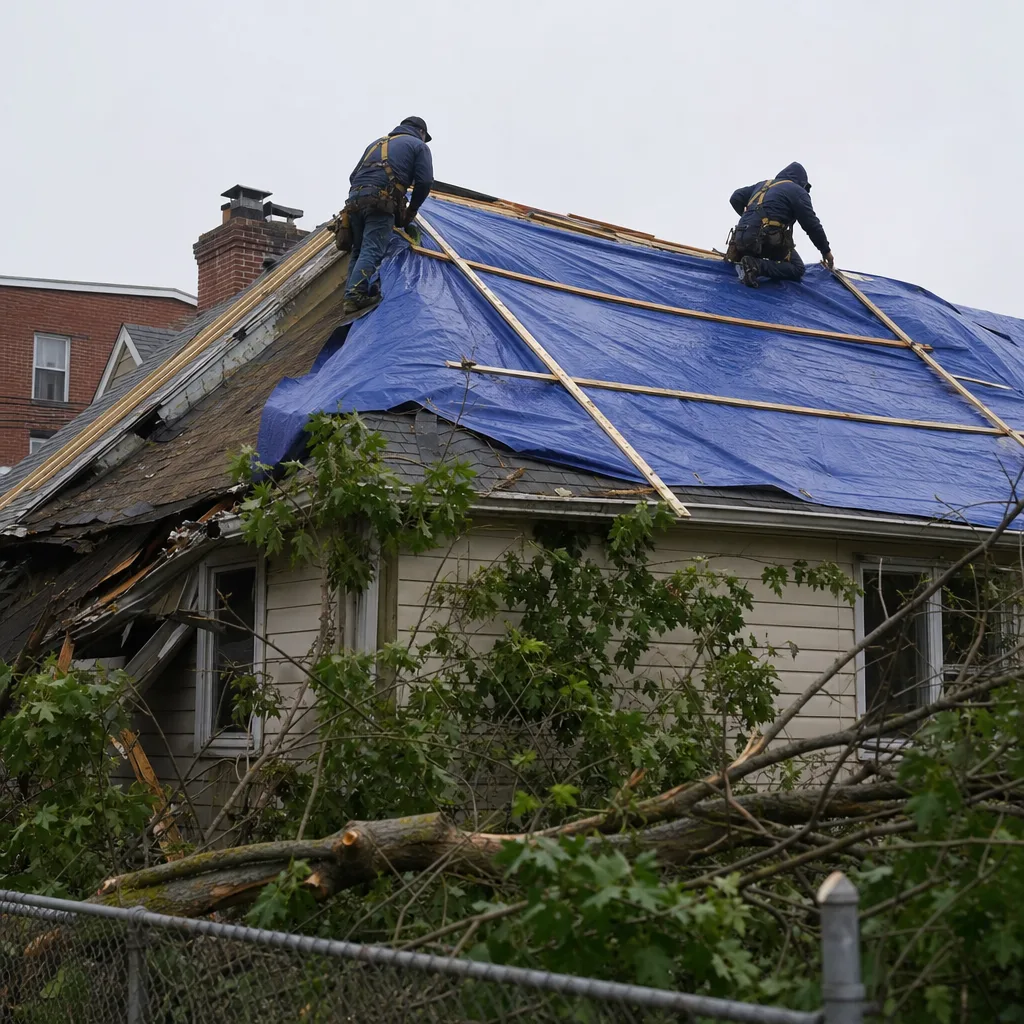
Emergency Board-Up & Tarping
After a fire, open windows and doors invite weather, pests, and unauthorized entry. In Long Island City, street-facing ground units and loft windows at sidewalk level are particularly exposed. We board up with plywood and seal roof penetrations with heavy-gauge tarping the same day. It keeps the property secure while we work and while your insurance adjuster reviews the loss.
What happens when you call
- 1
A real person answersNo phone trees - you reach a local pro.
- 2
You get an upfront price rangeHonest numbers before anyone is dispatched.
- 3
A background-checked tech heads outLicensed & insured, dispatched right away.
- 4
You approve before work beginsNothing starts until you say go.
Fire & Smoke Damage Restoration Costs in Long Island City, NY
A kitchen fire cleanup in a Long Island City apartment typically runs $2,800 to $7,500 when it is contained to one room. Smoke and soot removal across a full loft ranges from $4,000 to $12,000 depending on square footage and how far residue migrated. Odor removal and deodorization for a whole unit usually lands between $1,800 and $5,500. Emergency board-up is $400 to $1,400 depending on the number of openings. The biggest cost driver in LIC is what the demolition reveals. If your converted loft has asbestos-containing materials, which is common in pre-1980 factory stock around Hunters Point and Court Square, abatement adds $2,000 to $10,000 and stops work until it’s cleared. In newer towers, that line item does not exist. Insurance covers most fire restoration work when the cause is sudden and accidental. The free visual inspection is how you get a firm scope and a real number before committing to anything. Call (716) 452-0798 for a free estimate.
We Also Serve Cities Near Long Island City
Our Long Island City crews also handle fire and smoke damage restoration in Astoria, Maspeth, Jackson Heights, and Elmhurst. Same live dispatch, same 45-minute commitment, same written scope before work starts.
Long Island City Fire & Smoke Damage Restoration Questions, Answered
How does fire restoration differ between a converted factory loft and a new high-rise in Long Island City?
A pre-war loft in Hunters Point or Court Square almost always involves asbestos testing before demolition can continue, which adds time and cost that a newer high-rise on Center Boulevard does not face. Lofts also have brick, timber, and open floor plates that absorb and channel smoke differently, while high-rises have gypsum board, sealed units, and shared ductwork that pushes smoke horizontally. The restoration plan changes entirely based on the building’s age and construction.
Do I need to worry about water from fire sprinklers or hoses causing mold in my Long Island City apartment?
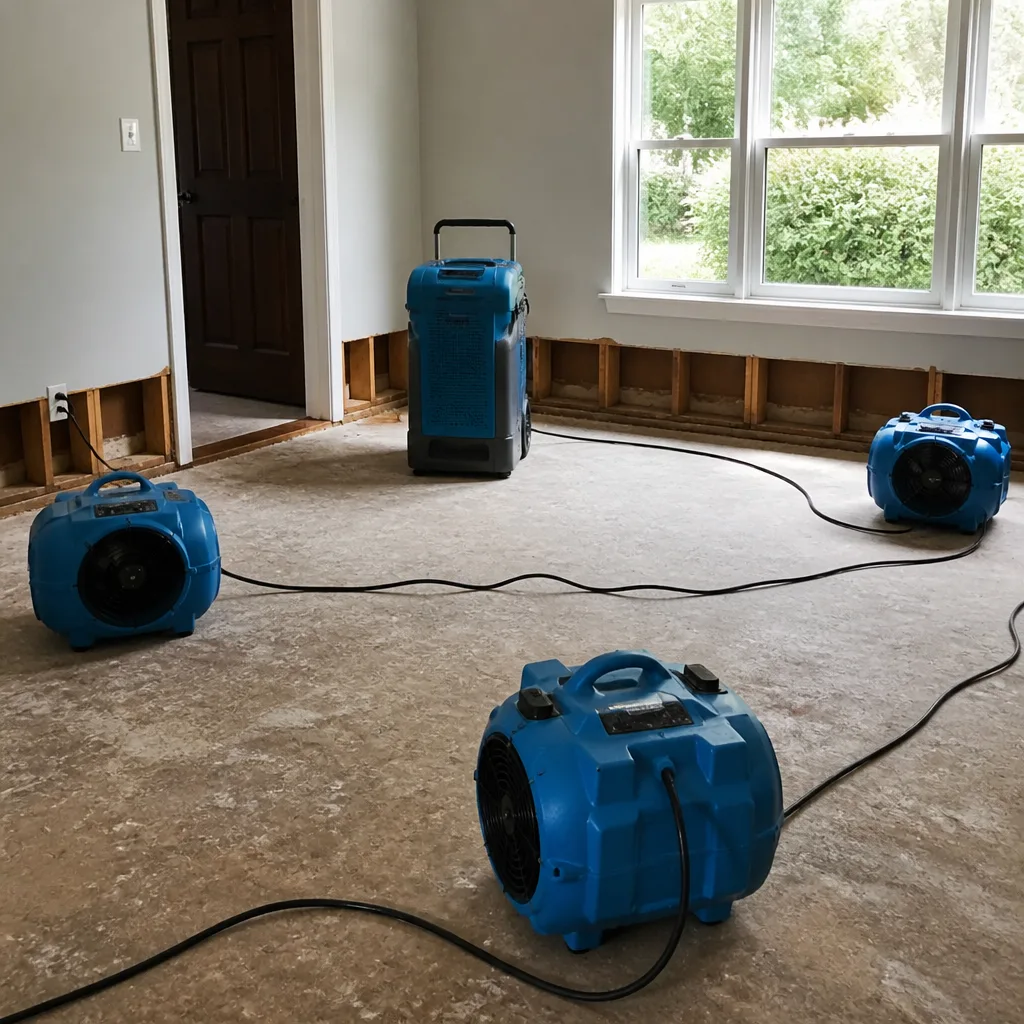
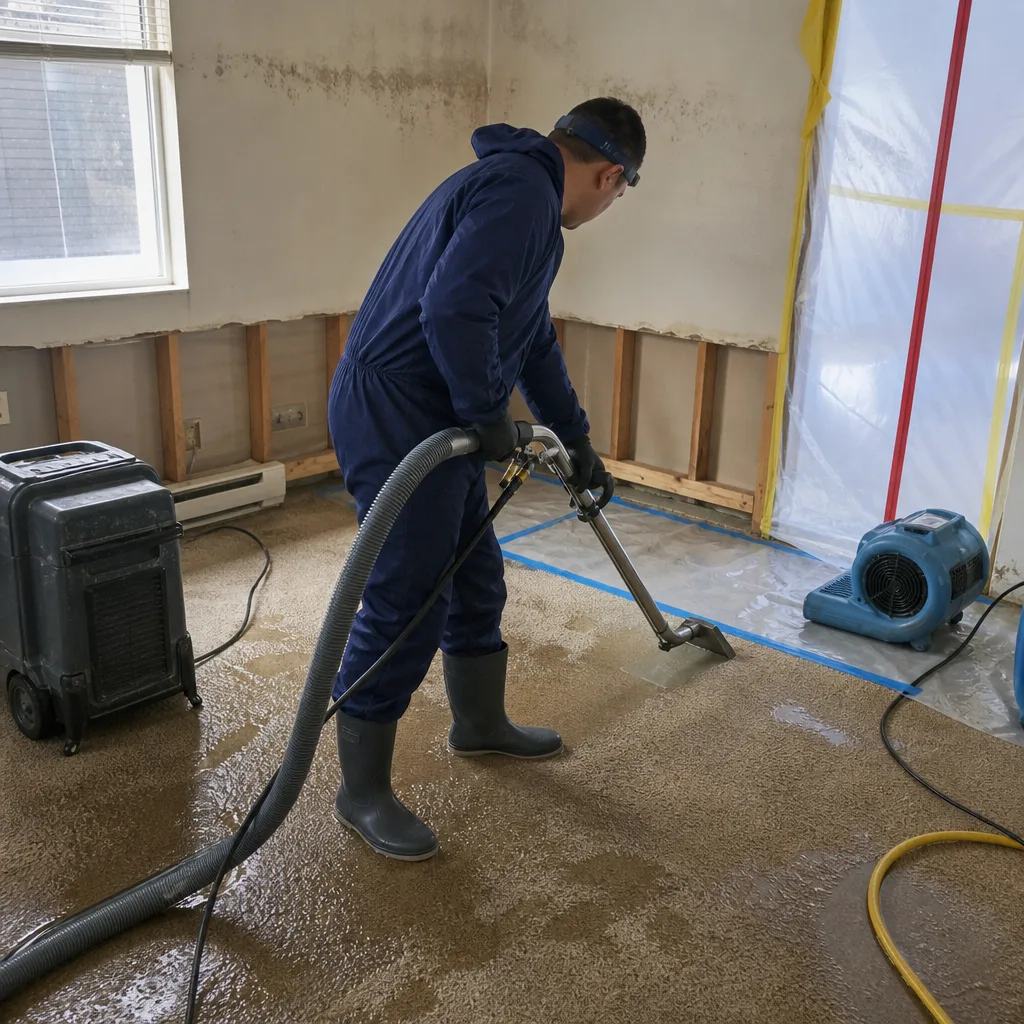
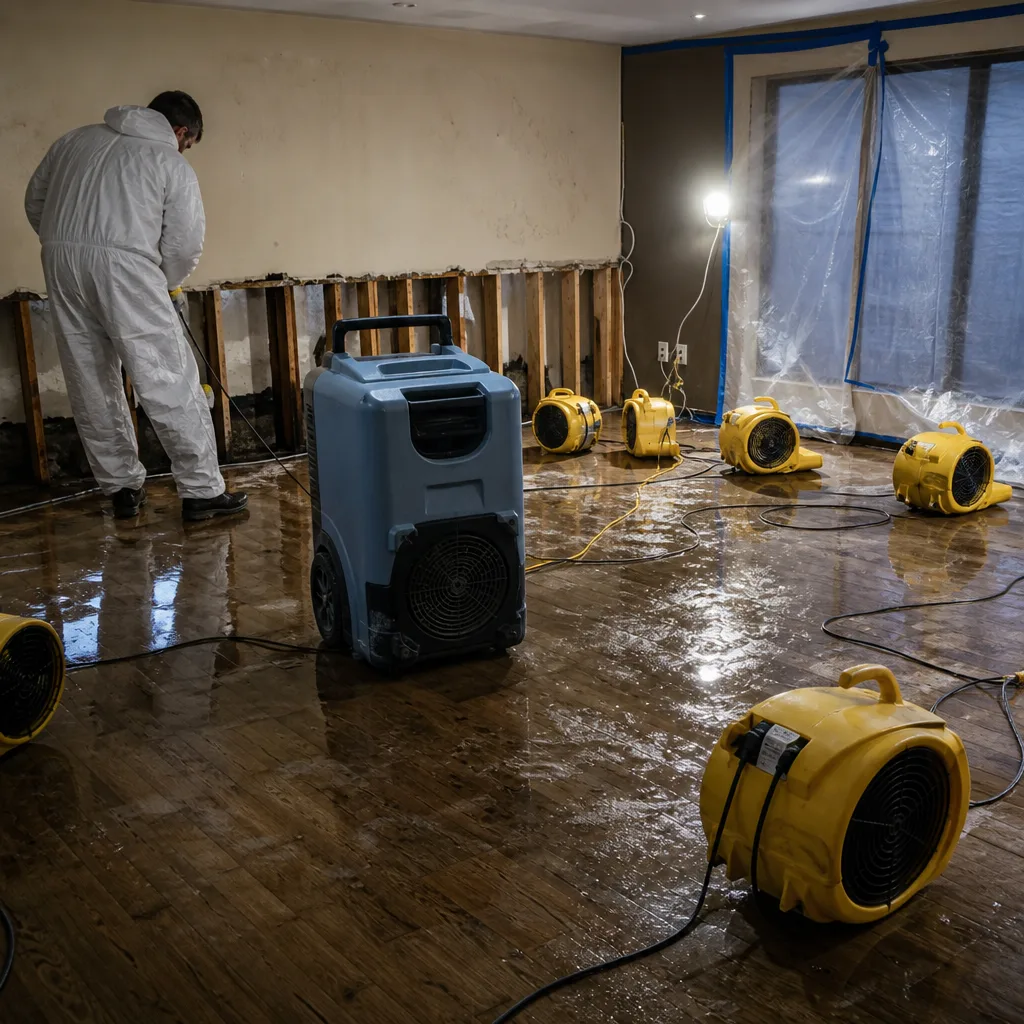
Yes, and quickly. The water used to put out a fire soaks walls, floors, and furniture, and mold can begin within 24 to 48 hours in Long Island City’s humid summers. We set drying equipment during the same visit as the board-up whenever possible and log moisture readings daily until the structure reaches the dry standard.
Why does my Long Island City loft have a lingering smoke smell even after the fire was put out?
Smoke residue penetrates porous surfaces like brick, timber, drywall, and fabric, and it is not removed by wiping down what you can see. Odor molecules sit inside cavities, behind walls, and in ductwork. Deodorization with hydroxyl or ozone treatment, plus thermal fogging, is what actually removes the smell from those hidden spaces.
Can I stay in my high-rise unit during fire and smoke restoration in Long Island City?
It depends on the damage. If the fire was contained and smoke did not enter the HVAC or shared ductwork, you can often stay while we clean. If soot entered the building’s ventilation or if demolition is required, it is usually safer and faster to relocate temporarily. We coordinate with your building management and your insurance carrier to make that call clear and documented.
What should I do first after a kitchen fire in my Long Island City apartment?
Call 911 if it is active, then call us at (716) 452-0798. Do not wipe soot or wash walls, because that can set the residue into painted surfaces. Open windows if it is safe, turn off the HVAC to prevent smoke from spreading through ducts, and do not plug in or use any electronics from the affected room until they have been checked. Take photos before anyone moves anything.
How fast can you actually get to my Long Island City building?
We commit to 45 minutes from your call to a crew heading your way, and we hit that window in Long Island City because our crews stage locally, not from another borough. A live dispatcher answers at any hour at (716) 452-0798.
Will my insurance cover fire and smoke restoration in my Long Island City property?
Most homeowners and condo policies cover sudden and accidental fire damage, including smoke and soot removal, odor treatment, and water damage from firefighting. We bill your carrier directly and handle adjuster communication. If you are unsure what your policy covers, call us and we will help you figure out what questions to ask.
What certifications do your technicians hold?
Our crews are IICRC-certified in fire and smoke restoration and odor control, and trained to RIA and IFA standards. Every technician is background-checked, uniformed, and supervised by a lead who has handled Long Island City’s building types before. Curt Bowman has run Floodline Restoration Co. since 2010 with the rule that the person who shows up is the person who answers the phone.
Serving Long Island City, NY - Our Local Coverage Area
We’re based in the Long Island City area and know this community well. Use the map below to see our service coverage - if you’re nearby, we can almost certainly help.
When Long Island City’s Old Buildings Meet Fire, the Rules Change
Half of Long Island City was built before asbestos was banned, and the other half was built after 2010. That split defines fire restoration in this neighborhood more than any other factor. In a converted factory loft off 47th Avenue or 44th Drive, the moment demolition reveals transite ceiling panels or asbestos pipe insulation, the job legally stops. The area gets sealed, the air gets monitored, and a licensed abatement crew takes over before our drying equipment can be placed. It is a delay, a cost, and a regulatory requirement that does not exist in the glass towers a block away on Center Boulevard. We hit that stop on a smoke-damage job in a Hunters Point warehouse conversion. The containment was up, demolition was underway, and then the transite panels tested positive for asbestos. We sealed the area, brought in the licensed abatement team, and only after clearance did we place air movers and dehumidifiers for structural drying, logging moisture readings every 12 hours until the loft came back to pre-loss condition without cross-contaminating the neighboring units. We’ll be there when we say, and we’ll tell you the truth about what the building is made of. Done right, and backed in writing.
Written by Curt Bowman, Owner at Floodline Restoration Co., serving Long Island City since 2010.