
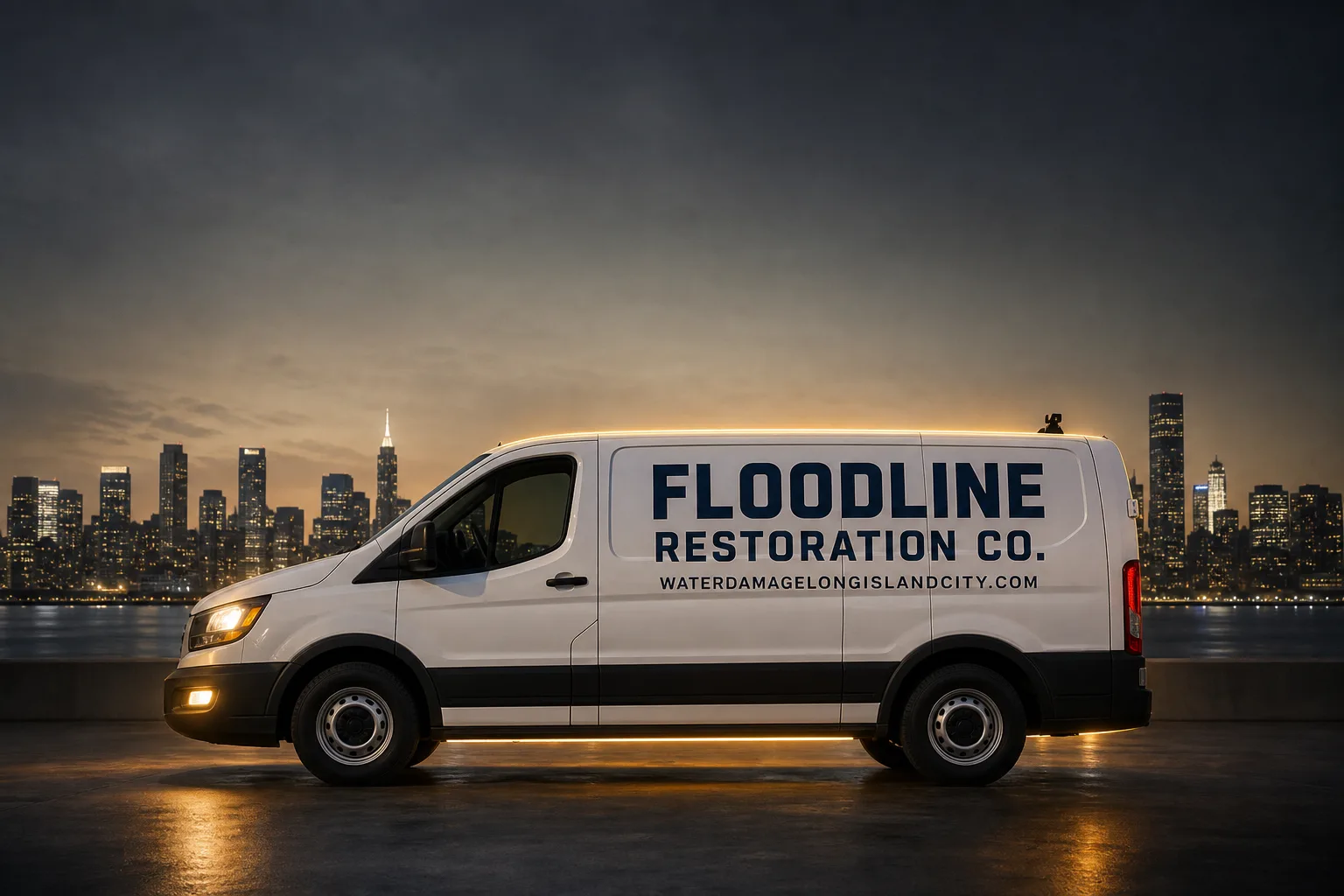
Free visual inspection and a written scope of work before any mitigation begins - photos, moisture readings, and drying logs go in your claim file
The scope we write is the scope we bill. Anything new gets shown to you, in writing, before we touch it.
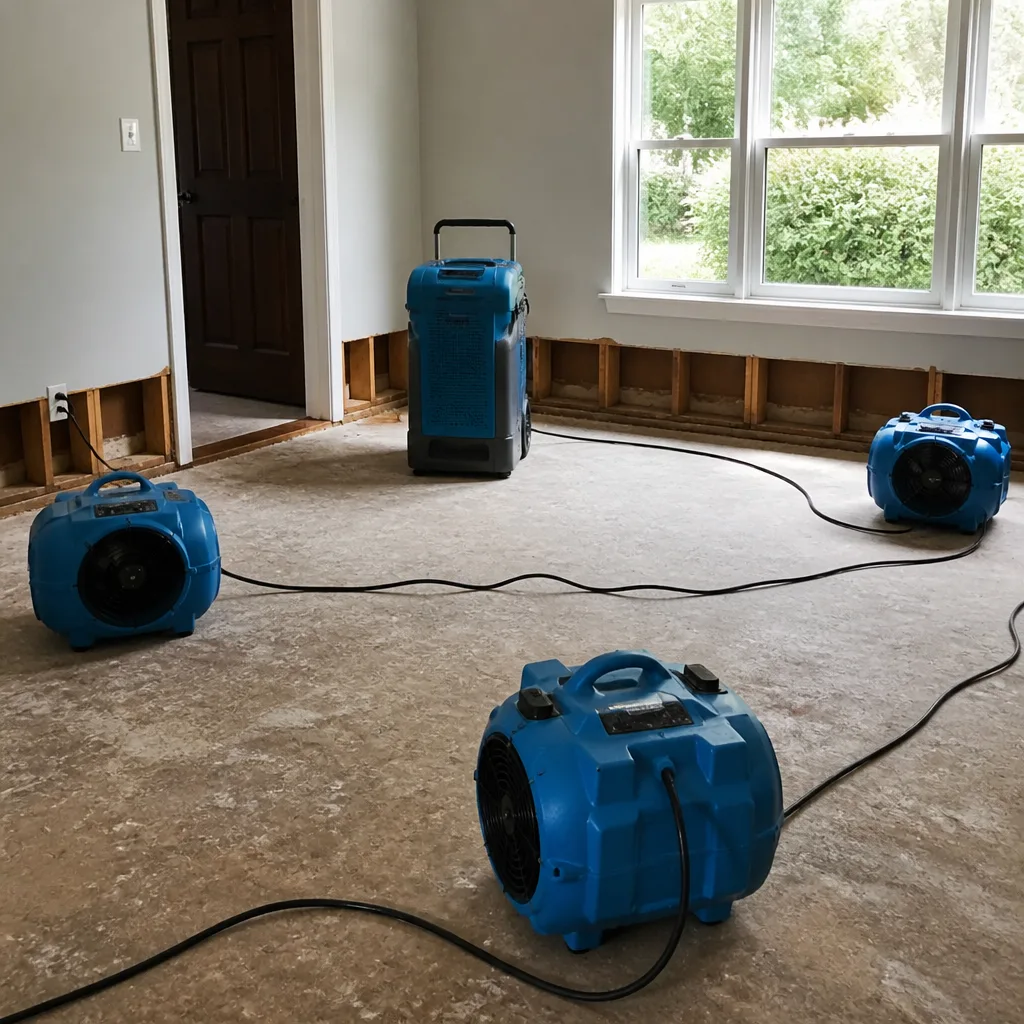
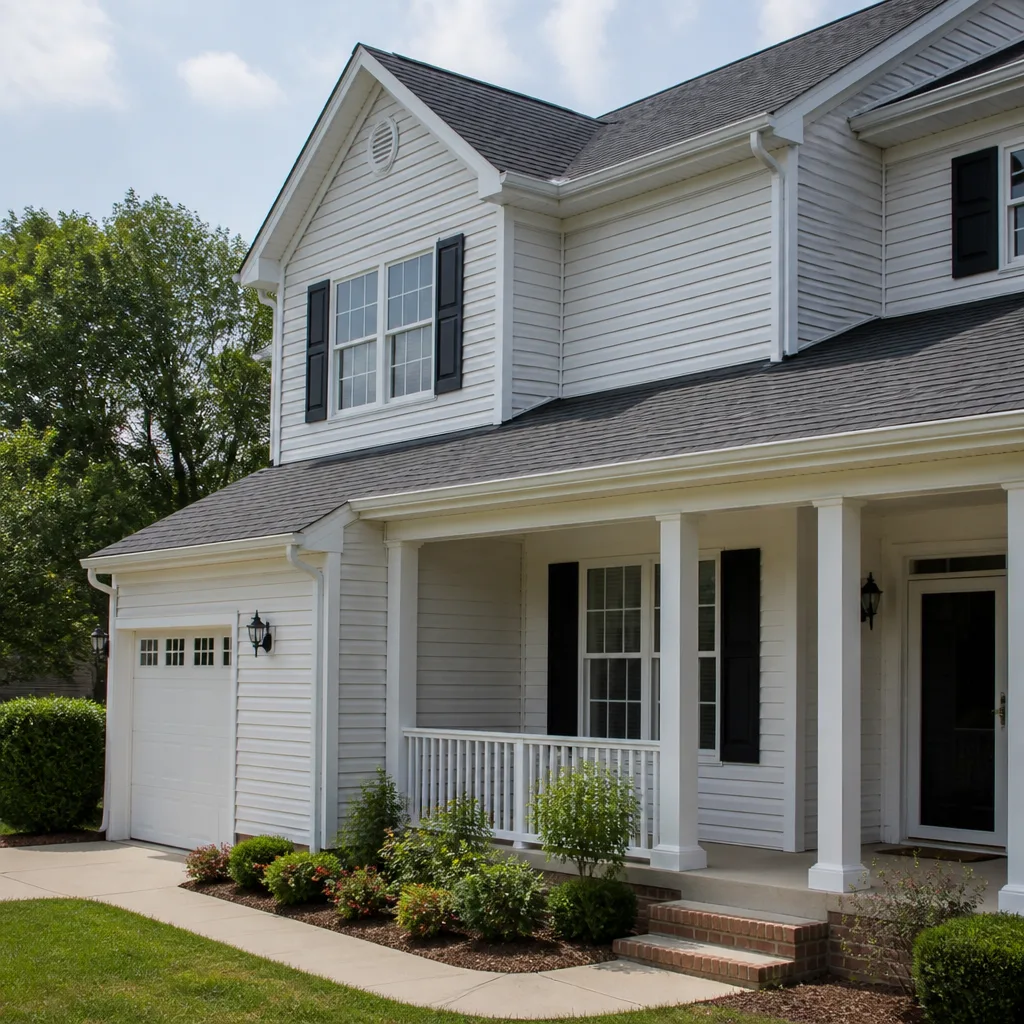
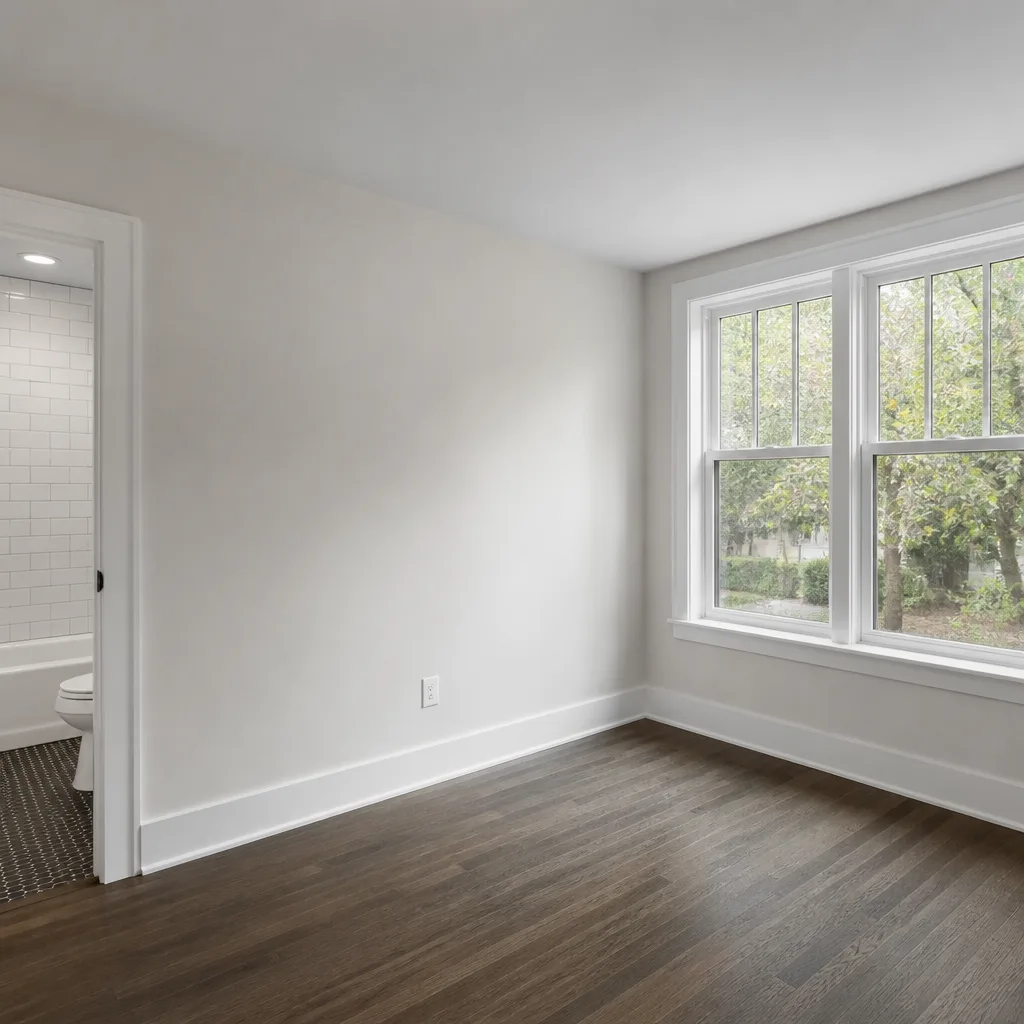
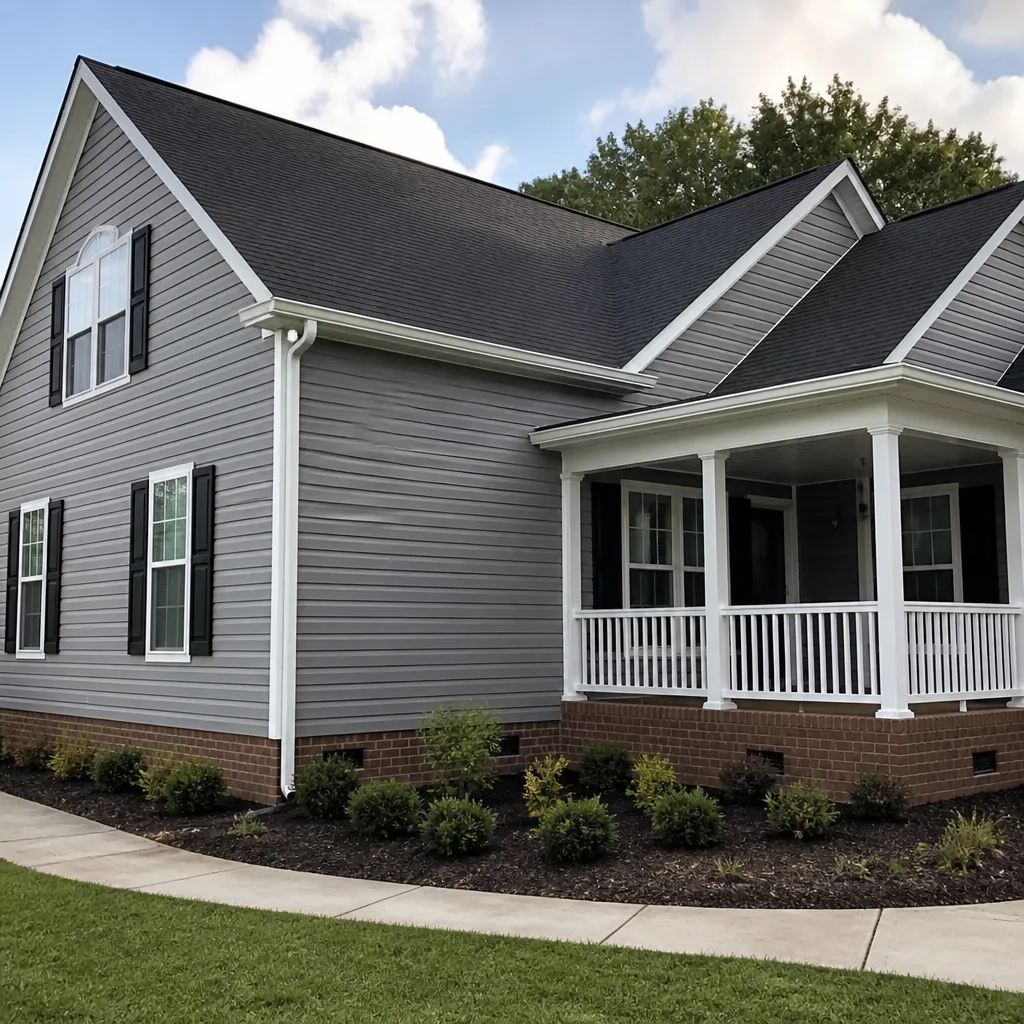
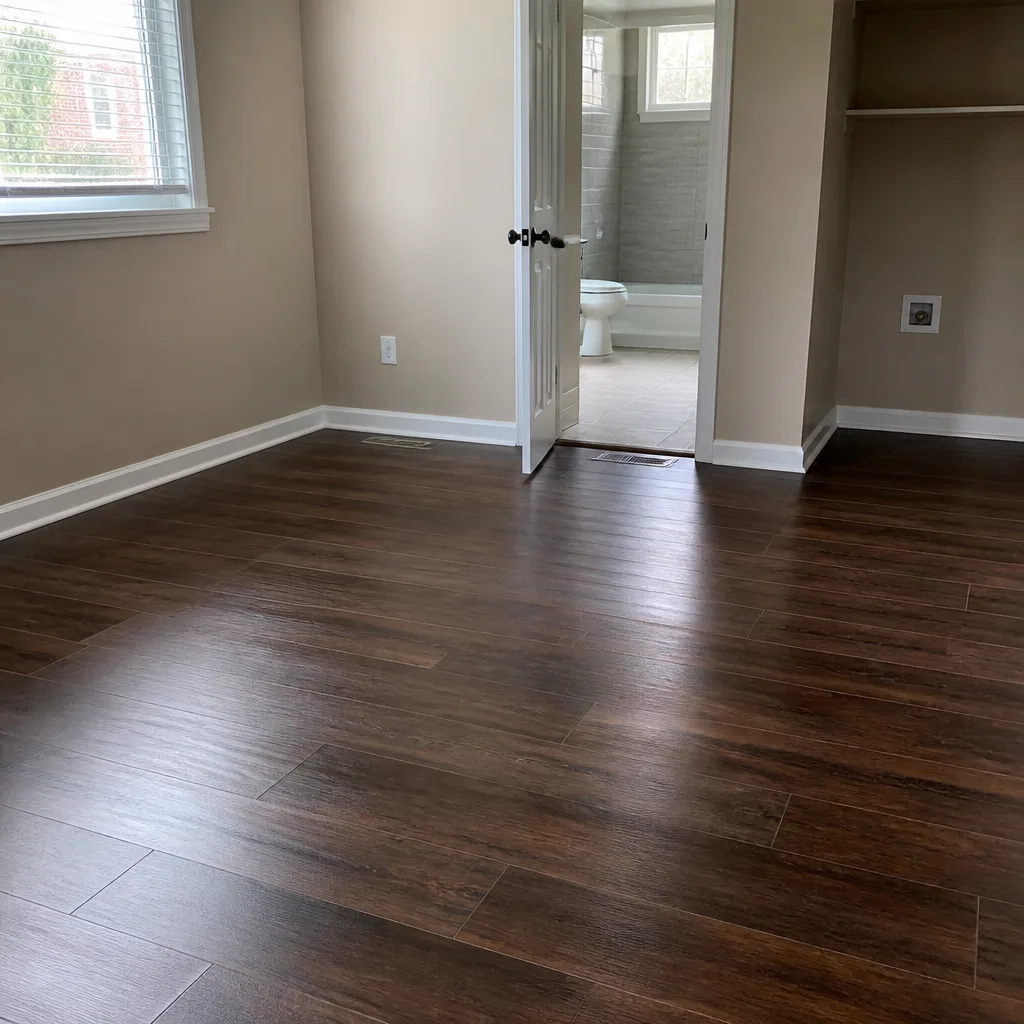
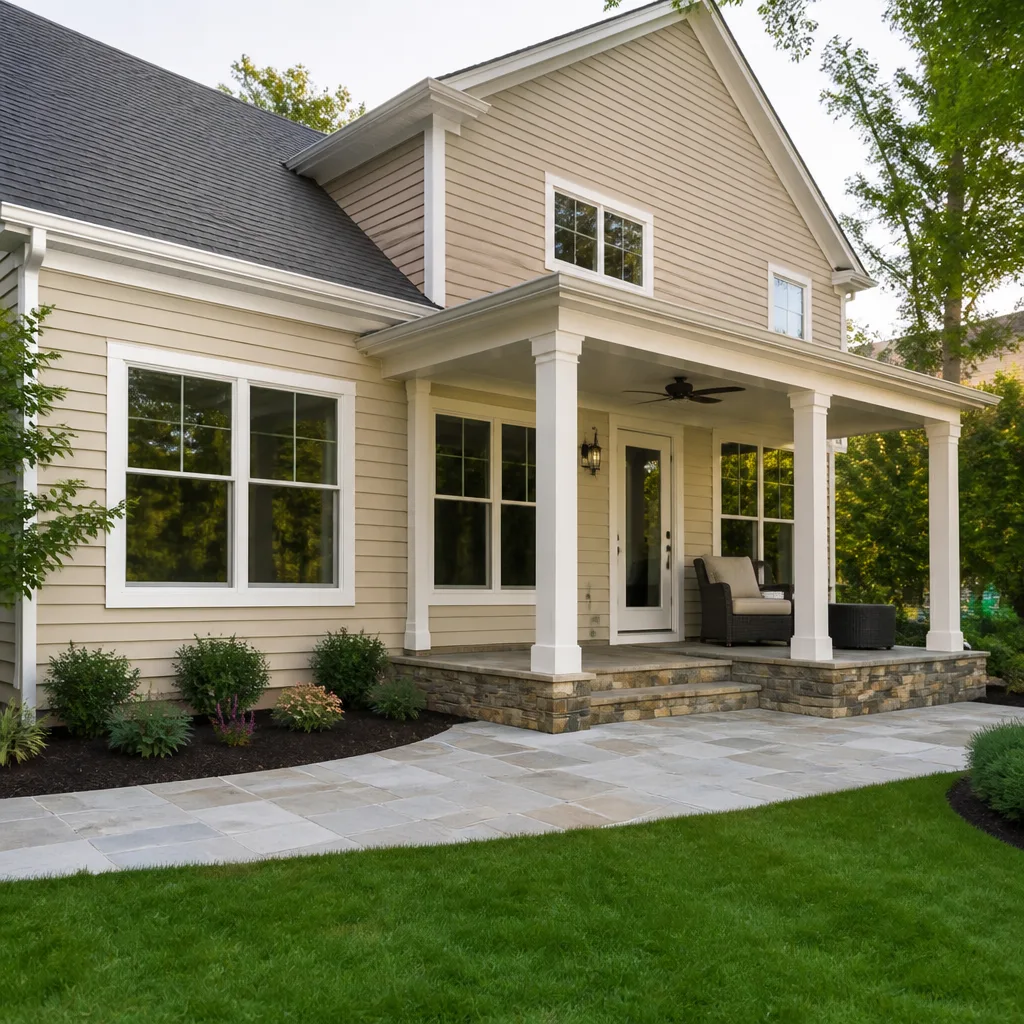
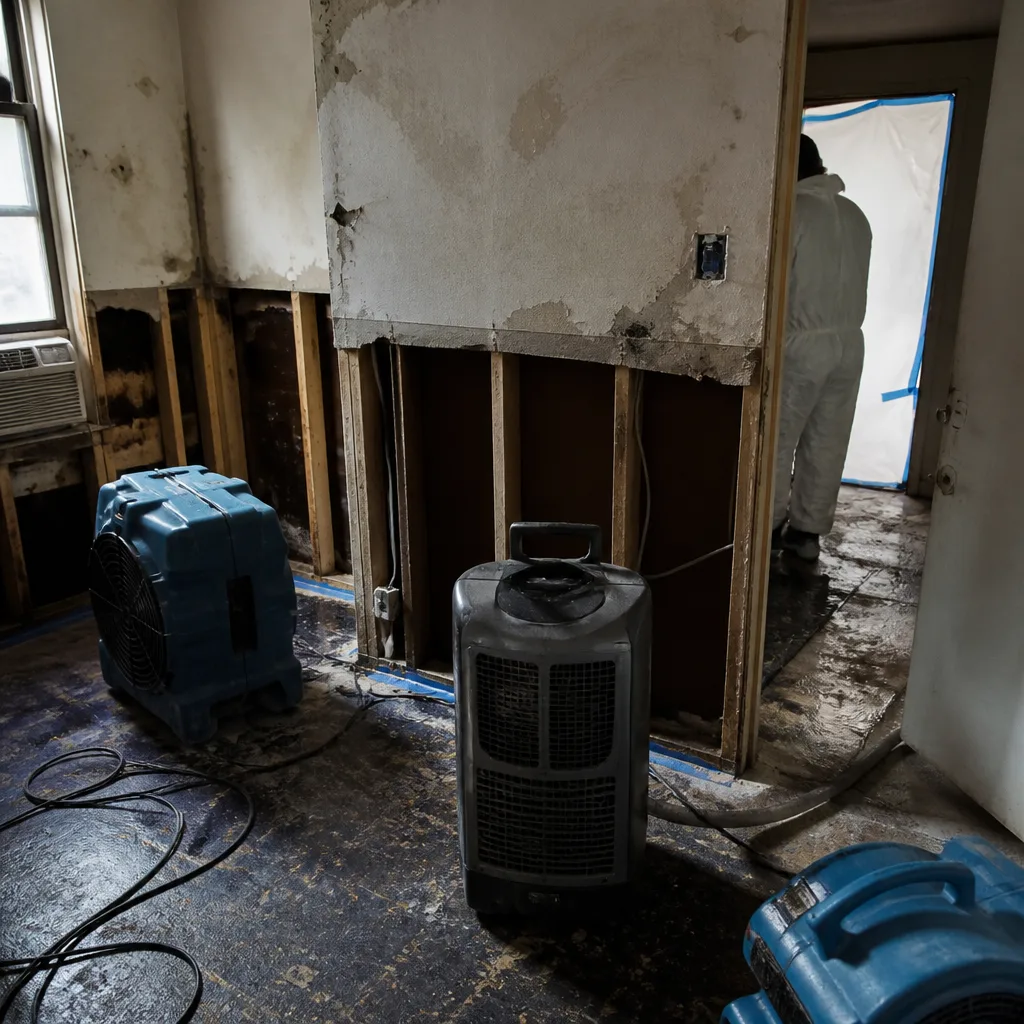 Before
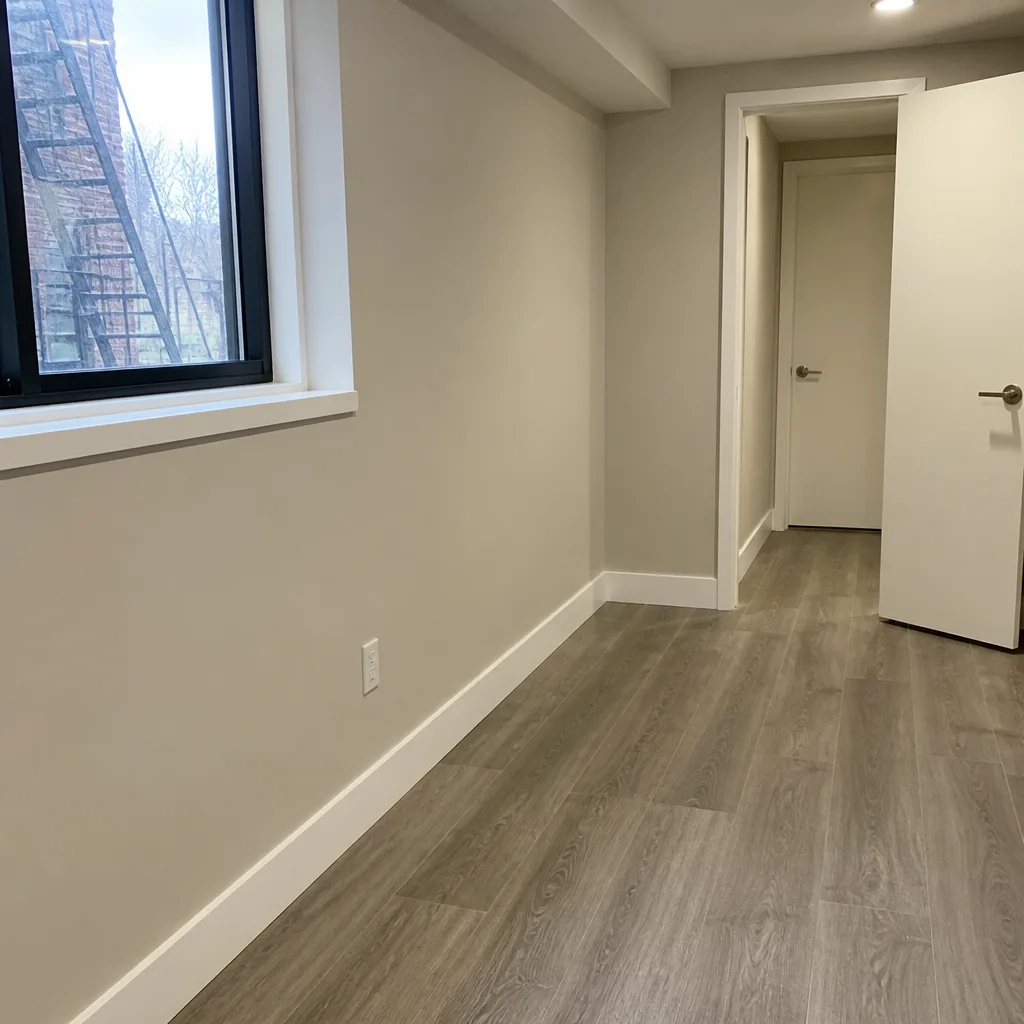 After
After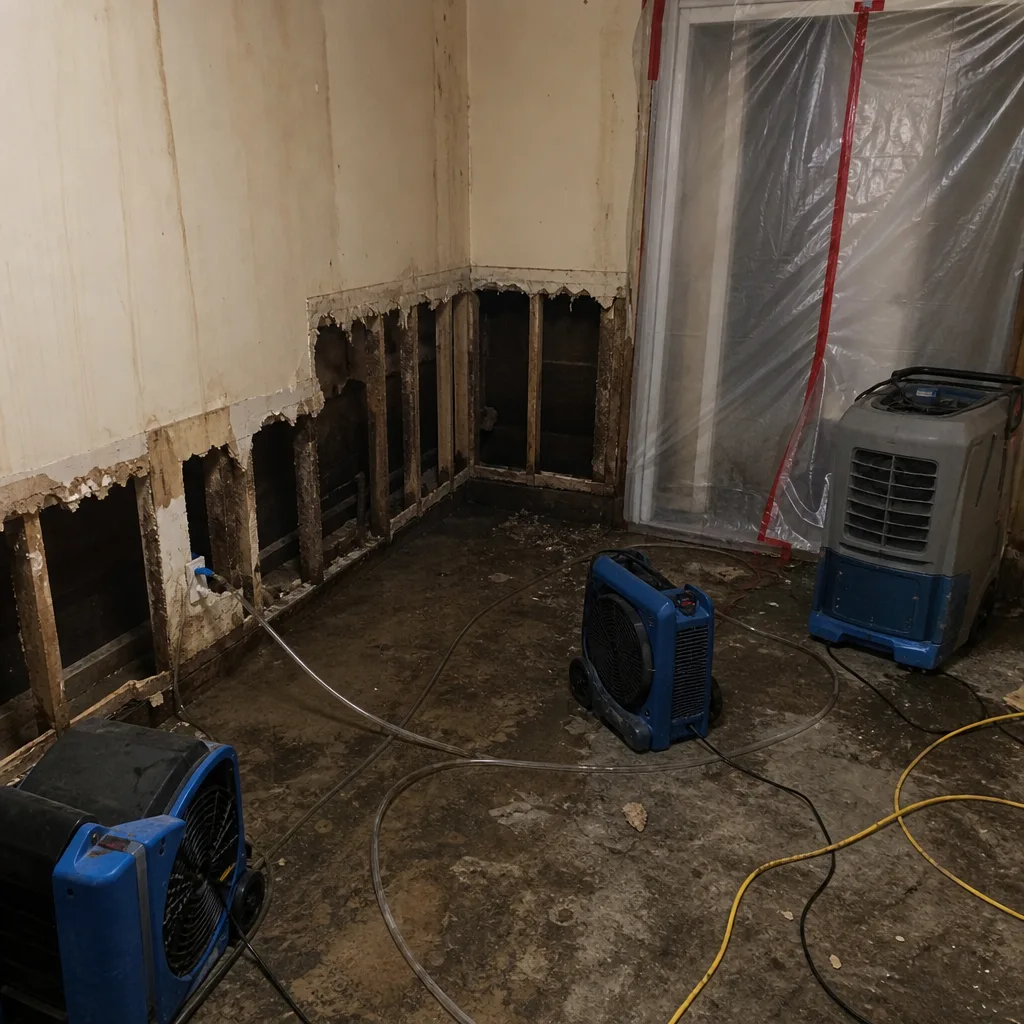 Before
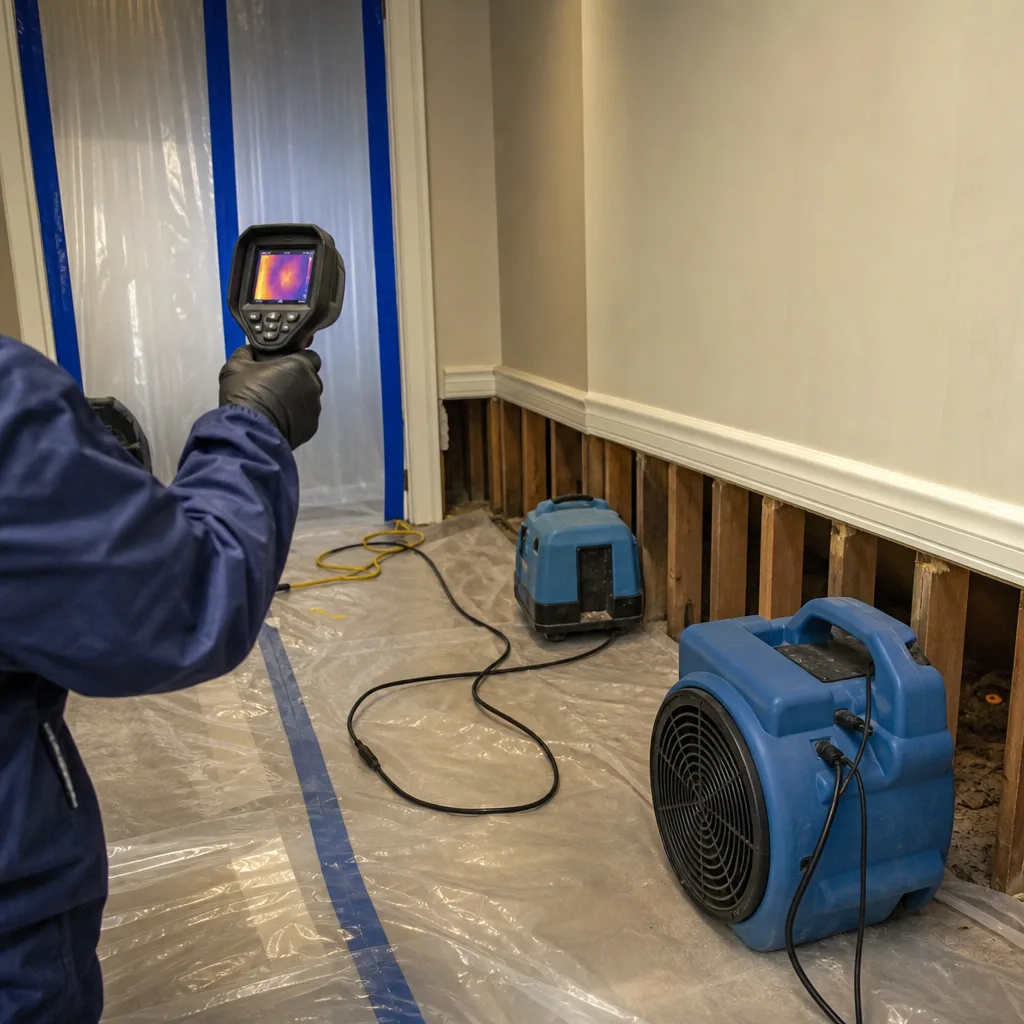 After
After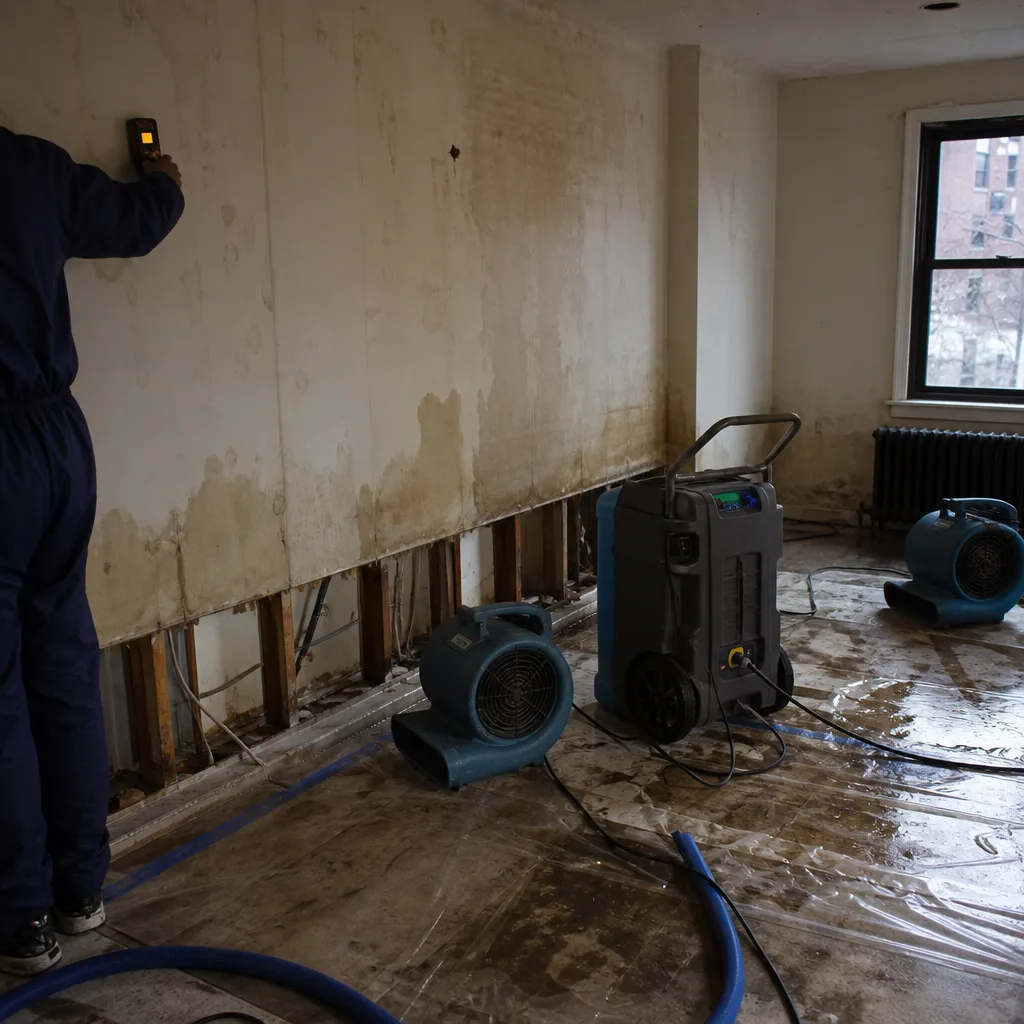 Before
 After
After24/7 Emergency Commercial Restoration in Midtown Manhattan
Commercial restoration in Midtown Manhattan means one thing most weeks: water where it should not be, moving through floors of occupied tenant space. Our crews dispatch from a New York City office and reach buildings throughout Midtown within the hour, any hour. Call (716) 452-0798 and a live dispatcher answers. Not a recording. Not a callback queue. We size up the scene, contain what’s spreading, and start extraction before the next tenant’s ceiling gives way.
The first hour after a riser fails or a sprinkler head pops is when the loss gets defined. Category 1 water becomes Category 2 water as it picks up decades of dust, plaster, and whatever sits between floors. Sheetrock wicks upward. Hardwood warps. Electrical panels and elevator shafts become hazards. A fast, informed response in Midtown Manhattan is not convenience. It’s the difference between drying and gutting.
Understanding Commercial Restoration Severity in Midtown Manhattan Properties
Midtown’s commercial stock runs old. Much of it dates between 1920 and 1950, with cast-iron risers, galvanized supply lines, and original steam distribution. When those systems fail, the water volume is enormous. New York City runs high-pressure municipal feeds; a split riser in a 30-story tower can release hundreds of gallons a minute before the feed is isolated. That moves a “small leak” into large-loss territory faster than most building managers expect.
Severity also depends on floor assembly and occupancy. Water from an upper-floor failure travels through electrical conduits, pipe chases, and elevator shafts. It finds the path of least resistance and saturates drywall, insulation, and ceiling tiles across multiple tenant suites. Category 3 water, which carries sewage or standing contaminants, requires containment, antimicrobial treatment, and often full removal of affected materials. Midtown’s older towers bring a second complication: asbestos-containing materials in plaster, floor tile, and pipe wrap. Finding ACM triggers testing and abatement protocols that halt mitigation until resolved. That’s why we scope for ACM in the first walkthrough, not after drying equipment is on the truck.
Why Midtown Manhattan Property Owners Choose Floodline Restoration Co.
- 45-minute response commitment. For commercial losses in Midtown Manhattan, we target arrival within 45 minutes of the call. Live dispatch, crews already staged for the borough.
- 24/7 live answer. A real person picks up at 2 a.m. on a holiday. No answering service tree. No “leave a message.” You talk to someone who can send a crew.
- IICRC-certified crews. Our technicians hold WRT, FSRT, and AMRT certifications and work under RIA and IFA standards. Not third-party day labor. Our people.
- Free visual inspection. We walk the loss with you and with building management before any work is authorized. A written scope comes first.
- Direct insurance billing. We document, estimate, and coordinate directly with carriers. You stop being the messenger between us and the adjuster.
- One team, start to finish. Extraction, drying, cleaning, and rebuild. The crew that reads the moisture map on day one handles the final punch list.
Our Commercial Restoration Process
1. Inspection & Assessment
We map the full extent of water migration with thermal imaging and hygrometers. We identify the water category, test for ACM where building age warrants it, and note every affected tenant space, chase, and cavity.
2. Extraction & Stabilization
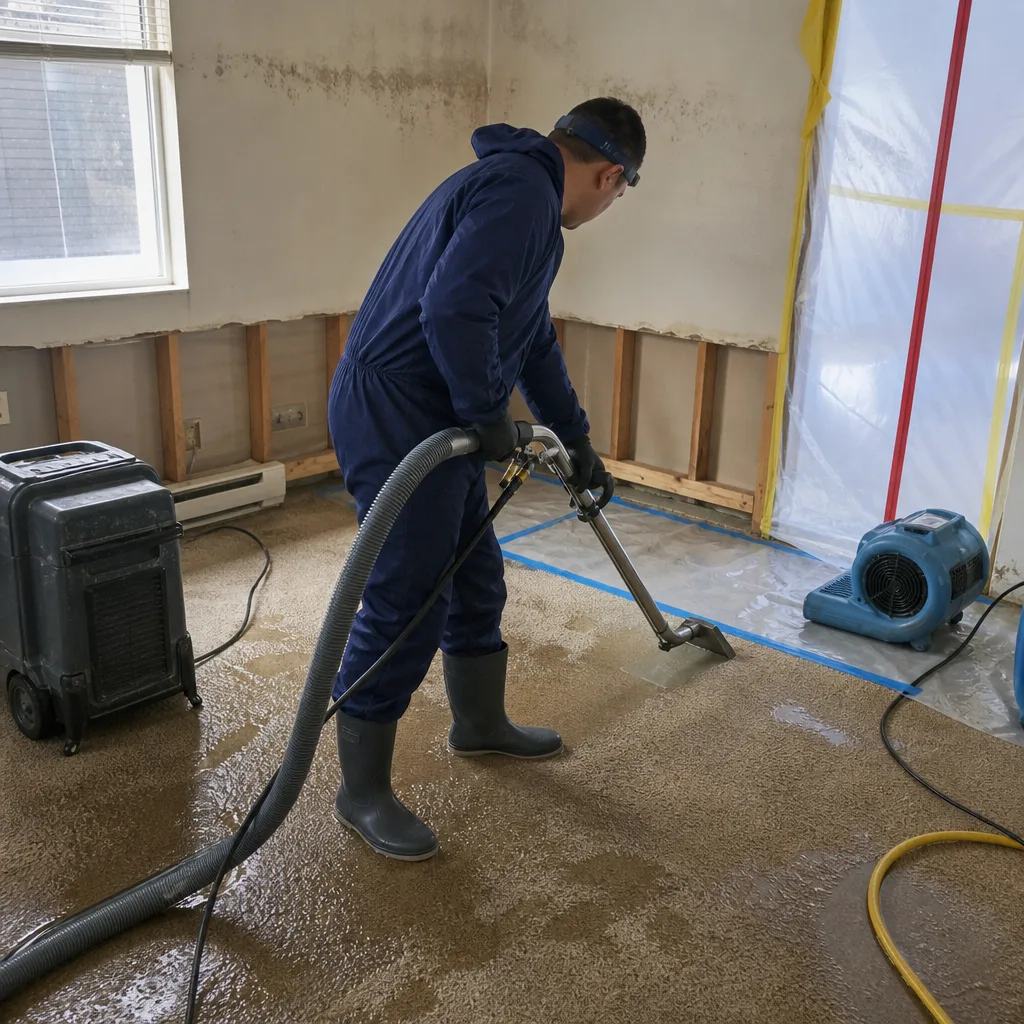
We isolate the source, shut down feeds where needed, and extract standing water using truck-mounted and portable extraction units. Containment goes up immediately where Category 2 or 3 water is present, protecting unaffected floors and suites.
3. Drying & Dehumidification
Dri-Eaz and Phoenix air movers and dehumidifiers are placed per a moisture map, not by guesswork. In Midtown’s dense urban heat island, we expect slower surface drying and adjust daily readings against building-specific benchmarks, not suburban defaults.
4. Cleaning & Sanitization
All affected surfaces are cleaned, and where the water category demands it, we apply antimicrobial treatments and run HEPA air scrubbers to control what drying stirs into the air.
5. Document & Inventory Recovery
Paper files, tenant records, server rooms, and inventory get triaged. We photograph everything, log what can be dried and what cannot, and coordinate with your insurer on restoration versus replacement.
6. Repairs & Restoration
Rebuild is scoped and priced in writing, like a remodel, then scheduled around tenant needs. Same crew. Same project lead. No handoff to a sub you never met.
Need Emergency Commercial Restoration in Midtown Manhattan Now?
Crews minutes away, answering live 24 hours a day. The sooner we start, the less it costs.
Working With Your Insurance Company
Midtown commercial losses often involve multiple carriers: the building’s, the tenant’s, sometimes a lender’s. We handle that. From the first hour, we document water category, affected square footage, moisture readings, and the pre-loss condition of everything we touch. Our estimates follow the same standards your adjuster uses, and we talk to them directly. You should not be scheduling calls between us and a desk adjuster at 3 p.m. on a Tuesday. That’s our job.
Photo documentation starts before extraction begins and continues through the final moisture reading. Drying logs are kept daily, updated hourly during large-loss events, and shared with the carrier as they go. That record is what keeps a claim moving and prevents disputes about what was wet and for how long.
What We Provide Your Insurer
- Thorough documentation of the loss
- Photos of all damage, room by room
- Moisture readings and drying logs
- A detailed, line-item scope of work
- Direct coordination with your carrier
Built for Midtown Manhattan’s Loss Calendar
January in Midtown is the season of frozen rooftop penthouses. Freeze-thaw cycles split exposed pipe chases above the 20th floor, and the water finds its way down through mechanical rooms, office floors, and lobby ceilings before anyone notices. February and March bring more of the same, plus riser failures in buildings that deferred maintenance through the winter. Spring’s heavy rain finds every failed façade seal in the glass curtain-wall towers east of Sixth Avenue. Summer thunderstorms overload roof drains and send flash water through stacked mechanical spaces. A single nor’easter can leave a dozen Midtown buildings with soaked elevator shafts and wet electrical rooms along the same corridor.
Then there’s the steam. Midtown is the heart of Con Edison’s district steam network, the largest in the US. When a building steam connection fails or an interior distribution line lets go, the damage is not just wet. It’s hot and wet: soaked insulation, condensation in wall cavities, and warmth that accelerates mold. That pattern is a Midtown signature. We’ve traced and documented enough Con Edison steam losses to know what an insurer needs to see, and what building managers need to hear about timelines and tenant exposure.
Commercial Restoration Across Midtown Manhattan’s Neighborhoods
Response routes and building profiles change by corridor. Around Bryant Park and the Avenue of the Americas, pre-war office towers with original cast-iron risers dominate. When a 14th-floor riser failed near there, our crew was on-site within the hour to shut the municipal feed and begin extraction before Category 2 water seeped into tenant law offices below. We coordinated phased scoping with three adjusters across nine floors, scheduled all drying and dehumidification after 7 p.m. per building management, and kept hourly drying logs until pre-loss benchmarks were met. No tenant lost a day of operation.
East of Grand Central in Murray Hill, the stock shifts to mid-century commercial buildings with steam heat and older supply lines. Times Square and the theater district bring hospitality losses: hotel floors, restaurant kitchens, and retail spaces where a 2 a.m. pipe break means a 6 a.m. opening deadline. Over near Hudson Yards, newer glass towers leak differently; façade seals fail and water travels inside wall cavities across multiple floors before the source is even visible. Each area has its own failure mode, and our crews read the building before they place a single air mover.
Specialized Commercial Restoration Services We Offer in Midtown Manhattan
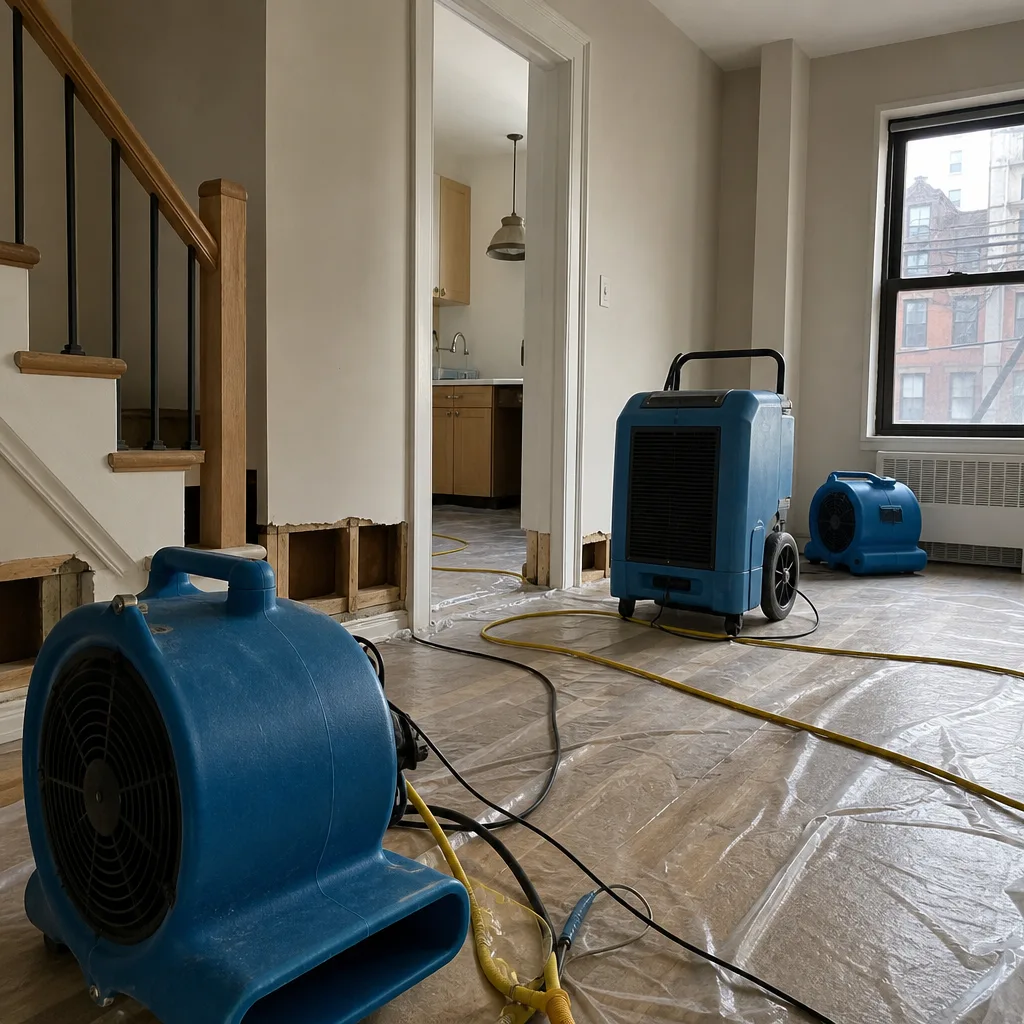
Office & Retail Restoration
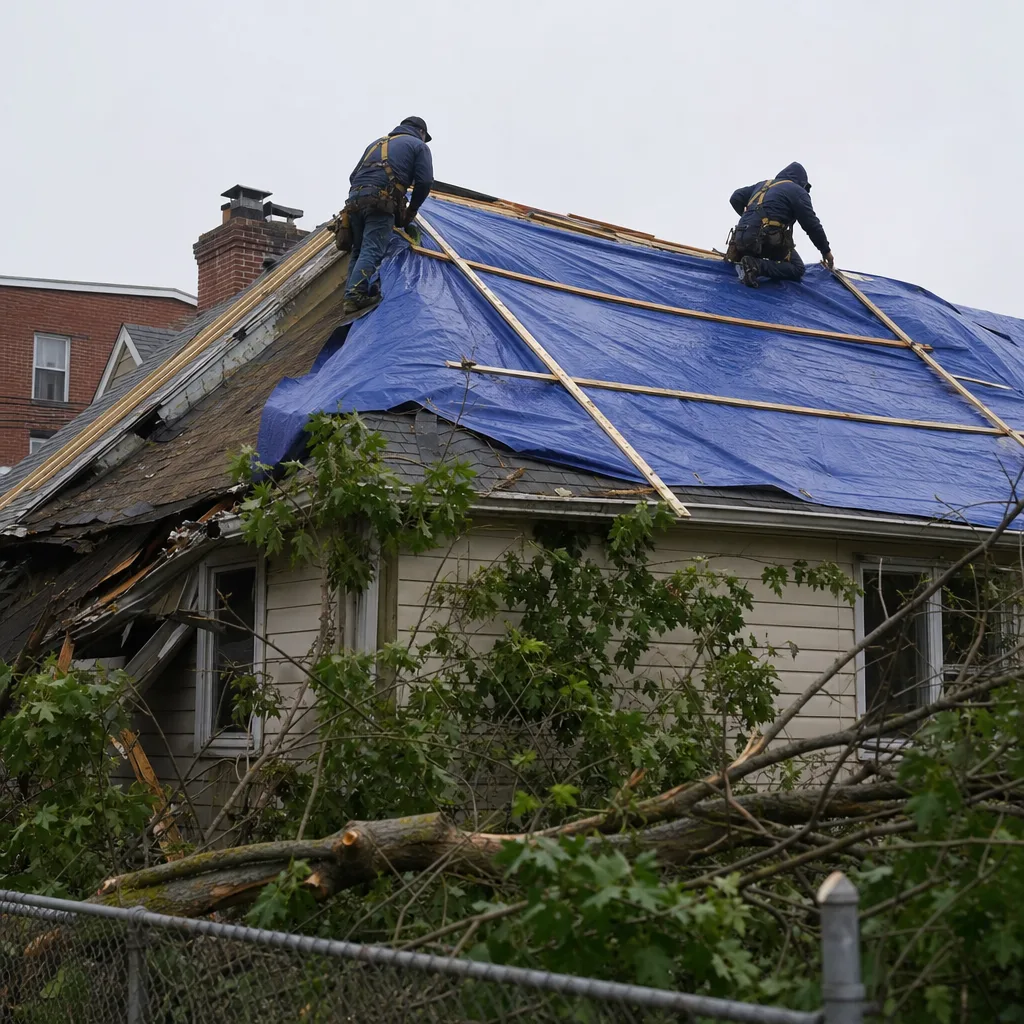
Tenant suites, open floor plates, retail storefronts. We handle water, fire, and smoke damage with the same urgency but a heavier emphasis on business continuity. Drying and content triage happen around your operating hours where possible. Where not possible, we get you back to work in days, not weeks.
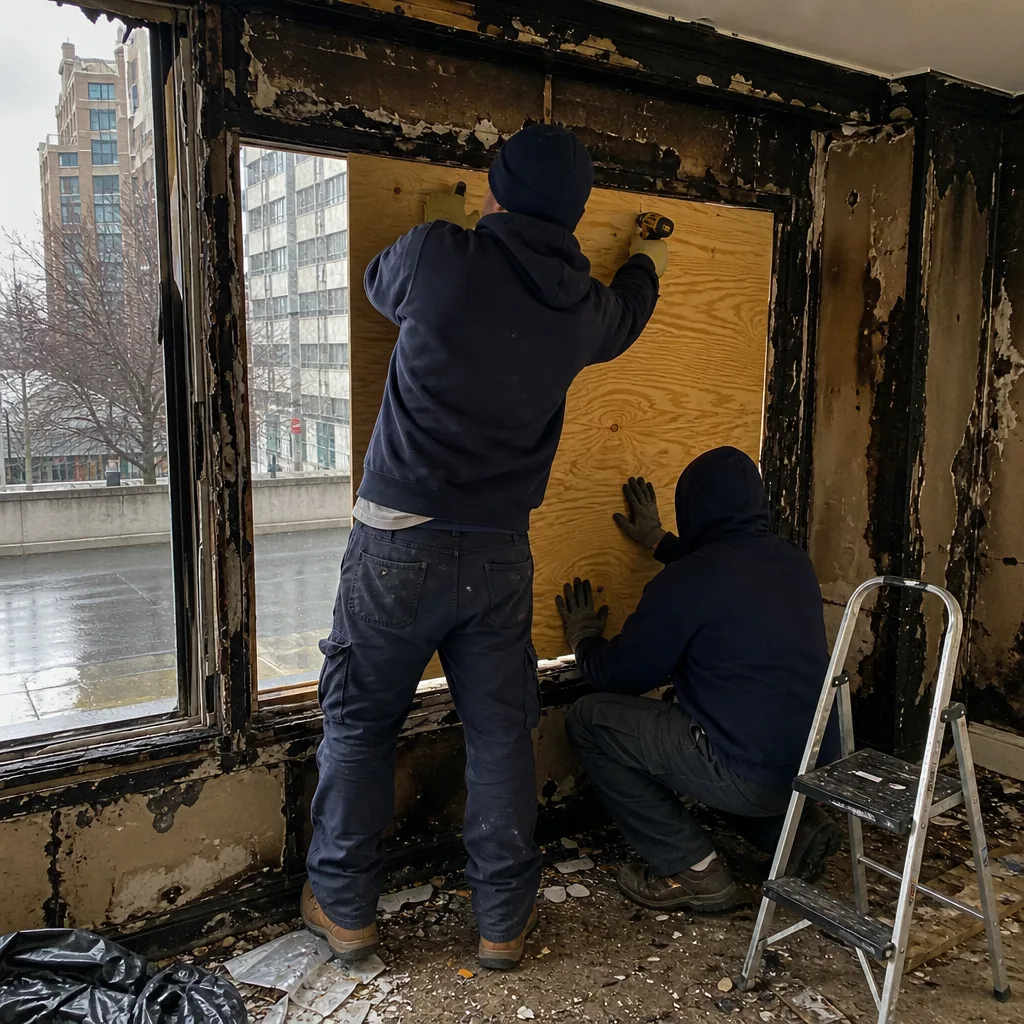
Multi-Unit & HOA Restoration
Condominium boards and building managers face a specific problem: one unit’s loss becomes everyone’s problem. We scope common areas, coordinate with unit owners, and manage the restoration without making the board the project manager. Documentation is built for HOA carriers and individual unit policies alike.
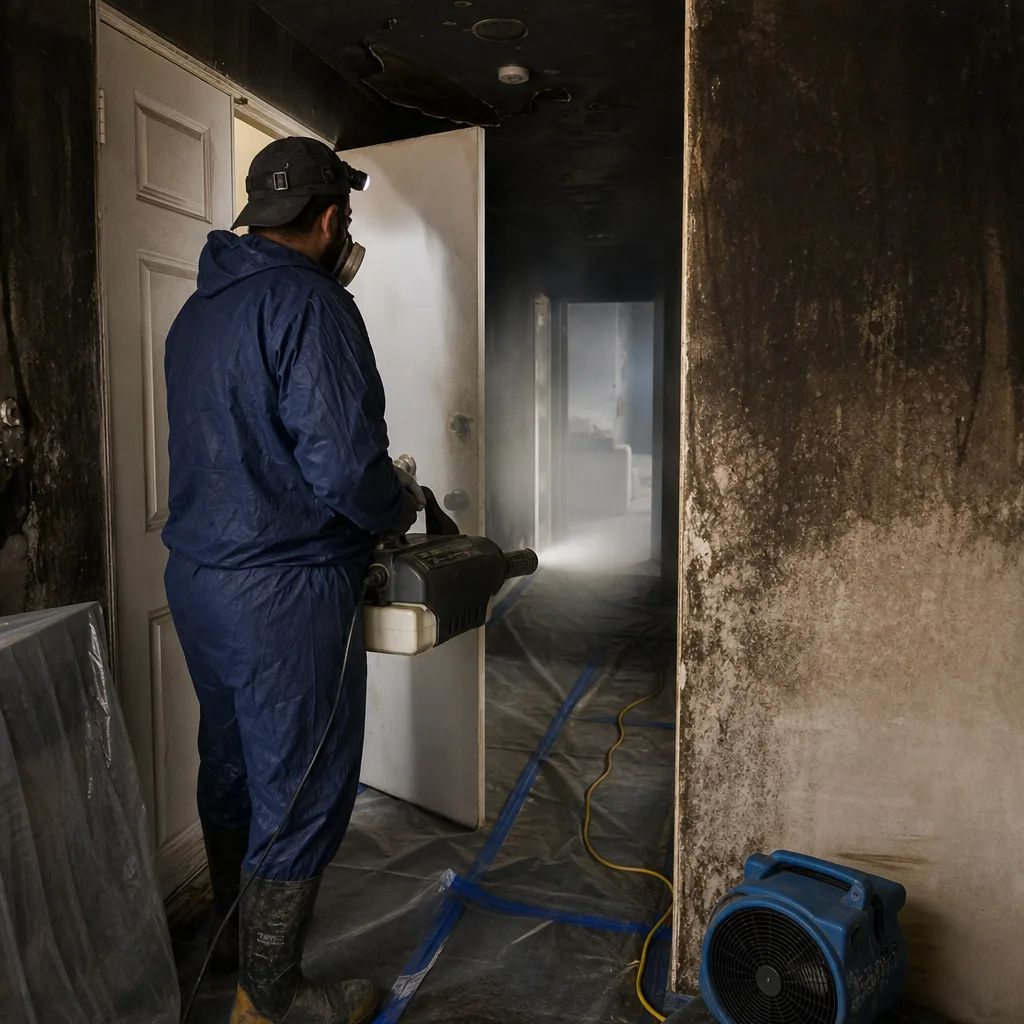
Industrial Facility Cleanup
Midtown’s industrial and logistics spaces, loading docks, mechanical floors, and sub-grade storage areas bring tougher containment needs and heavier extraction. Our crews run professional-grade Injection and XPOWER equipment where standard setups fall short, and we write scopes that acknowledge real production deadlines.
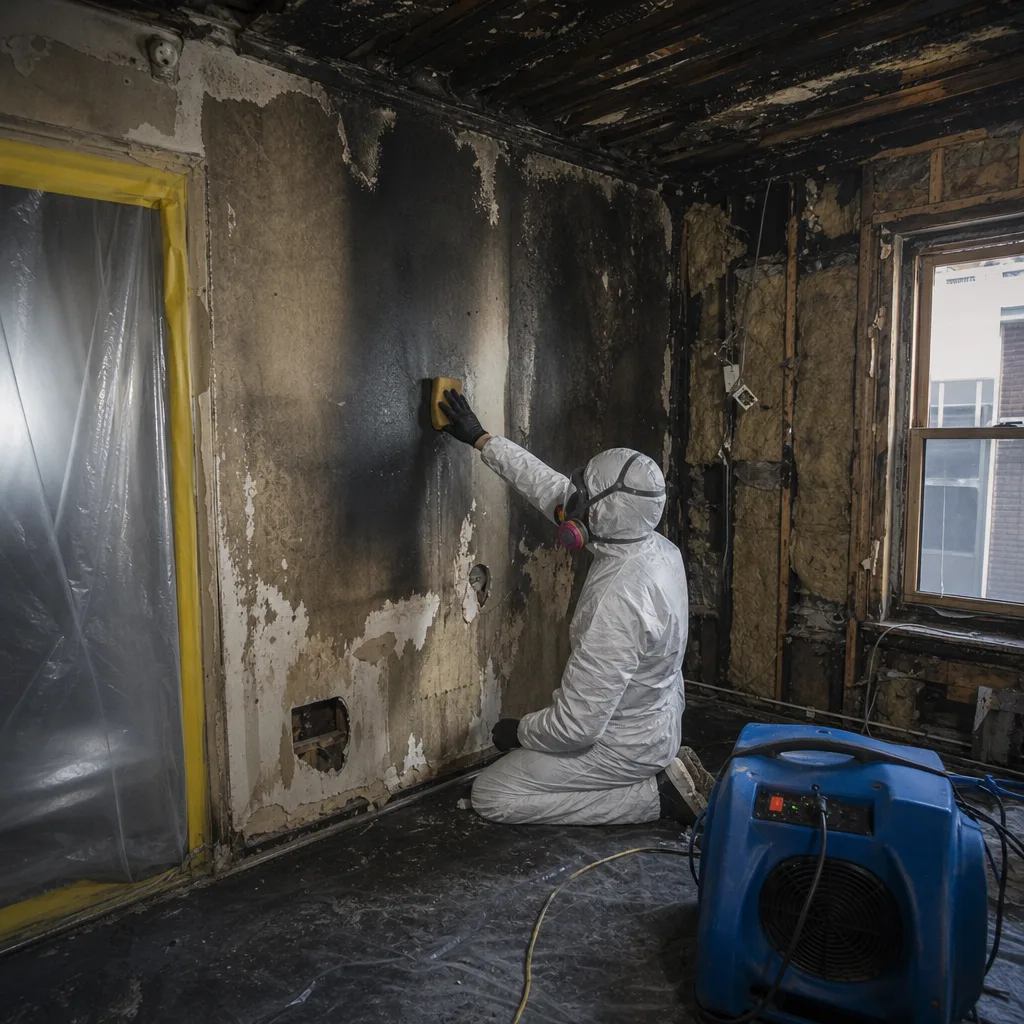
Large-Loss Response
A true large loss in Midtown is a multi-floor, multi-tenant, multi-carrier event. We stage crews, equipment, and a project lead who owns the whole job. Phased scoping keeps work moving even as new damage is discovered behind walls and under raised floors. This is the core of what we do in Midtown, and we do it without handing pieces off to unfamiliar subs.
Business Interruption Minimization
Every hour of downtime costs revenue. We prioritize extraction and drying in revenue-critical spaces first, then move to back-of-house areas. Drying logs and documentation are built to support business interruption claims, with clear timelines the adjuster can verify.
What happens when you call
- 1
A real person answersNo phone trees - you reach a local pro.
- 2
You get an upfront price rangeHonest numbers before anyone is dispatched.
- 3
A background-checked tech heads outLicensed & insured, dispatched right away.
- 4
You approve before work beginsNothing starts until you say go.
Commercial Restoration Costs in Midtown Manhattan, NY
Commercial water restoration in Midtown Manhattan typically runs $4.50 to $9.00 per square foot for extraction, drying, and sanitization on a contained single-floor loss. Multi-floor events with phased scoping and after-hours work run $9.00 to $18.00 per square foot. Document and inventory recovery adds $1,500 to $8,000+ depending on volume and whether freeze-drying or desiccant drying is needed. Structural repairs and rebuild are scoped separately, in writing, like any commercial remodel.
What moves the price: building age and ACM abatement triggers, water category, floor count, whether tenants can remain during drying, and how quickly the source was isolated. Insurance covers most of these losses when documentation is solid from the first hour. That’s why we photograph before we extract, log every reading, and never let a building owner guess what the carrier will accept. On out-of-pocket scopes, we provide the same line-item estimate before work begins, so the number you approve is the number you pay. The $50 Off Any Repair Over $250 offer applies to commercial repair scopes as well.
We Also Serve Cities Near Midtown Manhattan
Our Midtown crews regularly work across Midtown Manhattan and into the surrounding areas, including Long Island City, Greenpoint, Williamsburg, and Murray Hill. If your building sits on the edge of Midtown or just across the river, call and we’ll route the nearest crew to you.
Serving Midtown Manhattan, NY - Our Local Coverage Area
We’re based in the Midtown Manhattan area and know this community well. Use the map below to see our service coverage - if you’re nearby, we can almost certainly help.
Midtown Manhattan Commercial Restoration Questions, Answered
How does a Con Edison steam loss in a Midtown high-rise differ from a standard water leak in commercial restoration?
Steam losses are wet-heat events. The moisture is warmer, condensation collects inside wall cavities, insulation stays soaked longer, and mold accelerates in the warmth. The extraction and drying plan has to account for thermal load, not just visible water. We trace the steam line, document the pattern for the insurer, and adjust drying benchmarks for heated moisture. Call (716) 452-0798 for a free inspection.
What asbestos protocols must be followed when restoring water damage in a pre-war Midtown office tower?
New York City and federal regulations require ACM testing before disturbing plaster, floor tile, or pipe insulation in buildings constructed before the 1980s. If ACM is present, abatement by a licensed contractor must be completed before drying equipment goes in or demolition starts. We flag this during initial scoping, so mitigation is not halted mid-job by a surprise test result.
Why do multi-floor commercial losses in Midtown require phased scoping and after-hours work?
Because tenants on every affected floor have leases, operations, and insurance policies of their own. Phased scoping lets us start containment and extraction on the source floor while assessing lower floors systematically. After-hours work is often required by building management to avoid disrupting elevators, lobbies, and occupied suites during business hours. The schedule gets written into the scope, not improvised.
How do you dry a modern glass curtain-wall tower when façade seal failures leak rainwater into interior wall cavities across multiple floors?
We use thermal imaging to trace the water path behind the curtain wall, then open targeted access points for cavity drying with Injectidry systems and high-volume dehumidification. Because the leak source is often above the visible damage, we inspect upward first. Water often travels through floor assemblies before showing up on ceilings three or four stories down.
What role do drying logs play in a Midtown large-loss commercial claim?
Drying logs are the evidence trail that proves how wet the building was and how long it took to reach dry standard. In a stacked Midtown loss with multiple insurers, daily logs with moisture readings are what keep carriers from disputing scope or denying portions of the claim. We log every reading, share logs directly with adjusters, and keep the homeowner or building owner informed without them having to ask.
How fast can a crew actually reach my Midtown Manhattan building?
We target 45 minutes from the call for commercial losses in Midtown. A live dispatcher answers 24/7 and routes the nearest crew immediately. In a high-pressure riser failure, that speed matters because water is still moving through the building until the feed is isolated.
Will insurance cover commercial restoration in Midtown Manhattan?
Most commercial policies cover sudden and accidental water damage, including riser failures, sprinkler discharges, and storms. Coverage hinges on documentation: what was wet, when it was discovered, and what was done to stop it. We build that file from the first hour and bill the carrier directly. For a free walkthrough, call (716) 452-0798.
What should I do in the first 30 minutes after discovering water in a Midtown commercial building?
Call us first, then call building management. Do not enter standing water in mechanical rooms or near electrical panels. If you know where the shutoff is and can reach it safely, isolate the source. Stay out of elevator shafts and any area where water may have reached wiring. We’ll walk through containment from there.
Written by Curt Bowman, Owner at Floodline Restoration Co., serving Midtown Manhattan’s commercial buildings and the surrounding boroughs with full-cycle restoration and our Commercial Restoration team.