
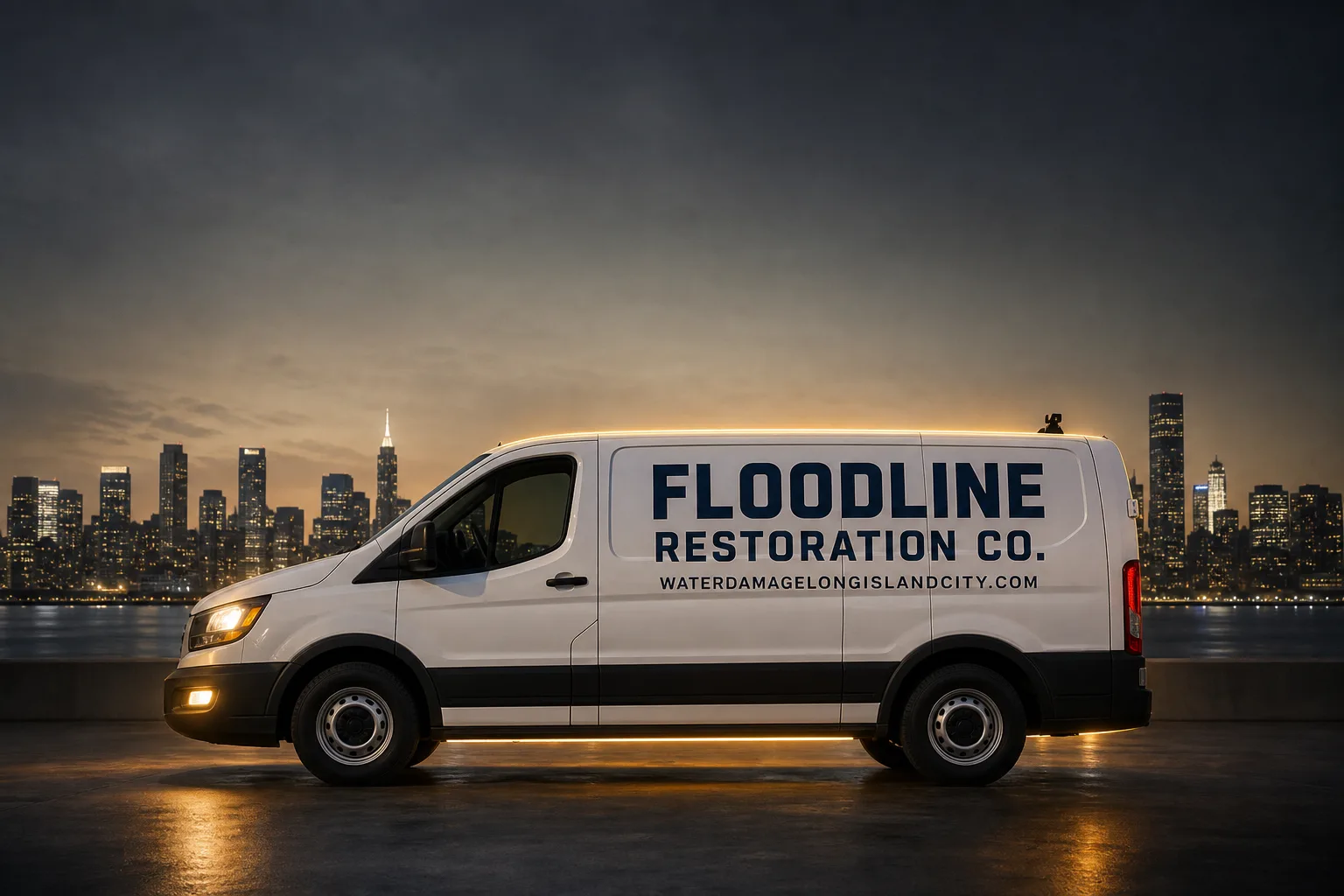
Free visual inspection and a written scope of work before any mitigation begins - photos, moisture readings, and drying logs go in your claim file
The scope we write is the scope we bill. Anything new gets shown to you, in writing, before we touch it.
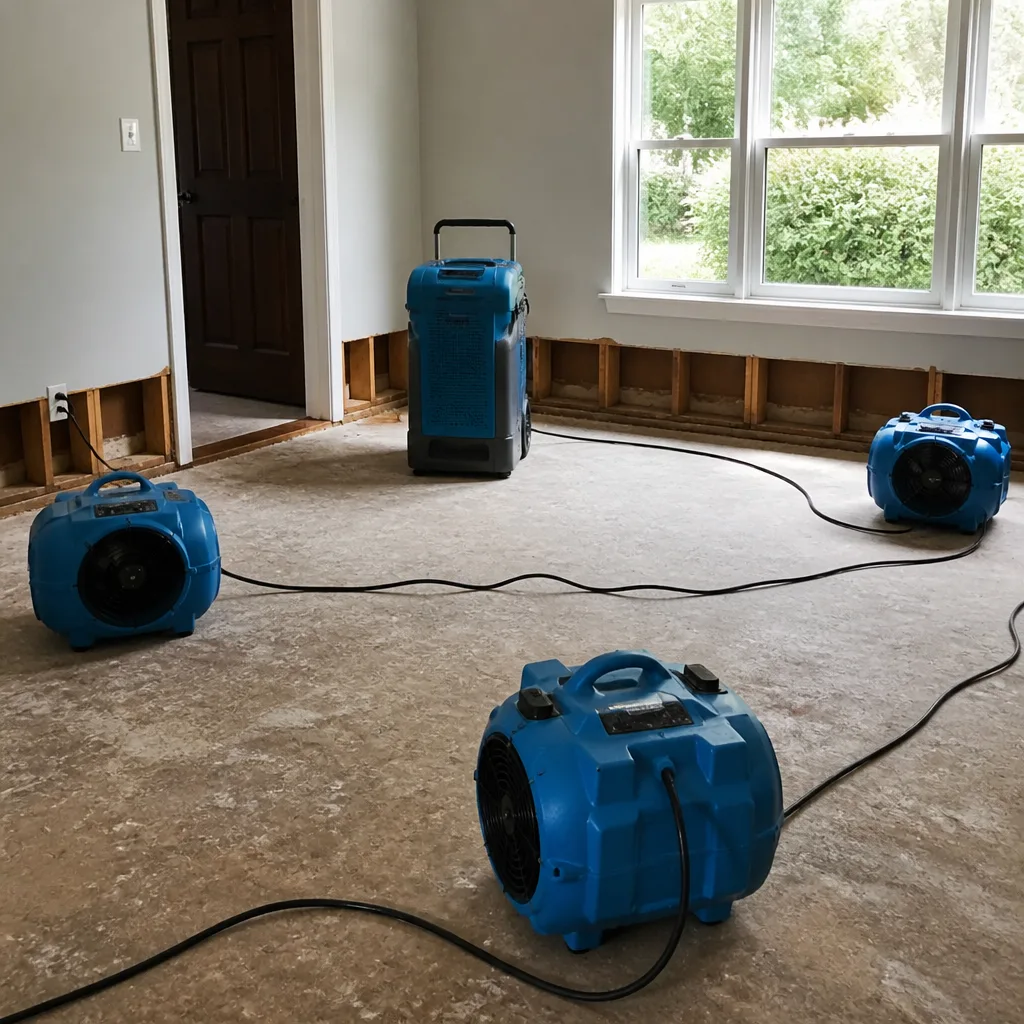
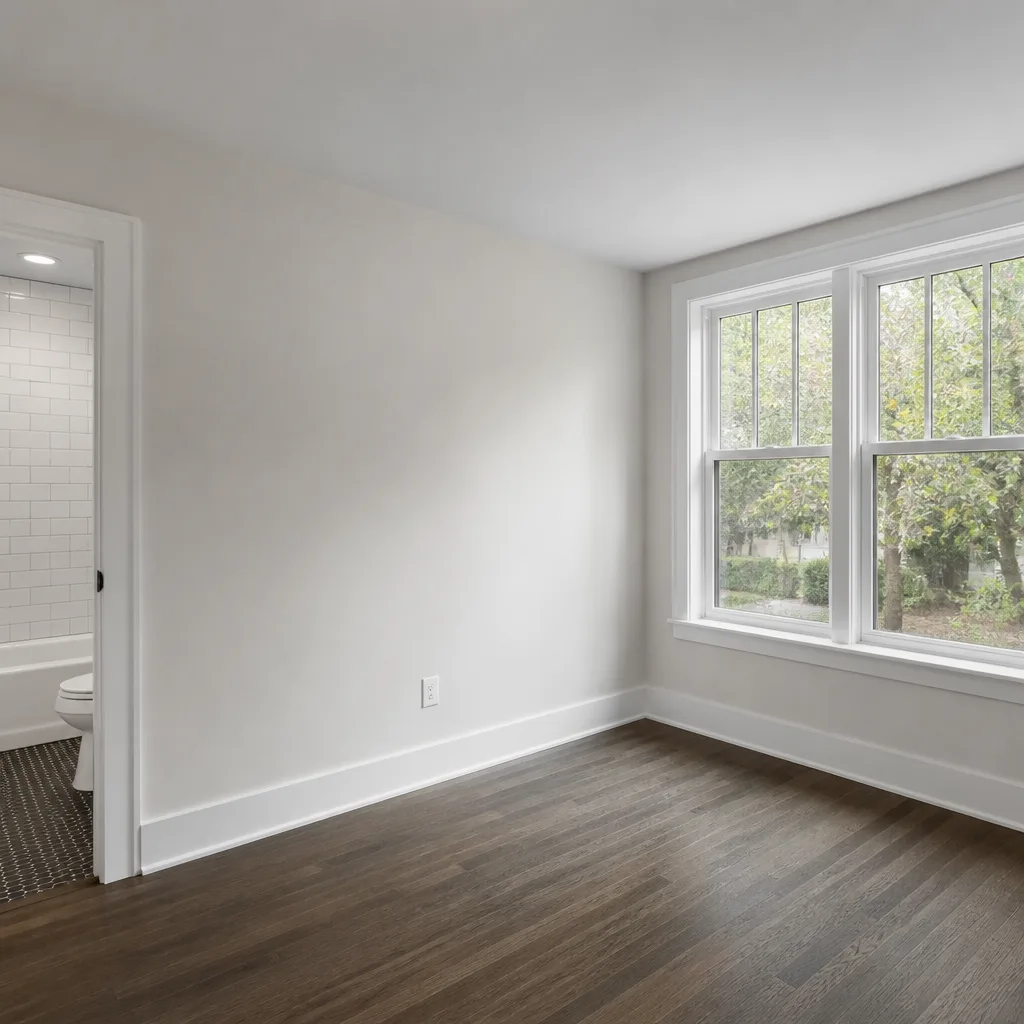
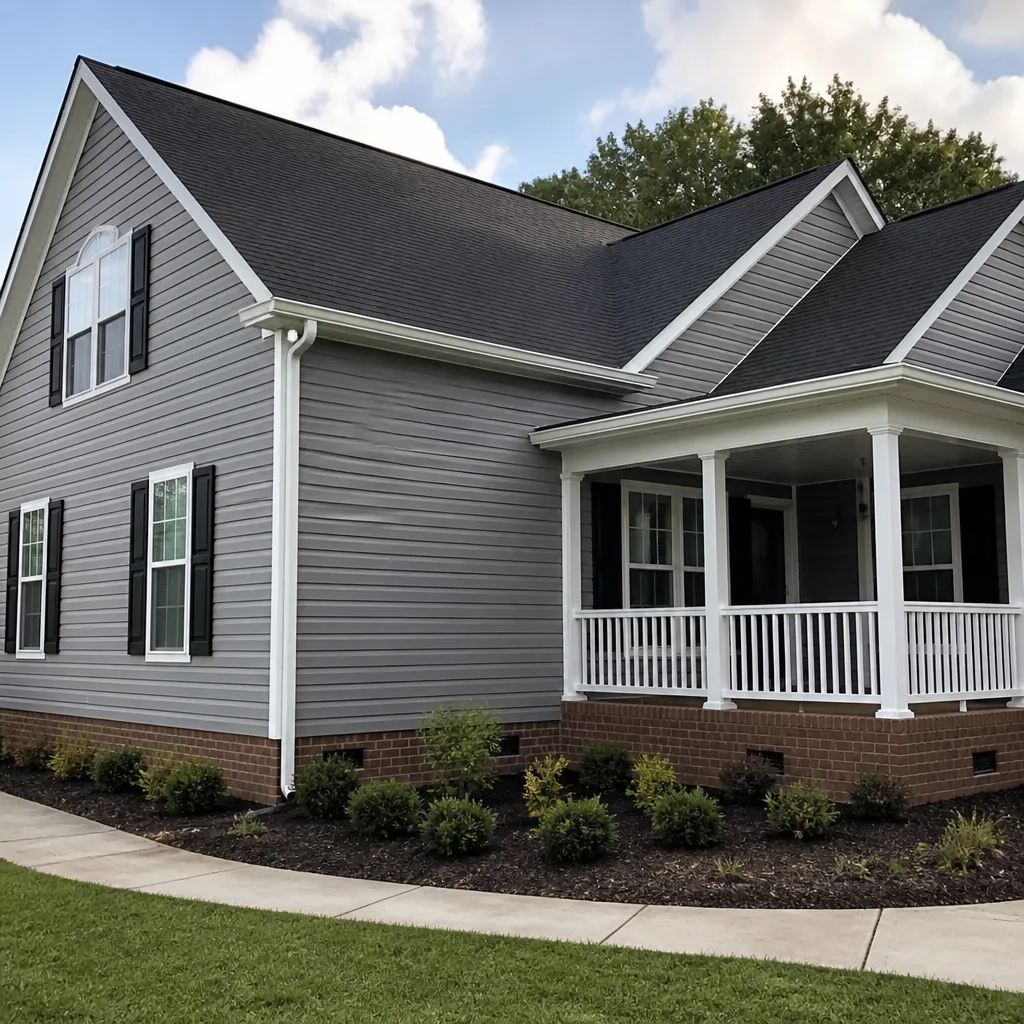
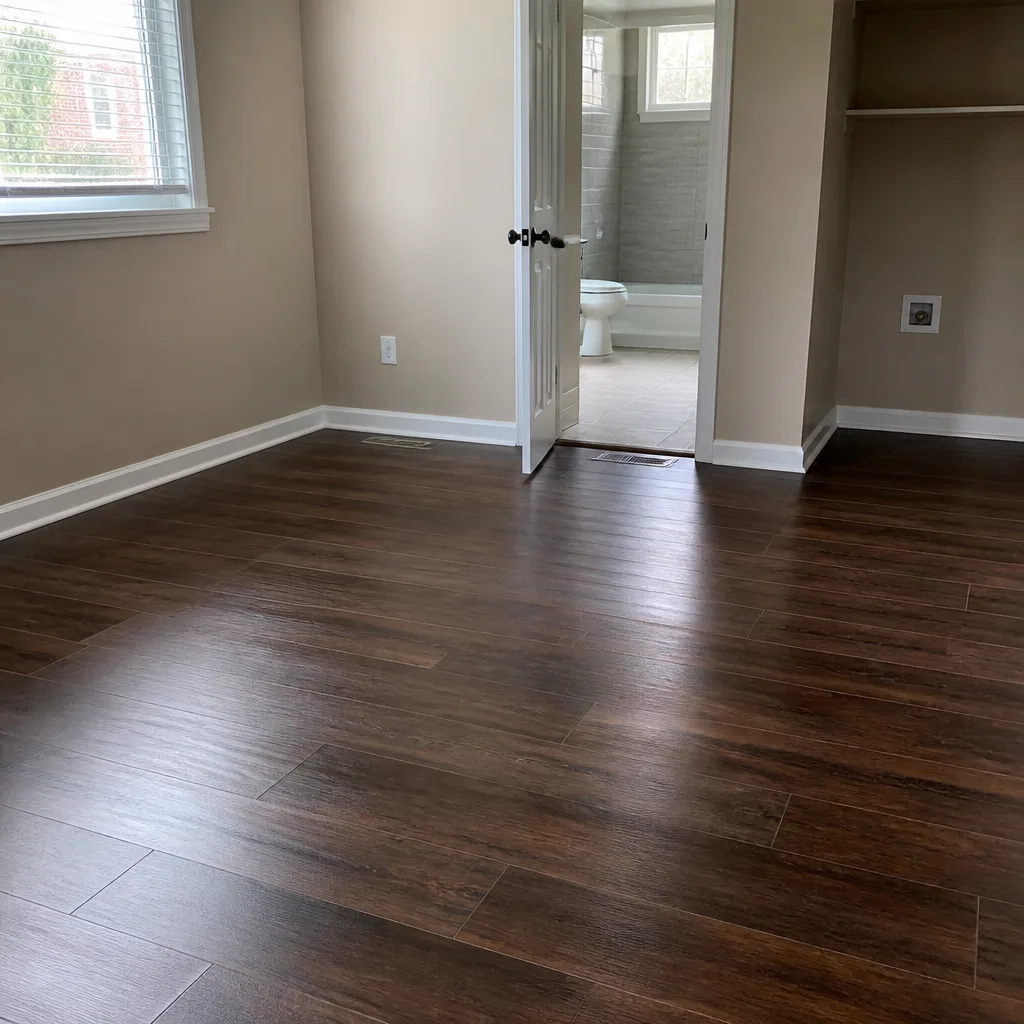

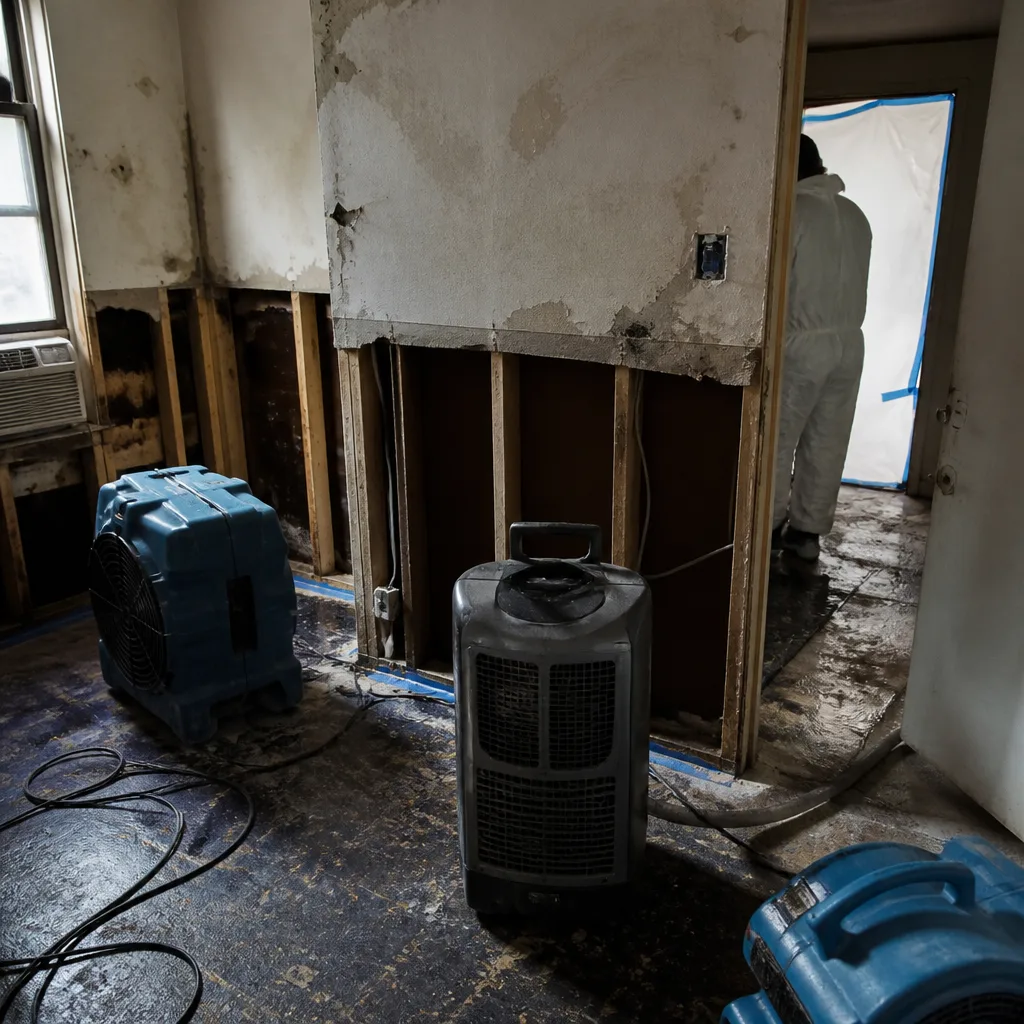 Before
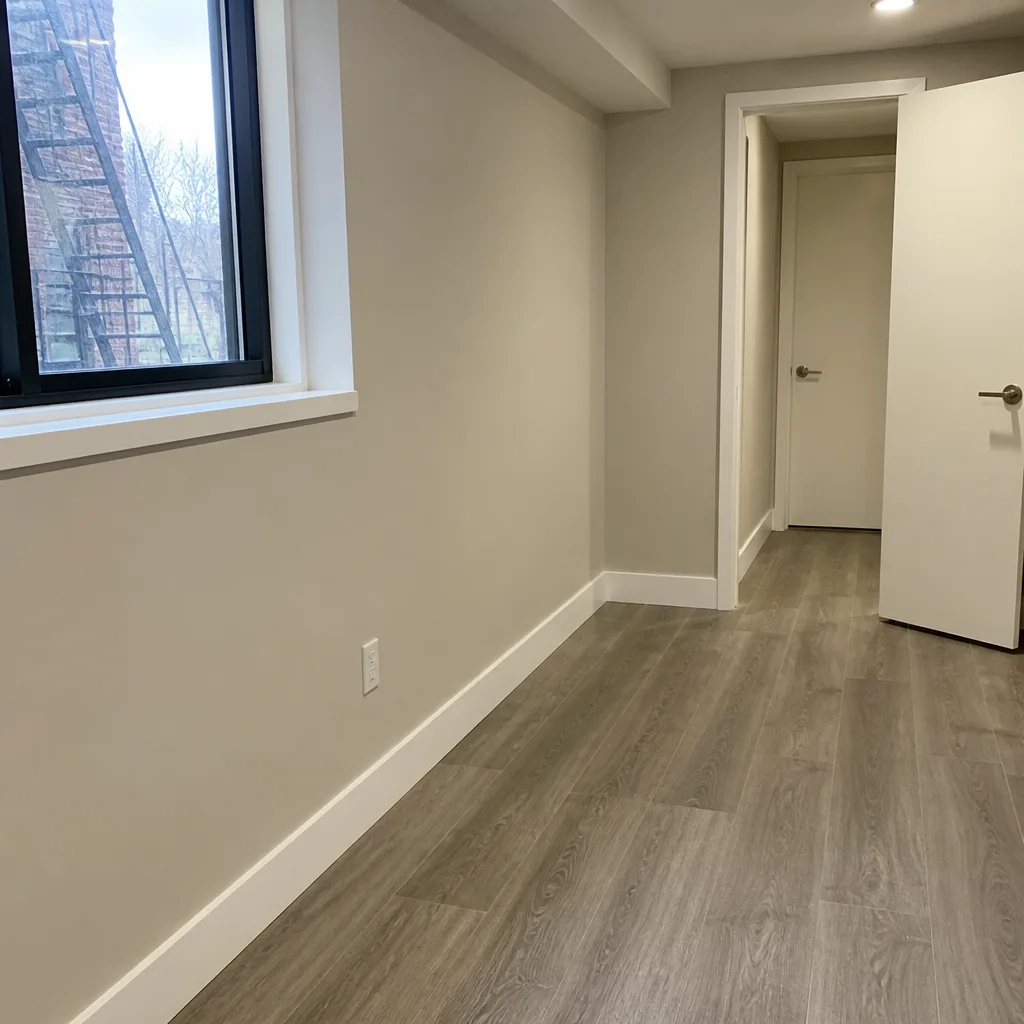 After
After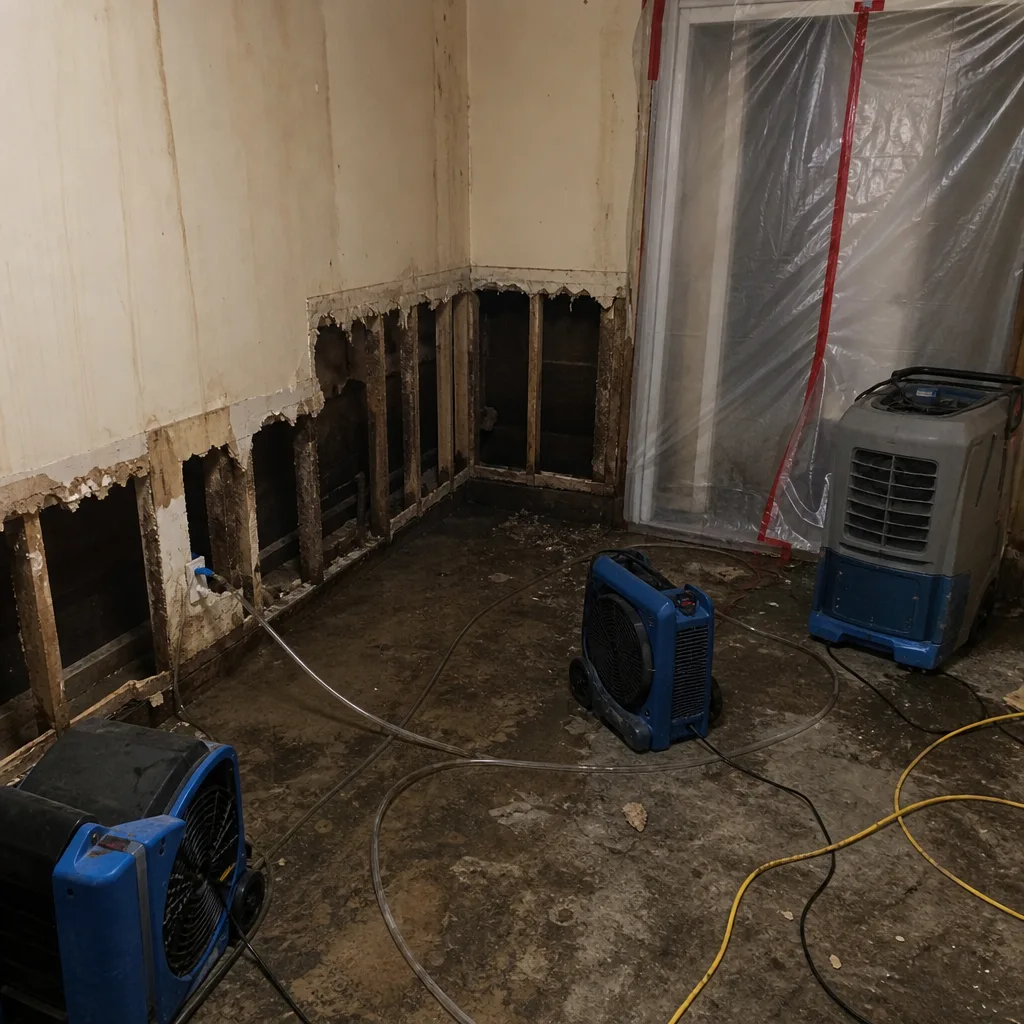 Before
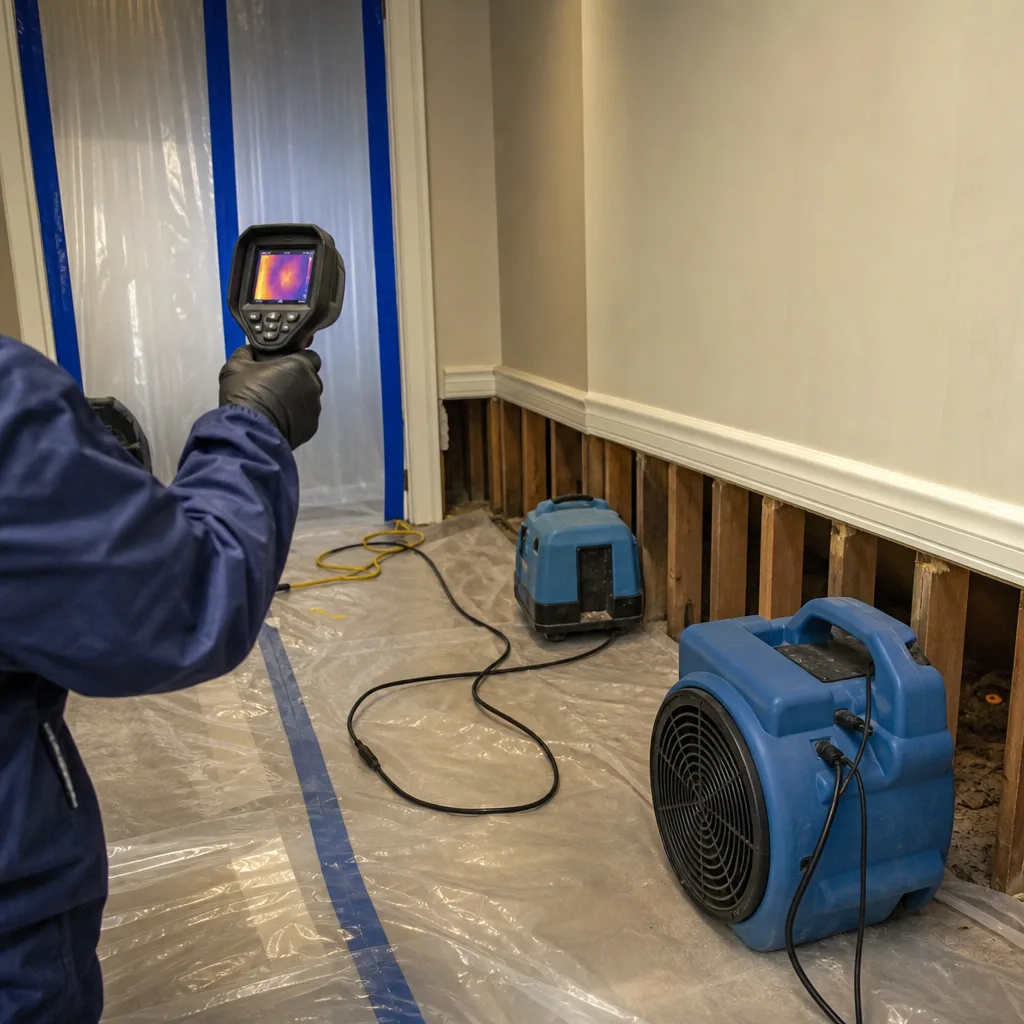 After
After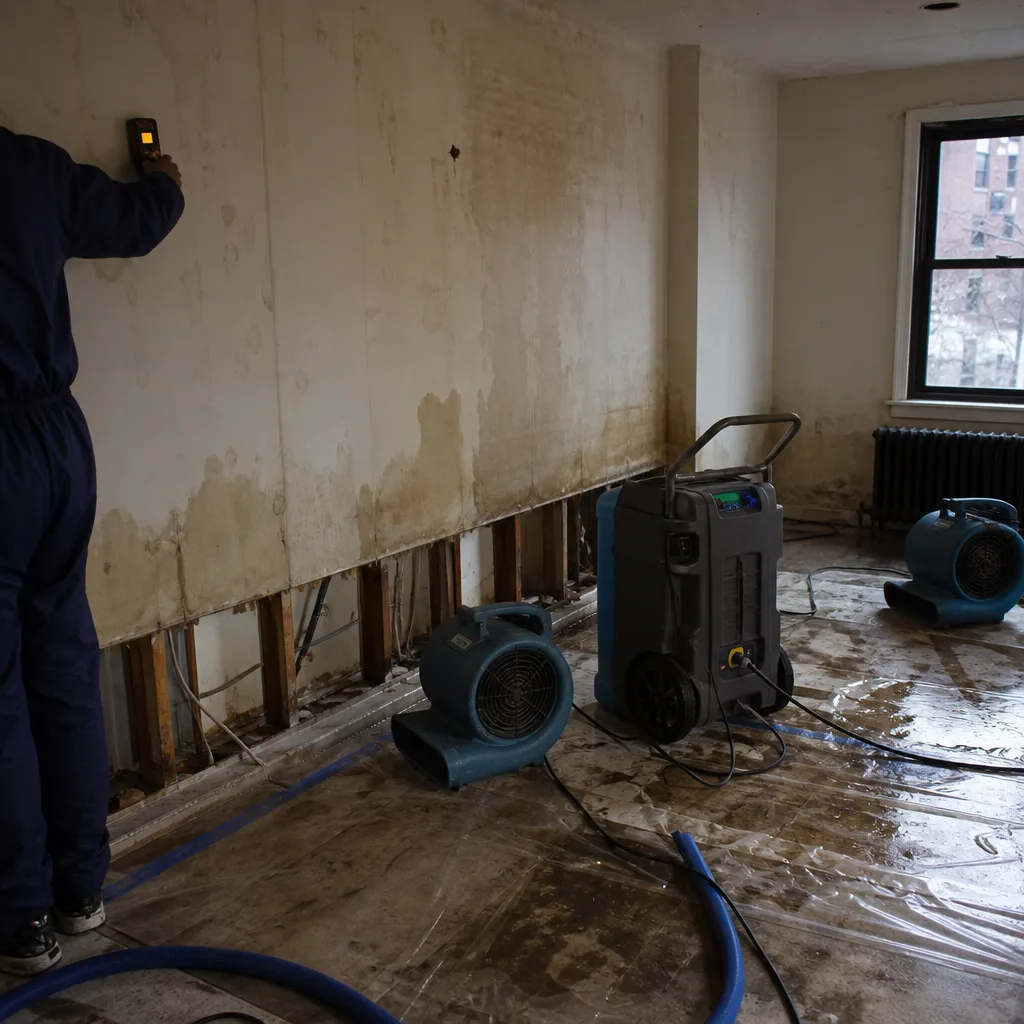 Before
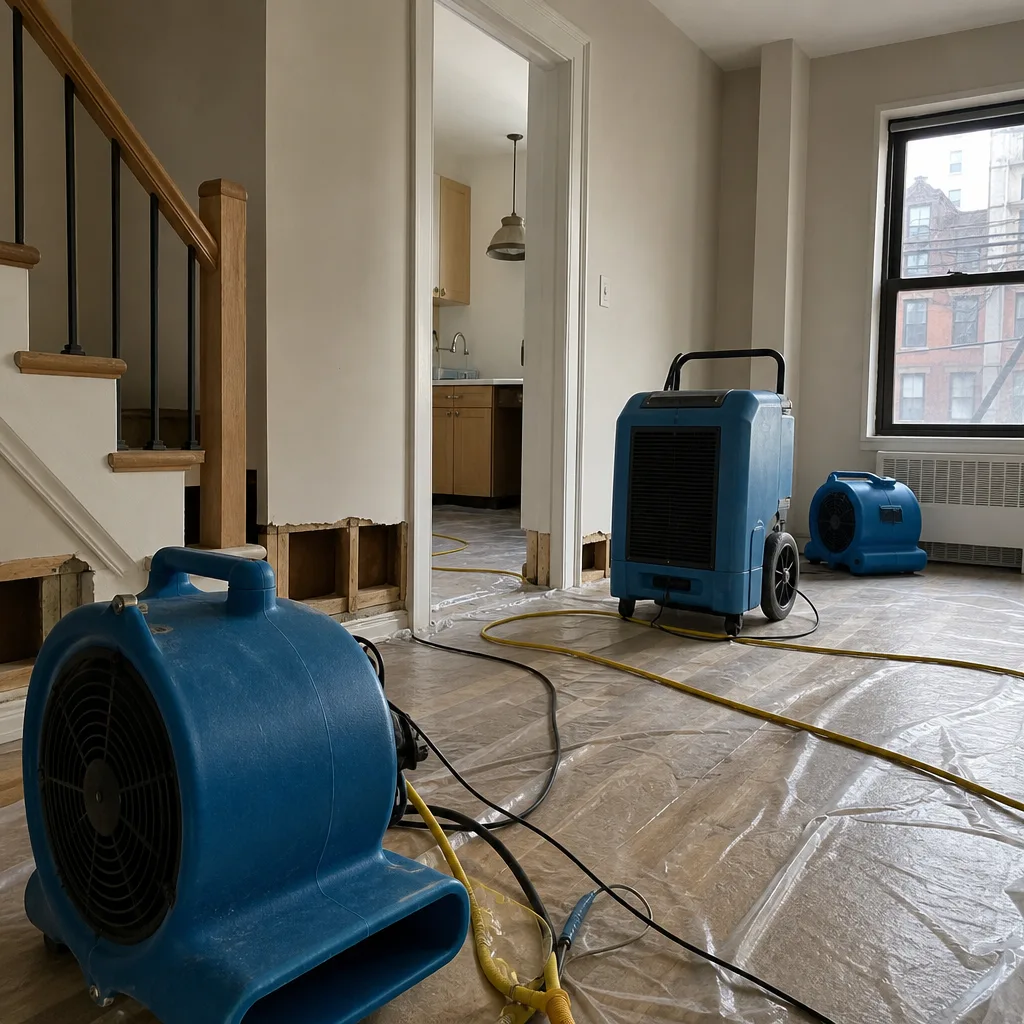 After
After24/7 Emergency Mold Remediation in Midtown Manhattan
Mold doesn’t wait for business hours in Midtown Manhattan, and neither do we. A live dispatcher answers at (716) 452-0798 around the clock, every day of the year, and a certified crew can be on-site fast enough to stop a spreading colony before it crosses into occupied suites or adjacent units. The first hour matters because mold releases spores within 24 to 48 hours of water exposure, and in Midtown’s stacked high-rises, those spores travel through shared HVAC returns, elevator shafts, and pipe chases faster than in any low-rise building.
We offer a free visual inspection so you know exactly what you’re dealing with before any work begins. No pressure, no scare tactics. Just a clear scope and a plan.
Understanding Mold Remediation Severity in Midtown Manhattan Properties
Mold severity in Midtown Manhattan follows a different pattern than in residential Queens or Brooklyn. The defining variable isn’t square footage, it’s verticality. When a chilled-water riser or sprinkler line fails on an upper floor of a 1920s office tower near Grand Central, water doesn’t pool in one basement. It cascades. It finds the path of least resistance through ceiling cavities, around cast-iron supply risers, and into wall chases, creating multiple isolated colonies across three, four, or five floors before the leak is even located.
The urban heat island effect compounds this. Midtown’s density traps heat, which keeps interior wall cavities warm enough to accelerate mold growth even in winter. A moisture reading that looks stable in a suburban basement benchmark can rebound in a Midtown high-rise wall cavity within days. Our technicians account for this drift when setting drying targets, using continuous moisture mapping rather than one-time spot checks. In pre-war buildings with original plaster and ACM, containment must be established before any wall is opened, because disturbing asbestos-containing plaster releases fibers alongside mold spores and halts the entire job.
Why Midtown Manhattan Property Owners Choose Floodline Restoration Co.
- 45-minute response commitment. We dispatch crews from our New York City office to Midtown addresses immediately, because a contained colony is a fraction of the cost of a dispersed one.
- A live person answers the phone 24/7. No automated systems, no voicemail at 2 a.m. You’ll speak with a dispatcher who can authorize a crew right then.
- IICRC-certified crews. Our technicians hold AMRT (Applied Microbial Remediation Technician) and WRT (Water Damage Restoration Technician) certifications, plus RIA and IFA training. They know how to read a moisture map in a commercial high-rise, not just a suburban basement.
- Free visual inspection. We won’t charge you to tell you whether you have a problem or not. That’s a square deal.
- Direct insurance billing. We coordinate with adjusters and carriers directly, so you never carry paperwork between parties.
- One team from containment to clearance. The crew that sets up the negative-air chamber is the same crew that performs the final clearance testing. No handoffs, no inherited work.
Our Mold Remediation Process
Inspection & Assessment
We start with a visual inspection, then use thermal imaging and hygrometers to locate hidden moisture behind walls and above ceilings. In pre-war Midtown buildings, this often means checking pipe chases and riser cavities that haven’t been opened in decades. You get a written scope before any containment begins.
Containment & Negative Air
We isolate the affected area with 6-mil polyethylene sheeting and establish negative air pressure using HEPA-filtered air scrubbers. This keeps mold spores from migrating to occupied suites, which matters enormously in multi-tenant Midtown buildings where a law firm or medical office sits directly below your loss.
Drying & Dehumidification
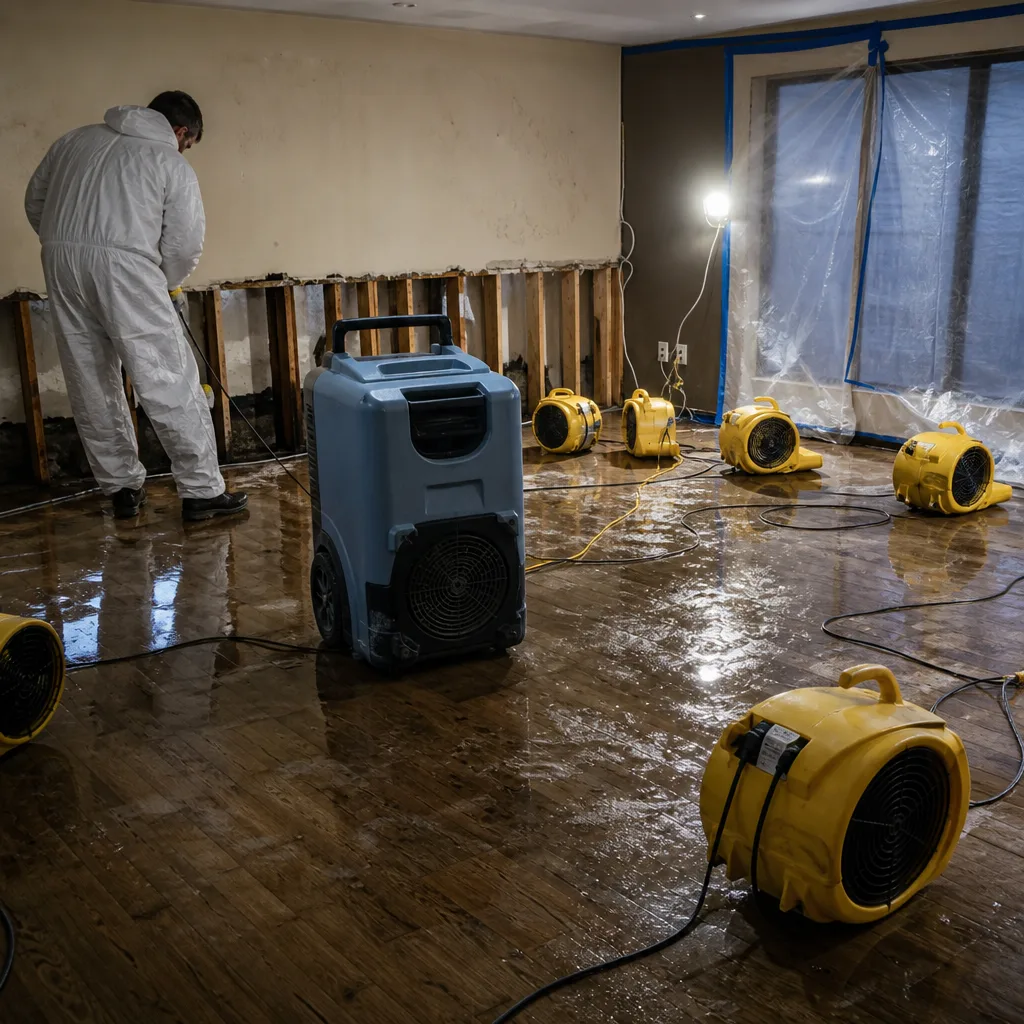
We set Dri-Eaz LGR dehumidifiers and Phoenix or XPOWER air movers on a structural drying plan, with daily moisture readings logged against a dry standard. In Midtown’s heat island, we extend drying logs and verify readings in wall cavities, not just on exposed surfaces.
Cleaning & Sanitization
Affected materials are HEPA-vacuumed, wire-brushed where applicable, and treated with antimicrobial agents appropriate to the surface. Porous materials that can’t be salvaged are removed and bagged under containment.
Air Quality Restoration
After physical removal, we run HEPA air scrubbers continuously and perform clearance testing to confirm spore counts have returned to baseline. This step is critical in Midtown high-rises where shared air systems can redistribute spores to floors far from the source.
Repairs & Restoration
We rebuild what was removed, matching materials to the building’s era, from 1930s lath-and-plaster to modern drywall systems. The same crew that opened the wall closes it, and the job isn’t done until the 90-Day Done Right Promise is in your hands.
Need Emergency Mold Remediation in Midtown Manhattan Now?
Crews minutes away, answering live 24 hours a day. The sooner we start, the less it costs.
Working With Your Insurance Company
Midtown mold claims are complex because they almost always involve multiple parties: the building owner, the commercial tenant, the condo board, and multiple insurers. We’ve handled enough of them to know that the claim lives or dies on documentation from the first hour. That’s why we photograph every affected surface before we touch it, log moisture readings daily, and produce a line-item scope that adjusters can process without back-and-forth.
If your policy covers mold remediation, we deal directly with your carrier. You don’t play messenger. We’ve written scopes for law firms near Rockefeller Center, luxury condos on Fifth Avenue, and medical offices along Madison Avenue, and we know how to present a Midtown loss so an adjuster in another state understands why the containment cost is what it is.
What We Provide Your Insurer
- Thorough documentation of the loss
- Photos of all damage, room by room
- Moisture readings and drying logs
- A detailed, line-item scope of work
- Direct coordination with your carrier
Built for Midtown Manhattan’s Loss Calendar
January and February bring deep freezes that burst supply risers in pre-war buildings where original cast-iron pipe has been in service since the Hoover administration. When a riser fails on the 14th floor, water travels down thirteen floors and into commercial tenant spaces below, and mold gets its start inside wall cavities before the leak is even isolated. Spring thaw stresses roof drains and exposed pipe chases on older buildings. Summer brings Con Edison steam-system condensation issues and sudden thunderstorm runoff into basement mechanical rooms. Fall is nor’easter season, with window and curtain-wall failures on high floors funneling rainwater into interior wall cavities across multiple floors. Every season in Midtown Manhattan produces a slightly different mold profile, and we’ve built our drying protocols around each one.
Mold Remediation Across Midtown Manhattan’s Neighborhoods
Each submarket in Midtown Manhattan throws a slightly different mold problem at us. Near the Garment District, we work in 1920s loft buildings where original wooden subfloors and tenant-specific buildouts mean containment must be phased around after-hours access windows dictated by building management. Around Grand Central and Park Avenue, the towers are newer but the tenant expectations are higher: a mold job in a white-shoe law firm can’t disrupt a deposition schedule, so we work overnights and weekends, and we document everything for facilities managers who answer to partners.
Over near Times Square, hotel properties present a different challenge. A moisture issue in one guest room can trigger brand-standard air-quality tests across an entire floor, and we’ve set containment in occupied hotels where guests never knew we were there. Down toward Murray Hill and the East 30s, residential co-ops in pre-war buildings often have steam riser condensation issues that create hidden mold colonies inside wall cavities, and those jobs require careful coordination with co-op boards and managing agents who want written scopes before any wall is opened. In the Plaza District west of Fifth Avenue, luxury condos demand discretion and tight schedules, and our uniformed, background-checked crews move through service elevators without disrupting the lobby.
Specialized Mold Remediation Services We Offer in Midtown Manhattan
Mold Inspection & Testing
A proper mold inspection in Midtown Manhattan starts with understanding the building’s plumbing history. We trace riser routes, check mechanical-room conditions, and use moisture mapping to locate colonies that air sampling alone would miss. If you need pre-renovation testing or post-remediation clearance, we provide documented results your board or insurer can act on.
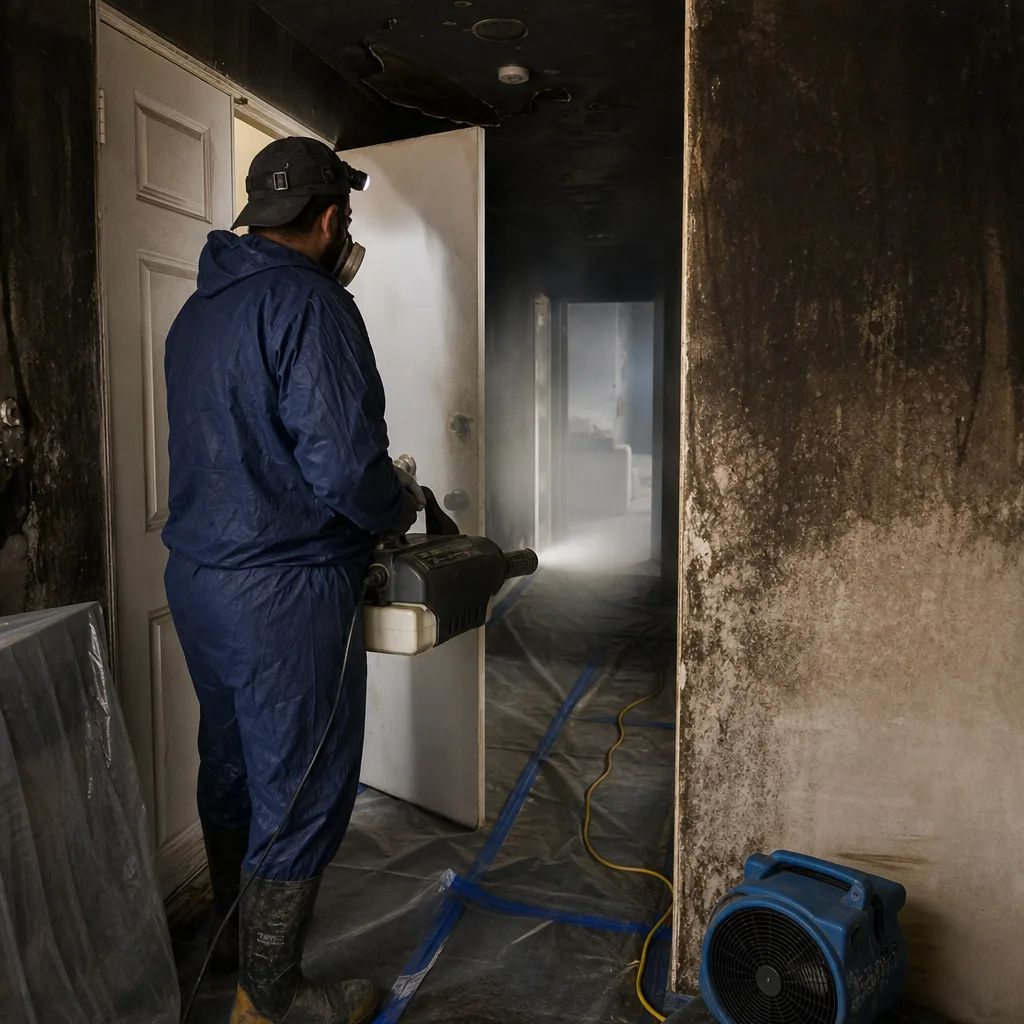
Mold Removal
For Midtown buildings, mold removal is rarely a single-room job. We contain the affected area, remove contaminated materials, and document everything in a way that supports your insurance claim. Our crews are trained to work in occupied commercial buildings without disrupting the tenants around you.
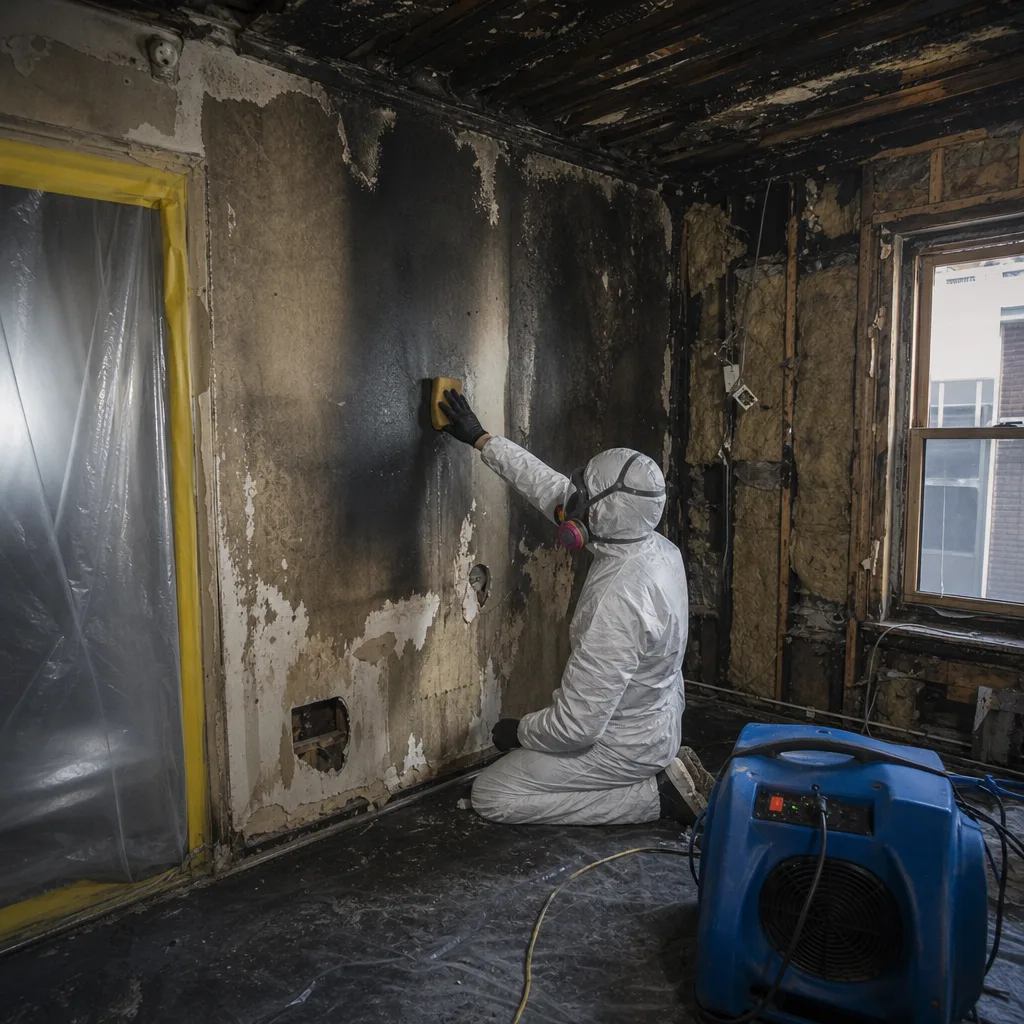
Black Mold Remediation
Stachybotrys and other toxigenic molds require the highest level of containment and PPE. We handle black mold in basements, mechanical rooms, and behind failed façade seals with full negative-air containment and HEPA filtration. No shortcuts, no exposed crews, no compromised neighbors.
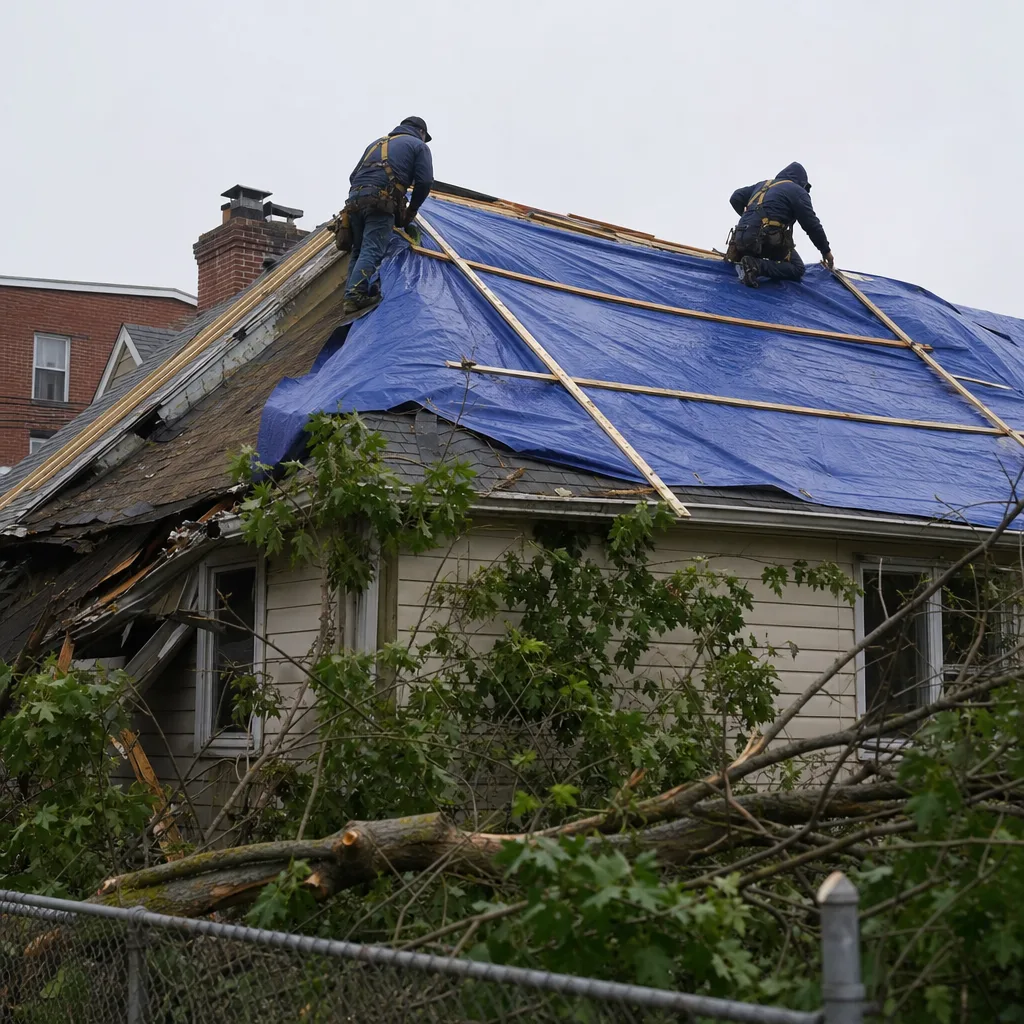
Air Quality Restoration
After mold removal, we run HEPA air scrubbers until spore counts test clean. In Midtown high-rises with shared HVAC systems, this step matters more than anywhere else, because spores that escape containment travel through the building’s air distribution faster than they would in a single-family home.
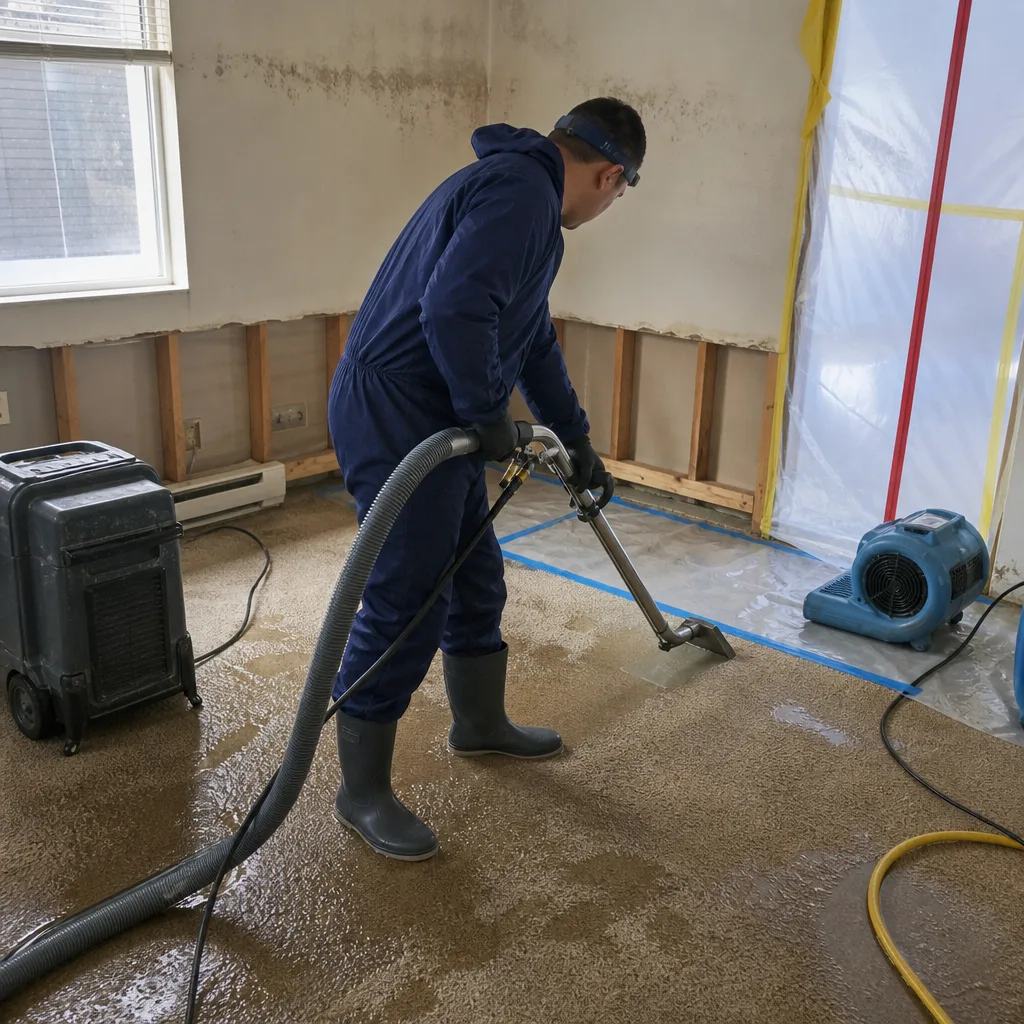
Moisture & Humidity Control
Midtown’s district steam system puts moisture where most buildings don’t have it: inside wall cavities and mechanical chases. We install and calibrate dehumidification systems, check condensation points on steam piping, and set moisture-control protocols that building engineers can maintain after we’re gone.
What happens when you call
- 1
A real person answersNo phone trees - you reach a local pro.
- 2
You get an upfront price rangeHonest numbers before anyone is dispatched.
- 3
A background-checked tech heads outLicensed & insured, dispatched right away.
- 4
You approve before work beginsNothing starts until you say go.
Mold Remediation Costs in Midtown Manhattan, NY
Mold remediation in Midtown Manhattan typically runs $2,500 to $8,500 for a contained single-room job in a residential unit, and $12,000 to $45,000 or more for multi-floor commercial containment jobs, depending on how many floors are affected and whether asbestos abatement is required. A straightforward inspection with moisture mapping usually costs $350 to $700. Full-scale black mold remediation in a pre-war building with ACM present can exceed $50,000 when the affected area spans multiple floors.
What moves the price in Midtown specifically: vertical accessibility (upper-floor jobs cost more), after-hours work windows required by building management, asbestos testing and abatement protocols in pre-war buildings, and the number of tenant spaces requiring containment and clearance testing. Insurance covers many of these costs when the mold resulted from a covered water event, which is why we document everything from the first visit. The free visual inspection is the way to get a firm number, and we give it to you in writing before any work starts. Call (716) 452-0798 and we’ll set one up.
We Also Serve Cities Near Midtown Manhattan
Our crews cover Midtown Manhattan and the surrounding borough areas, including Long Island City, Greenpoint, Williamsburg, and Murray Hill. If your building is in one of these neighborhoods, the same certified team and the same 90-Day Done Right Promise applies. Our Mold Remediation team handles both residential and commercial properties across the full metro area.
Serving Midtown Manhattan, NY - Our Local Coverage Area
We’re based in the Midtown Manhattan area and know this community well. Use the map below to see our service coverage - if you’re nearby, we can almost certainly help.
Midtown Manhattan Mold Remediation Questions, Answered
How does Midtown Manhattan’s district steam network complicate mold remediation in office towers?
Con Edison’s district steam system, the largest in the US, delivers high-pressure steam through a network that feeds many of Midtown’s commercial buildings. When a building steam connection or interior distribution line fails, it creates a wet-heat moisture pattern inside wall cavities and insulation that accelerates mold growth faster than a standard water leak. Our crews know how to trace these steam-loss patterns, document them for insurers, and set containment that addresses the condensation inside the cavity, not just the visible surface.
Do you handle multi-tenant mold containment in occupied Midtown high-rises without disrupting business?
Yes. We’ve set full containment overnight in active office towers near the Garment District while law firms operated on the floors below. We work after-hours and on weekends, use service elevators and secondary entrances, and keep our equipment footprint tight enough that building management and tenants barely notice the work is underway.
How do you address category 3 water damage from a sewage backup in a century-old Midtown basement?
Category 3 water carries pathogens and requires full containment, PPE, and removal of all affected porous materials under negative air. In century-old Midtown basements, that often means dealing with original brick, stone foundations, and decades of layered buildouts. We remove, sanitize, dry, and rebuild to a clean standard, and we document every step for your insurer.
What should a Midtown luxury condo board expect during mold remediation after a sprinkler discharge?
Expect a written scope before any work begins, a containment plan that keeps residents and common areas safe, daily moisture readings, and direct coordination with the building’s insurance carrier. We’ve worked in luxury condos along Fifth Avenue and the Plaza District, and we know boards need discretion, documentation, and a tight schedule. That’s what we deliver.
Can you prevent mold after a façade leak in a modern glass curtain-wall tower?
Yes. Façade seal failures in curtain-wall towers funnel rainwater into interior wall cavities where it can sit for weeks before anyone sees staining. We use thermal imaging to trace the water path, dry the cavity from the interior, and work with the building’s engineer to address the exterior seal so the leak doesn’t return. The moisture log we hand over shows the dry standard was met, in writing.
How fast can someone actually get to my Midtown Manhattan building?
We commit to a 45-minute response from our New York City office to Midtown addresses, 24/7. A live dispatcher answers the phone at (716) 452-0798 and can have a certified crew on-site the same visit.
Will my insurance cover mold remediation in Midtown Manhattan?
If the mold resulted from a covered water event, such as a pipe failure or sprinkler discharge, many policies cover the remediation cost. We photograph everything before we touch it, log moisture readings daily, and bill your carrier directly. You won’t have to play messenger between us and an adjuster.
What should I do in the first 30 minutes after discovering mold in a Midtown property?
Shut off the water source if you can identify one, keep people out of the affected area, and don’t disturb the mold by wiping or vacuuming it, which releases spores into the air. Call (716) 452-0798 and speak with a live dispatcher. We’ll walk you through what to do until the crew arrives.
Written by Curt Bowman, Owner at Floodline Restoration Co., serving Midtown Manhattan and the greater NYC metro area since 2010.