
Free visual inspection and a written scope of work before any mitigation begins - photos, moisture readings, and drying logs go in your claim file
The scope we write is the scope we bill. Anything new gets shown to you, in writing, before we touch it.
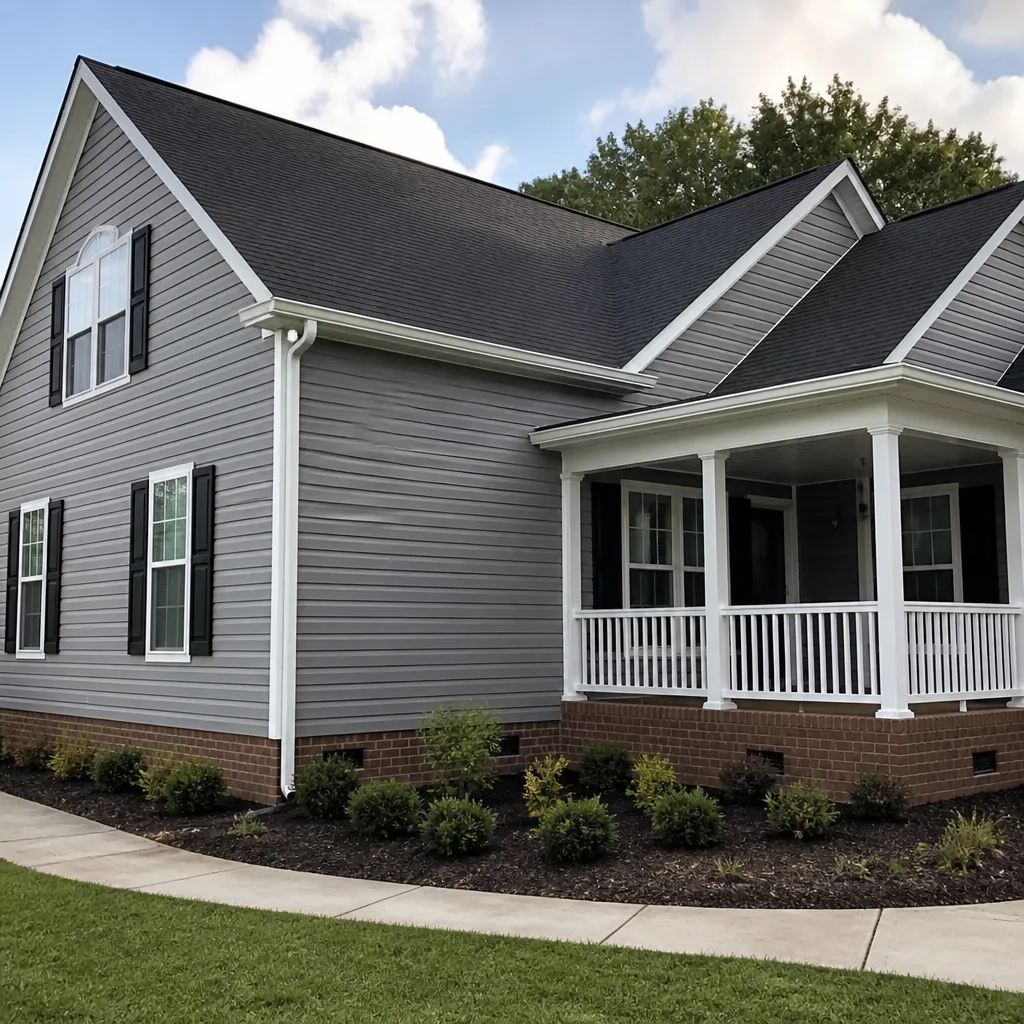
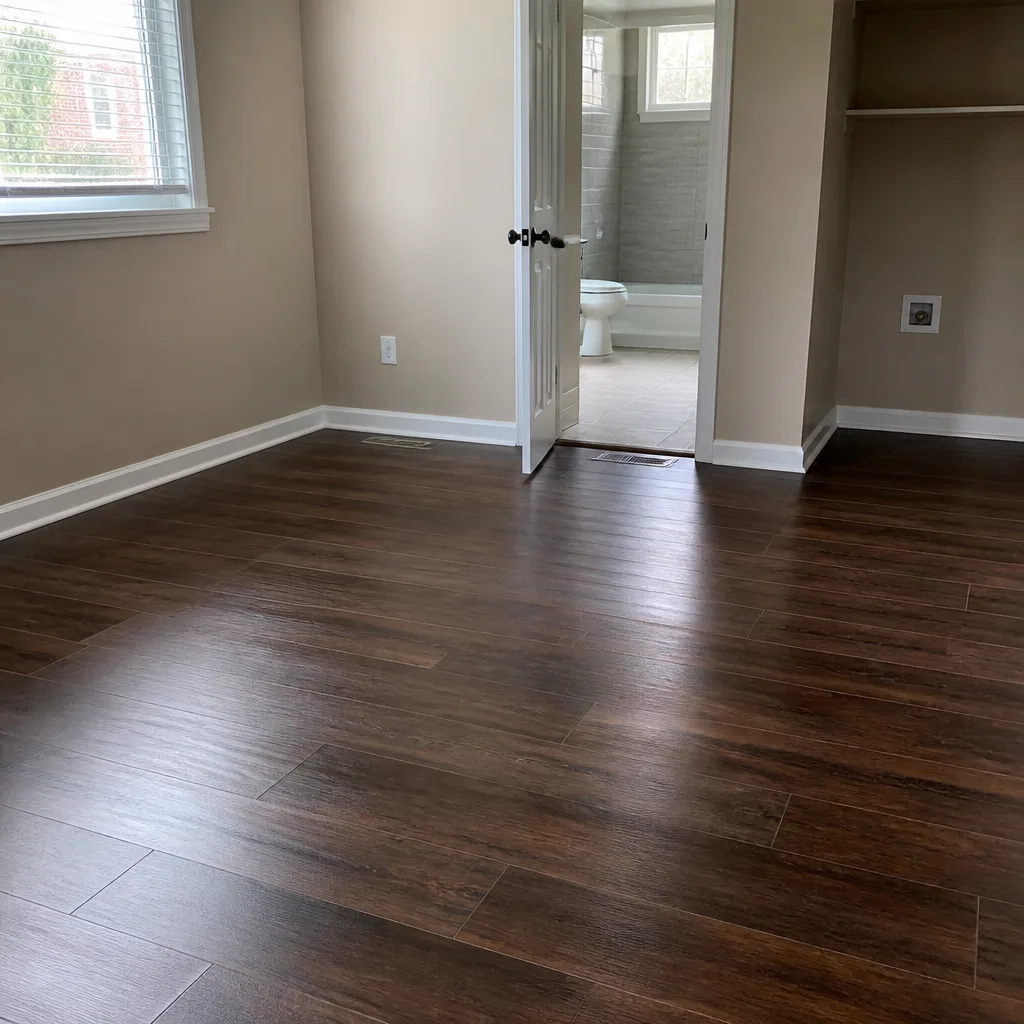

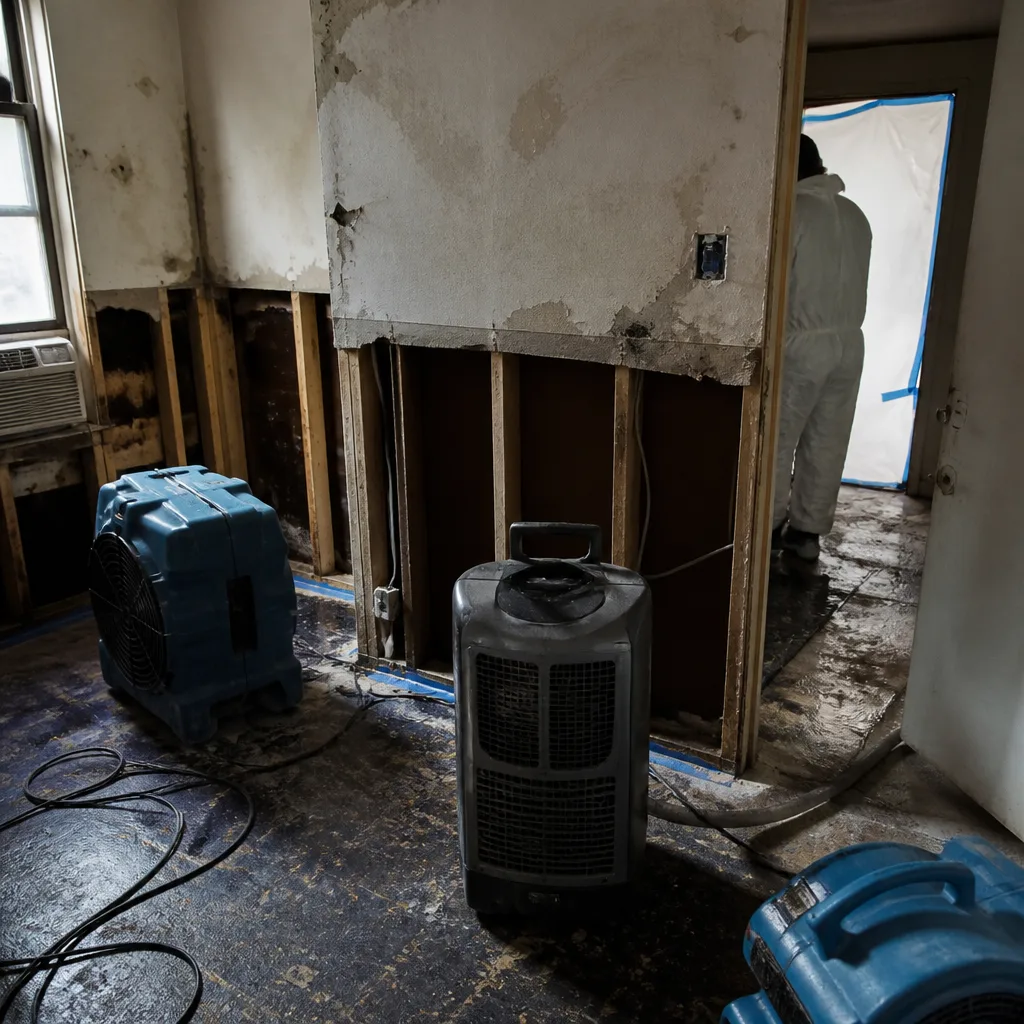 Before
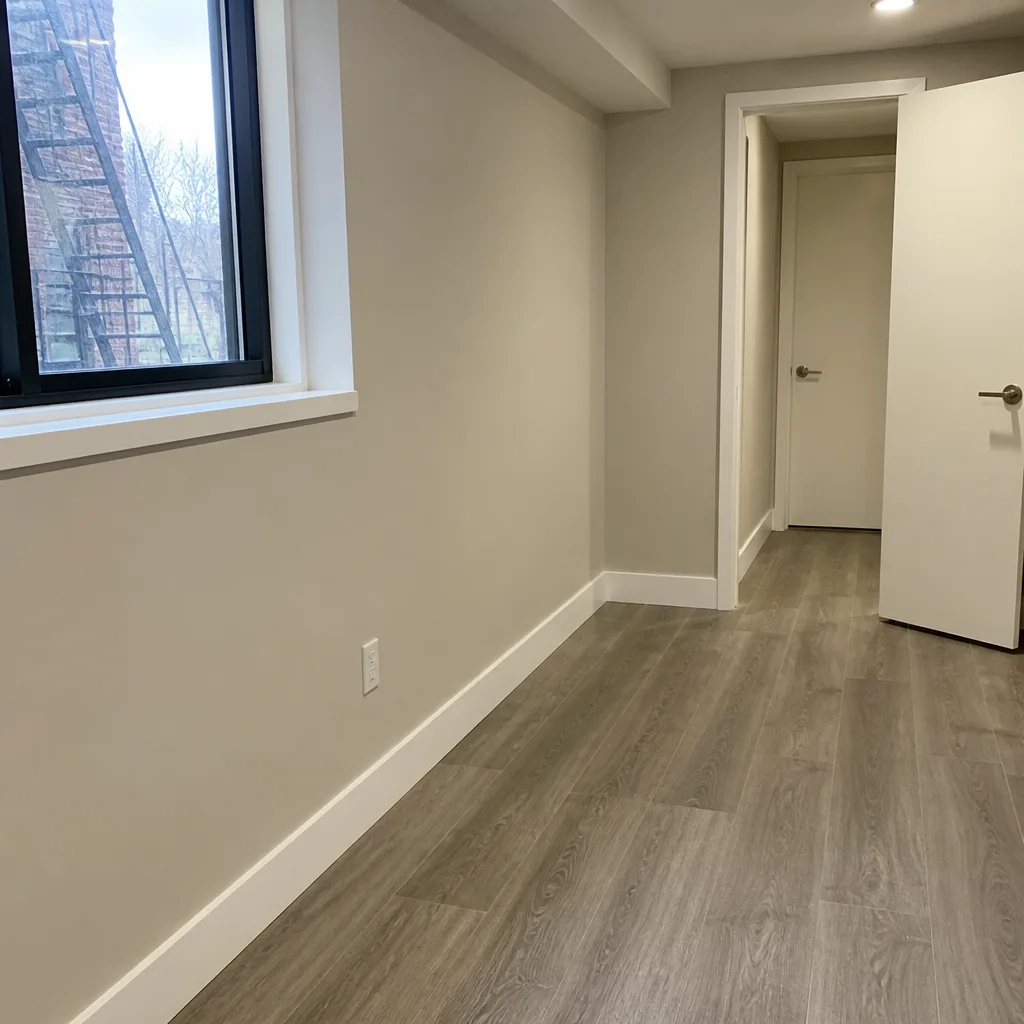 After
After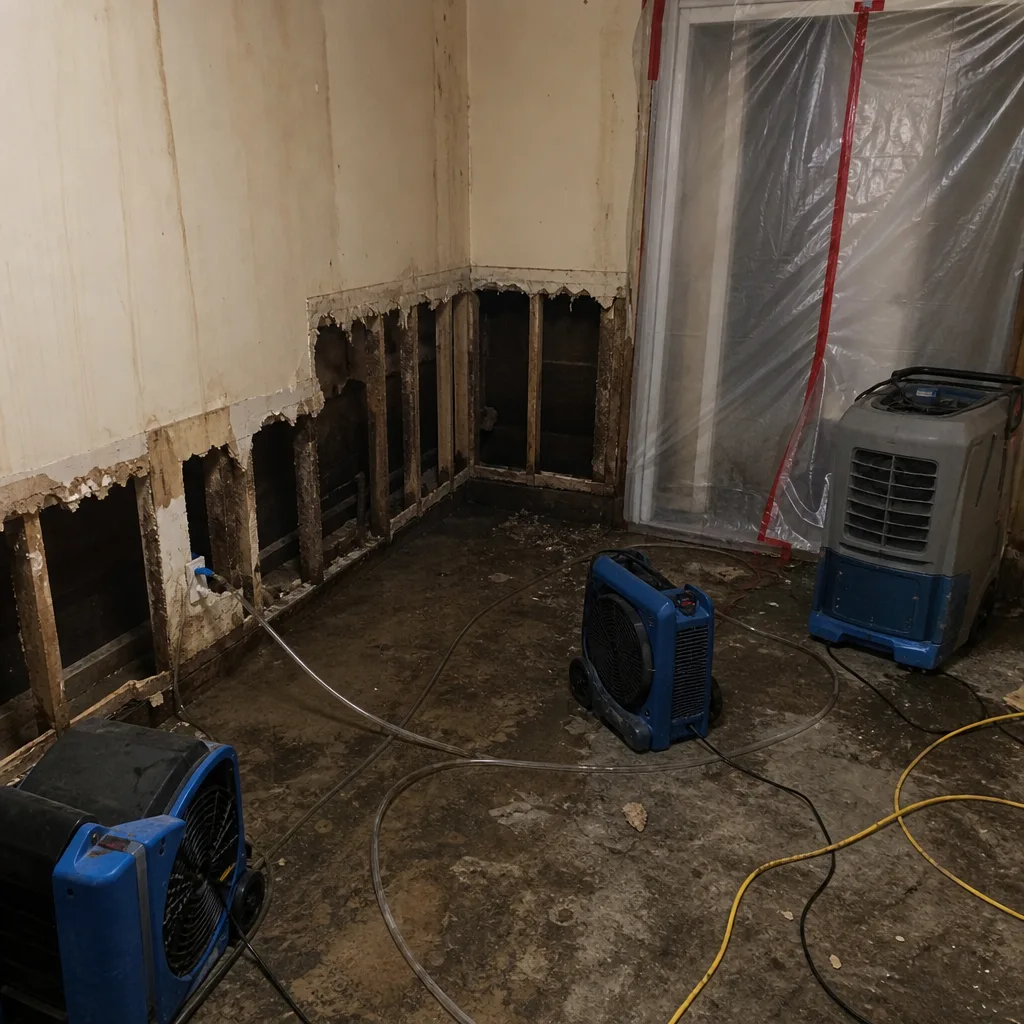 Before
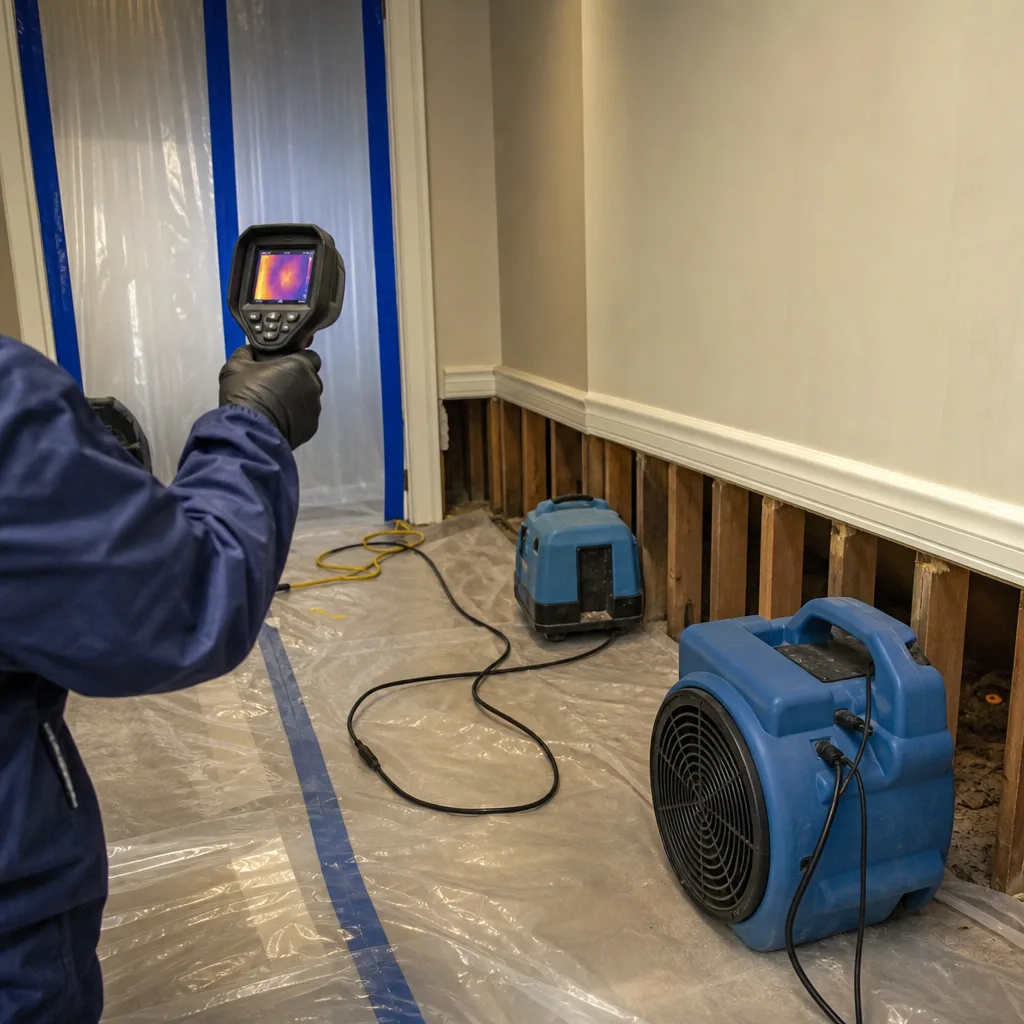 After
After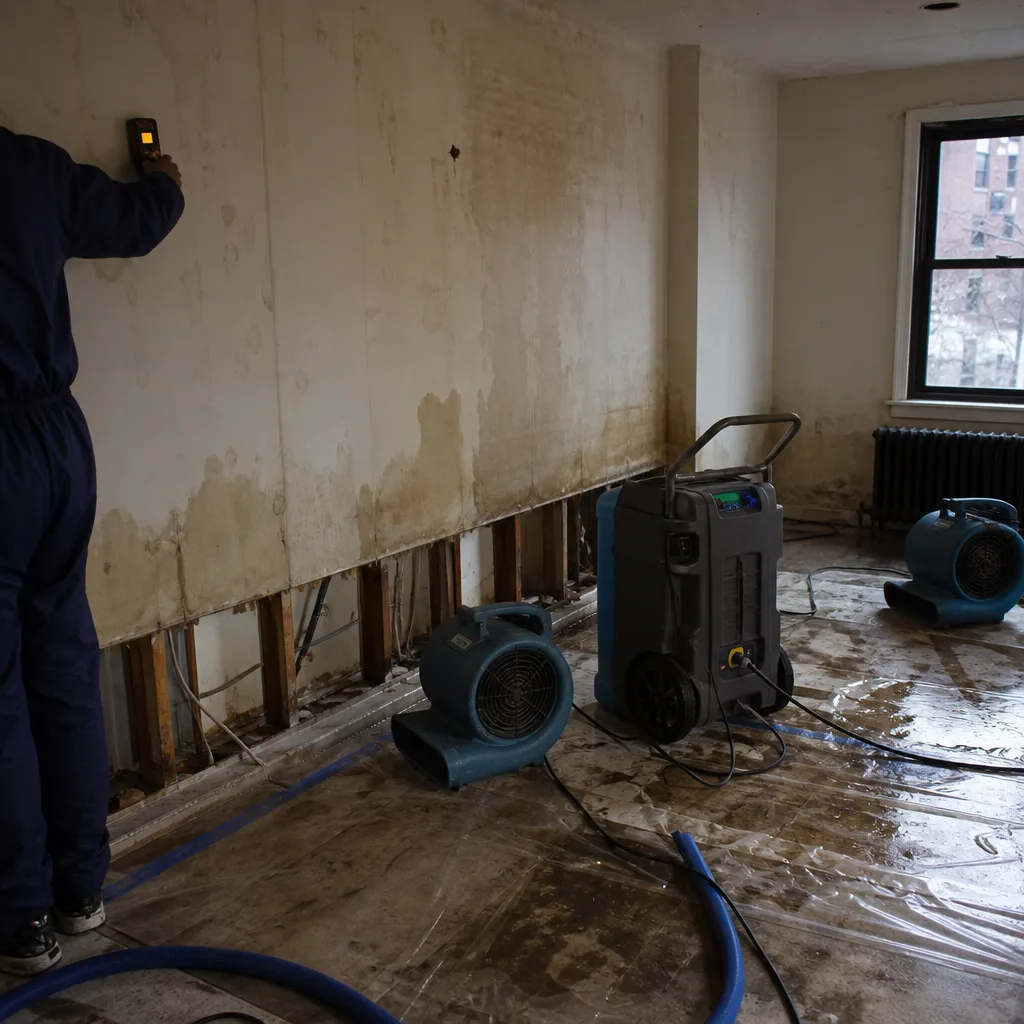 Before
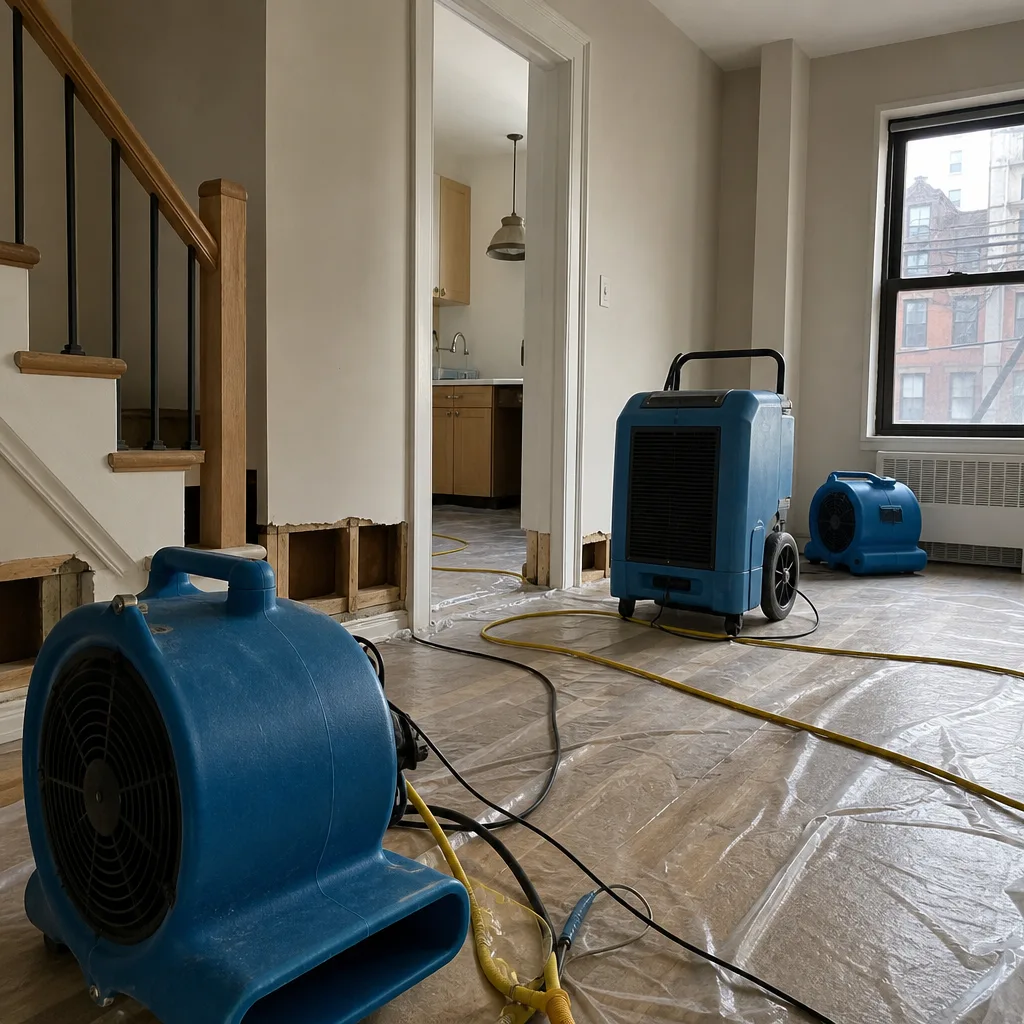 After
After24/7 Emergency Fire & Smoke Damage Restoration in Midtown Manhattan
Fire and smoke damage in Midtown Manhattan demands immediate action. Every hour that soot sits on marble, brass, or custom millwork, it etches deeper into finishes and drives odor further into wall cavities. Floodline Restoration Co. answers live at (716) 452-0798 around the clock, seven days a week, and dispatches certified crews directly into Midtown Manhattan. The first hour after the fire department leaves is when cleanup decisions matter most: what gets wiped, what gets packed out, and where the smoke actually traveled. A free visual inspection gets us on site fast, and our team brings the 90-Day Done Right Promise in writing on every job we start. When you call, a real person picks up, not a recording, and a crew is moving toward your building that same visit.
Understanding Fire & Smoke Damage Restoration Severity in Midtown Manhattan Properties
Smoke is not one thing. In Midtown Manhattan’s building stock, restoration crews deal with three distinct soot signatures: dry soot from high-oxygen fires, wet soot from smoldering low-heat burns that leaves a greasy film, and protein soot from kitchen fires that is nearly invisible but bonds to painted surfaces and lacquered cabinetry. Each requires a different cleaning agent and different pressure. Smoke also migrates strangely in pre-war high-rises: the century-old riser chases, elevator shafts, and transom gaps that give these buildings their character also act as vertical flues, carrying soot from a third-floor event up into penthouses twelve floors above. Add the dense urban heat island effect in Midtown, and surface moisture readings run higher than suburban baselines, which confounds technicians who have never worked in this kind of vertical stack. Knowing the soot type, the migration path, and the building’s age-specific materials determines whether you need a targeted clean or a full contents pack-out.
Why Midtown Manhattan Property Owners Choose Floodline Restoration Co.
- 45-minute response commitment: Our crews stage from the New York City office and reach Midtown addresses fast, often in under 45 minutes for emergency board-up and initial assessment.
- 24/7 live answer: A real dispatcher picks up at two in the morning, every time. No automated system. No “leave a message and we’ll call you back.”
- Certified technicians: Our crews train to IICRC standards including FSRT (Fire & Smoke Restoration Technician) and OCT (Odor Control Technician), and carry RIA and IFA certifications.
- Free visual inspection: We assess damage, map the smoke path, and document everything before any scope is proposed. No cost, no obligation.
- Direct insurance billing: Homeowners and building managers never play messenger between us and the carrier. We bill the insurer directly and document every step.
- One crew from first extraction to final rebuild: The same team that boards up on day one handles soot removal, drying, and structural repair. No mid-job handoff to a crew you have never met.
Our Fire & Smoke Damage Restoration Process
Inspection & Assessment
We arrive, walk the entire loss area, and map the smoke path using thermal imaging and moisture meters. In Midtown high-rises, this includes checking riser chases, elevator shafts, and adjacent floor cavities where smoke travels undetected. We also complete mandatory ACM testing protocol in pre-war buildings before any equipment goes in.
Stabilization & Board-Up
For structural fire damage or broken windows on upper floors, we secure the space immediately. Board-up and tarping protect against weather, vandalism, and further smoke intrusion while the claim is documented.
Soot & Residue Removal
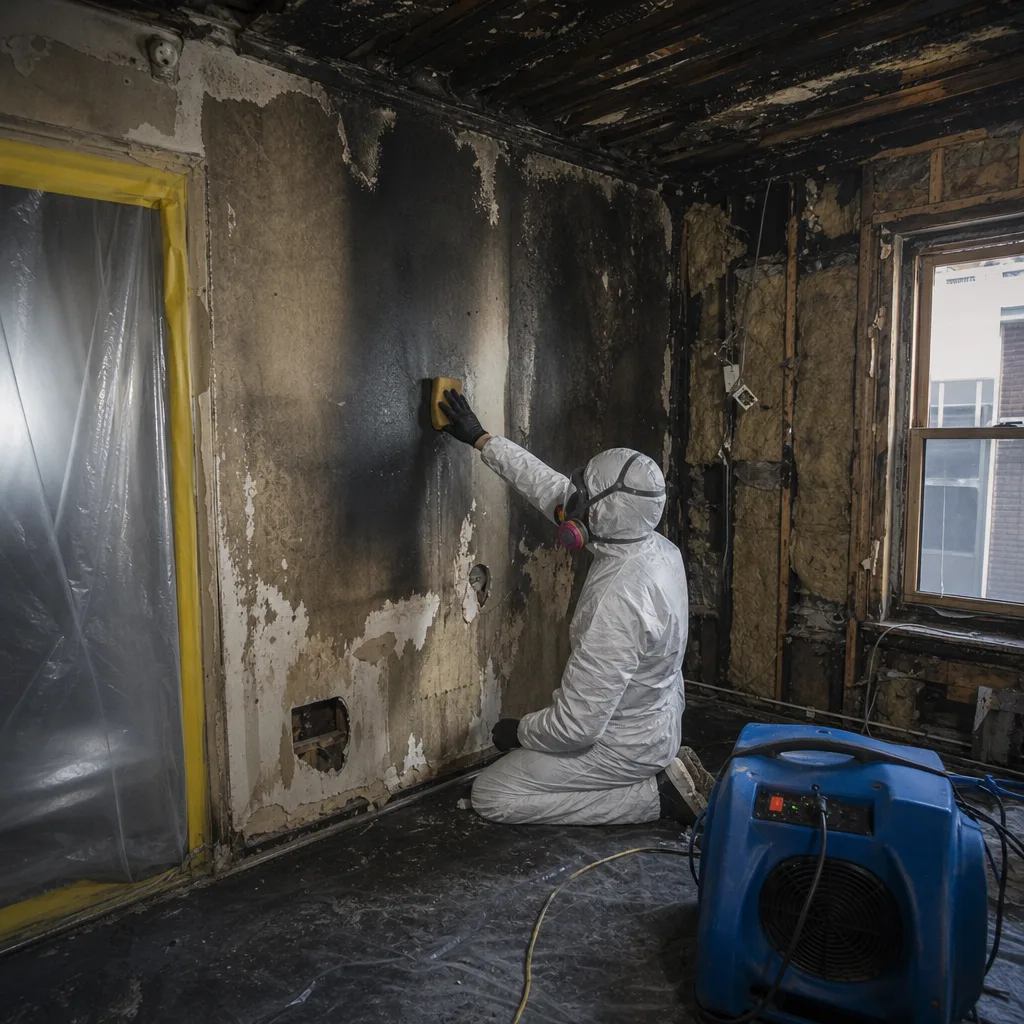
We clean surface soot using methods matched to the residue type and substrate, from dry-chem sponge on porous plaster to wet compounding on lacquered millwork. The goal is to remove soot without driving it deeper into finished surfaces.
Odor Removal & Deodorization
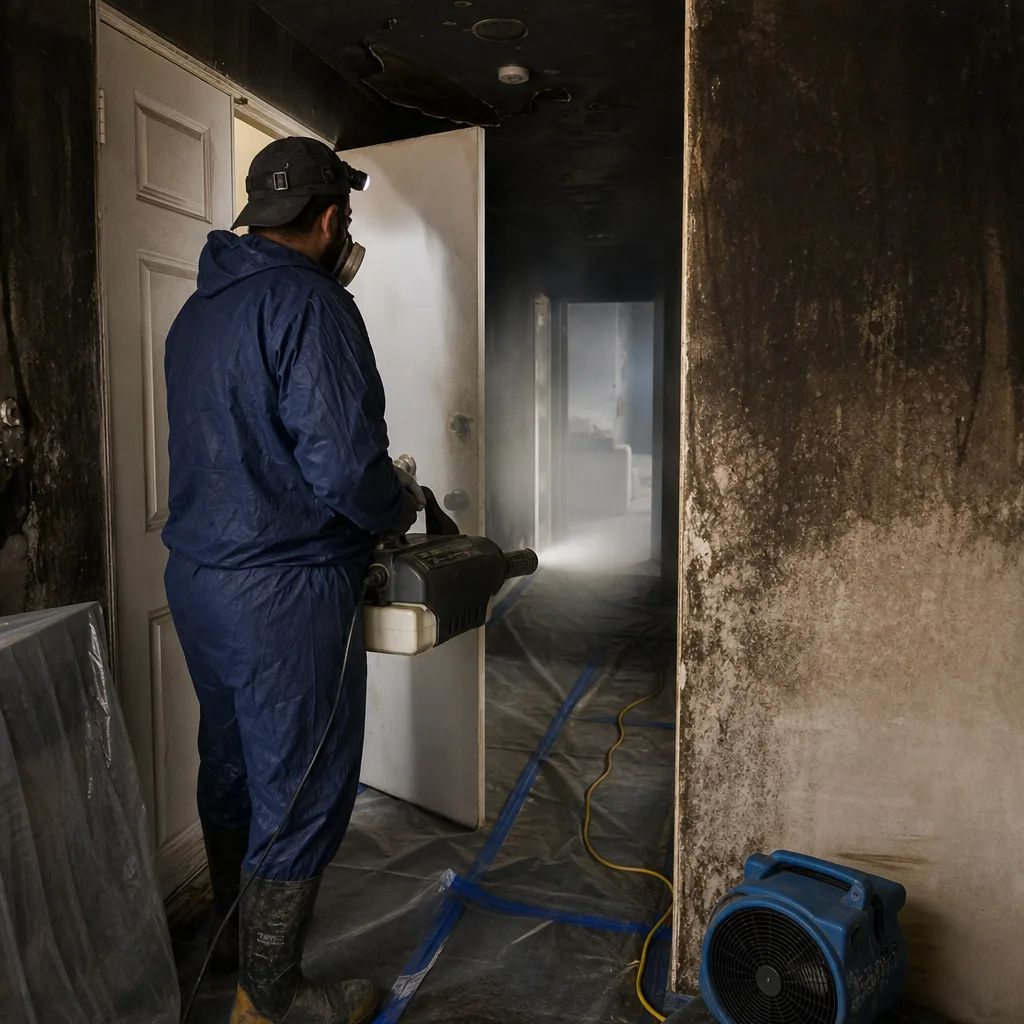
Smoke odor is not a surface problem; it lives in wall cavities, ductwork, and soft goods. We deploy hydroxyl generators, thermal fogging, and ozone where appropriate, matched to the building’s ventilation constraints and occupant needs.
Contents Cleaning & Pack-Out
High-value contents from law firms, luxury residences, and landmark lobbies get packed out, inventoried, and cleaned at our facility using ultrasonic and immersion methods. Every item is photographed and logged before it leaves the building.
Structural Repairs & Restoration
The final phase is reconstruction: framing, drywall, paint, flooring, and finish restoration that returns the space to pre-loss condition. The same crew that started the job finishes it, backed by the 90-Day Done Right Promise in writing.
Need Emergency Fire & Smoke Damage Restoration in Midtown Manhattan Now?
Crews minutes away, answering live 24 hours a day. The sooner we start, the less it costs.
Working With Your Insurance Company
In Midtown Manhattan, a single fire can involve multiple tenants, multiple carriers, and a building management policy layered on top. That complexity is where documentation decides the outcome. From the first hour, we photograph everything room by room, log moisture readings, map the smoke path, and note any pre-existing conditions that could be confused with new damage. Our estimates use industry-standard line items that adjusters recognize. We speak directly with your adjuster, provide them our scope in writing, and send them every drying log and photo as it is generated. You do not wait on hold with your carrier and then repeat what we said. We handle that.
What We Provide Your Insurer
- Thorough documentation of the loss
- Photos of all damage, room by room
- Moisture readings and drying logs
- A detailed, line-item scope of work
- Direct coordination with your carrier
Built for Midtown Manhattan’s Loss Calendar
Fire loss in Midtown Manhattan follows a pattern tied to the city’s infrastructure and the age of its buildings. January and February bring deep-freeze stress to electrical systems in buildings where original wiring still runs behind plaster walls, and space heaters get pushed past their limits in converted offices and older residential units. Spring thaw exposes roof-drain failures in flat-roofed pre-war towers, and water meeting live electrical panels starts fires that produce a specific wet-soot signature. Summer brings HVAC overloads, server-room fires in commercial floors, and the occasional manhole or transformer event near Con Edison infrastructure that fills adjacent buildings with acrid smoke without an actual fire on the premises. Nor’easter season adds wind-driven rain through aging façade seals, and every one of these seasons produces a distinct damage profile. Our crews have worked all of them in Midtown buildings, and we know from the first walkthrough what the season and the building type are telling us.
Fire & Smoke Damage Restoration Across Midtown Manhattan’s Neighborhoods
Midtown Manhattan is not one building type; it is a patchwork, and restoration response changes from corridor to corridor. Around Grand Central and the Murray Hill edge, you get brick-and-limestone office towers from the 1920s with original riser chases that smoke loves. Times Square and the theater district mix century-old landmark theaters with newer glass towers, and working in an active theater means coordinating after-hours work windows with stage schedules. Hell’s Kitchen still holds walk-up tenements and converted loft buildings where smoke travels horizontally through shared cocklofts, affecting four apartments at once. The Diamond District on 47th Street and the high-end residential towers along Billionaires’ Row each demand sealed containment and negative air pressure to protect adjacent units and occupied office floors. Our crews know which routes move fastest at 2 a.m., which buildings require freight-elevator scheduling, and which co-op boards need notification before equipment crosses the lobby marble.
Specialized Fire & Smoke Damage Restoration Services We Offer in Midtown Manhattan
Smoke & Soot Removal
Midtown’s pre-war co-ops and landmark lobbies are filled with surfaces that do not forgive heavy-handed cleaning: original bronze elevator doors, marble wainscoting, lacquered millwork, silk wallcoverings. We match cleaning method to the soot type and the substrate, using dry-chem sponges on porous plaster and controlled wet compounding on painted surfaces. The goal is removal without etching, and that restraint is the difference between a restored lobby and a repainted one.
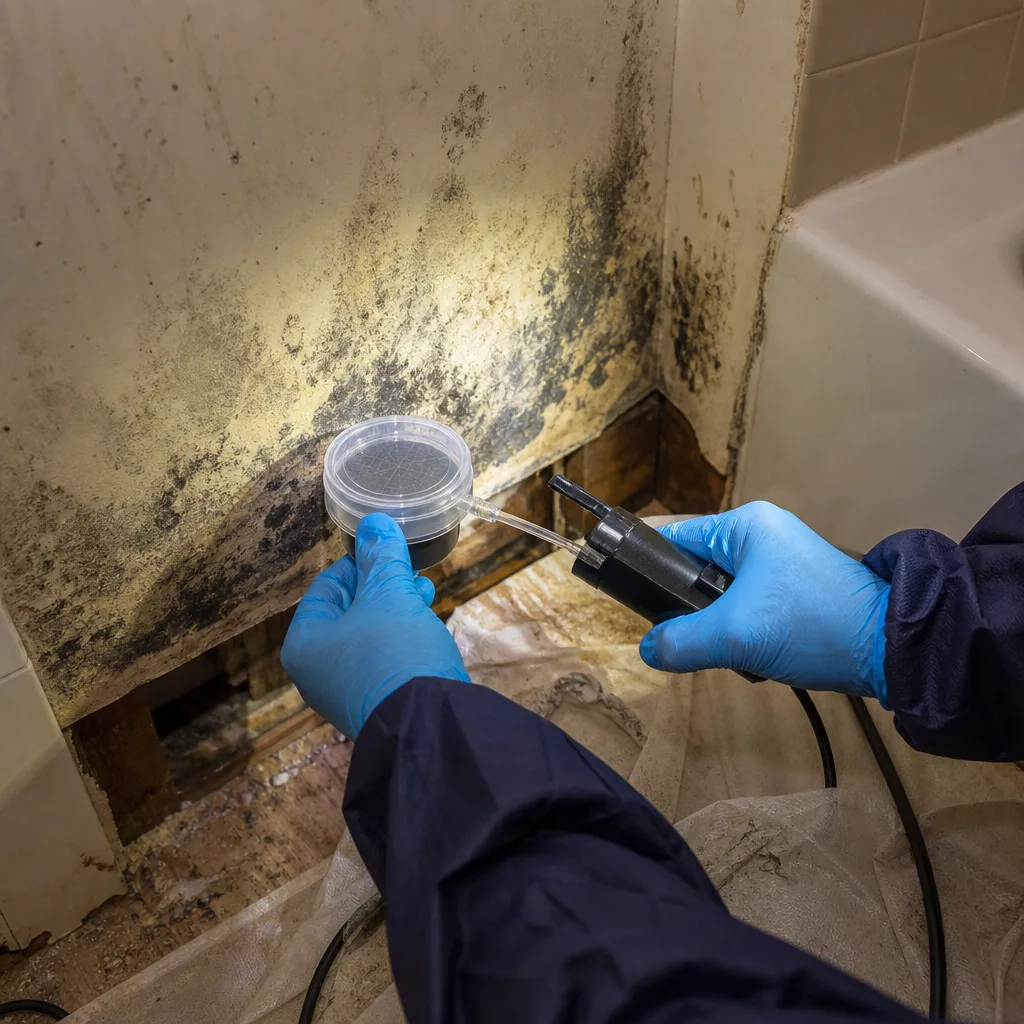
Odor Removal & Deodorization
Smoke odor in a Midtown high-rise travels through riser chases, elevator shafts, and common corridors far beyond the fire unit. We deploy hydroxyl generators and thermal fogging in stages, sealed floor by floor where building management requires it. Our technicians understand that masking odor is not remediation, and the 90-Day Done Right Promise means we keep working until the space smells like it did before the fire.
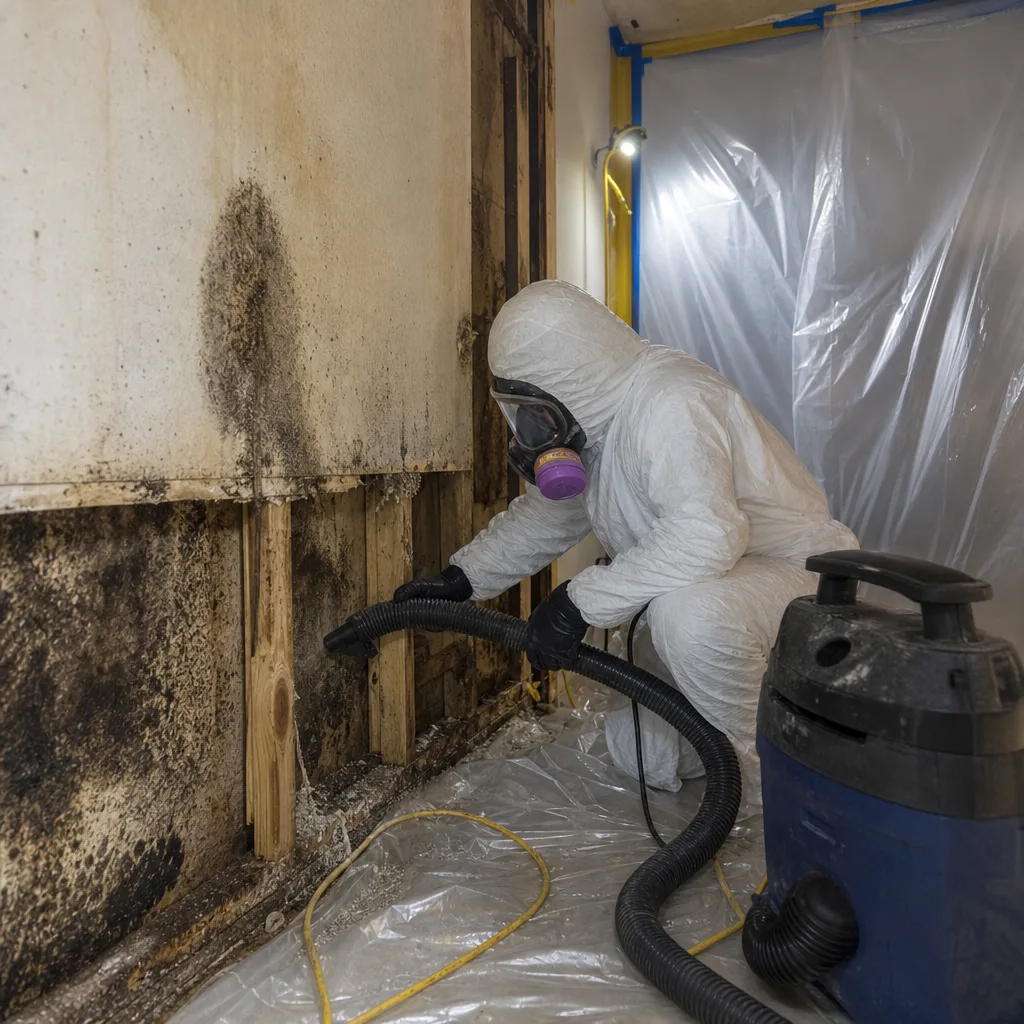
Contents Cleaning & Pack-Out
When a law firm on the 40th floor of a Midtown office tower loses a server room to fire, the contents list includes client files, deposition exhibits, art, and electronics. We pack out under chain-of-custody documentation, clean with ultrasonic and immersion methods at our facility, and return every item photographed and inventory-matched. For condominium owners, we work with building management to schedule freight elevator time and protect common areas during pack-out.
Fire Damage Cleanup
Beyond soot and odor, fire leaves structural residue: charred framing, melted conduit, ruined insulation, and the powdery residue from fire-suppression chemicals. We remove unsalvageable material, seal and deodorize what remains, and document everything for the adjuster. In Midtown’s older buildings, this phase almost always involves ACM testing and coordination with the building’s environmental consultant before demolition proceeds.
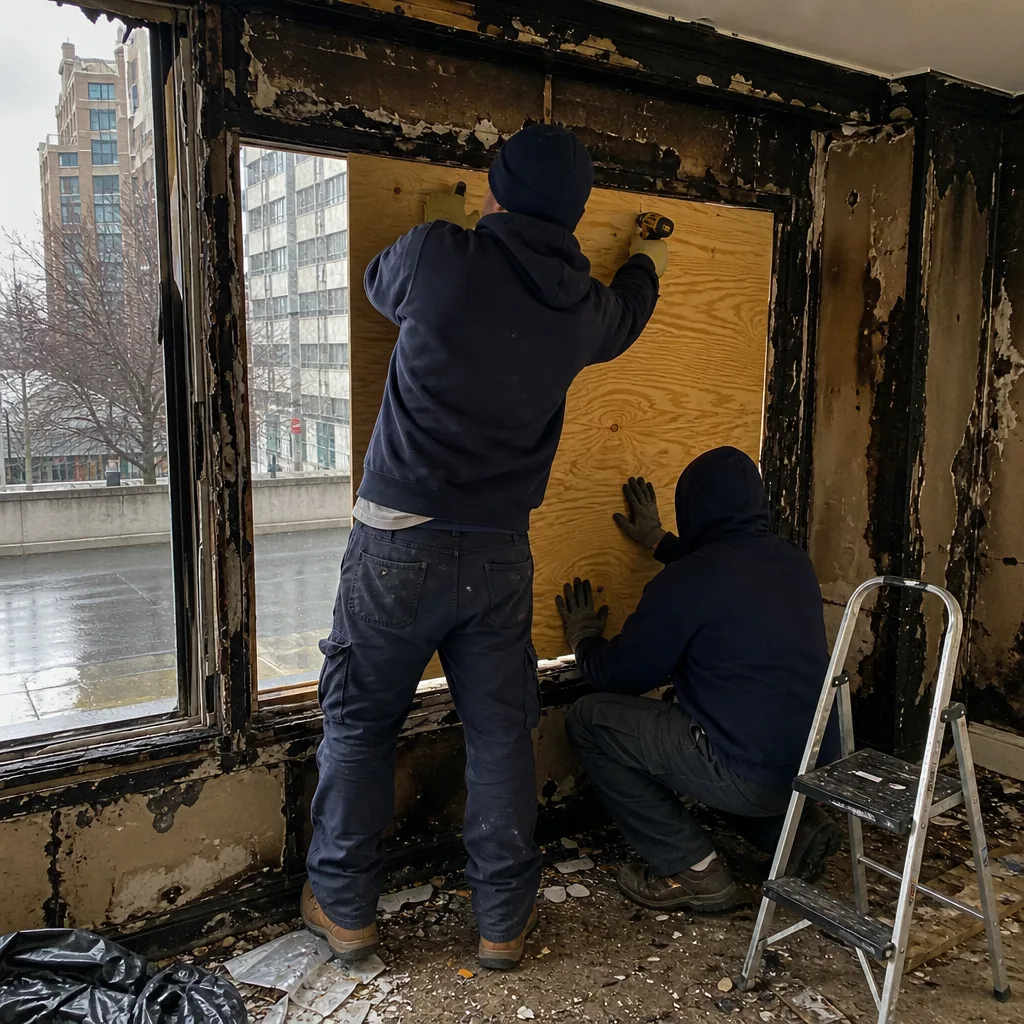
Emergency Board-Up & Tarping
An upper-floor fire in Midtown means broken windows, breached façades, and weather exposure thirty stories up. We board and tarp immediately, using equipment and methods that work on high floors without risking pedestrians below. Securing the space fast also means fewer liability issues for the building, and it stops smoke from migrating further while the claim is being scoped.
What happens when you call
- 1
A real person answersNo phone trees - you reach a local pro.
- 2
You get an upfront price rangeHonest numbers before anyone is dispatched.
- 3
A background-checked tech heads outLicensed & insured, dispatched right away.
- 4
You approve before work beginsNothing starts until you say go.
Fire & Smoke Damage Restoration Costs in Midtown Manhattan, NY
What should you expect to pay in Midtown Manhattan? A targeted smoke and soot cleanup in a single condominium unit typically runs $2,800 to $7,500, depending on surface types and how far the smoke traveled. Odor removal with hydroxyl treatment and thermal fogging adds $1,500 to $4,000 in most Midtown apartments. A full pack-out and contents cleaning for a multi-room residence starts around $6,000 and can reach $25,000 or more for high-value finishes, art, and electronics. Structural fire repair, including demolition, framing, and finish work, runs $12,000 to well over $100,000 for the multi-floor commercial losses common in Midtown office towers. Most fire losses in this market are insurance-covered; the carrier pays the restoration scope directly. Our free visual inspection gives you a fixed written scope before any work starts, so you know exactly what the claim will support. Call (716) 452-0798 for a free estimate and we will walk the loss with you the same day.
We Also Serve Cities Near Midtown Manhattan
Our crews respond to fire and smoke losses across the East River and along the Manhattan waterfront. We serve Fire & Smoke Damage Restoration in Midtown Manhattan and neighboring areas including Long Island City, Greenpoint, Williamsburg, and Murray Hill. Call (716) 452-0798 and a live dispatcher will confirm which crew can reach you fastest.
Serving Midtown Manhattan, NY - Our Local Coverage Area
We’re based in the Midtown Manhattan area and know this community well. Use the map below to see our service coverage - if you’re nearby, we can almost certainly help.
Midtown Manhattan Fire & Smoke Damage Restoration Questions, Answered
How do you handle soot removal from original cast-iron radiators in a pre-war Midtown building without damaging the finish?
We hand-clean cast-iron radiators using dry-chem sponges and gentle agitation, never wire brushes or abrasive compounds that would scar the original finish. The radiators stay in place when possible, and we mask the surrounding floor and wall before starting. Call (716) 452-0798 and we’ll tell you exactly what your radiators need after seeing the soot type.
Can a Con Edison steam leak in a Midtown high-rise create smoke-like damage that insurers might misclassify?
Yes, and this is a genuinely Midtown-specific problem. A steam leak inside a wall cavity produces a wet-heat signature, soaked insulation, condensation, and a warm, musty odor that thermal imaging and odor profiling can easily confuse with smoke damage from a fire. Our technicians know how to trace the Con Edison district steam connection, document the loss pattern for the carrier, and prove what is steam-related versus fire-related before any scope is locked. Misclassification leads to incomplete deodorization and callbacks days later.
What does pack-out and contents cleaning look like for a law firm on the 40th floor of a Midtown office tower after a server-room fire?
We inventory every item under chain-of-custody documentation, photograph everything before it leaves the floor, and schedule freight-elevator time with building management to avoid disrupting other tenants. Client files, deposition exhibits, electronics, and art get cleaned using ultrasonic and immersion methods at our facility, then returned with a photo-matched inventory. Direct adjuster communication means the firm’s carrier gets the documentation it needs without the firm playing messenger.
Do you need to shut down an entire elevator bank when restoring smoke damage in a Midtown pre-war tower?
Usually not. We coordinate with building management to schedule freight elevator use during low-traffic windows, often after hours. Containment barriers and negative air pressure keep smoke and soot from traveling through elevator shafts during the work. In some cases, one car is taken out of service temporarily, but full elevator bank shutdowns are rare and only happen when the smoke path runs directly through the shaft.
How quickly can you get a drying plan and moisture readings documented for an insurer after a Midtown fire, where multiple tenants and carriers are involved?
Our crews arrive with the inspection on the same visit, and we generate initial moisture readings and a preliminary drying plan within hours of first contact. For multi-tenant Midtown losses, we document floor by floor and unit by unit, separating each tenant’s scope so each carrier gets its own line-item documentation. Direct adjuster coordination starts immediately, and drying logs are shared daily until the dry standard is met.
How fast can someone actually get here?
In most Midtown Manhattan neighborhoods, a certified crew reaches your building within 45 minutes of your call, and often faster when the loss is near our dispatch routes. We answer live 24 hours a day at (716) 452-0798, and the crew that answers the dispatch is the crew that arrives. No callbacks, no waiting for a supervisor to call you back in the morning.
Will insurance cover fire and smoke damage restoration in Midtown Manhattan?
Most Midtown condominium and co-op policies cover fire and smoke damage, including soot removal, odor remediation, and contents cleaning, subject to your policy limits and deductible. Commercial tenants are typically covered under their own policies, and the building’s master policy usually covers common areas and structural repair. We bill carriers directly and provide the documentation they need without you having to negotiate line items.
What should I do in the first 30 minutes after a fire in my Midtown apartment?
Do not touch or wipe any surfaces. Soot smears and etches when disturbed. Open no windows unless smoke is actively pouring out; uncontrolled airflow spreads soot further. Turn off the HVAC system if you can access it. Call your carrier to report the loss, then call us at (716) 452-0798. We will walk you through the next steps on the phone and get a crew moving toward you immediately.
One more thing worth knowing. Midtown Manhattan is the core service area for Con Edison’s district steam network, the largest in the United States. A steam line rupture inside a wall cavity produces a wet-heat signature, soaked insulation, condensation, and mold-accelerating warmth, and that signature mimics smoke damage in thermal imaging and odor profiling. A technician who has never worked in Midtown might lock a fire restoration scope that misses the steam failure entirely. Our crews check for Con Edison steam connections on every pre-war Midtown loss we handle, because in this market, the first question is not just where the smoke went. It is whether everything you are seeing is from the fire at all.
Written by Curt Bowman, Owner at Floodline Restoration Co., serving Midtown Manhattan with Fire & Smoke Damage Restoration done right and backed in writing.