
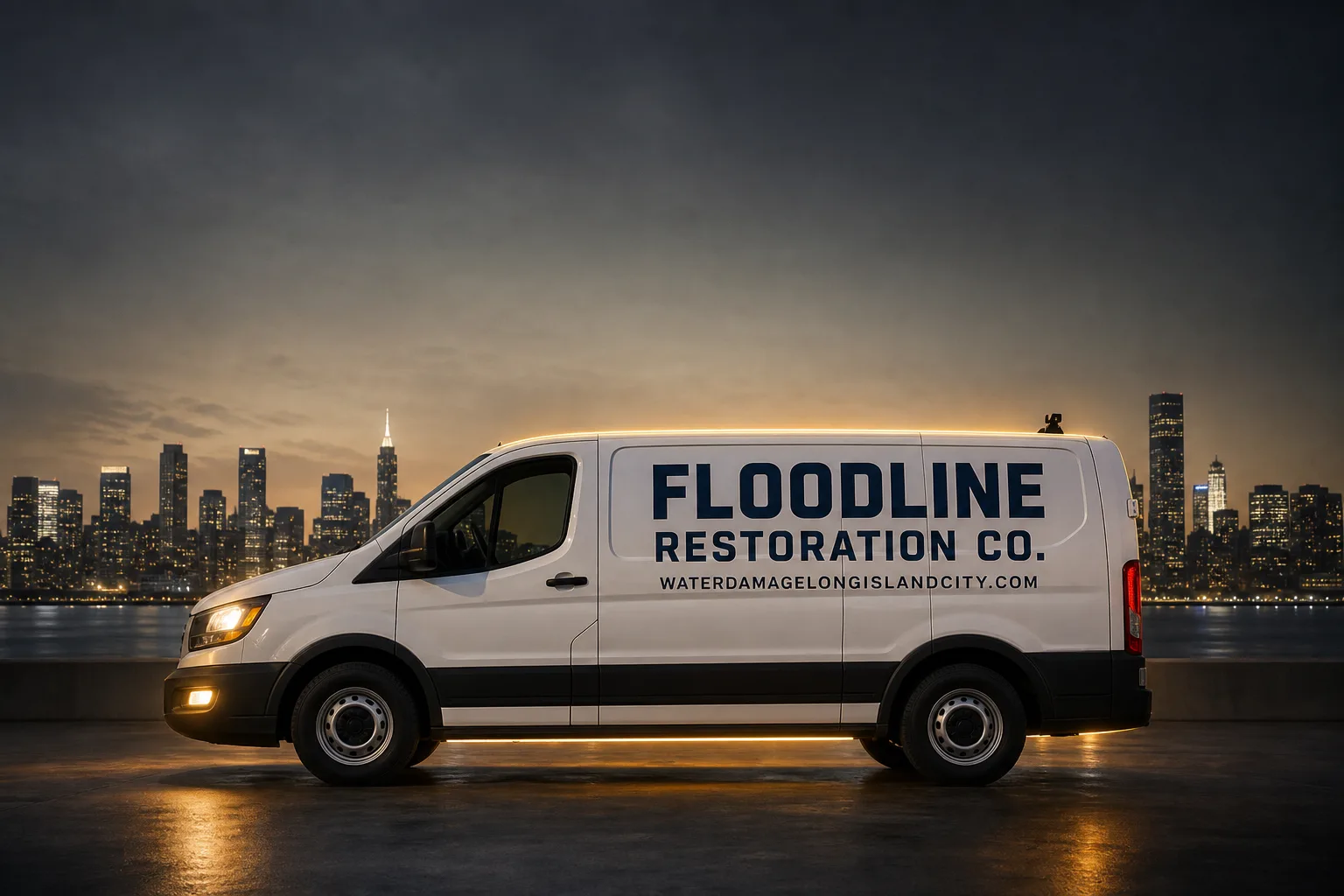
Free visual inspection and a written scope of work before any mitigation begins - photos, moisture readings, and drying logs go in your claim file
The scope we write is the scope we bill. Anything new gets shown to you, in writing, before we touch it.
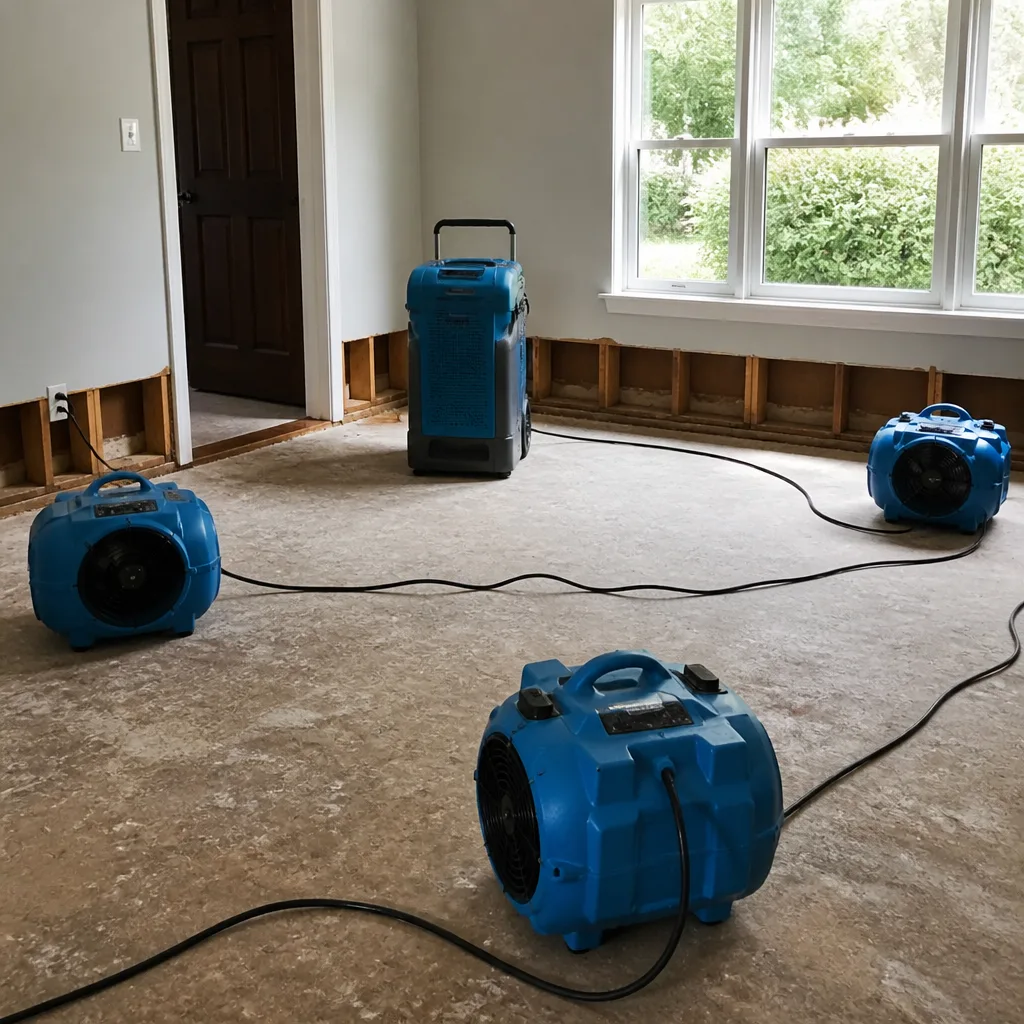
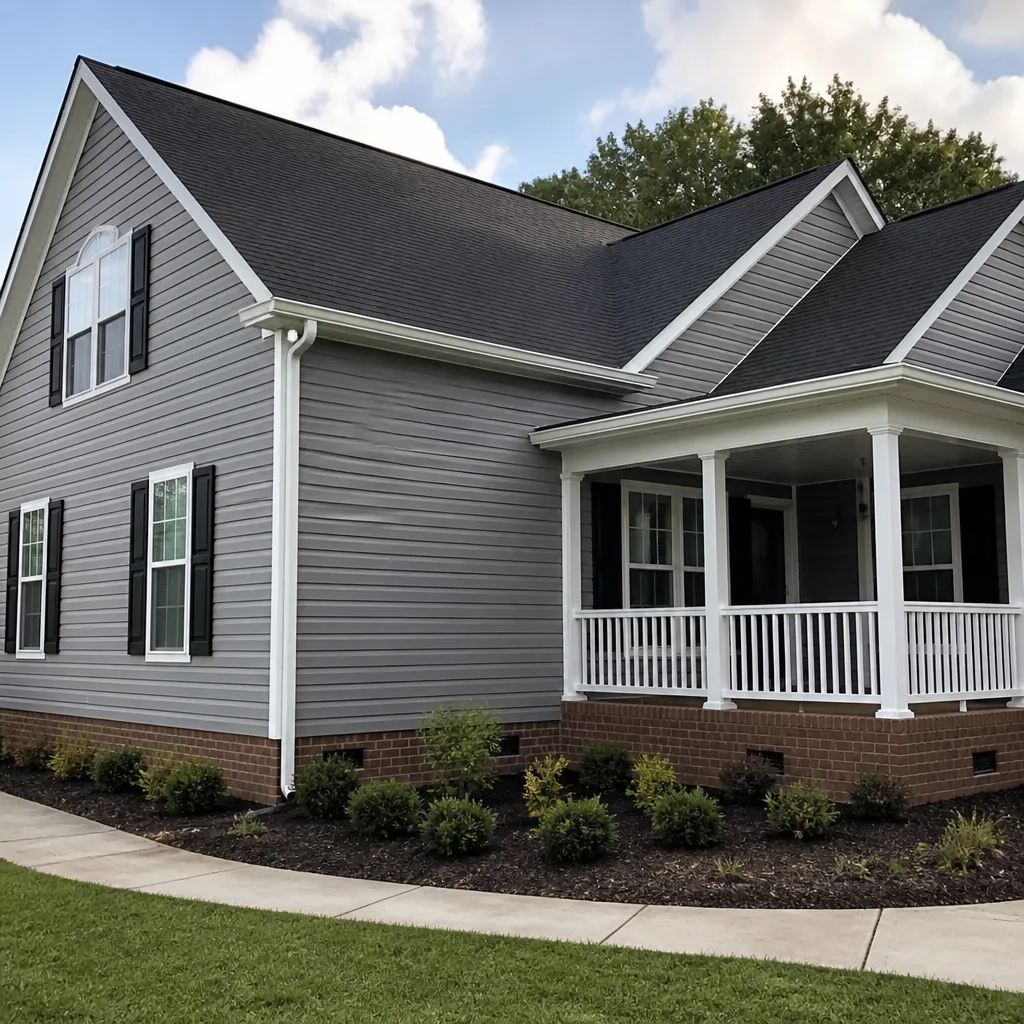
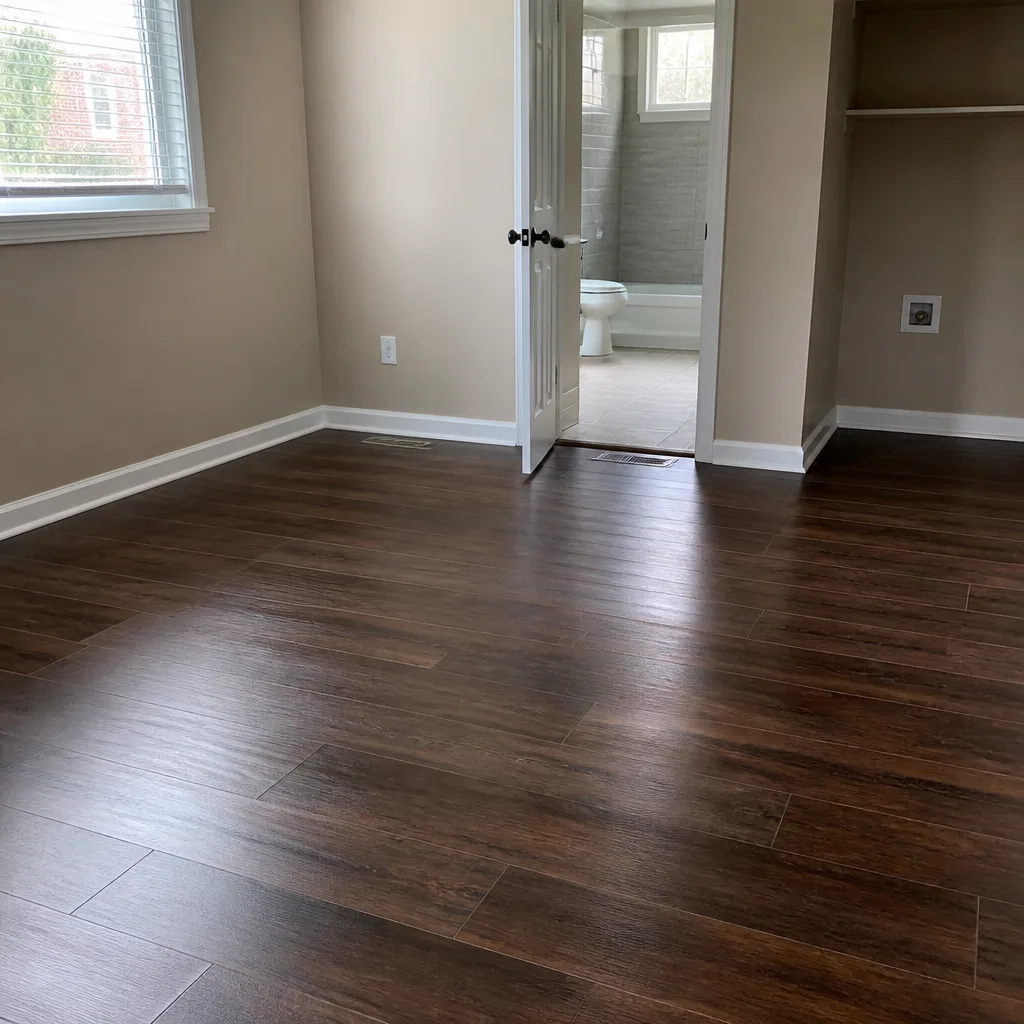

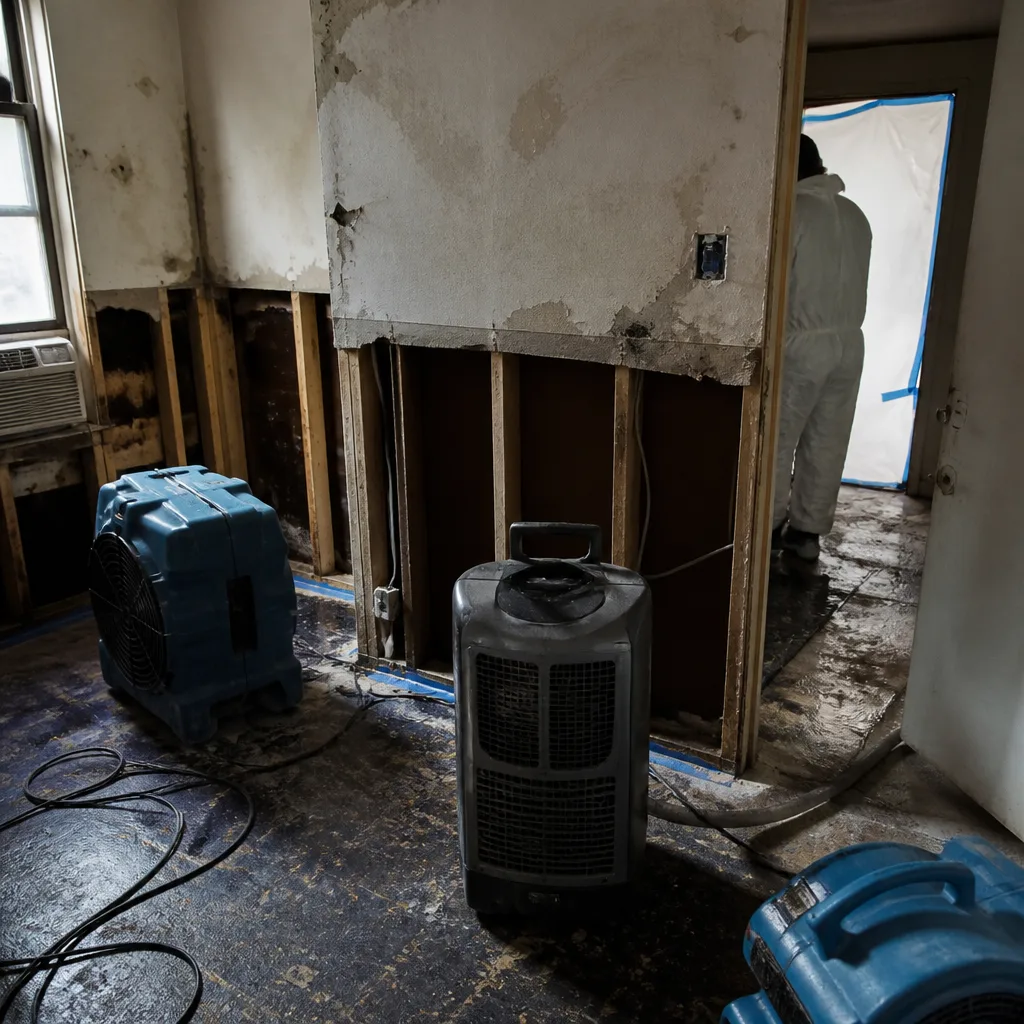 Before
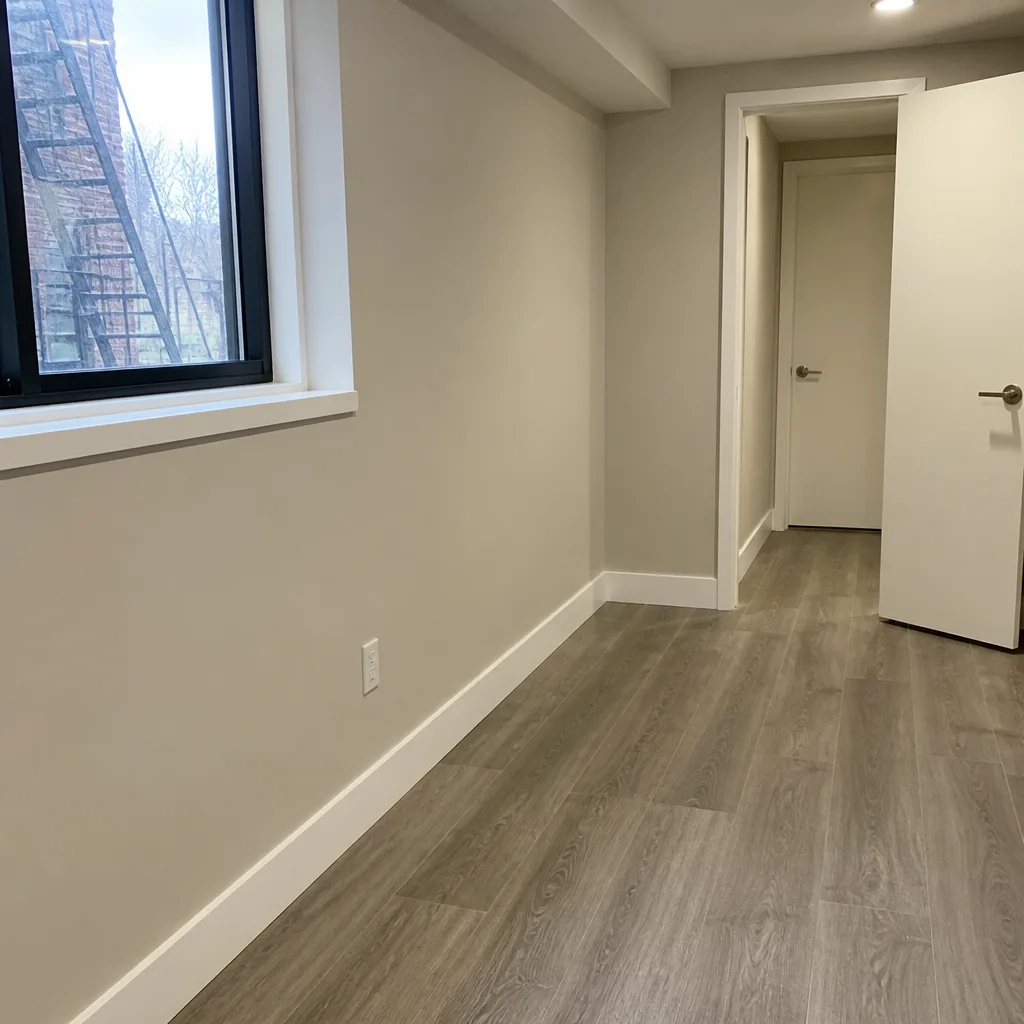 After
After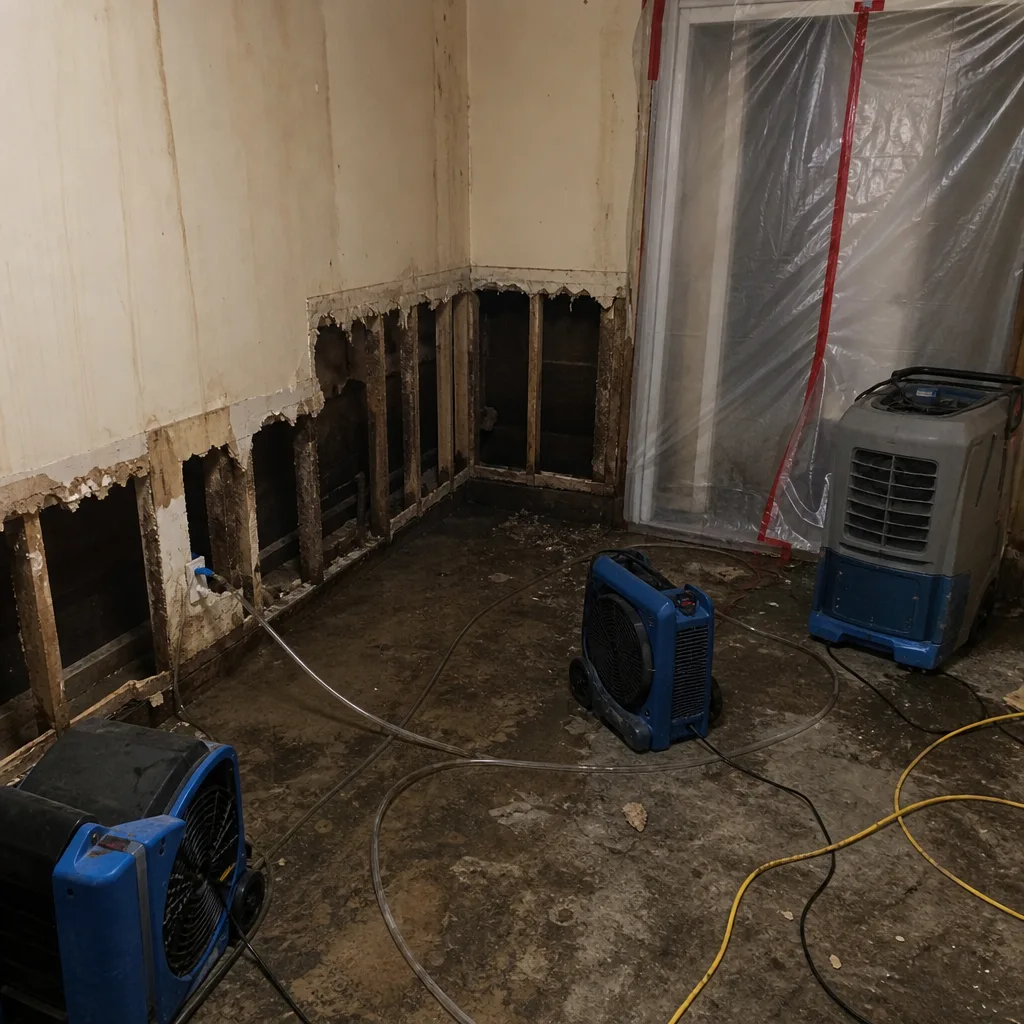 Before
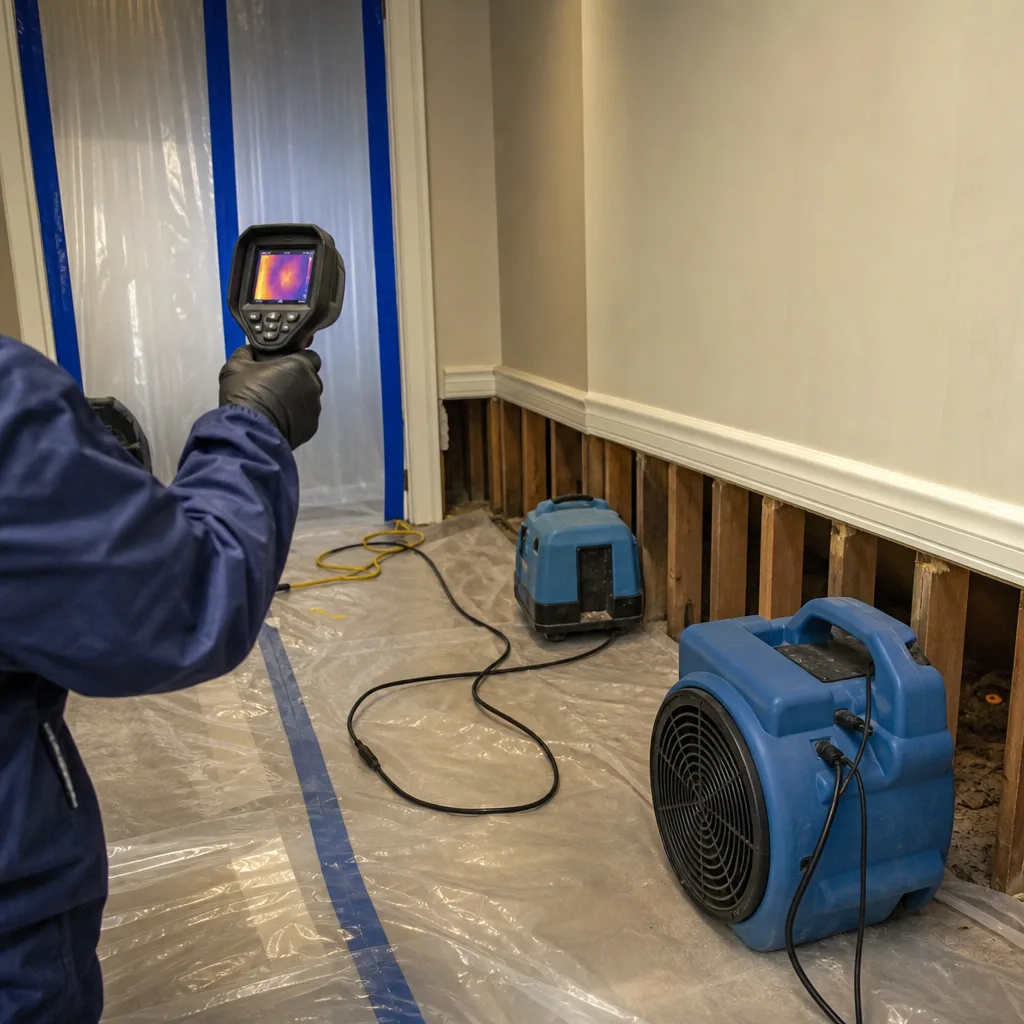 After
After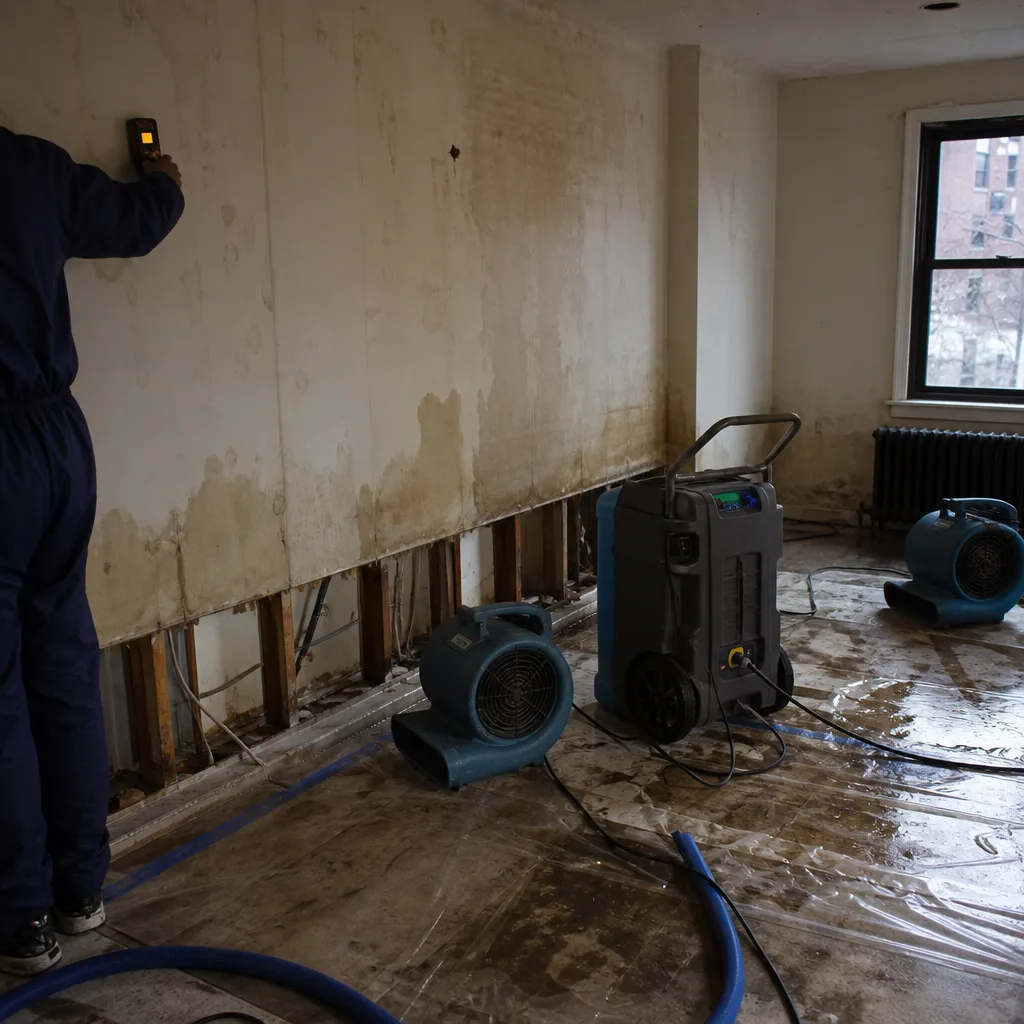 Before
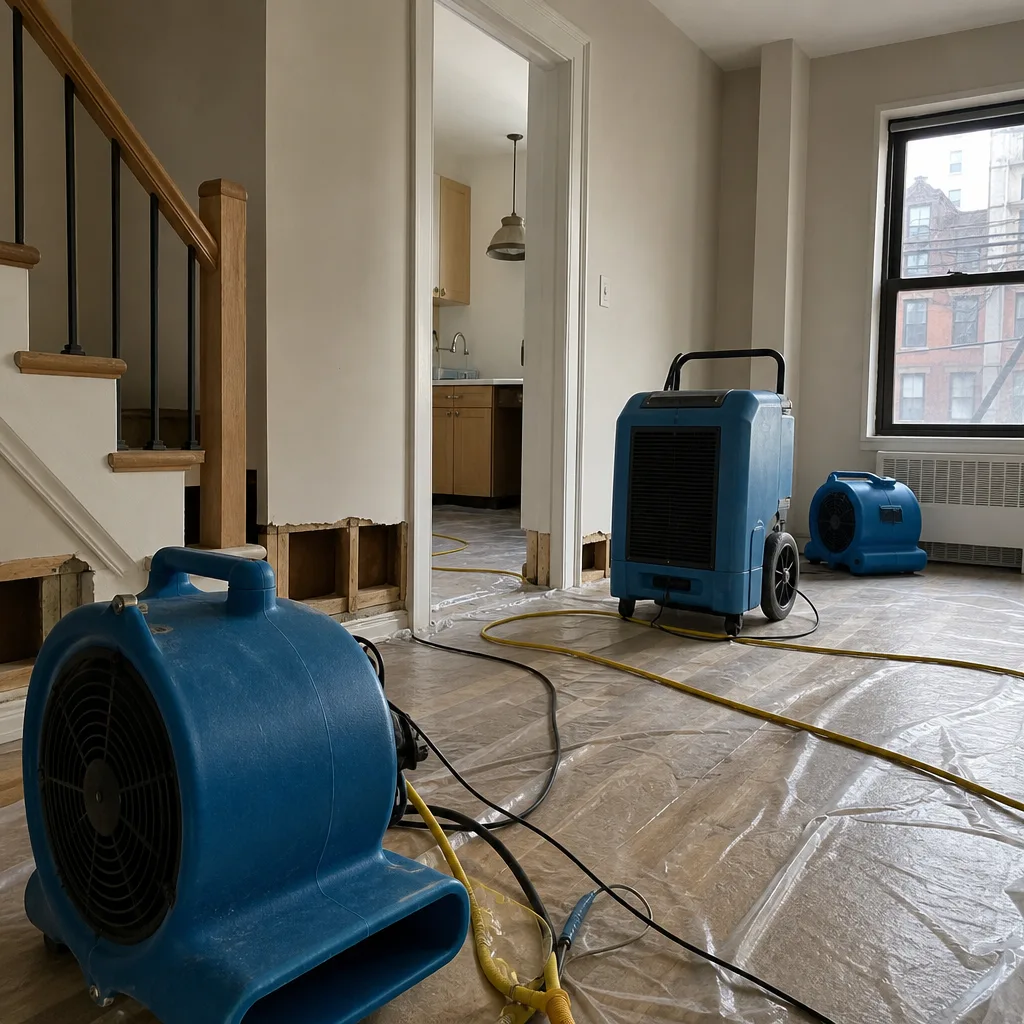 After
After24/7 Emergency Storm & Disaster Restoration in Midtown Manhattan
Storm and disaster restoration in Midtown Manhattan usually begins with a call placed at an inconvenient hour, and we answer live around the clock. When a nor’easter drives water through a failed roof drain or a windstorm sends debris through a curtain-wall panel, the first hour determines how much of the building can be saved. Our crews dispatch to Midtown Manhattan addresses day and night, including weekends and holidays, and we start with a free visual inspection before any drying equipment is even unloaded. Call (716) 452-0798 and a live dispatcher picks up. Not a recording, not a callback queue. A person who can get a crew moving toward your building while you’re still on the line.
For owners and managers of Midtown Manhattan’s older towers and mid-century office buildings, storm damage rarely stays on one floor. Water finds the path of least resistance, and in a pre-war high-rise that path runs through cast-iron riser chases, elevator shafts, and original plaster ceilings. The sooner extraction starts, the less chance that water reaches the tenant spaces below. That’s why we commit to a 45-minute response for emergency calls inside the Midtown Manhattan core.
Understanding Storm & Disaster Restoration Severity in Midtown Manhattan Properties
Not all storm water is the same, and in Midtown Manhattan the classification of the water matters more than anywhere else in the city. Category 1 water comes from a clean source like a broken supply line or window blow-in during a storm. Category 2 carries contaminants, which is common when rainwater picks up decades of accumulated debris from roof drains, mechanical penthouses, or compromised façade cavities. Category 3 water, the most dangerous, includes sewage backup driven by storm surge or overwhelmed municipal drains. Each category dictates a different level of containment, disinfectant protocol, and drying standard.
Midtown’s building stock complicates the severity question. Pre-war towers from the 1920s and 1930s contain original galvanized and cast-iron risers, and many still have asbestos-containing plaster and pipe insulation. That means a seemingly simple storm water intrusion on the 28th floor can trigger mandatory asbestos testing before we set a single air mover. Modern glass curtain-wall buildings bring a different failure mode: wind-driven rain penetrates failed gaskets and sealant joints, channeling water into interior wall cavities across multiple floors before anyone sees a stain on the ceiling. By the time the damage is visible, the drying job is already a multi-day, multi-floor project requiring moisture mapping with thermal imaging and daily hygrometer readings until every cavity reaches dry standard.
Why Midtown Manhattan Property Owners Choose Floodline Restoration Co.
- 45-minute response commitment for emergency calls in Midtown Manhattan, with a live dispatcher who knows the difference between a freight elevator off 42nd Street and a service entrance on Lexington.
- 24/7 live answer from a real person. We don’t use automated triage systems. At 2 a.m. you reach a dispatcher, not a menu.
- IICRC-certified crews trained to WRT (Water Damage Restoration Technician) and FSRT (Fire & Smoke Restoration Technician) standards, plus additional certification for commercial high-rise loss scenarios that don’t exist in the suburbs.
- Free visual inspection before we recommend anything. You get a written scope of work and a line-item estimate, not a pressure pitch.
- Direct insurance billing with our team handling the adjuster communication. You never play messenger between your carrier and us.
- One team from extraction to reconstruction. The same certified crew that maps the moisture on day one handles the daily readings and rebuilds what needs rebuilding. No mid-job handoff to a third party.
Our Storm & Disaster Restoration Process
Inspection & Assessment
We arrive within the response window, walk the affected floors and interstitial spaces, and identify every water path. Thermal imaging and penetrating moisture meters show us what’s wet behind walls and above ceilings. We photograph everything and document the category of water before a single piece of equipment comes off the truck.
Extraction & Stabilization
High-volume extraction pulls standing water from floor surfaces, carpet, and drainage depressions. In Midtown high-rises, this often means extracting from tenant spaces while building management coordinates access to mechanical rooms and riser closets. We set containment barriers to stop water and humidity from migrating to unaffected floors.
Drying & Dehumidification
We run professional-grade Dri-Eaz dehumidifiers, Phoenix axial air movers, and XPOWER units sized to the square footage and cubic air volume of each affected space. In dense Midtown buildings, the urban heat island effect can slow surface drying, so we take daily moisture readings and adjust equipment placement until every affected material hits dry standard, not a generic suburban benchmark.
Cleaning & Sanitization
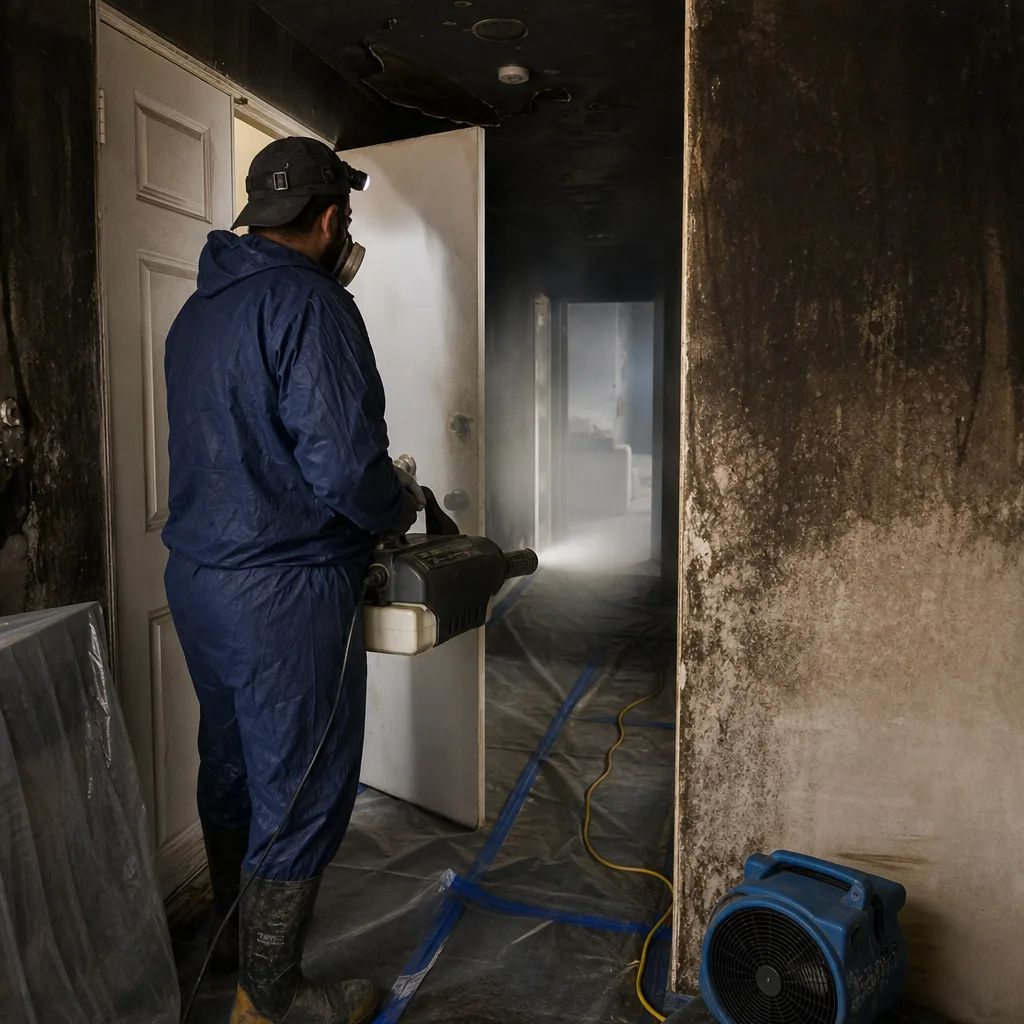
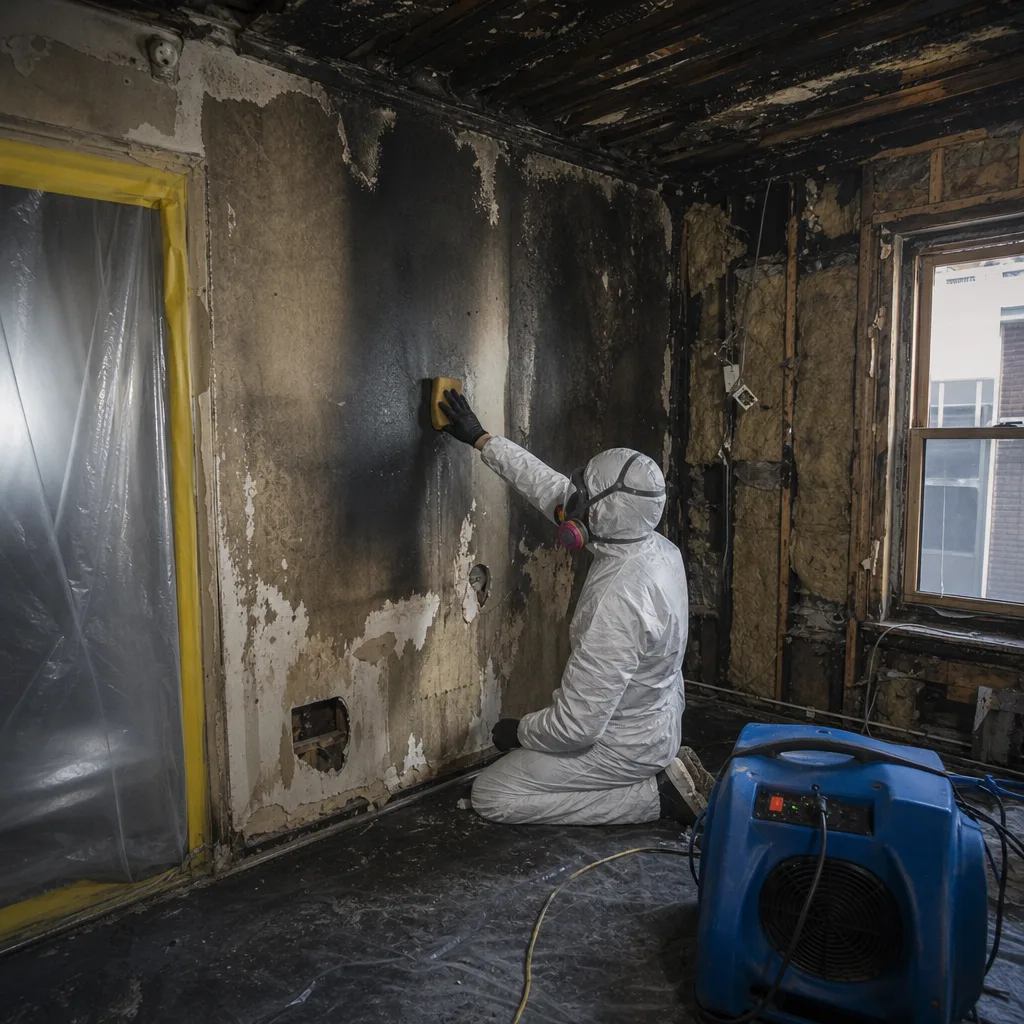
Storm water carries whatever it touches on the way down. We clean and sanitize all affected surfaces, including wall cavities, subflooring, and any contents that can be salvaged. In commercial tenant spaces, this includes filing cabinets, server room flooring, and anything else the water reached.
Specialty Treatment for Midtown’s Older Buildings
In pre-war towers, this is where asbestos protocols, Con Edison steam system tracing, and phased multi-tenant scoping come into play. We coordinate with building management, environmental consultants, and your carrier to document every step in a way that satisfies all parties. In curtain-wall towers, we identify and seal façade penetrations so the next heavy rain doesn’t restart the cycle.
Repairs & Restoration
Once the building is dry and stable, we rebuild. Drywall, flooring, ceiling systems, paint, wall coverings, millwork. The same team that did the extraction handles the reconstruction, so there’s no handoff and no argument about what was or wasn’t part of the original scope. Every job carries the 90-Day Done Right Promise in writing.
Need Emergency Storm & Disaster Restoration in Midtown Manhattan Now?
Crews minutes away, answering live 24 hours a day. The sooner we start, the less it costs.
Working With Your Insurance Company
Midtown Manhattan losses involve layers most homeowners never see: commercial tenant policies, building master policies, and sometimes three or four carriers on a single stacked-loss event. We handle the documentation from the first hour so the claim doesn’t stall. Photos of every affected area, room by room. Moisture readings logged daily until dry standard is reached. A line-item scope of work that matches the carrier’s preferred format. Direct adjuster communication, so you’re not relaying questions between a building manager, a claims agent, and a restoration crew. Floodline Restoration Co. has billed carriers directly for years, and our documentation is built to withstand the scrutiny that comes with multi-tenant, high-value Midtown claims.
What We Provide Your Insurer
- Thorough documentation of the loss
- Photos of all damage, room by room
- Moisture readings and drying logs
- A detailed, line-item scope of work
- Direct coordination with your carrier
Built for Midtown Manhattan’s Loss Calendar
Midtown Manhattan’s storm and disaster losses follow a rhythm as predictable as the Metro-North schedule. January and February bring deep freezes that crack supply lines in unheated mechanical penthouses and exposed riser chases along older setback walls. When a high-pressure municipal water line lets go on the 40th floor of a pre-war tower, the volume released in the first ten minutes is measured in thousands of gallons, not hundreds. Spring brings thaw cycles and the first heavy rain events of the season, when clogged roof drains and scuppers overflow into top-floor tenant spaces and elevator shafts. Summer thunderstorms hit hard and fast, overwhelming the street-level drainage around subway entrances and basement mechanical rooms. And from August through October, nor’easter remnants push wind-driven rain against the east-facing curtain walls along Sixth Avenue, Park, and Lexington, finding every failed gasket and dried-out sealant joint in the envelope. When those winds hit a 1980s glass tower, the result is water running inside wall cavities down multiple floors before it surfaces on a ceiling tile near the elevator lobby.
Storm & Disaster Restoration Across Midtown Manhattan’s Neighborhoods
Midtown isn’t one neighborhood. It’s a vertical city stacked from 34th Street to 59th, river to river, and the loss patterns differ block by block. Around Bryant Park and the Garment District, pre-war commercial buildings from the 1920s carry original cast-iron risers and decades-old roof drains that fail during heavy downpours. Along Fifth Avenue and Madison, landmark buildings and luxury retail spaces face strict building-management rules that affect access hours, freight elevator availability, and containment protocols. Over near Hudson Yards and the west side, newer glass towers and residential conversions present the curtain-wall leak pattern we described, where water travels invisibly inside the wall cavity before it surfaces. And in the blocks around Grand Central and Murray Hill, Con Edison’s steam network runs beneath the streets and into hundreds of buildings, adding a wet-heat failure mode that technicians elsewhere rarely encounter. Our crews know the freight entrances, the loading docks, and the building managers. That practical knowledge removes hours of setup time from every job.
One truth about Midtown Manhattan sets it apart from every other service area we cover. The core of the district steam network, the largest in the United States, runs directly beneath these streets. When a building’s steam connection or interior distribution piping fails, the result is not a simple water leak. It’s a wet-heat intrusion: hot, chemically treated condensate mixes with decades of pipe corrosion and soaks insulation, condenses inside wall cavities, and creates warmth that accelerates mold growth within 48 hours. Technicians trained in Queens or Brooklyn almost never see this pattern. Knowing how to trace the steam line, document the loss for an insurer, and classify the water correctly is a genuinely Midtown-specific skill, and it’s one our crews have learned from doing the work here. A Con Edison steam loss misclassified as a standard water leak gets under-scoped, and mold follows.
Specialized Storm & Disaster Restoration Services We Offer in Midtown Manhattan
Flood Damage Restoration
Flooding in Midtown Manhattan usually comes from above: a failed riser, a broken sprinkler head, a roof drain overwhelmed by a sudden downpour. Water cascades through multiple floors, and the job isn’t finished until every affected cavity is dry, not just every visible surface. We run Dri-Eaz dehumidifiers and Phoenix air movers sized to the cubic volume of each floor, with daily moisture readings logged until the entire building hits dry standard.
Roof Tarping
When wind strips a section of roof membrane from a Midtown tower or row building, the next rainstorm turns a manageable repair into a multi-floor loss. We install heavy-duty tarps and weatherproof covers to stop water entry immediately, then document the temporary repair so the permanent fix can be scheduled without panic. Our crews understand the safety and access constraints of working on occupied commercial roofs, including perimeter rail requirements and wind-load concerns at height.
Emergency Board-Up
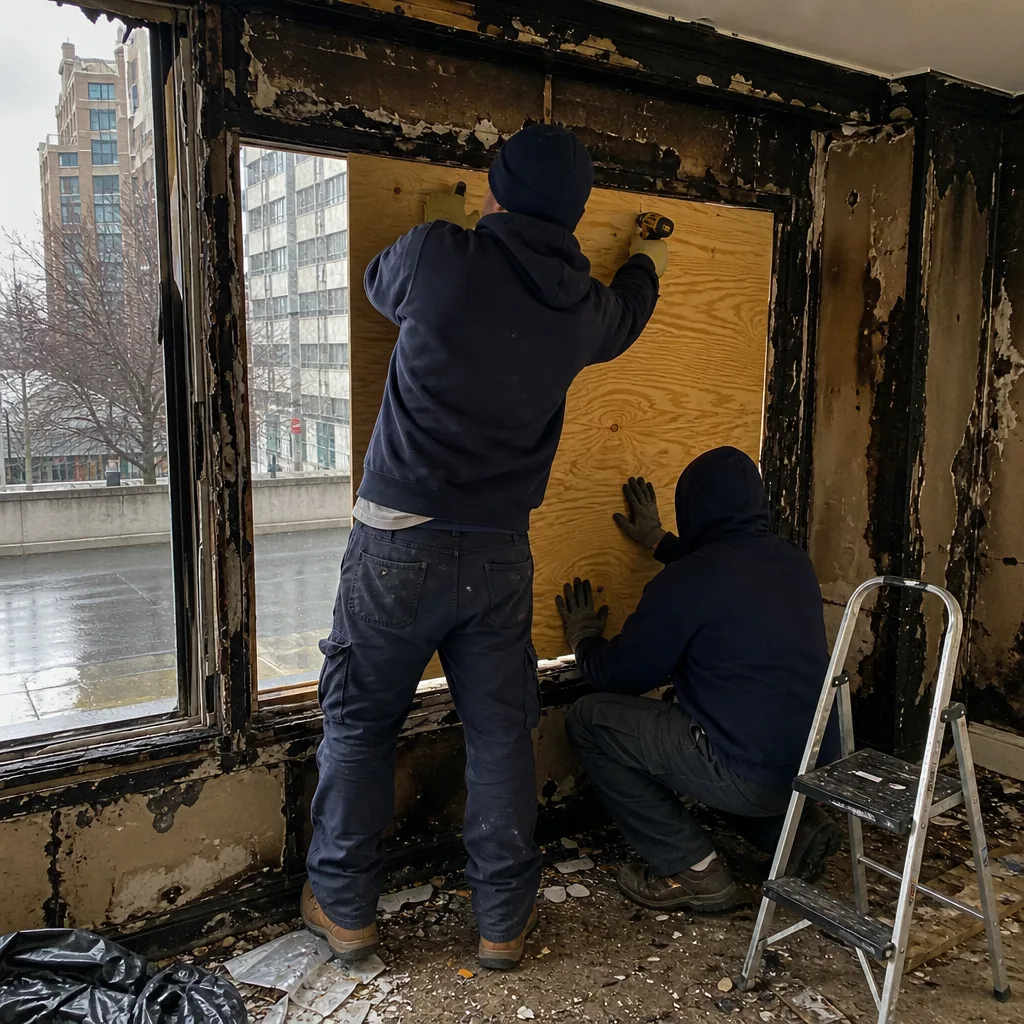
Broken windows from a windstorm, blown-out storefronts, wall penetrations from flying debris. We board and secure openings the same day the damage happens, using materials sized to Midtown’s commercial window bays and aluminum framing. This isn’t a handyman job. Proper board-up means weather sealing, security fastening, and documentation for the claim. Done wrong, it becomes a liability. Done right, it’s invisible.
What happens when you call
- 1
A real person answersNo phone trees - you reach a local pro.
- 2
You get an upfront price rangeHonest numbers before anyone is dispatched.
- 3
A background-checked tech heads outLicensed & insured, dispatched right away.
- 4
You approve before work beginsNothing starts until you say go.
Storm & Disaster Restoration Costs in Midtown Manhattan, NY
Storm and disaster restoration in Midtown Manhattan runs higher than the boroughs, and for reasons that have nothing to do with markups. Access costs more: freight elevator time, building management coordination, after-hours work windows. Containment costs more: pre-war plaster often triggers asbestos testing, and multi-tenant floors require phased scoping rather than one continuous job. Labor costs more: certified commercial restoration techs, not day-labor crews. A straightforward water extraction and drying job in a single Midtown office suite typically ranges from $4,800 to $13,000. A multi-floor stacked loss with steam system involvement, ACM protocols, and phased tenant access can run $65,000 to $250,000 or more. Roof tarping on a Midtown commercial structure runs $1,200 to $4,500 depending on access and roof type. Emergency board-up runs $600 to $1,800 per opening. The free visual inspection gives you a firm line-item scope before any work begins. Call (716) 452-0798 and we’ll walk the site with you. The estimate is free, and the scope is in writing.
We Also Serve Cities Near Midtown Manhattan
Our crews respond throughout the surrounding area, including Storm & Disaster Restoration in Midtown Manhattan and the neighboring communities of Long Island City, Greenpoint, Williamsburg, and Murray Hill. If your building sits close to the Midtown core, we can typically reach you within the same 45-minute window.
Serving Midtown Manhattan, NY - Our Local Coverage Area
We’re based in the Midtown Manhattan area and know this community well. Use the map below to see our service coverage - if you’re nearby, we can almost certainly help.
Midtown Manhattan Storm & Disaster Restoration Questions, Answered
How does a Con Edison steam leak in my Midtown building differ from a standard water leak?
A Con Edison steam leak is not a standard water loss. The water is hot, chemically treated condensate mixed with pipe corrosion, which classifies it as Category 2 or 3 water and demands different containment, disinfection, and drying protocols. The heat from the steam also accelerates evaporation into wall cavities and can push mold growth from days to hours. Misclassifying the water leads to under-scoped mitigation and a mold problem within 48 hours. If you suspect a steam system failure in your Midtown building, call (716) 452-0798 immediately and tell the dispatcher it’s steam, not water.
Why do we have to test for asbestos before you even set up a dehumidifier in our 1930s office tower?
Because the law requires it, and because cutting into asbestos-containing plaster, floor tile, or pipe insulation without testing exposes workers and occupants to serious harm and lands the contractor in a mandatory abatement stoppage. In pre-war Midtown buildings, the assumption must be that asbestos is present until testing proves otherwise. We coordinate the testing and, if needed, the abatement before any drying equipment disturbs suspect materials. It protects you, your tenants, and the restoration timeline.
My building management says you can only work after 7 p.m. Does that delay drying?
It can, which is why we plan for after-hours access from the first scope. We stage equipment and materials before the freight elevator shuts down for the day, then run extraction and drying through the night and into the early morning when other trades have finished. We have handled hundreds of after-hours-only jobs in Midtown, and our documentation includes time-stamped readings that show exactly when each phase was completed. The drying standard doesn’t change because the clocks do, but the scheduling has to be right from hour one.
Water from an upper-floor sprinkler discharge has been running down for hours. How do you even begin mitigation?
We start with containment to stop water from moving into unaffected floors, then trace the full migration path with thermal imaging and moisture meters. Sprinkler discharges in Midtown high-rises often run through elevator shafts, electrical rooms, and tenant spaces before they surface, so the visible water is only part of the loss. We set Dri-Eaz and Phoenix equipment on every floor the water touched, not just the floor where someone first noticed it. For a discharge that has run for hours, call (716) 452-0798 before you do anything else.
The glass curtain wall on our 1980s tower leaks during heavy rain. Where does the water go?
It travels inside the wall cavity behind the façade panels, down the gaskets and framing, and surfaces wherever it finds a horizontal surface: a ceiling tile, a window sill, an electrical box. By the time water is visible inside an occupied floor, it has usually been migrating through the cavity for hours and may have wetted insulation, framing, and drywall across multiple floors. We find the entry point with water testing and thermal imaging, seal it, and then dry every cavity the water touched. The leak isn’t fixed until the path is traced, not just the spot where the stain appeared.
Will my insurance cover storm damage in Midtown Manhattan?
Most commercial property and condo policies cover sudden and accidental storm damage, including wind-driven rain, roof failures, and sprinkler discharges. The exceptions matter: gradual leaks from long-term façade deterioration are often excluded as maintenance, and Con Edison steam losses may require specific documentation to trigger coverage. We document the cause, the scope, and the drying logs in the format carriers expect, and we bill directly. If you’re unsure whether your policy covers a specific loss, call (716) 452-0798 and we’ll help you read the fine print before the adjuster arrives.
Can we stay in the building while you do the restoration?
Usually, yes, with containment and phased access. In high-rise commercial towers, tenant floors can often remain occupied while we contain and dry one section at a time. The exceptions are Category 3 water losses where sewage or heavily contaminated water is present, or when asbestos abatement must occur. We’ll tell you honestly, in writing, whether occupancy is safe during the work.
What should we do in the first 30 minutes after storm damage?
Shut off the source of water if you can do so safely, move any high-value items out of the path of the water, and call (716) 452-0798. Don’t use household vacuums to extract water, don’t turn on ceiling fixtures if the ceiling is wet, and don’t disturb any damaged materials that might contain asbestos. Then take photos of everything for the claim. The sooner our crew arrives, the less damage spreads, and the first hour is the cheapest hour of any restoration project in Midtown Manhattan.
Written by Curt Bowman, Owner at Floodline Restoration Co., serving Midtown Manhattan and the surrounding area.