
Quick Summary
This guide breaks down the essential factors influencing the water extraction cost per sq ft in LIC, from contamination tiers to complex building structures. Mitigation costs generally range from $3.00 to $5.00 per square foot for clean water up to $12.00 or more for sewage backups, with Floodline Restoration Co. providing transparent pricing and direct insurance billing. Readers can accurately assess their cleanup expenses and contact Floodline Restoration Co. for 24/7 emergency dispatch or to schedule a free on-site visual inspection.
Water Extraction Cost Per Sq Ft: Pricing Estimates and Key Factors
Estimating the cost of water extraction is complex because no authoritative, neutral per-square-foot rate applies across all situations. In practice, costs vary significantly depending on the contamination category, the extent of structural moisture, and the specific building environment. For instance, extracting clean water from an open slab floor in a newer residential building involves a different scope of work than addressing contaminated water trapped in older building assemblies with multiple subfloor layers.[4]
Professional restoration teams, such as Floodline Restoration Co., typically evaluate moisture levels, identify the water source, and determine the necessary drying equipment. Below is an overview of how water extraction costs are generally estimated, how water categories impact pricing, and why building conditions influence the overall scope.
Water Extraction Cost Per Sq Ft: Overview and Pricing Ranges
Water extraction cost per sq ft summary: Pricing for basic clean-water extraction often ranges from approximately $3.00 to $5.00 per square foot. Gray water mitigation typically incurs higher costs (often $6.00 to $9.00 per square foot), while black water or sewage backup removal ranges higher still, often exceeding $9.00 to $12.00 per square foot depending on containment and sanitization needs. Total project costs depend on contamination category, structural accessibility, equipment run time, and how many material layers hold trapped moisture.[2]
Because no single flat-rate benchmark exists, structural mitigation estimates typically account for bulk extraction alongside continuous dehumidification and sanitization treatments. The primary cost drivers include the water contamination category and the specialized equipment needed to return structural elements to dry standards.[1]
Key Cost Takeaways
- Clean Water (Category 1): Typically around $3.00 to $5.00 per square foot. Sources include broken supply lines, failed sink valves, or rainwater before it contacts building contaminants.
- Gray Water (Category 2): Typically higher, often around $6.00 to $9.00 per square foot. Sources include washing machine overflows, dishwasher discharge, or sump pump failures containing chemical or organic residue.
- Black Water (Category 3): Often $9.00 to $12.00+ per square foot. Sources include sewer backups, storm surges, and ground floodwaters that demand specialized containment barriers and disposal protocols.
Because building types vary widely, from older masonry structures to modern high-rise developments, an on-site moisture assessment is typically necessary to establish an accurate scope of work.
What Does Professional Water Extraction Cost Per Sq Ft?
Depending on building construction and contamination category, overall water extraction and drying services can range from roughly $3.00 per square foot for basic clean water on open surfaces to $12.00 or more per square foot for complex black water scenarios. Clean water sitting on resilient flooring sits at the lower end of estimates, whereas heavily contaminated water trapped under layered flooring materials requires extensive labor and containment, increasing overall costs.[3]
Illustrative Project Cost Estimates
Water damage rarely stays confined to a single surface. Illustrative project estimates often include:
- Initial moisture mapping & thermal inspection: $150 to $500 (illustrative estimate; some providers may credit this toward service)
- Single-room water extraction & drying setup: $1,200 to $4,500 (illustrative estimate)
- Targeted mold remediation (if drying was delayed past 48 hours): $1,500 to $6,000 (illustrative estimate)
- Category 3 sewer or ground flood extraction: $2,000 to $10,000+ (illustrative estimate)
- Multi-room structural drying & decontamination: $3,000 to $15,000+ (illustrative estimate)
Note: These figures are illustrative estimates only. Exact costs vary based on site access, water volume, structural materials, and required safety protocols.
Understanding Category 1, 2, and 3 Water Pricing Tiers
The water category dictates required safety protocols, extraction methods, disposal procedures, and whether materials can be dried in place or must be discarded under containment.
| Feature | Category 1 (Clean) | Category 2 (Gray) | Category 3 (Black) |
|---|---|---|---|
| Est. Cost / Sq Ft | $3.00 – $5.00 | $6.00 – $9.00 | $9.00 – $12.00+ |
| Common Origin | Supply pipe bursts, sink overflows | Dishwasher leaks, appliance drains | Sewage backups, storm surge, river flooding |
| Antimicrobial Treatment | Light preventative application | Direct wash required on all surfaces | EPA-registered broad-spectrum sanitizers |
| Porous Material Handling | Drying in place often possible | Pads and insulation usually discarded | Mandatory tear-out of carpet, drywall, and insulation |
Why Flat Per-Square-Foot Rates May Not Apply
Need water extraction cost per sq ft lic?
We’re available now - call for a fast, free estimate.
Generic cost calculators often fail to reflect actual costs because local architecture includes diverse building types, from older converted lofts to modern high-rise apartments.
Variations in Building Construction
Different structural designs present distinct mitigation considerations:
- Older brick and timber structures (illustrative example): Heavy timber framing and exposed masonry absorb water rapidly. Porous materials can draw water deep into building envelopes, often requiring extended desiccant dehumidification to address bound moisture.
- Modern sealed multi-unit buildings (illustrative example): Tightly sealed construction can trap humidity indoors. Moisture may travel through utility chases or shared vertical shafts, and concrete subfloors can retain moisture that requires thorough drying before repairs.
Multi-Layered Substrates and Ambient Humidity
In humid or coastal environments, ambient relative humidity can slow natural evaporation. Additionally, renovated spaces with modern flooring installed over original subfloors or leveling compounds can trap moisture between layers, requiring specialized extraction methods rather than basic surface removal.
Hardwood, Laminate, and Subfloor Water Extraction Costs
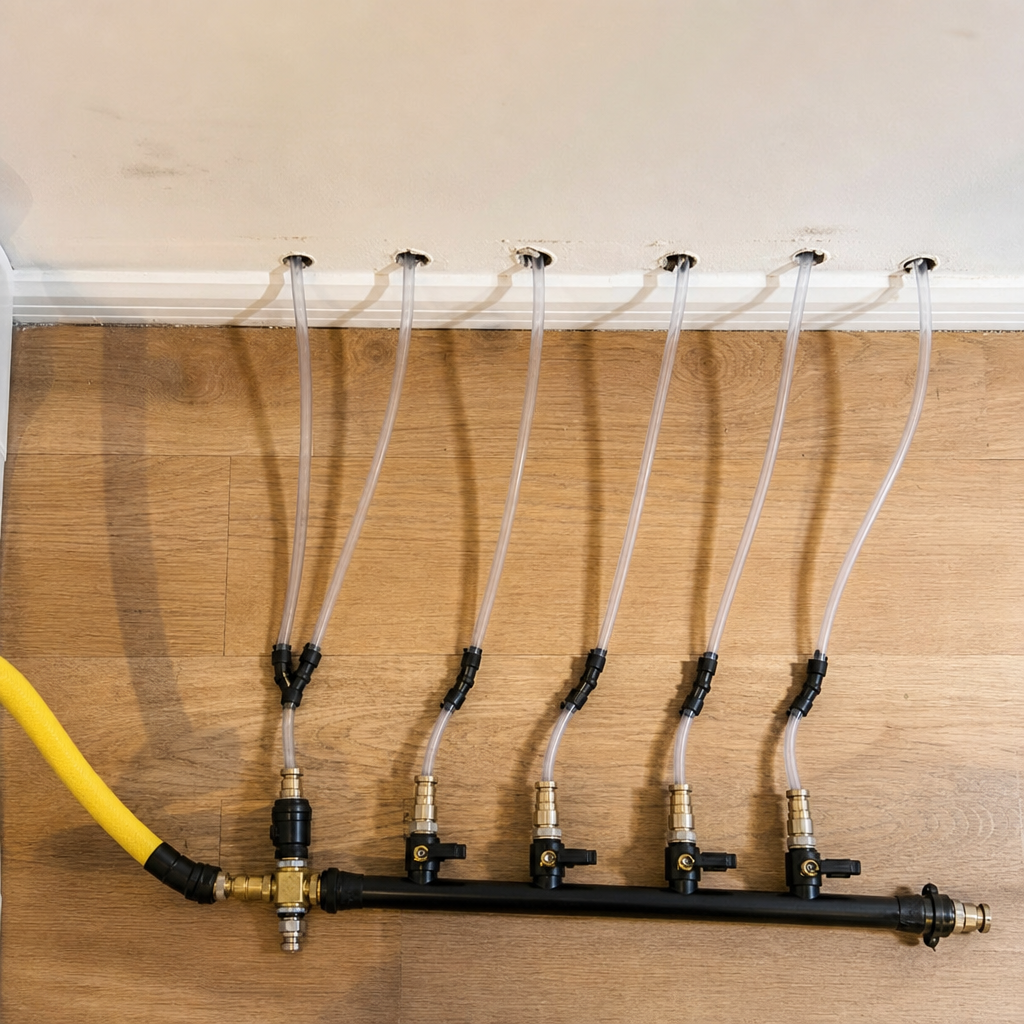
When mitigation begins promptly, specialty floor drying can help avoid full replacement. However, costs depend on the level of saturation, the type of flooring, and whether water has penetrated subfloor assemblies.
Symptoms of Trapped Moisture Under Flooring
- Cupping: The edges of individual wood planks rise higher than their centers due to high moisture underneath the boards.
- Crowning: Plank centers bulge upward when the surface has dried faster than the saturated underside.
- Buckling: Flooring pulls completely free from the subfloor as swelling forces boards upward.
- Persistent odors: A sour or musty smell indicating moisture trapped beneath the underlayment barrier.
Drying in Place vs. Full Subfloor Replacement
Where feasible, technicians from Floodline Restoration Co. may place specialty floor rescue mat systems that apply negative air pressure across the surface to pull moisture from the subfloor through the wood grain, which can help preserve flooring and reduce reconstruction expenses.
Drywall, Ceilings, and Wall Cavity Drying
Water from an overhead pipe leak travels downward through wall cavities before it pools visibly on the floor. Removing that moisture early helps stop framing from warping and reduces the risk of microbial growth behind wall surfaces.
Assessing Vertical Wicking and Insulation Saturation
Standard gypsum drywall wicks water upward, rising above the floor level within hours. Saturated insulation holds moisture directly against framing materials. If moisture remains inside an unventilated wall cavity past 48 hours, microbial growth can develop, expanding the necessary scope of remediation.
Flood Cuts vs. Structural Cavity Drying
To avoid unnecessary wall removal, technicians such as those at Floodline Restoration Co. can use moisture meters and thermal imaging to locate the damp boundary. If the water is clean, specialized injector systems may dry cavities through small openings behind baseboards. When water is contaminated, technicians typically perform a flood cut above the water line to remove wet insulation and sanitize framing directly.
Basement and Ground-Floor Sewage Backup Extraction
Need water extraction cost per sq ft lic?
We’re available now - call for a fast, free estimate.
Ground-floor units, retail spaces, and basements face elevated risk from sewer backups during heavy storm events. Category 3 black water extraction typically falls at the higher end of pricing estimates ($9.00 to $12.00+ per square foot) due to biohazard containment, personal protective equipment (PPE) requirements, and specialized disposal protocols.
Handling Category 3 Black Water Emergencies
Sewage and flood runoff introduce contaminants into living areas. Restoration technicians often set up negative air machines equipped with HEPA filtration to help prevent airborne contaminants from drifting into unaffected areas.
Decontamination and Sanitization Steps
Under standard industry guidelines (such as the IICRC S500 standard), soft and porous materials contaminated by black water generally cannot be salvaged and are removed under containment. The mitigation process typically follows three stages:
- Bulk Extraction: High-powered vacuum units extract standing waste directly into secure holding tanks.
- Controlled Removal: Contaminated carpets, padding, baseboards, and affected drywall sections are removed and disposed of in accordance with waste regulations.
- Decontamination: Technicians apply antimicrobial agents across structural framing, clean hard surfaces, and run air filtration equipment until the area is sanitized.
Navigating Insurance Coverage and Mitigation Standards
Many commercial property and homeowners insurance policies offer coverage for water extraction when damage is sudden and accidental, such as a burst supply pipe. Coverage terms and documentation requirements vary by policy and carrier.
Documentation for Water Damage Claims
When filing an insurance claim, providing clear documentation of the loss is generally recommended. Restoration professionals like Floodline Restoration Co. often track psychrometric readings, such as relative humidity, temperature, and moisture levels in affected materials, to record that structural elements have returned to dry standards.
Mitigation Standards and Best Practices
Industry-standard guidelines, such as those established by the IICRC for water damage restoration (WRT) and microbial remediation (AMRT), outline protocols for monitoring moisture, containment, and structural drying. Following established standards helps ensure that structural assemblies are dried thoroughly and systematically.
Frequently Asked Questions About Water Extraction Costs
Understanding restoration pricing factors, equipment requirements, and insurance workflows helps guide decisions during an emergency.
How much does water extraction cost per square foot?
Pricing varies based on the scope and water category. Clean water extraction often ranges around $3.00 to $5.00 per square foot, while gray water mitigation is typically higher, such as $6.00 to $9.00 per square foot. Contaminated Category 3 black water or sewage backups can range from $9.00 to $12.00+ per square foot due to required containment and sanitization protocols.
How fast should an emergency water mitigation team arrive?
A fast response is recommended. Standing water can soak into drywall and subfloors quickly, and microbial growth can begin within 24 to 48 hours under warm, humid conditions.
What is the difference between water extraction and structural drying?
Extraction is the physical removal of standing liquid using specialized vacuum equipment. Structural drying is the controlled process of evaporating and removing trapped moisture from building materials, such as concrete, wood studs, and subflooring, using commercial dehumidifiers and air movers.
Do restoration companies bill insurance carriers directly?
Billing practices depend on the individual restoration company and the insurance policy. Some contractors, including Floodline Restoration Co., work directly with insurers and provide itemized documentation and moisture logs, while other projects may require the property owner to pay upfront and submit receipts for reimbursement.
Need water extraction cost per sq ft lic?
We’re available now - call for a fast, free estimate.
Sources
- Water_Rates_LBNL-2024-0613 – Lawrence Berkeley National … – eta-publications.lbl.gov (2024)
- Water Damage Restoration Cost 2026 – Palm Build – palmbld.com (2026)
- Water Damage Restoration Cost (2026): Cleanup, Drying & Rebuild – repaircostledger.com (2026)
- Water Damage House Repair Costs in 2026 – ibuyer.com (2026)
Related reading: Flooded Basement Cleanup Cost | Call Now-10% Off | Same-Day Service | Free Estimate
Related reading: Water Extraction Cost Per Square Foot | Call Now-10% Off | Same-Day Service | Free Estimate
Related reading: Water Removal Cost | Call Now-10% Off | Same-Day Service | Free Estimate
Frequently Asked Questions
How can I get an exact per-square-foot water extraction estimate for my Long Island City property?
Because factors like multi-layered flooring and water contamination tiers alter the scope of work, generic calculations are rarely precise. Floodline Restoration Co. offers free on-site visual inspections across Long Island City, using thermal moisture mapping to provide a clear, itemized quote based on your exact square footage and structural needs.
Does homeowner insurance cover water extraction, and how does direct billing work?
Most property insurance policies cover extraction when the water damage is sudden and accidental, such as a burst supply pipe. Floodline Restoration Co. works directly with your insurance provider, documenting psychrometric drying logs and moisture readings to handle the billing process seamlessly on your behalf.
Can saturated hardwood flooring be saved to prevent costly floor replacement?
Yes, if mitigation begins before irreversible cupping or warping occurs, specialized rescue mat systems can extract moisture directly from the subfloor through the wood grain. Floodline Restoration Co. utilizes commercial negative-pressure drying equipment to salvage hardwood floors whenever feasible, helping avoid expensive tear-out and reconstruction costs.
About the author
 |
Sarah Miller Sarah Miller is a certified water damage restoration specialist with over eight years of experience working closely with property owners in the New York metropolitan area. She holds a B.S. in Construction Management from Pratt Institute and specializes in transparent cost estimation and structural mitigation protocols. Sarah is passionate about helping clients navigate complex insurance claims and restoring their properties efficiently. |
Water damage, flood, or mold emergency?
We’re available now - call for a fast, free estimate.
Call Now - Free Estimate