
Quick Summary
Flooded basement cleanup costs typically range from $1,500 to upwards of $15,000, determined largely by the water contamination category, property finishes, and moisture penetration into porous masonry. Floodline Restoration Co. emphasizes that fast emergency extraction paired with transparent, upfront scopes and direct insurance billing is critical to preventing costly mold growth and unexpected out-of-pocket expenses. Property owners will understand key pricing drivers for urban basements and can contact Floodline Restoration Co. for a free visual inspection, written estimate, or 24/7 emergency water mitigation.
Flooded Basement Cleanup Cost: Pricing Guide
The average flooded basement cleanup cost sits around $4,000, with most residential projects ranging from $1,500 to $15,000. Where your property falls within that range depends on three main variables: the water contamination category, whether the basement is finished or unfinished, and how deeply moisture has penetrated the building materials.[1]
When water enters a basement, speed is the single most important factor controlling your total bill. Water mitigation teams, such as Floodline Restoration Co., use commercial extraction and drying equipment to remove standing water and moisture. Getting a clear inspection and an itemized scope of work upfront helps you prevent secondary mold damage and makes navigating insurance claims straightforward.
Flooded Basement Cleanup Cost: Quick Pricing and Emergency Overview
Basement water mitigation pricing breaks down by project size, water type, and drying time:
- Clean water extraction (Category 1): $1,500 to $3,000 for standard supply line leaks or water heater failures.
- Gray water mitigation (Category 2): $2,500 to $6,000 for washing machine overflows or sump pump failures.
- Black water / Sewage backup (Category 3): $7,000 to $15,000+ for municipal sewer backflow, storm surges, or standing contaminated water requiring biohazard removal.
Key Takeaways at a Glance
Standard square-foot pricing models often miss the reality of dense urban buildings. In historic brick and brownstone properties, porous masonry pulls moisture deep into foundation walls via capillary action. When municipal drains back up in neighborhoods near water level, the cleanup requires far more than surface pumping. For property owners evaluating flooded basement restoration prices, insurance coverage usually covers sudden internal pipe breaks, while drain backups often require specific policy endorsements.[2]
Direct Cost Summary
A basic pump-out for minor clean water in an unfinished basement can cost as little as $500 to $1,500. However, as specialists at Floodline Restoration Co. note, when contaminated water soaks into drywall, insulation, and framing, expenses climb quickly due to mandatory biohazard disposal, antimicrobial applications, and extended drying setups.
What Does Flooded Basement Cleanup Cost?
Total restoration expenses vary widely based on the depth of the water, how long it sat, and the structural finishes in the space.
Estimated Service Price Ranges
The table below outlines typical restoration pricing across common basement flood scenarios:
| Restoration Scenario | Estimated Price Range | Key Work Included |
|---|---|---|
| Minor Seepage (Unfinished Space) | $500 – $2,000 | Surface extraction, air movers, dehumidification |
| Clean Water Loss (Category 1) | $1,500 – $3,500 | Water extraction, targeted drying, moisture tracking |
| Finished Basement (Moderate Flood) | $3,500 – $9,000 | Flood cuts, carpet pad removal, cavity drying, sanitizing |
| Sewage Backup / Storm Surge (Category 3) | $7,000 – $15,000+ | Biohazard extraction, porous material tear-out, antimicrobial wash |
Square Footage vs. Contamination Realities
While generic pricing guides quote basement flood cleanup at $4 to $12 per square foot, real-world costs depend heavily on the water category. A 500-square-foot basement flooded with clean water from a ruptured supply line might cost $2,000 to dry out. That exact same 500-square-foot space flooded with four inches of raw sewage can easily cost over $10,000 because all porous materials must be cut out, bagged, and disposed of as contaminated waste.
Water Contamination Levels and Urban Masonry: The True Cost Drivers
Need flooded basement cleanup cost?
We’re available now - call for a fast, free estimate.
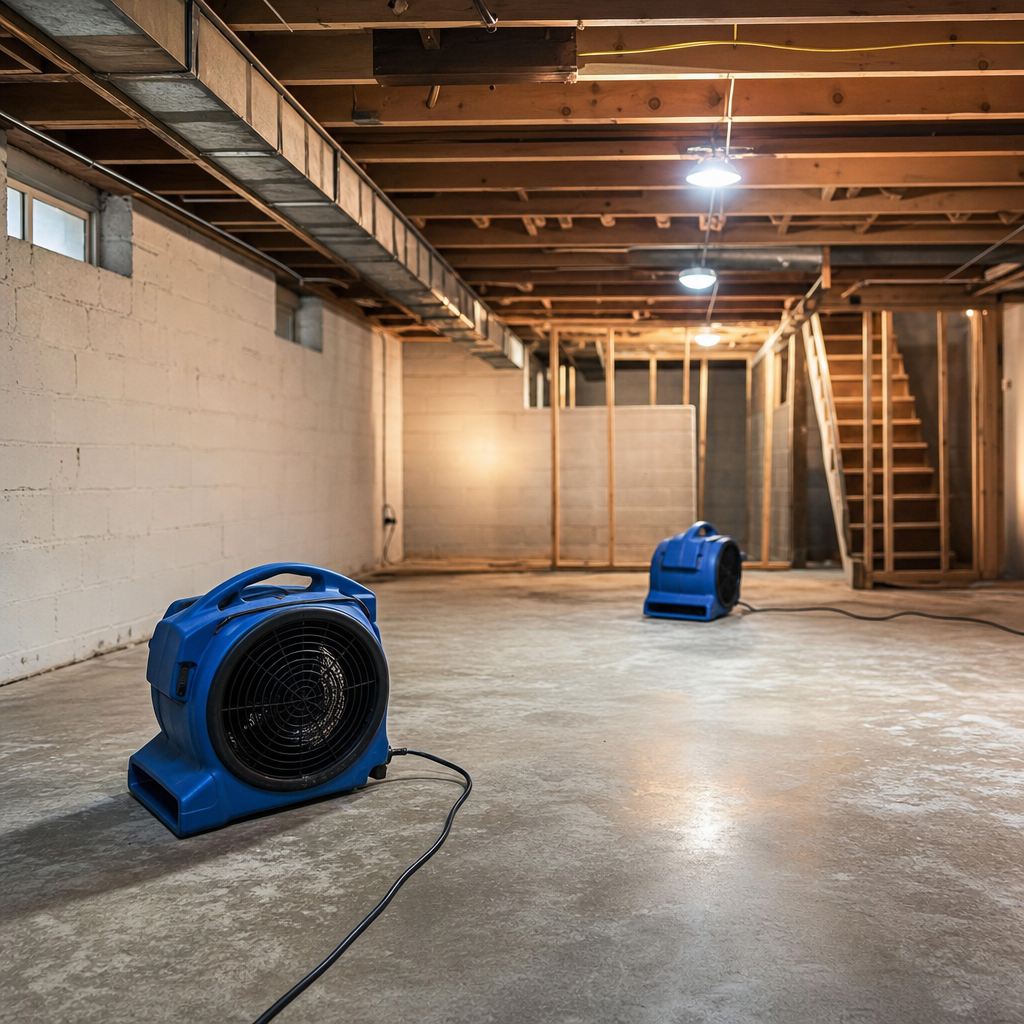
Water damage restoration falls under three industry standard classifications. Identifying the category dictates safety protocols, disposal requirements, and equipment needs.
Clean Water vs. Gray Water vs. Category 3 Black Water
| Feature | Category 1 (Clean) | Category 2 (Gray) | Category 3 (Black) |
|---|---|---|---|
| Common Source | Broken supply pipe, sink overflow | Sump pump overflow, appliance drain line | Sewer backflow, river/seawater surge, ground runoff |
| Safety Equipment | Standard work boots, gloves | Nitrile gloves, eye protection | Protective suits, respirators, rubber boots |
| Disposal Rules | Porous materials often savable | Carpet pads and filters discarded | Removal of soaked porous materials |
| Sanitization Needs | Standard surface cleaning | Antimicrobial wash | Deep sanitization and containment |
Why Dense Urban Basements Defy Standard Calculators
Standard estimation software assumes wood-framed, standalone suburban construction. In dense urban markets like Long Island City, Queens, and Brooklyn, technicians from Floodline Restoration Co. observe that basements present structural realities that drive drying times and equipment counts higher:
- Porous Historic Masonry: Century-old unreinforced brick, stone mortar, and industrial concrete absorb water like sponges. When water sits against these walls, it enters the masonry pores. Drying them requires commercial dehumidifiers running for several days.
- Shared Party Walls: In attached townhomes and commercial rows, moisture can travel across structural party walls into adjacent properties if not contained quickly.
- Sub-Grade Hydrostatic Pressure: Properties located near sea level or former industrial wetlands experience high groundwater tables. When storm drains back up, water forces its way through expansion joints and floor cracks under significant pressure.
Component Breakdown: Drywall, Subfloors, and Structural Framing
Mitigation is not simply pumping out water; it involves assessing every building component to determine what can be dried in place and what must be removed to protect the building structure.
Drywall and Flood Cuts
Drywall wicks moisture upward through capillary action. In a Category 1 loss caught immediately, wall cavities can sometimes be dried in place. In Category 2 or 3 losses, technicians perform flood cuts, removing the drywall above the high-water line. This exposes the wall studs, speeds up structural drying, and prevents hidden fungal growth.
Subfloors and Framing Recovery
Solid wood floor joists and wall studs can usually be saved if dried correctly before mold takes hold. Plywood and OSB subfloors swell when wet; if delamination occurs, they must be replaced. Industrial air movers and commercial dehumidifiers draw moisture out of structural framing.
Insulation and Mechanical Equipment
| Material | Action Required | Cost Impact |
|---|---|---|
| Fiberglass Batt Insulation | Full removal and disposal | Inexpensive material, but requires labor to strip and replace |
| Closed-Cell Spray Foam | Wash, sanitize, and dry in place | Saves replacement costs; resists water absorption |
| Water Heaters and Boilers | Safety inspection | Submerged electrical controls and gas valves usually require replacement |
Insurance Coverage, Claim Navigation, and Mold Prevention
Understanding policy language makes a major difference in how much out-of-pocket expense you bear after a flood.
Does Homeowners Insurance Cover Flooded Basement Cleanup?
Standard homeowners insurance policies often cover sudden internal water damage, such as a burst supply pipe. However, sewer backups and external flooding or surface water usually require separate coverage or specific policy endorsements.
Mold and Demolition Risks from Delays
According to professionals at Floodline Restoration Co., delays in water cleanup significantly increase the risk of mold growth and structural damage. When building materials remain saturated, mold can develop, leading to greater structural compromise and requiring more extensive demolition. Prompt water extraction is critical to limit these risks and avoid higher repair costs.
Frequently Asked Questions About Basement Flood Cleanup
How much does flooded basement cleanup cost in New York City?
Basement cleanup costs in urban areas like New York City typically fall within general restoration price ranges but can trend higher depending on property access, building materials, and the extent of contamination.
How quickly should an emergency water extraction team arrive?
An emergency water extraction team should arrive as quickly as possible. Rapid response is critical to stop water from migrating deeper into structural framing and to limit the scope of demolition required.
What credentials should a water damage contractor carry?
Look for professional restoration contractors like Floodline Restoration Co. who have verified training and experience in water mitigation, structural drying, and safety protocols.
Can I clean up a flooded basement myself with a shop vacuum?
A wet-dry vacuum works for minor, clean water spills on bare concrete. However, consumer vacuums cannot pull water from beneath baseboards, inside sill plates, or out of porous masonry. Leaving residual moisture behind frequently leads to subfloor rot, structural framing damage, and hidden mold colonies within wall cavities.
Need flooded basement cleanup cost?
We’re available now - call for a fast, free estimate.
Sources
- Flooded Basement Cleanup Cost: What Homeowners Pay Across the United States 2026 – currentcost.org (2026)
- Flooded Basement Cleanup and Restoration Cost (2026) – repaircostledger.com (2026)
Frequently Asked Questions
How does direct insurance billing work for flooded basement cleanup?
Floodline Restoration Co. works directly with your insurance provider by documenting moisture readings, structural damage, and itemized scopes using standard carrier pricing platforms. This direct billing process eliminates guesswork, speeds up claim processing, and helps property owners avoid unexpected out-of-pocket expenses.
How long does it take to dry historic masonry and brick basement walls after a flood?
Porous urban brick, stone, and mortar absorb water deeply via capillary action, typically requiring three to five days of continuous commercial dehumidification. Floodline Restoration Co. utilizes specialized moisture meters to track structural drying daily, ensuring foundation walls are completely dry before equipment is removed.
What is included in an upfront written estimate for basement flood mitigation?
A comprehensive written scope outlines the exact water contamination category, required flood cuts, contaminated material disposal, and planned drying equipment counts. Floodline Restoration Co. provides free visual inspections and detailed written estimates so property owners know total mitigation costs before work begins.
About the author
 |
David Harrison David is a certified property restoration specialist with over 12 years of experience in emergency mitigation and structural drying. He holds a degree in Construction Management from the New York Institute of Technology and is an IICRC-certified Master Water Restorer. David specializes in translating complex restoration protocols into actionable advice for property owners navigating unexpected disasters. |
Water damage, flood, or mold emergency?
We’re available now - call for a fast, free estimate.
Call Now - Free Estimate