
Quick Summary
Understanding the true water extraction cost per square foot requires evaluating vertical moisture wicking and contamination levels, with clean water extraction averaging $3.00 to $7.50 per square foot and black water ranging from $7.00 to $15.00. Floodline Restoration Co. provides transparent line-item scopes and rapid emergency response to thoroughly dry structural cavities and subfloors before secondary mold and reconstruction costs multiply. Readers will learn how mitigation pricing differs from rebuild expenses and how to secure a free on-site visual inspection for an accurate, fully documented cleanup estimate.
Water Extraction Cost Per Square Foot: Real Pricing and Rapid Cleanup
According to consumer-facing estimates from independent publishers, professional water extraction typically costs between $3.00 and $7.50 per square foot for clean water scenarios, while contaminated or sewage water ranges from $7.00 to $15.00 per square foot. Pricing varies depending on the water category, geographic region, contamination level, and whether mitigation is bundled with drying or repairs. These extraction and drying figures do not include separate repair and reconstruction costs.[1]
Flat square-foot pricing often gives property owners an incomplete picture. Water does not stay flat on a floor; it travels upward into drywall, sill plates, insulation, and framing. A realistic estimate accounts for water category, building material porosity, and vertical wick height, backed by itemized documentation.
Water Extraction Pricing and Fast Response Overview
Surface water removal is only the first step in stabilizing a flooded property. Pumping standing water stops immediate pooling, but controlled structural dehumidification is necessary to pull moisture out of dense assemblies before rot or mold develops. In dense urban buildings, multi-level water travel along conduit paths and subflooring requires prompt containment. Note that estimates vary based on water category, region, contamination level, and whether mitigation is bundled with drying or repairs.
| Water Category & Scope | Estimated Cost Per Sq. Ft. | Common Sources & Scope Details |
|---|---|---|
| Category 1: Clean Water | $3.00 – $7.50 | Supply line breaks, failed water heaters, sink overflows. Requires extraction and structural drying. |
| Category 2: Gray Water | $4.50 – $9.00 | Washing machine overflows, sump pump failures, dishwasher discharges. Requires sanitizing and selective pad removal. |
| Category 3: Black Water | $7.00 – $15.00 | Sewage backups, storm surge, river flooding. Requires biohazard containment, controlled demolition, and sanitization. |
Mitigation vs. Reconstruction Costs
Initial mitigation is distinct from rebuild and reconstruction costs rather than part of a single pricing continuum. Extraction and structural drying stabilize the structure and prevent mold growth. In contrast, separate structural reconstruction and repairs (which independent consumer estimates place around $20.00 to $37.00+ per square foot depending on materials) cover the physical replacement of removed subfloors, framing, drywall, insulation, trim, and floor finishes. As specialists at Floodline Restoration Co. point out, knowing this distinction helps property owners and facility managers review contractor scopes without confusion.[3]
What Does Water Extraction Cost Across Common Scenarios?
Need water extraction cost per square foot?
We’re available now - call for a fast, free estimate.
While consumer-facing estimates from independent publishers show standard extraction ranging between $3.00 and $7.50 per square foot, total project invoices depend on water category, regional pricing, contamination level, equipment run times, and disposal protocols.
| Service Component | Typical Cost Range | What Is Included |
|---|---|---|
| Moisture Inspection & Mapping | $150 – $500 | Thermal imaging, non-penetrating moisture meters, baseline psychrometric readings |
| Single-Room Water Extraction & Drying | $1,200 – $4,500 | Pumping, weighted extraction, high-velocity air movers, LGR dehumidifiers |
| Mold Remediation (if delayed) | $1,500 – $6,000 | HEPA air scrubbing, negative pressure containment, antimicrobial wash |
| Sewage Backup Decontamination | $2,000 – $10,000 | Biohazard removal, structural washdown, antimicrobial treatment, waste disposal |
| Whole-Property Mitigation Claim | $3,000 – $15,000+ | Multi-room extraction, continuous dehumidification logs, controlled flood cuts |
Why Flat Square-Foot Pricing Fails: Vertical Wicking and Water Categories
Treating water damage as a simple two-dimensional calculation creates misleading budgets. Within minutes of a flood, water wicks upward through porous gypsum board, wood studs, and fiberglass insulation. A puddle measuring 100 square feet on the floor might saturate 300 square feet of vertical wall assembly and ceiling cavities.
The Three Water Contamination Categories
The sanitary quality of the source determines the required personal protective equipment (PPE), disposal mandates, and drying methods:
- Category 1 (Clean Water): Originates from a sanitary source, such as a broken supply line or clean tap. Materials can often be dried in place if addressed within 24 to 48 hours.
- Category 2 (Gray Water): Contains chemical or biological contaminants that can cause discomfort or sickness, such as appliance discharge or toilet overflow with urine. Porous items like carpet padding usually need removal.
- Category 3 (Black Water): Highly contaminated water containing pathogenic agents, raw sewage, or outdoor storm surge. Demolition of porous assemblies and strict biohazard sanitization are mandatory.
Cubic Volume and Vapor Pressure
Restoration technicians calculate drying requirements based on cubic air volume rather than floor area alone. The height of the ceiling, the degree of vertical moisture migration, and the building’s ambient air conditions dictate how many low-grain refrigerant (LGR) or desiccant dehumidifiers are needed to establish the correct vapor pressure gradient for deep structural drying.
Carpet, Padding, and Subfloor Extraction
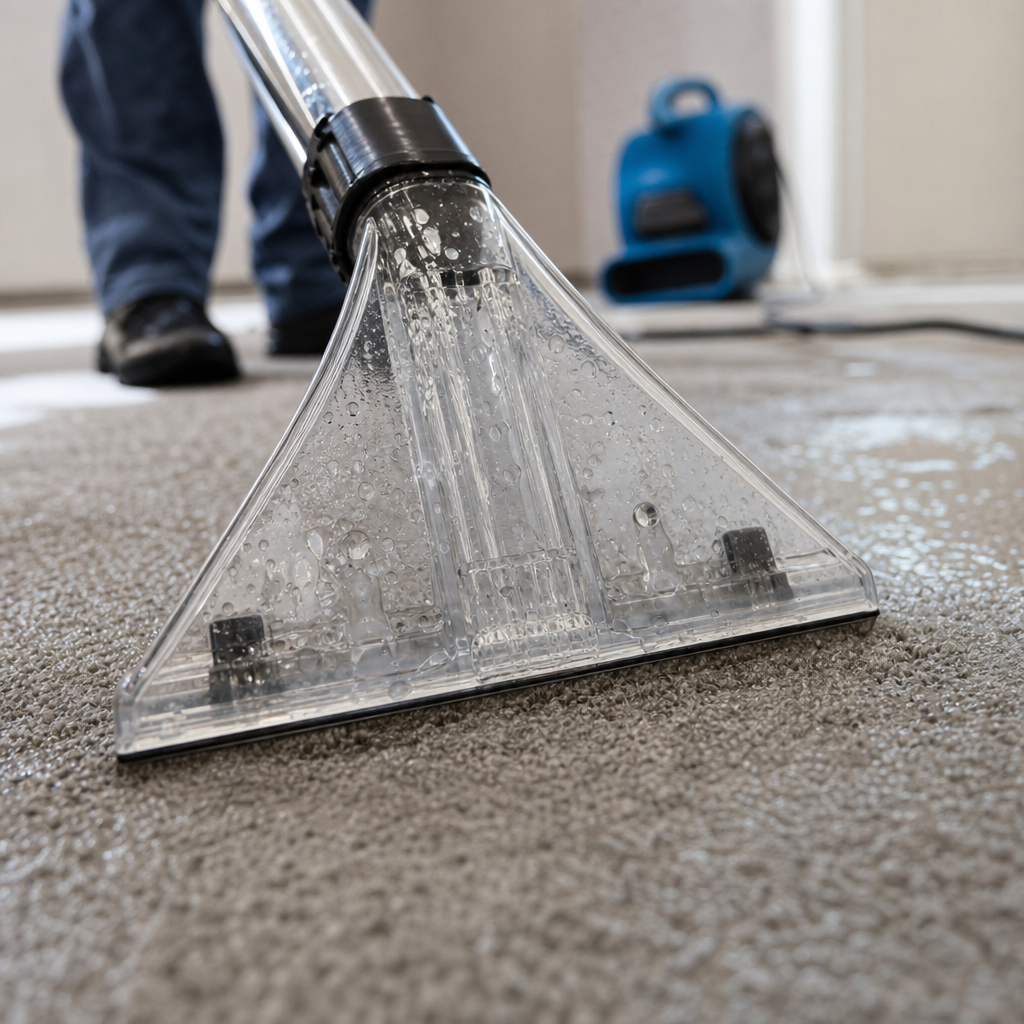
Flooring is a composite structural assembly, not a single material. While surface water can be removed quickly, moisture readily seeps into the underlayment and subfloor below.
Salvage vs. Disposal
Commercial direct-glue carpet over concrete can often be saved using weighted extraction machines and targeted airflow. Residential installations with open-cell foam padding present a different problem. Foam pads hold contaminants and trap moisture against the subfloor, meaning padding must almost always be replaced in Category 2 or 3 losses.
Subfloor Moisture Complications
When subfloors absorb water, distinct structural problems follow:
- Plywood and Hardwood Cupping: Moisture differential between the top and bottom of planks forces the edges upward.
- OSB Edge Swelling: Oriented strand board swells along joints when wet, often requiring mechanical sanding or total replacement.
- Trapped Concrete Vapor: Moisture trapped beneath vapor-impermeable vinyl or laminate breaks down adhesive lines and breeds hidden mold.
Technicians, including teams at Floodline Restoration Co., use specialized floor drying mats and high-pressure injection systems to pull moisture out of subfloors without tearing out salvageable hardwood.
Drywall, Ceilings, and Structural Cavity Drying
Need water extraction cost per square foot?
We’re available now - call for a fast, free estimate.
When leaks originate on upper floors, water follows electrical conduits, pipes, and joist bays before pooling above ceiling drywall. Surface drying cannot reach these trapped pockets.
Recognizing Hidden Saturation
Key warning signs of water hidden inside building cavities include:
- Sagging, discolored drywall or plaster along ceiling joists
- Blistering paint holding pockets of water behind walls
- Baseboards separating from studs due to framing expansion
- Musty odors emerging from electrical outlets and switch plates
Cavity Drying and Controlled Flood Cuts
To dry structural framing without widespread demolition, technicians use positive or negative air pressure injection systems by drilling small access holes behind removed baseboards. However, when contaminated water is involved, or when wet insulation is trapped behind drywall, technicians perform controlled flood cuts 12 to 24 inches above the highest moisture mark. This exposes the studs to direct airflow and removes contaminated insulation quickly.
Insurance Coverage and Restoration Invoices
When reviewing restoration estimates and insurance claims, property owners should note that initial water extraction and structural drying account for only part of the total restoration bill. Rebuilding, replacing finishes, and structural reconstruction are billed as separate scopes of work.
Frequently Asked Questions About Water Extraction Costs
How much does professional water extraction cost per square foot?
According to consumer-facing estimates from independent publishers, clean water extraction and drying averages between $3.00 and $7.50 per square foot, while contaminated gray or black water cleanup ranges from $7.00 to $15.00 per square foot. Pricing varies by region, water category, contamination level, and whether services are bundled, and excludes separate repair or reconstruction work.[2]
How does water extraction fit into a total insurance claim?
Emergency extraction and structural drying are only part of the total restoration bill. Structural repairs, drywall replacement, and finish reconstruction are billed separately from initial mitigation.
What factors increase the price of water removal and structural drying?
Main cost drivers include the contamination level of the water, how far moisture has wicked into drywall and subflooring, regional pricing differences, building accessibility, after-hours emergency response times, and the need for controlled demolition or mold containment.
How does clean water extraction pricing differ from black water removal?
Clean water (Category 1) allows technicians to dry materials in place using extractors and dehumidifiers. Black water (Category 3) contains dangerous pathogens, requiring biohazard containment, personal protective gear, removal of porous materials like carpet and drywall, and antimicrobial sanitization, which increases labor and equipment costs.
Is carpet water extraction charged separately from subfloor drying?
Yes. Surface extraction with suction equipment is billed as an active service, while structural subfloor drying involves separate daily equipment charges for dehumidifiers, air movers, and injection mat systems.
How long does emergency water extraction take for a flooded home?
According to Floodline Restoration Co., physical extraction of standing water usually takes 2 to 6 hours. Complete structural drying of framing, drywall, and subfloors typically requires 3 to 5 days of continuous, monitored dehumidification to bring moisture levels back to dry standard baselines.
Need water extraction cost per square foot?
We’re available now - call for a fast, free estimate.
Sources
- Water Damage Repair Cost per Square Foot (2026) – repaircostledger.com (2026)
- Water Damage Restoration Cost: 2026 Pricing Guide – pushleads.com (2026)
- Carpet Cleaning Pricing & Production Rates – cmmonline.com
Related reading: Flooded Basement Cleanup Cost | Call Now-10% Off | Same-Day Service | Free Estimate
Frequently Asked Questions
How can property owners prevent water extraction costs from escalating after an emergency?
Rapid mitigation is critical; securing a fast response stops vertical moisture from wicking into wall framing and insulation before repair costs multiply. Floodline Restoration Co. offers free on-site visual inspections and detailed line-item estimates so owners understand exact equipment run times and mitigation scopes before extraction starts.
When is a controlled flood cut required instead of structural cavity injection drying?
Technicians use non-invasive air injection systems when clean Category 1 water enters wall cavities without wetting internal insulation. However, if Category 2 or 3 contaminated water is involved, or if wet batt insulation is present, technicians must cut drywall 12 to 24 inches above the moisture line to remove contaminated materials.
What documentation should be included in a water extraction invoice for insurance claims?
An insurance-ready invoice must clearly separate emergency water extraction and dehumidification charges from structural repair and rebuild scopes. Teams at Floodline Restoration Co. document moisture mapping readings, psychrometric baseline logs, and itemized equipment usage to ensure direct alignment with insurance adjuster requirements.
About the author
 |
Sarah Miller Sarah Miller is a certified water damage restoration specialist with over eight years of experience working closely with property owners in the New York metropolitan area. She holds a B.S. in Construction Management from Pratt Institute and specializes in transparent cost estimation and structural mitigation protocols. Sarah is passionate about helping clients navigate complex insurance claims and restoring their properties efficiently. |
Water damage, flood, or mold emergency?
We’re available now - call for a fast, free estimate.
Call Now - Free Estimate