
Quick Summary
Navigating water removal costs is critical during an emergency, as national residential restoration averages $3,865 and ranges from $450 for minor spills to over $16,000 for complex structural flooding. Floodline Restoration Co. eliminates pricing uncertainty by breaking down clean, gray, and black water rates while delivering rapid emergency mitigation and seamless insurance claim advocacy. Readers will understand key structural drying cost drivers and can contact Floodline Restoration Co. for 24/7 emergency dispatch or request a free visual inspection with an upfront written scope of work.
Water Removal Cost: Transparent Pricing and Fast Recovery
If you are facing standing water inside your property, typical water removal costs range from $450 for minor, localized spills to $16,000 or more for severe structural flooding. Across the restoration industry, standard market estimates place an average residential water damage job around $3,865. Every hour standing water sits against building materials, the damage escalates, making prompt extraction necessary to protect both your property and your wallet.
At Floodline Restoration Co., our goal is to eliminate the guesswork during an emergency. We dispatch certified technicians across Long Island City and surrounding New York City neighborhoods with rapid response times. Our team performs an on-site inspection using professional moisture meters and provides an itemized scope of work before equipment is powered on. We also work directly with insurance carriers to help streamline claims and clarify out-of-pocket expenses.
Water Removal Cost at a Glance: What to Expect
Water Removal Cost at a Glance: Professional water extraction and drying pricing typically averages around $3.50 per square foot for clean water, $5.25 per square foot for gray water, and $7.50 per square foot for black water. National average repair costs center around $3,865, with most restoration jobs falling between $450 and $16,000 depending on contamination, affected materials, and drying duration.
Category-based pricing generally averages about $3.50 per square foot for clean water, $5.25 for gray water, and $7.50 for black water. Industry market data estimates the national average restoration price at $3,865, with most standard jobs falling between $450 and $16,000 depending on the severity of the loss.
Key Factors That Shape Your Total Bill
Flat per-square-foot pricing rarely tells the whole story, particularly in older multi-family apartments, converted industrial lofts, and dense high-rises. Sucking standing water off a floor represents only a fraction of the total work; significant expenses lie in deep structural drying inside wall cavities, floor joists, and concrete subfloors. Actual restoration invoices are determined by three main elements:
- Contamination category: Clean water from a broken supply line requires far less labor and sanitization than toxic sewage, toilet backups, or outdoor storm flooding.
- Structural footprint and depth: The square footage of wet surfaces matters, but how deeply moisture has penetrated behind baseboards, under hardwood, and down utility chases matters even more.
- Drying setup and duration: The number of commercial low-grain refrigerant (LGR) dehumidifiers, air movers, and specialized injection systems required to return materials to safe moisture levels over several days.
Why Rapid Response Lowers Total Expenses
Water weakens drywall, framing, and subflooring within hours. Quick water extraction stops mold spores from germinating and prevents expensive secondary damage. In New York City properties where concrete, brick, and shared utility risers complicate air circulation, prompt dispatch makes the difference between drying a wall in place or tearing it out completely.
What Does Water Removal Cost? Pricing Breakdown and Service Ranges
Total project pricing varies widely based on damage severity and structural drying needs, though base liquid extraction can follow baseline square-foot benchmarks. Final bills climb when drying equipment needs to run for extended periods or when water penetrates structural building components.
Standard Price Ranges Across Mitigation Services
According to data tracked by Floodline Restoration Co., industry market benchmarks indicate that water damage restoration averages approximately $3,865 nationally, with most repairs falling between $450 and $16,000 depending on severity. A U.S. Army Corps of Engineers flood study shows that water extraction and dry-out costs ranged from $1 to $4.75 per square foot with a mean of $3.65. In multi-family buildings and dense urban structures, these figures shift based on access, shared walls, and ventilation limits.[1]
Pricing also scales according to water contamination levels. Gray and black water events cost substantially more to mitigate than clean water due to chemical hazards, pathogens, specialized personal protective equipment (PPE), and regulated disposal requirements.
Water Categories: Clean, Gray, and Black Water Pricing
Water restoration standards categorize water into three distinct tiers, each requiring different labor protocols and equipment:
- Category 1 (Clean Water): Water originating from broken supply pipes, failing water heaters, or overflowing sinks. Average cost: about $3.50 per square foot. Minimal hazard; materials can usually be dried in place if addressed within 24 to 48 hours.
- Category 2 (Gray Water): Water containing chemical or biological contaminants, such as dishwasher discharge, washing machine overflows, or sump pump failures. Average cost: about $5.25 per square foot. Requires antimicrobial treatments and removal of porous items like carpet padding.
- Category 3 (Black Water): Highly contaminated, hazardous water from sewage backups, river or ocean storm surges, or standing water that has remained untreated for more than 48 hours. Average cost: about $7.50 per square foot. Demands full containment, negative air machines, heavy sanitization, and controlled demolition of porous building materials.
Base Water Extraction vs. Complete Structural Drying
A common misconception among property owners is that pumping out visible standing water solves the disaster. In reality, standing water extraction is only one part of the overall restoration process. A major portion of the work and expense is tied to subsurface structural drying: extracting trapped moisture from subfloors, concrete slabs, insulation, and timber framing using LGR dehumidifiers and high-velocity air movers running continuously for several days.
In Long Island City and Queens, where many residential units are housed in historic brick factory conversions or high-rise concrete towers, standard per-square-foot metrics fall short. Moisture travels along vertical risers and settles behind masonry, demanding controlled drying chambers and specialized equipment to avoid mold growth.
Key Structural Cost Drivers: Where Hidden Water Traps Reside
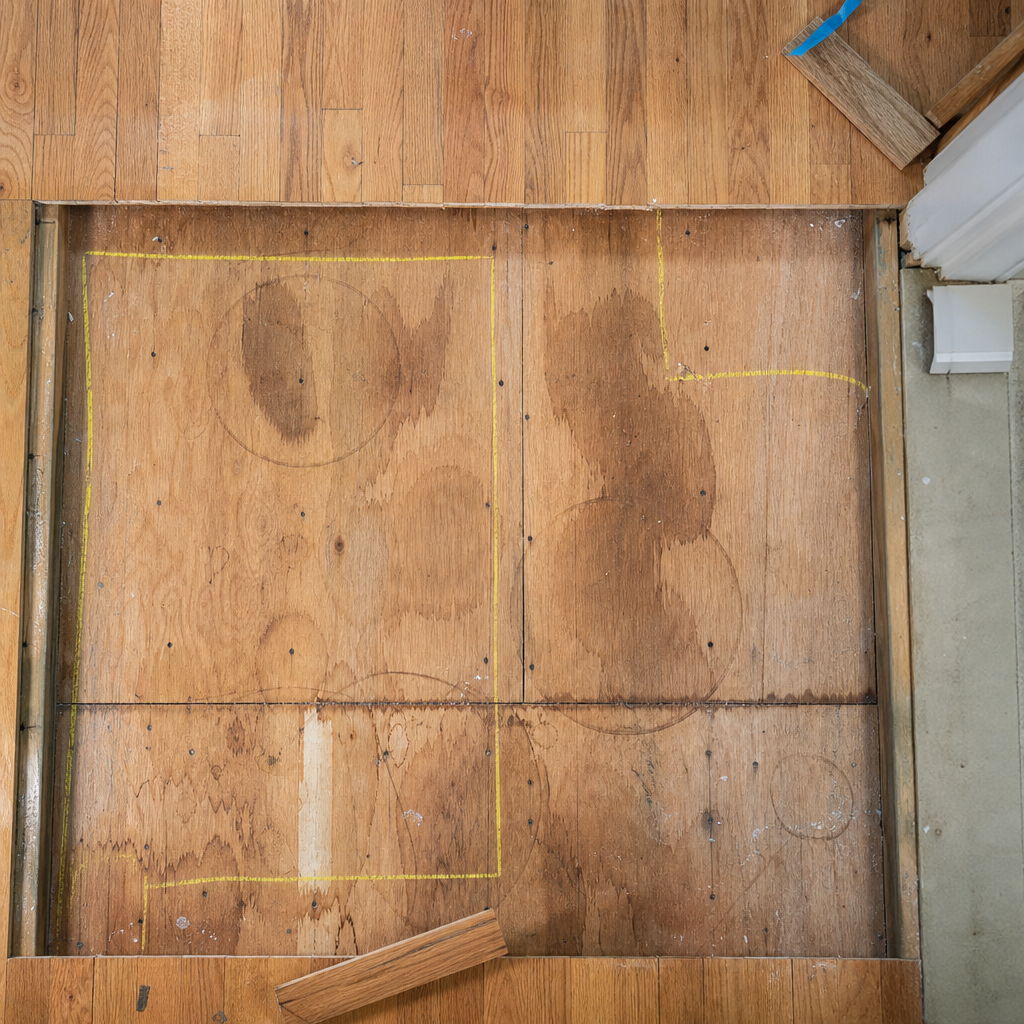
Hidden moisture trapped in framing and subfloors drives the majority of mitigation expenses. While surface water can be pumped out in a couple of hours, structural drying requires precise temperature, airflow, and humidity management to prevent rot and structural decay.
In older urban properties, moisture migrates into brick cavities, sub-slab spaces, and utility chases. Technicians must seal these areas into targeted drying zones to pull deep moisture out without contaminating living spaces.
Drywall and Ceiling Cavities: Repair vs. Controlled Demolition
Drywall wicks water upward quickly. When internal moisture levels stay above 16%, wood framing and drywall become prime environments for fungal growth. Rather than ripping down entire walls immediately, technicians use thermal imaging cameras and non-invasive moisture meters to determine if cavity-injection drying systems can salvage the drywall. If contamination is severe, targeted flood cuts (typically 12 to 24 inches above the water line) are made to remove saturated sections while saving the upper wall.
Hardwood Floors, Subfloors, and Joists
Water trapped beneath hardwood causes cupping, crowning, and subfloor delamination. Instead of tearing up expensive flooring right away, restoration specialists like Floodline Restoration Co. often deploy targeted vacuum mat systems that draw moisture straight through the hardwood and subfloor. This technique saves thousands of dollars in replacement costs, provided it is installed before the wood fibers warp permanently.
| Structural Area | Non-Invasive Strategy | Demolition Alternative |
|---|---|---|
| Drywall Cavities | Directed heat and cavity air injection | Continuous flood cuts (12 to 24 inches) |
| Hardwood and Subfloor | Targeted vacuum mat extraction systems | Full plank tear-out and subfloor replacement |
| Concrete Slabs | High-capacity desiccant dehumidification | Flooring removal and extended mechanical drying |
Basements, Crawl Spaces, and Multi-Story Building Risers
Flooded basements and lower-level commercial utility rooms require heavy-duty submersible pumps and trash pumps. Pumping standing water out of a flooded basement and thoroughly drying the space varies widely based on water volume and square footage, and costs climb significantly if sewage is present or if mechanical equipment (furnaces, boilers, electrical panels) has been submerged.
How to Navigate Insurance Claims and Choose an Emergency Restoration Partner
Property insurance policies generally cover water extraction when the damage is sudden and accidental, such as a ruptured pipe or an appliance line break. They typically exclude damage resulting from unresolved maintenance issues, long-term seepage, or exterior flooding (unless you carry dedicated flood insurance through the NFIP or a private carrier).
To help claims process smoothly, restoration contractors like Floodline Restoration Co. typically compile comprehensive documentation for insurance adjusters, including:
- Initial thermal imaging scans and photographic proof of source damage.
- Daily psychrometric readings (ambient relative humidity, temperature, and grains per pound).
- Detailed moisture mapping logs showing that materials have returned to baseline dry standards.
- Itemized billing matched to standard industry pricing platforms like Xactimate.
Essential Criteria for Selecting an Emergency Restoration Contractor
- IICRC Certifications: Ensure technicians hold credentials such as Water Damage Restoration Technician (WRT) and Applied Microbial Remediation Technician (AMRT).
- Upfront Written Scopes: Avoid contractors who refuse to give clear, itemized scopes before tearing into walls or setting equipment.
- Insurance Coordination: Choose a firm experienced with detailed insurance documentation and standard billing platforms.
- Rapid On-Site Response: Look for prompt emergency dispatch with 24/7 live call support.
Frequently Asked Questions About Water Removal Pricing
How much does emergency water removal cost per square foot?
Emergency water extraction and drying pricing typically averages about $3.50 per square foot for Category 1 clean water losses. For Category 2 gray water (such as washing machine overflows), costs average about $5.25 per square foot. Category 3 black water or sewage backups average about $7.50 per square foot due to safety and biohazard disposal protocols.
Does homeowner insurance cover water extraction and drying costs?
Yes, standard homeowner and commercial property policies usually cover water extraction and structural drying if the incident was sudden and accidental (for instance, a frozen burst pipe or a failed water heater). Policies generally exclude damage caused by lack of maintenance, gradual leaks, or external floodwaters unless a separate flood policy is in place.
What is the average cost to remove water from a flooded basement?
The cost to pump water out of a flooded basement and dry the structure depends heavily on the water volume, contamination category, and whether building materials are affected. If the basement is finished with drywall and carpeting, or if the flooding involves raw sewage backup, total restoration and sanitization expenses can increase substantially.
What is the cost difference between water extraction and full structural drying?
Water extraction (pumping or vacuuming standing liquid from surfaces) is only one part of the overall restoration process. Structural drying (operating industrial LGR dehumidifiers, air movers, and specialized wall and floor drying systems over several days) accounts for a major portion of the total project effort, ensuring trapped moisture is fully eliminated from structural framing and subflooring.
What should you do while waiting for emergency extraction crews?
Take these three steps immediately to contain damage and lower your overall restoration costs:
- Turn off the main water shut-off valve to stop the source.
- Shut off electrical breakers feeding power to the wet areas if safe to access.
- Elevate furniture, drapes, and loose valuables off wet floors to prevent moisture wicking and staining.
At Floodline Restoration Co., we provide on-site visual inspections and 24/7 emergency dispatch throughout Long Island City and the surrounding boroughs. Contact our emergency line for immediate assistance.
Sources
- Restoration Cost Statistics (2026) – rapideyeinspections.com (2026)
Related reading: Flooded Basement Cleanup Cost | Call Now-10% Off | Same-Day Service | Free Estimate
Related reading: Water Extraction Cost Per Square Foot | Call Now-10% Off | Same-Day Service | Free Estimate
Frequently Asked Questions
How long does professional structural drying take after standing water is removed?
Complete structural drying typically takes 3 to 5 days depending on the affected materials and building layout. Floodline Restoration Co. monitors progress with daily psychrometric readings and moisture mapping to ensure framing and subfloors reach certified dry standards before pulling equipment.
How does Floodline Restoration Co. help property owners navigate insurance claims?
Floodline Restoration Co. streamlines the claim process by documenting damage with thermal imaging, logging daily drying metrics, and submitting itemized scopes directly through industry-standard Xactimate billing. This comprehensive proof helps adjusters approve sudden and accidental water losses quickly to reduce out-of-pocket expenses.
Can hardwood floors be salvaged after water damage without full replacement?
Yes, hardwood floors can frequently be saved if rapid extraction begins within 24 to 48 hours before wood fibers warp permanently. Floodline Restoration Co. deploys specialized vacuum mat drying systems that pull trapped moisture straight through the planks and subfloor, avoiding expensive flooring tear-outs.
About the author
 |
Sarah Miller Sarah Miller is a certified water damage restoration specialist with over eight years of experience working closely with property owners in the New York metropolitan area. She holds a B.S. in Construction Management from Pratt Institute and specializes in transparent cost estimation and structural mitigation protocols. Sarah is passionate about helping clients navigate complex insurance claims and restoring their properties efficiently. |
Water damage, flood, or mold emergency?
We’re available now - call for a fast, free estimate.
Call Now - Free Estimate