
Quick Summary
Determining whether you can clean black mold yourself depends on the contamination size, material porosity, and underlying moisture sources rather than mold color alone. While minor growth under ten square feet on nonporous surfaces can be safely cleaned using proper protective gear, extensive contamination and porous materials require specialized containment from experts like Floodline Restoration Co. Readers will understand critical safe removal thresholds and know when to request a certified moisture assessment and visual inspection before disturbing suspected mold colonies.
Can You Clean Mold Yourself? Safe Removal Rules
Mold color does not determine the cleanup method or hazard level. Deciding whether you can clean mold yourself depends on the affected area, the material involved, the moisture source, the level of contamination, and your health status. Homeowners can often clean small mold areas, generally less than about 10 square feet, on hard, nonporous surfaces using detergent and water followed by immediate drying. However, extensive areas (approximately 10 square feet or more), major water damage, contaminated water or sewage, recurrent mold, moldy drywall removal, or health concerns warrant professional guidance or remediation.[1]
People with asthma, chronic lung disease, allergies, weakened immune systems, or other health concerns should consult a health professional before cleanup. Every mold cleanup project requires finding and fixing the moisture source, and painting or caulking over mold should be avoided.
Can You Clean Mold Yourself? The Short Answer
Direct Answer: You can often clean mold yourself if the area is small (generally less than about 10 square feet) and limited to hard, nonporous surfaces. Porous materials may need to be discarded when they cannot be thoroughly cleaned and dried. If the growth is extensive, involves contaminated water or sewage, recurrent mold, or moldy drywall removal, or if you have health concerns, seek professional guidance or remediation.
Before beginning, identify the type of material and the extent of the water issue. People with health concerns should speak with a healthcare provider prior to undertaking mold cleanup.
The 10-Square-Foot Rule and Cleanup Considerations
As a general benchmark, cleanup can often be managed by the property owner if the affected area is small, generally less than about 10 square feet. For larger or more complex situations, professional remediation from specialists like Floodline Restoration Co. is recommended.
When mold covers approximately 10 square feet or more, involves major water damage, contaminated water or sewage, or recurrent growth, professional guidance or remediation is warranted to manage the cleanup safely.
Key Rules Before Starting Any Cleanup
- Material determines the outcome: Hard, nonporous surfaces can often be cleaned with detergent and water and dried immediately. Porous materials may need to be discarded when they cannot be thoroughly cleaned and dried.
- Fix the moisture source first: Repair plumbing leaks, roof leaks, or drainage issues before or during cleaning. Do not paint or caulk over mold.
- Never mix cleaning chemicals: Never mix bleach with ammonia or other cleaning products, as this produces toxic gases.
Cleaning Porous Materials and Safe Chemical Use
Porous materials like drywall, ceiling tiles, and carpet padding present challenges during cleanup. These porous items may need to be discarded when they cannot be thoroughly cleaned and dried.
Safe Cleaning Practices and Moisture Control
For most small cleanup jobs on hard, nonporous surfaces, detergent and water followed by immediate drying is sufficient. If bleach is used on nonporous surfaces, the CDC limits the concentration to no more than 1 cup of household bleach per gallon of water. Bleach is not required or universally preferred, and liquids do not substitute for removing porous materials that cannot be thoroughly cleaned and dried.[2]
Dry homes and belongings within 24 to 48 hours when possible to help prevent mold growth after water damage.[4]
| Material Type | Recommended Cleanup Approach | Key Safety Considerations |
|---|---|---|
| Hard, Nonporous (Ceramic tile, metal, glass, sealed countertops) | Clean with detergent and water, then dry immediately. If bleach is used, use no more than 1 cup of bleach per gallon of water. | Never mix bleach with ammonia or other cleaning products. Provide adequate ventilation. |
| Porous Substrates (Drywall, ceiling tiles, insulation, carpet padding) | Discard when materials cannot be thoroughly cleaned and dried. | Avoid spreading dust and wear appropriate protective equipment during removal. |
Drywall, Ceilings, and Subfloors: Repair vs. Replace Decisions
Deciding whether materials can be cleaned or need removal depends on the substrate and whether they can be fully cleaned and dried.
| Substrate | Standard Protocol | Can It Be Cleaned? |
|---|---|---|
| Drywall & Sheetrock | Discard when it cannot be thoroughly cleaned and dried; moldy drywall removal warrants professional guidance. | Only if superficial and fully cleanable and dryable |
| Ceiling Tiles | Discard when they cannot be thoroughly cleaned and dried. | No, if heavily contaminated or water-damaged |
| Solid Wood Framing / Studs | Clean, wash, and dry thoroughly. | Yes (if structurally sound and thoroughly dried) |
| Glazed Tile & Grout | Clean with detergent and water, then dry immediately. | Yes |
Drywall and Ceiling Tiles
Porous items like drywall and ceiling tiles may need to be discarded when they cannot be thoroughly cleaned and dried. If significant water damage has occurred behind walls or if drywall removal is necessary, professional remediation is warranted.
Flooring and Structural Materials
Porous wood or subflooring exposed to moisture should be evaluated to see if it can be thoroughly cleaned and dried. When structural materials remain wet, damaged, or cannot be thoroughly cleaned, professional evaluation by teams like Floodline Restoration Co. is recommended.
What Personal Protective Equipment (PPE) Is Required for Mold Cleaning?
Need can you clean black mold yourself?
We’re available now - call for a fast, free estimate.
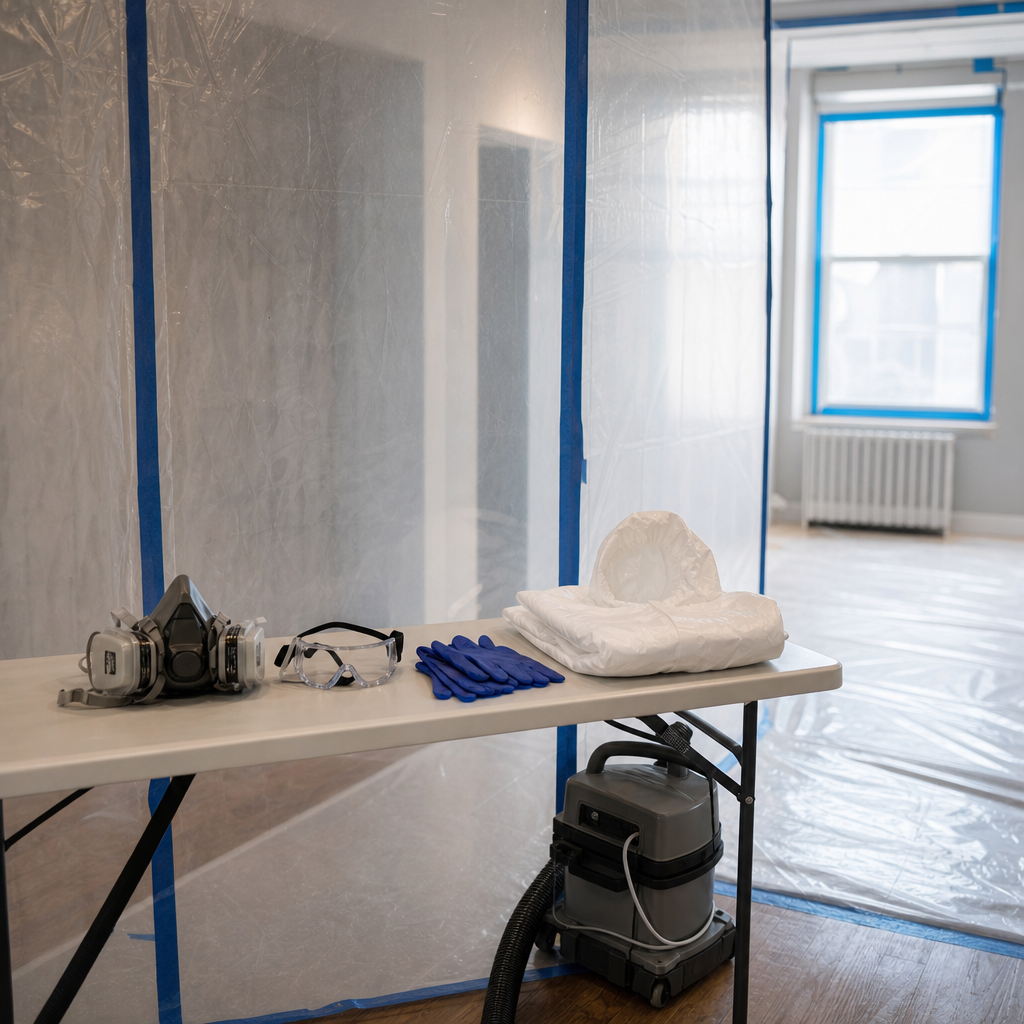
Cleaning mold can expose you to airborne particles. Basic personal protection is recommended to avoid contact and inhalation.
Essential Gear for Minor Surface Cleanup
For ordinary small cleanup projects, use CDC-supported personal protective equipment:
- Respirator: Wear at least a NIOSH-approved N95 respirator.
- Goggles: Wear protective goggles that do not have open vent holes.
- Gloves: Wear protective gloves (such as long rubber, nitrile, or neoprene gloves).
Broader protective equipment, such as disposable coveralls or higher-level respirators, may be recommended in professional or large-scale remediation settings.
When to Seek Professional Mold Remediation
Extensive mold growth (approximately 10 square feet or more), major water damage, contaminated water or sewage backups, recurrent mold problems, moldy drywall removal, or health concerns warrant professional guidance or remediation.
Factors That Influence Professional Remediation
Professional remediation depends on several project elements:
| Factor | Remediation Consideration |
|---|---|
| Extent of Spread | Areas of 10 square feet or larger require professional containment and remediation techniques. |
| Water Contamination | Problems involving sewage or contaminated floodwaters require specialized professional handling. |
| Material Condition | Porous materials that cannot be thoroughly cleaned and dried require safe removal and replacement. |
| Structural Repairs | Addressing underlying leaks, structural drying, and rebuilding damaged assemblies. |
Why Fast Action Is Important
Dry homes and belongings within 24 to 48 hours when possible to help prevent mold growth after water damage. Addressing moisture sources promptly prevents small issues from expanding.
Choosing a Professional Mold Remediation Contractor
If professional remediation is needed, choose a reputable contractor experienced in mold cleanup and moisture management, such as Floodline Restoration Co.
What to Look For:
- Clear containment and removal plan: The contractor should provide a written plan for isolating the work area and removing contaminated materials.
- Moisture source identification: A qualified contractor helps ensure that the underlying moisture problem is identified and resolved.
- Health and safety practices: The team should use appropriate protective equipment and safe disposal methods.
Frequently Asked Questions About Mold Removal
When is professional mold remediation needed?
Professional guidance or remediation is warranted when mold covers extensive areas (approximately 10 square feet or more), results from contaminated water or sewage, recurs after cleaning, requires moldy drywall removal, or when building occupants have health concerns.[5]
How fast should wet materials be dried after water damage?
Dry homes and belongings within 24 to 48 hours when possible to help prevent mold growth after water damage.
Can painting over mold resolve the problem?
No. You should not paint or caulk over mold. The moisture source must be fixed and the mold properly cleaned or removed before applying paint or sealants.
Can liquids like vinegar or bleach save moldy drywall?
No. Liquids do not substitute for removing porous materials that cannot be thoroughly cleaned and dried.[3]
Need can you clean black mold yourself?
We’re available now - call for a fast, free estimate.
Sources
- [PDF] A Brief Guide to Mold, Moisture, and Your Home … – EPA – epa.gov (2012)
- Mold Clean-Up After Disasters: When to Use Bleach – cdc.gov (2018)
- Homeowner’s and Renter’s Guide to Mold Cleanup After Disasters – cdc.gov (2015)
- 8 Tips to Clean Mold – CDC – cdc.gov
- Mold Clean Up Guidelines and Recommendations – CDC – cdc.gov
Related reading: Water Damage Insurance Claim – Call Now-10% Off – Same-Day Service – Free Estimate
Related reading: Water Damage Insurance Claim Process – Call Now-10% Off – Same-Day Service – Free Estimate
Related reading: Burst Pipe Cleanup – Call Now-10% Off – On-Site in 60 Minutes – Free Estimate
Frequently Asked Questions
What happens if you improperly disturb black mold during DIY removal?
Scrubbing, cutting, or tearing out moldy materials without professional containment aerosolizes millions of microscopic spores and mycotoxins, rapidly cross-contaminating your HVAC system and adjacent living areas. Before disturbing suspected colonies, Floodline Restoration Co. recommends scheduling a professional visual inspection and moisture assessment to establish proper containment.
How can you tell if black mold has spread behind drywall or under subfloors?
Persistent musty odors, discolored baseboards, peeling paint, and warped surfaces often indicate hidden mold colonies actively feeding on trapped moisture behind wall assemblies. Specialists at Floodline Restoration Co. utilize non-invasive thermal imaging and moisture meters to accurately map structural dampness before any materials are dismantled.
Why is bleach ineffective for cleaning black mold on porous surfaces like drywall?
Bleach only disinfects nonporous surfaces; its chemical structure prevents it from penetrating porous materials, leaving embedded mold roots (hyphae) completely intact. In fact, the water component of bleach can soak into drywall or wood framing, inadvertently feeding recurrent mold growth deep within the substrate.
About the author
 |
David Harrison David is a certified property restoration specialist with over 12 years of experience in emergency mitigation and structural drying. He holds a degree in Construction Management from the New York Institute of Technology and is an IICRC-certified Master Water Restorer. David specializes in translating complex restoration protocols into actionable advice for property owners navigating unexpected disasters. |
Water damage, flood, or mold emergency?
We’re available now - call for a fast, free estimate.
Call Now - Free Estimate