
Quick Summary
When pressurized plumbing failures release water into wall cavities and subfloors, immediate burst pipe cleanup is critical to stop structural degradation and prevent hazardous mold development. Effective remediation relies on rapid water extraction, thermal moisture mapping, and controlled cavity drying, services that Floodline Restoration Co. provides around the clock alongside thorough insurance claim documentation. Readers will learn how to stabilize active plumbing leaks and can call Floodline Restoration Co. for rapid 45-minute emergency dispatch and a free visual inspection.
Burst Pipe Cleanup: Rapid Response Water Extraction & Repair
When a pressurized plumbing line splits inside a building, water escapes under continuous force until someone shuts the supply off. Professional burst pipe cleanup focuses on immediate containment, physical water extraction, moisture mapping, and controlled structural drying. While standard restoration jobs often range between $1,000 and $4,000 for basic water removal, total costs depend on the volume of water released, how many floors were penetrated, whether structural assemblies were compromised, and the extent of reconstruction required. Because prompt moisture control and drying reduce the risk of mold growth, taking fast action is essential to protecting your property and budget.[3]
If you are facing an active leak, securing an immediate on-site response helps prevent secondary structural damage.
Burst Pipe Cleanup: Fast Emergency Response and Action Steps
Burst Pipe Cleanup: Fast Emergency Response and Action Steps in brief: Stabilizing a burst pipe requires immediate water shutoff, electrical hazard management, water extraction, and structural drying. Contained losses may take about 3 to 5 days to dry under controlled conditions, while structural drying can take longer and may require several weeks depending on the damage.
Managing pipe burst water damage repair requires an orderly sequence. Pressurized water spreads rapidly along building pathways, making step-by-step containment necessary before drying equipment is installed.
Immediate Action Checklist When a Pipe Bursts
If you are trying to figure out what to do when a pipe bursts, follow these steps before the restoration crew arrives:
- Shut off the main water supply: Turn your primary gate valve or ball valve clockwise until it stops. If you live in an apartment or commercial building, notify building management to isolate the riser.
- Cut electrical power: Turn off circuit breakers supplying the flooded areas from the main panel. Never walk through standing water if outlets, baseboard heaters, or appliances are submerged.
- Call for emergency water extraction: Contact a certified restoration company to dispatch technicians equipped with commercial extraction units and moisture detection tools.
Understanding Freeze Breaks and Structural Risks
Freezing temperatures cause water inside pipes to expand, which can crack copper, PEX, and other plumbing lines. Supply lines routed through exterior walls, unheated crawl spaces, and drafty areas are especially prone to freeze breaks during sudden winter drops. Property age also plays a significant role. According to a water damage study by the Connecticut Insurance Department, homes approximately 30 years old are three times as likely to suffer plumbing supply or drainage failures compared to brand-new builds. Furthermore, homes over 20 years old showed a 37% higher likelihood of experiencing water damage involving shower fixtures.[1]
Drywall, Ceilings, and Interstitial Moisture Migration
In multi-level structures, apartment buildings, and commercial spaces, water rarely stays contained to a single floor. It can travel through utility chases, floor penetrations, and wall cavities. This movement behind finished surfaces is known as interstitial moisture migration.
Recognizing Hidden Water in Wall Cavities
Water pooling between walls can travel horizontally before showing visible signs on drywall or plaster. Technicians, such as those from Floodline Restoration Co., use thermal imaging cameras to observe temperature differentials and moisture meters to assess framing materials. Locating these moisture pockets helps guide targeted drying and prevent structural decay.
Repair vs. Replacement for Saturated Sheetrock
Standard gypsum board loses structural integrity when saturated. If drywall has absorbed significant moisture, or if ceiling panels are sagging under the weight of trapped water, controlled cuts may be performed. Opening damaged drywall exposes the wall cavity, allowing drying equipment to address internal framing before rebuilding begins.
Hardwood and Subfloor Restoration After a Pipe Burst
Hardwood flooring and underlying plywood subfloors can absorb water rapidly after a plumbing break. When boards take on moisture, the wood expands and distorts.
Symptom Checklist: Cupping, Crowning, and Buckling
- Cupping: The outer edges of individual floorboards rise higher than their centers due to moisture underneath the planks.
- Crowning: The center of the board bulges upward, which can occur when the surface dries faster than the underside.
- Buckling: Flooring planks lift away from the subfloor, indicating severe expansion from prolonged water exposure.
Targeted Drying Systems vs. Subfloor Tear-Out
Rather than removing hardwood immediately, restoration technicians like those at Floodline Restoration Co. may deploy specialized floor drying systems. These panels draw moisture from the subfloor and planks. When applied promptly, this process can pull trapped water out and allow the wood to stabilize, potentially avoiding full floor replacement.[4]
Basement and Crawl Space Water Extraction Solutions
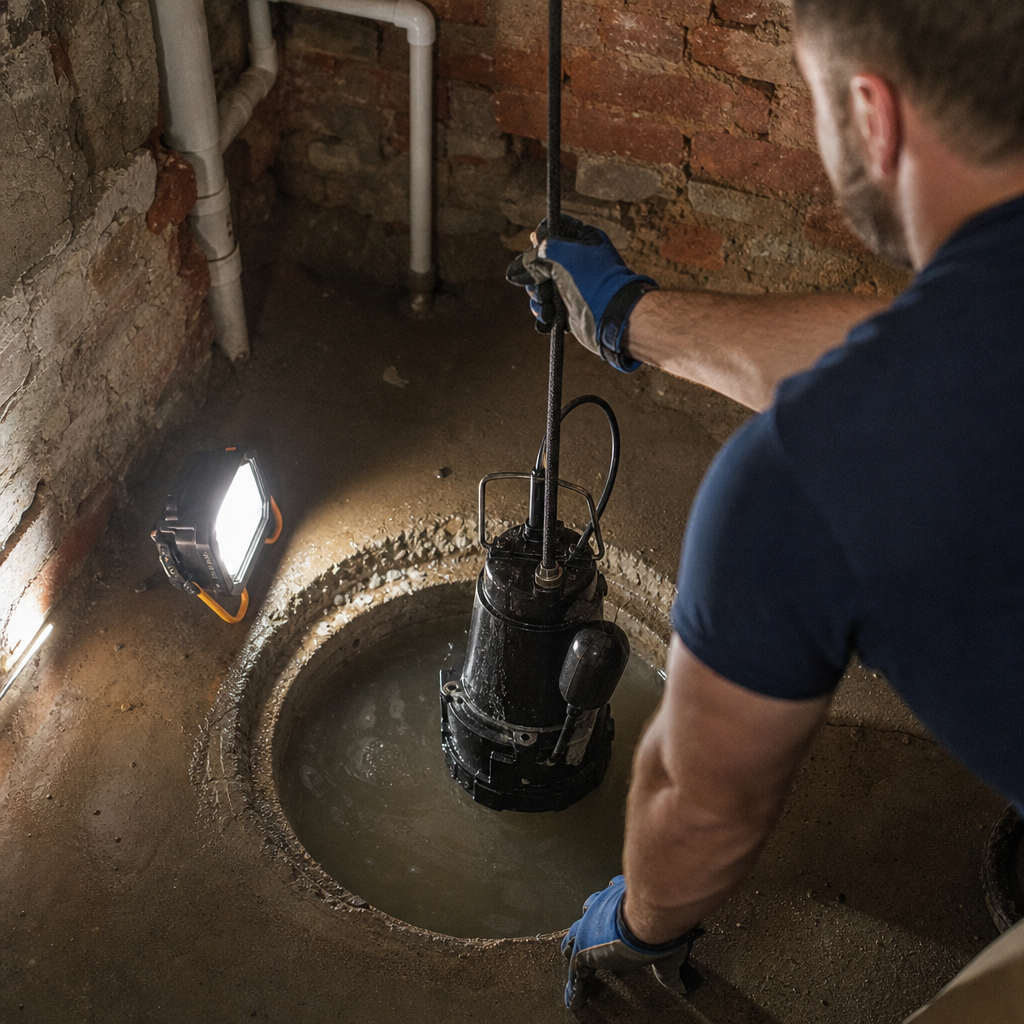
Basements and crawl spaces present extraction challenges because below-grade rooms often have limited ventilation. When an upper-floor line breaks, gravity directs water into the lower levels, affecting concrete, sill plates, and support framing.
Managing Flooding in Lower Levels
Standing water in basements can penetrate porous masonry and concrete. Commercial extractors and pumps are used to remove standing water quickly, preventing moisture from migrating deeper into foundation materials where drying becomes more difficult.[5]
Preventing Secondary Moisture Damage and Mold
Because below-grade spaces tend to stay cool and damp, commercial dehumidifiers and air movers are typically installed following water removal. Prompt moisture control and drying help reduce humidity and lower the risk of mold growth and structural issues.
What Does Burst Pipe Cleanup Cost? Pricing and Service Comparison
The total cost of burst pipe cleanup depends on the volume of water, building layout, and the extent of required mitigation. Typical restoration costs often range from $1,000 to $4,000 for standard water removal and drying, though costs can vary significantly depending on the severity of the damage and reconstruction requirements.
Standard Cost Considerations for Restoration Services
Key variables determining the final estimate include:
- Extraction volume: The depth and spread of standing water requiring removal.
- Equipment requirements: The amount of air movers, dehumidifiers, and specialty drying equipment needed on-site.
- Material removal: Controlled removal of unsalvageable insulation, baseboards, drywall, or floor coverings.
- Sanitization and monitoring: Cleaning treatments and moisture tracking throughout the drying process.
Does Homeowners Insurance Cover Burst Pipe Water Damage?
Homeowners insurance policies may cover sudden and accidental burst-pipe water damage when applicable conditions are met, subject to policy terms, exclusions, deductibles, and coverage limits.
Sudden and Accidental Language Explained
Insurance policies generally distinguish between sudden plumbing ruptures and damage resulting from gradual leaks or lack of maintenance. A pipe that freezes and bursts or a line that splits suddenly may qualify for coverage, whereas long-term leaks or neglected maintenance may be excluded. Property owners are typically expected to maintain heat in the building or drain plumbing lines during freezing conditions.[2]
Documenting the Loss for Claim Processing
To assist with the insurance claim process, thorough documentation is recommended:
- Photograph and record the damaged areas and affected belongings before cleanup begins.
- Maintain moisture tracking and service records provided by the restoration crew, such as Floodline Restoration Co.
- Submit itemized repair estimates and loss documentation directly to your insurance adjuster.
Frequently Asked Questions About Burst Pipe Cleanup
Getting clear answers helps you take the right steps when managing a plumbing emergency on your property.
How much does burst pipe cleanup cost?
Basic water extraction and drying for a typical localized incident often ranges between $1,000 and $4,000. Overall costs can vary depending on the extent of water spread, drying duration, and reconstruction needs.
How fast should a restoration crew arrive after a pipe bursts?
Emergency restoration services like Floodline Restoration Co. should be contacted as soon as possible after a pipe bursts. Rapid response helps contain water spread, protects structural materials, and facilitates faster drying.
How long does the structural drying process take?
Contained losses may take about 3 to 5 days under controlled conditions, while structural drying can take longer and may require several weeks depending on the damage.
How quickly can mold become a risk after a plumbing leak?
Moisture from a plumbing leak creates conditions favorable for mold growth. Prompt moisture control and drying significantly reduce the risk of mold developing on building materials.
Sources
- Water Main Break Rates In the USA and Canada: A Comprehensive Study – downloads.regulations.gov (2018)
- mwairpresentationfebruar – SEC.gov – sec.gov
- STUDY FACTS: – portal.ct.gov
- 110+ Water Damage Statistics | 2026 Data Report – gitnux.org – gitnux.org (2026)
- Breaking water mains present US, Canada with $452B … – asce.org (2024)
Frequently Asked Questions
How do technicians detect hidden water trapped behind walls after a burst pipe?
Restoration teams use non-invasive thermal imaging cameras and digital moisture meters to map temperature anomalies and locate interstitial moisture pockets inside wall cavities. Floodline Restoration Co. applies this moisture mapping technology to pinpoint structural saturation behind drywall and framing without performing unnecessary demolition.
Can wet hardwood flooring be saved without replacement after a plumbing break?
Yes, specialized commercial floor mat drying systems can extract trapped water directly from hardwood planks and underlying subfloors to reverse cupping and crowning. Floodline Restoration Co. deploys high-powered extraction panels rapidly to pull bound moisture out of the wood before permanent warping requires a full tear-out.
How does professional burst pipe cleanup assist with homeowners insurance claims?
Technicians establish detailed proof of sudden and accidental water damage through daily moisture logs, thermal images, and itemized mitigation records. Floodline Restoration Co. works directly with insurance adjusters, supplying full structural loss documentation to support coverage under standard property policy terms.
About the author
 |
David Harrison David is a certified property restoration specialist with over 12 years of experience in emergency mitigation and structural drying. He holds a degree in Construction Management from the New York Institute of Technology and is an IICRC-certified Master Water Restorer. David specializes in translating complex restoration protocols into actionable advice for property owners navigating unexpected disasters. |
Water damage, flood, or mold emergency?
We’re available now - call for a fast, free estimate.
Call Now - Free Estimate