
Quick Summary
Knowing what to do if pipe bursts is critical to halting rapid flooding, avoiding severe electrical hazards, and mitigating costly structural damage. While property owners must immediately shut off the main water valve and move valuables to safety, Floodline Restoration Co. acts as the vital emergency partner providing rapid water extraction, thermal moisture mapping, and comprehensive insurance claim management. By following this guide, you will understand how to safely stabilize your plumbing emergency and secure professional structural drying within the critical 24- to 48-hour window to prevent long-term mold growth.
What to Do If Pipe Bursts: Fast Action Emergency Guide
When a pipe bursts in your building, quick action is essential to limit property damage. Your immediate priority is to stop the flow of water by shutting off the main water supply right away. Avoid standing water near electrical equipment, and turn off electrical power only if it is safe to do so. Once conditions are safe, document visible damage, contact your insurer promptly, and contact a licensed plumber to resolve the plumbing issue. As specialists at Floodline Restoration Co. note, drying wet materials and affected areas within 24 to 48 hours whenever possible helps reduce the likelihood of long-term damage and mold growth.[5]
Water can move rapidly through floors, ceilings, and wall assemblies. Once the main valve is closed and the area is safe to enter, photograph or record visible damage, notify your insurance company, and begin protecting your belongings. This guide outlines the essential steps to secure your property and address the damage. See also Water Damage Restoration Long Island City | Call Now-10% Off | Same-Day Service | Free Estimate.
Before an Emergency: Locate and Learn to Operate Your Water Shutoff Valve
To prepare before an emergency occurs, locate your property’s main water shutoff valve and learn how to operate it properly. Main shutoff valves are commonly located in basements, crawlspaces, utility rooms, or near the water meter. Knowing the location of the valve and how to turn it off before a pipe bursts allows you to react quickly and minimize water damage.
What to Do If Pipe Bursts: Immediate Emergency Protocol
Immediate Action Checklist: Shut off the main water supply immediately to stop flooding. Avoid standing water near electrical equipment, and turn off the power only if it is safe to do so. When safe, document visible damage, contact your insurer promptly, and contact a licensed plumber.
Key Actions to Take
These core steps help stabilize your property:
- Cut the Water Supply: Shut off the main water supply immediately to stop the flow of water into the building.
- Address Electrical Hazards Cautiously: Avoid standing water near electrical equipment, and turn off electrical power only if it is safe to do so.
- Document Damage and Seek Assistance: Document visible damage with photos and videos when safe, contact your insurer promptly, and contact a licensed plumber for the pipe problem. Additional professional mitigation assistance may also be appropriate.
Why Rapid Response Is Important
According to the Insurance Information Institute, the average homeowners insurance loss for water damage and freezing was $15,400 from 2019 through 2023. According to the team at Floodline Restoration Co., wet materials and affected areas should be dried within 24 to 48 hours whenever possible to prevent microbial growth and further structural deterioration.[1]
Documentation for Insurance
Use your smartphone or camera to take photos and videos of the damaged pipe, visible water levels, and affected personal property as soon as it is safe to do so. Keeping an inventory of damaged items and noting specific details will support your insurance claim and provide a clear record for your adjuster.[4]
Step 1: Shut Off the Main Water Supply and Manage Electrical Safety
Shutting off the water supply is the primary step to prevent further flooding throughout the property.
Operating the Main Water Shutoff Valve
Depending on the type of valve installed on your main line:
- Ball valves: Turn the lever handle a quarter-turn so that it is perpendicular to the pipe.
- Gate valves: Turn the round wheel handle clockwise until it is fully closed.
Electrical Safety Precautions
Water in proximity to electrical fixtures or wiring presents a significant hazard. Avoid standing water near electrical equipment. Turn off power at the circuit breaker only if you can safely access the electrical panel without walking through water. If you cannot reach the panel safely, do not attempt to enter flooded areas until a qualified professional or the local utility has secured the electrical service.
Step 2: Document Damage and Contact Your Insurer
Need what to do if pipe bursts?
We’re available now - call for a fast, free estimate.
When the area is safe, document the visible damage thoroughly. Property insurance coverage commonly depends on whether the damage was sudden and accidental and whether the property was adequately maintained and heated. Consult your specific policy terms or contact your insurer promptly to understand what coverage applies.
Documenting the Loss
Take clear photos and videos of the break and all affected areas before extensive cleanup begins. Keep damaged items accessible so an insurance adjuster can review them during the claims process.
Protecting Undamaged Belongings
When safe to do so, move dry personal items, furniture, and electronics away from damp areas to prevent secondary moisture absorption.
Step 3: Contact a Licensed Plumber and Mitigation Support
A licensed plumber should be contacted to evaluate and repair the burst pipe. In addition, you should contact your insurer promptly to report the loss. Depending on the extent of water intrusion and the drying requirements, professional water damage mitigation assistance from providers like Floodline Restoration Co. may also be appropriate to ensure wet materials and affected areas are dried within 24 to 48 hours whenever possible.
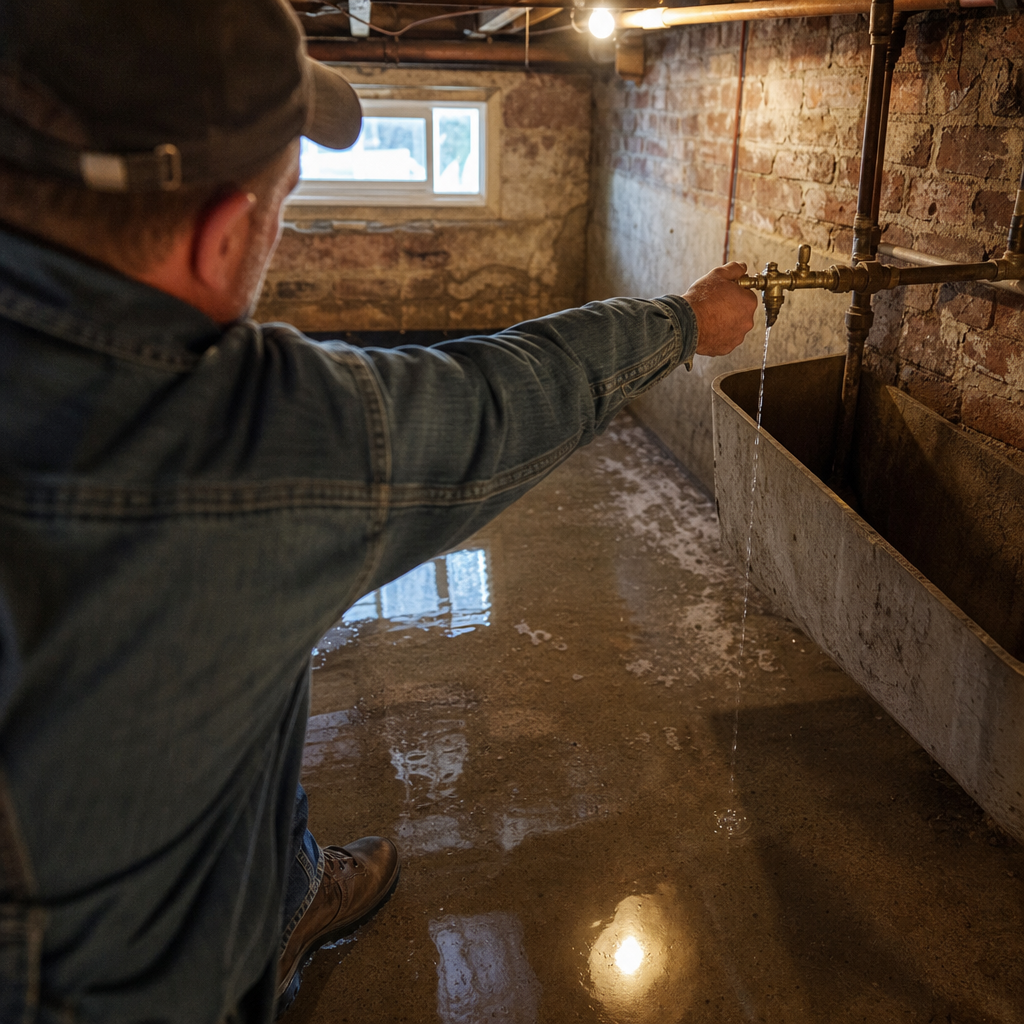
Step 4: Drain Remaining Faucets Safely
Once the main water supply is shut off, residual water may remain in the plumbing lines.
- Open lower faucets: Opening lower fixtures, such as basement sink taps or exterior spigots, helps relieve residual pressure and drain remaining water out of the system.
- Do not use open flames: If pipes are frozen, never use open flames or blowtorches to thaw them, as this creates a severe fire and safety hazard. Contact a licensed plumber for assistance.
Burst Pipe Costs and Claims
As observed by Floodline Restoration Co., the total financial impact of a burst pipe varies based on the volume of water released and the structural materials affected. According to the Insurance Information Institute, the average homeowners insurance loss for water damage and freezing was $15,400 between 2019 and 2023.[3]
Preventing Frozen and Burst Pipes in Cold Weather
Taking preventive measures during cold weather helps protect plumbing lines from freezing and bursting:
- Insulate vulnerable pipes: Add insulation to pipes located in unheated areas such as basements, crawlspaces, and exterior walls.
- Let faucets run at a trickle: During freezing weather, allow faucets connected to vulnerable pipes to run at a slow trickle to relieve pressure.
- Ensure pipes receive adequate heat: Keep cabinet doors open under kitchen and bathroom sinks during cold spells so that warm room air reaches the plumbing.
- Maintain building heating: Ensure all areas of the property receive adequate heat during freezing weather.
Frequently Asked Questions About Burst Pipe Emergencies
How much does burst pipe water damage repair cost?
Costs vary widely depending on the extent of the water intrusion and the materials affected. From 2019 through 2023, the average homeowners insurance loss for water damage and freezing was $15,400, according to the Insurance Information Institute.[2]
Does insurance cover water damage from a burst pipe?
Insurance coverage commonly depends on whether the damage was sudden and accidental and whether the property was adequately heated and maintained. Exclusions, such as those related to maintenance issues or slow leaks, depend on individual policy terms.
Who should I contact when a pipe bursts?
Contact a licensed plumber to inspect and repair the damaged plumbing, and contact your insurer promptly. Depending on the extent of the damage, professional mitigation assistance from a team like Floodline Restoration Co. may also be appropriate to help dry wet materials within 24 to 48 hours whenever possible.
Need what to do if pipe bursts?
We’re available now - call for a fast, free estimate.
Sources
- Major winter storm may affect over 170 million Americans - how much it could cost you – cnbc.com (2025)
- Average Insurance Payout For Water Damage (June 2026) – consumershield.com (2026)
- Ultimate Guide: Does Homeowners Insurance Cover Burst Pipe … – infoseemedia.com (2026)
- Water Damage: What's Covered; What's Not – Triple-I® – iii.org (2007)
- Freeze & Thaw: Bad Mix For All – newsroom.statefarm.com (2023)
Related reading: Flood Cleanup Cost | 10% Off & Free Estimate | Same-Day Service
Related reading: Water Mitigation Cost Per Square Foot – Call Now-10% Off – Same-Day Service – Free Estimate
Related reading: Fire Damage Insurance Claim – Call Now-10% Off – Same-Day Service – Free Estimate
Frequently Asked Questions
What should I do immediately after shutting off the water valve for a burst pipe?
Once the water supply is off and power is secured, call Floodline Restoration Co. for 24/7 emergency water extraction. Our specialists provide 45-minute on-site response to pump out standing water and initiate structural drying within the critical 24- to 48-hour window.
How do restoration specialists detect hidden water inside walls and ceilings?
Technicians at Floodline Restoration Co. use thermal moisture mapping and advanced infrared tools to locate moisture trapped behind drywall, flooring, and wall cavities. This comprehensive inspection ensures all hidden water is thoroughly dried to prevent structural decay and microbial growth.
How does professional mitigation assist with burst pipe insurance claims?
Floodline Restoration Co. provides complete insurance claim management by capturing detailed photographic evidence, thermal logs, and itemized loss documentation. We coordinate directly with your insurance adjuster to verify sudden and accidental water damage and expedite coverage approval.
About the author
 |
Sarah Miller Sarah Miller is a certified water damage restoration specialist with over eight years of experience working closely with property owners in the New York metropolitan area. She holds a B.S. in Construction Management from Pratt Institute and specializes in transparent cost estimation and structural mitigation protocols. Sarah is passionate about helping clients navigate complex insurance claims and restoring their properties efficiently. |
Water damage, flood, or mold emergency?
We’re available now - call for a fast, free estimate.
Call Now - Free Estimate