
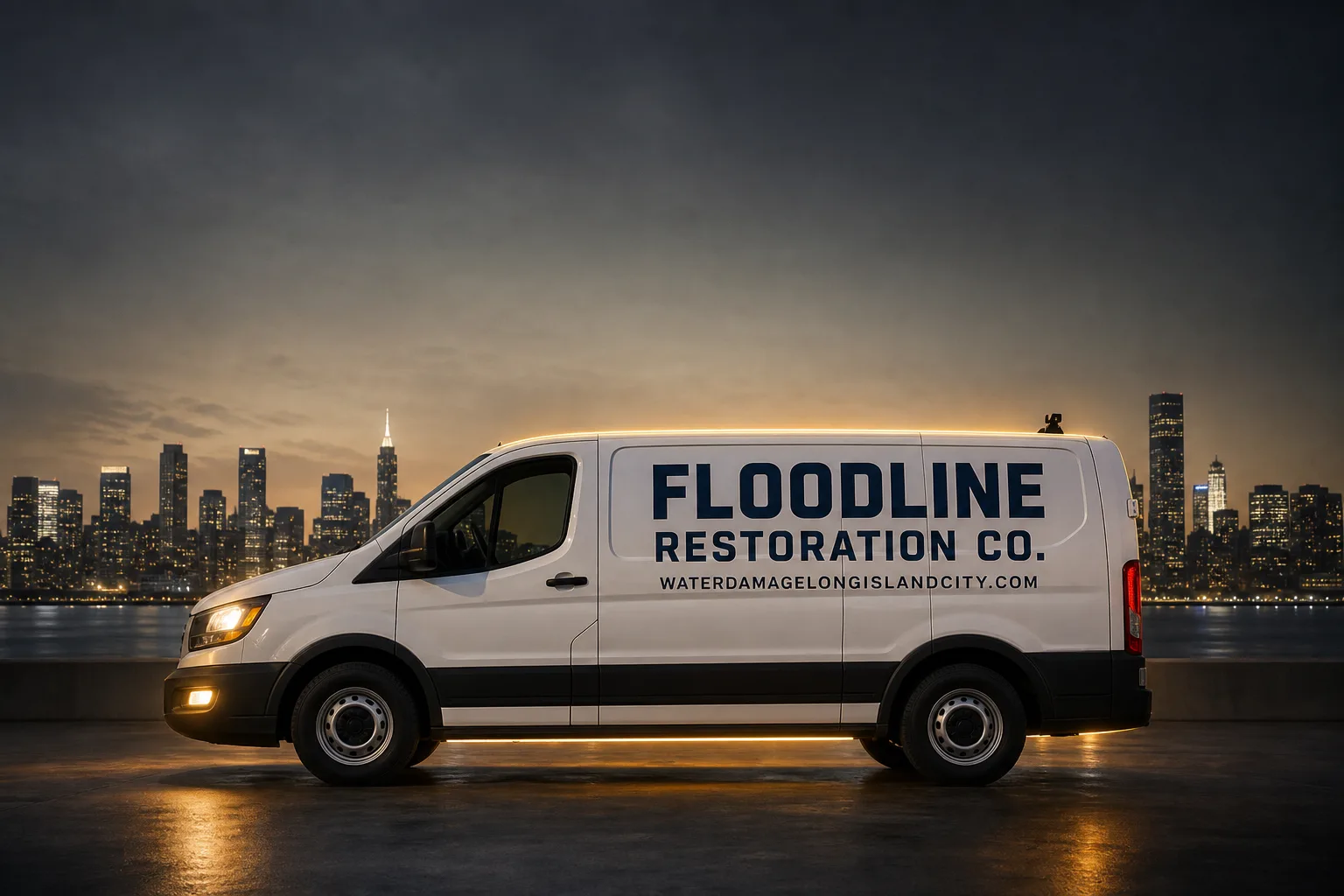
Free visual inspection and a written scope of work before any mitigation begins - photos, moisture readings, and drying logs go in your claim file
The scope we write is the scope we bill. Anything new gets shown to you, in writing, before we touch it.
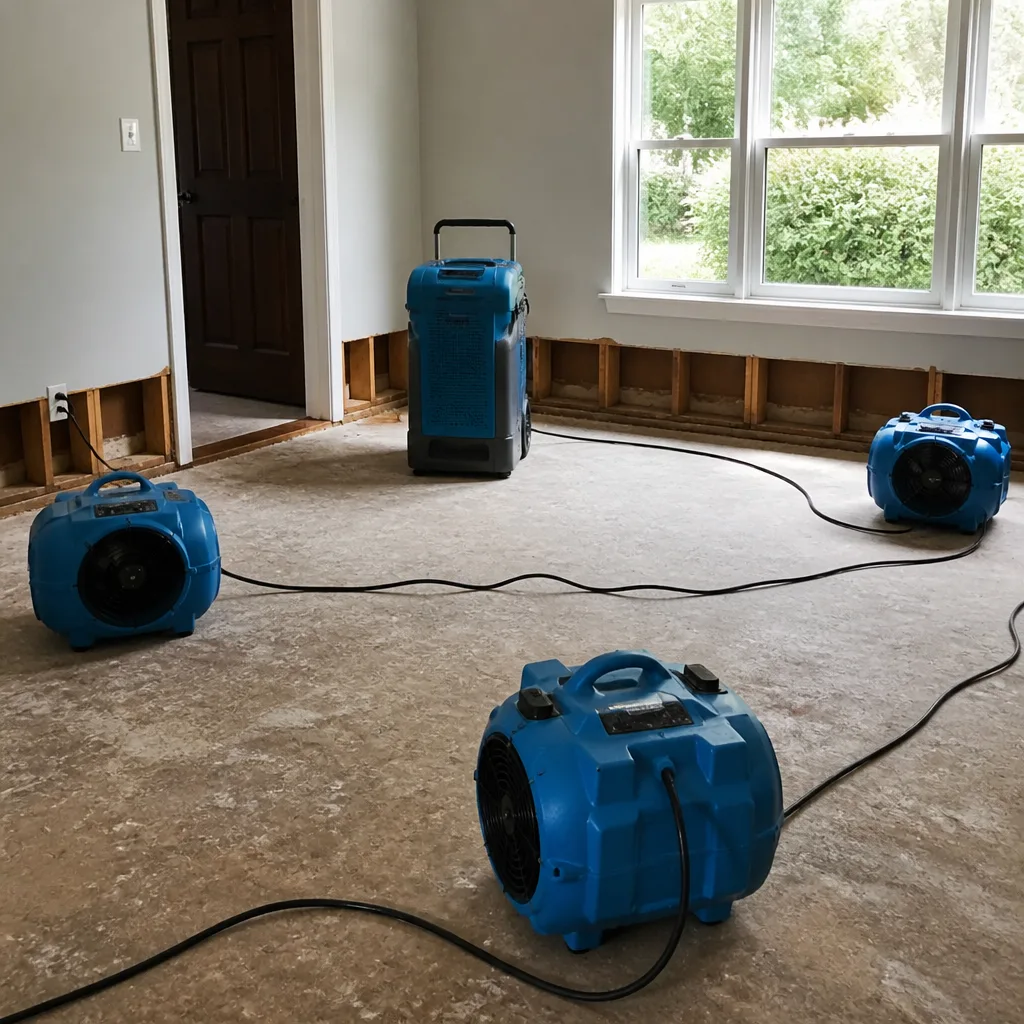
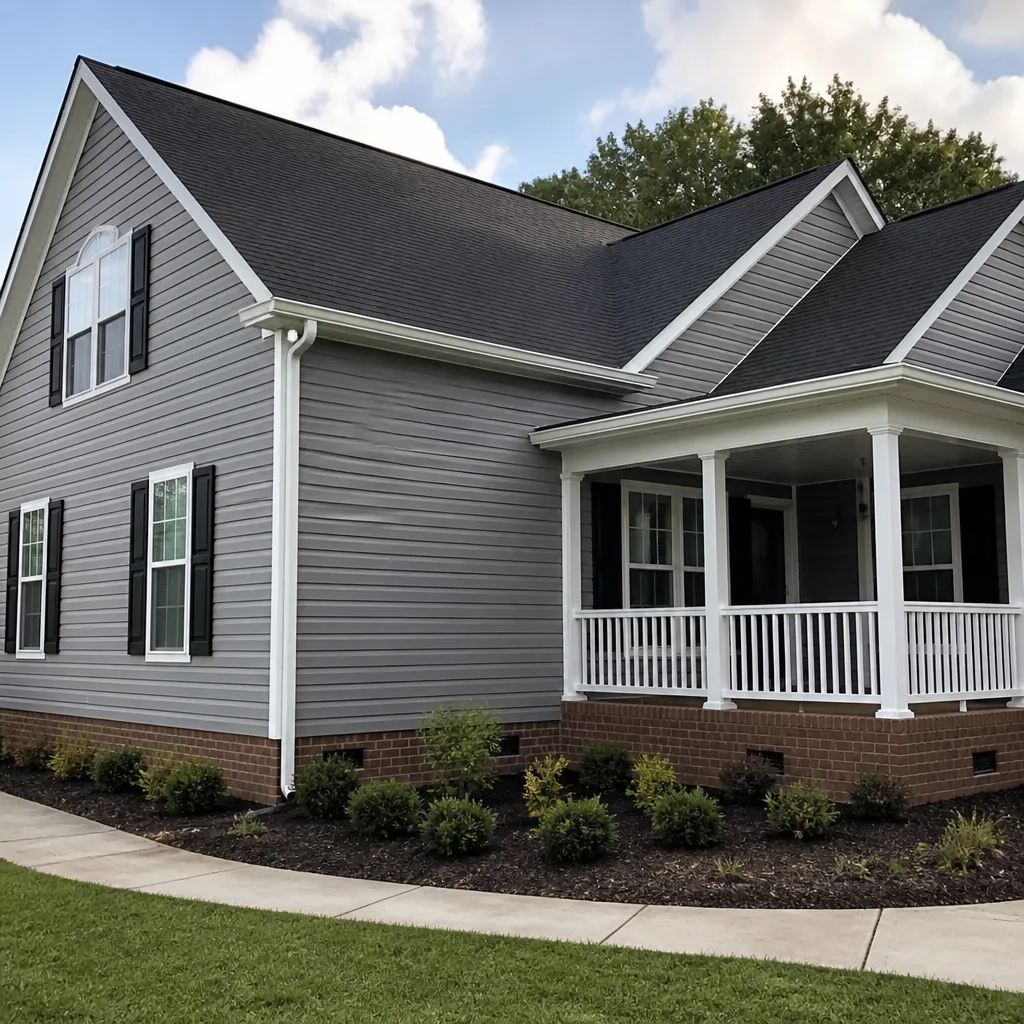
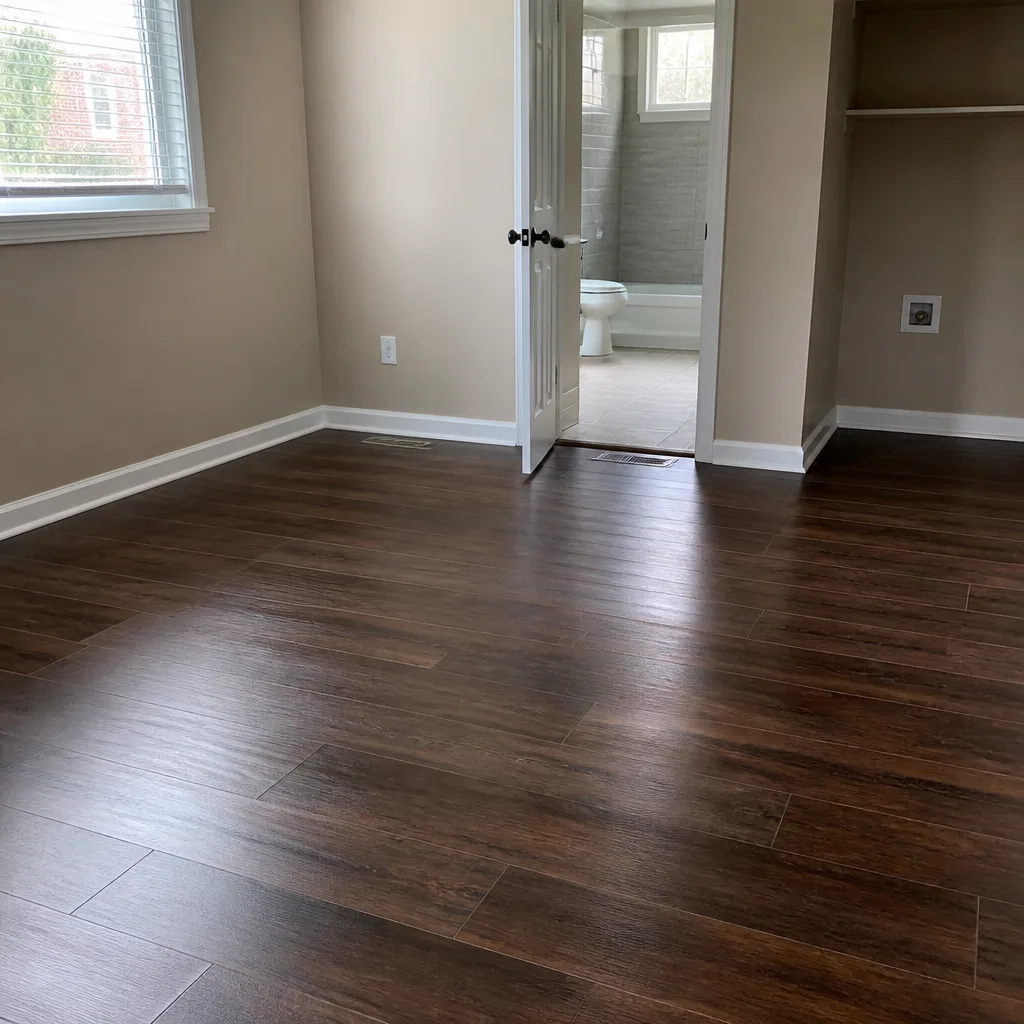
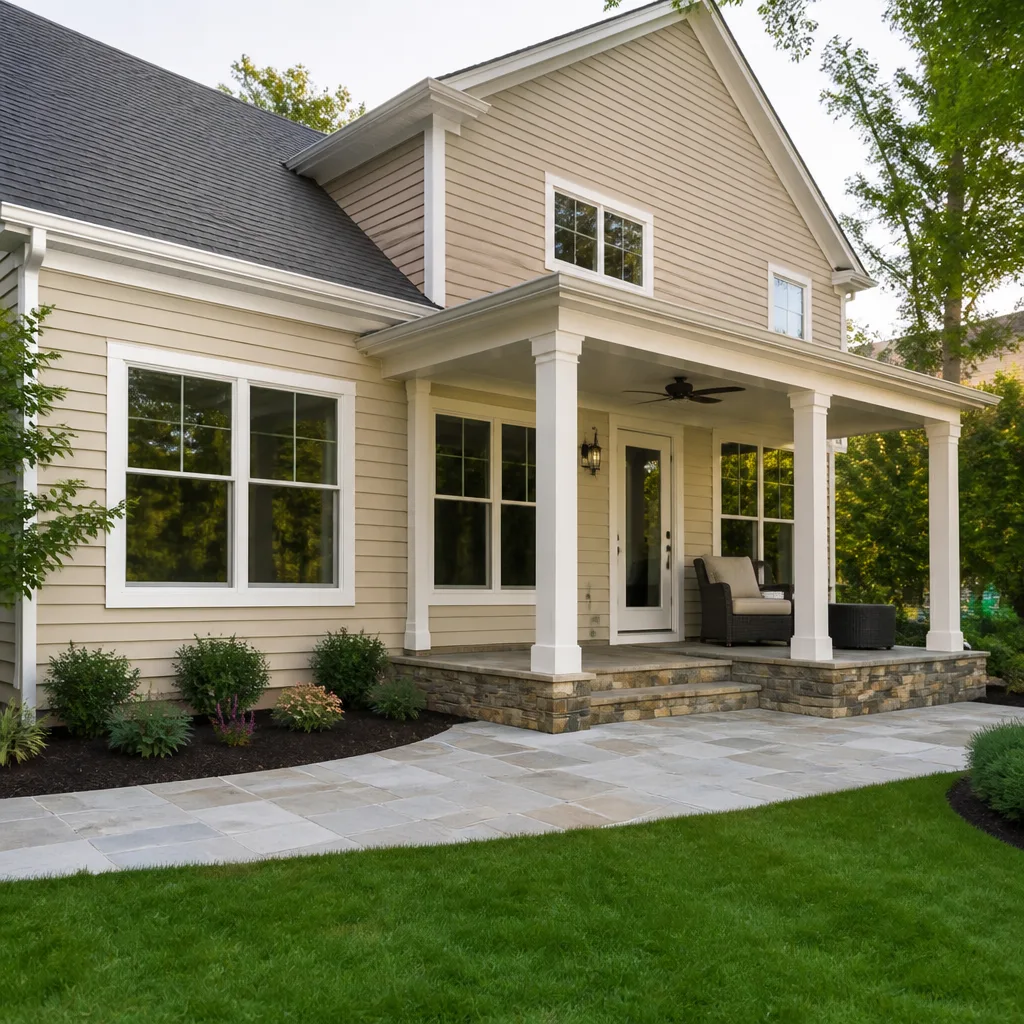
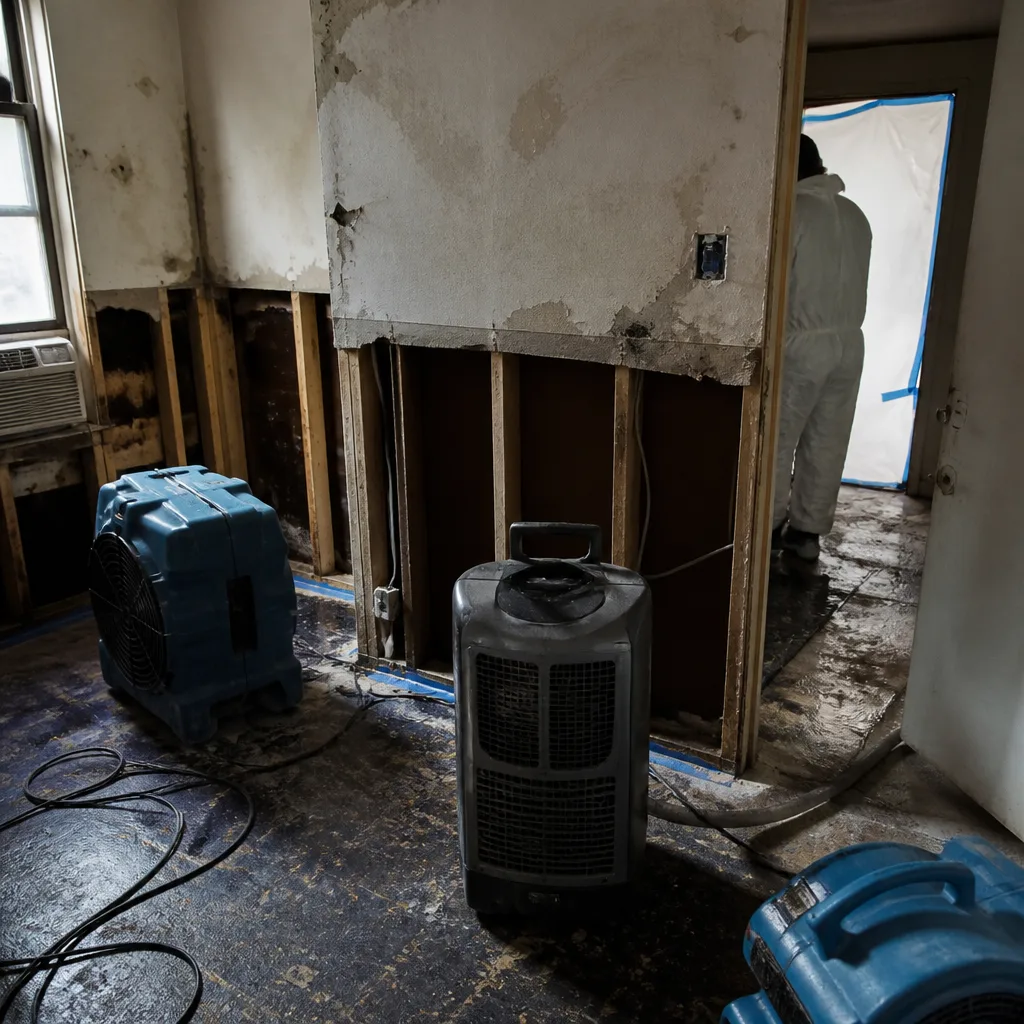 Before
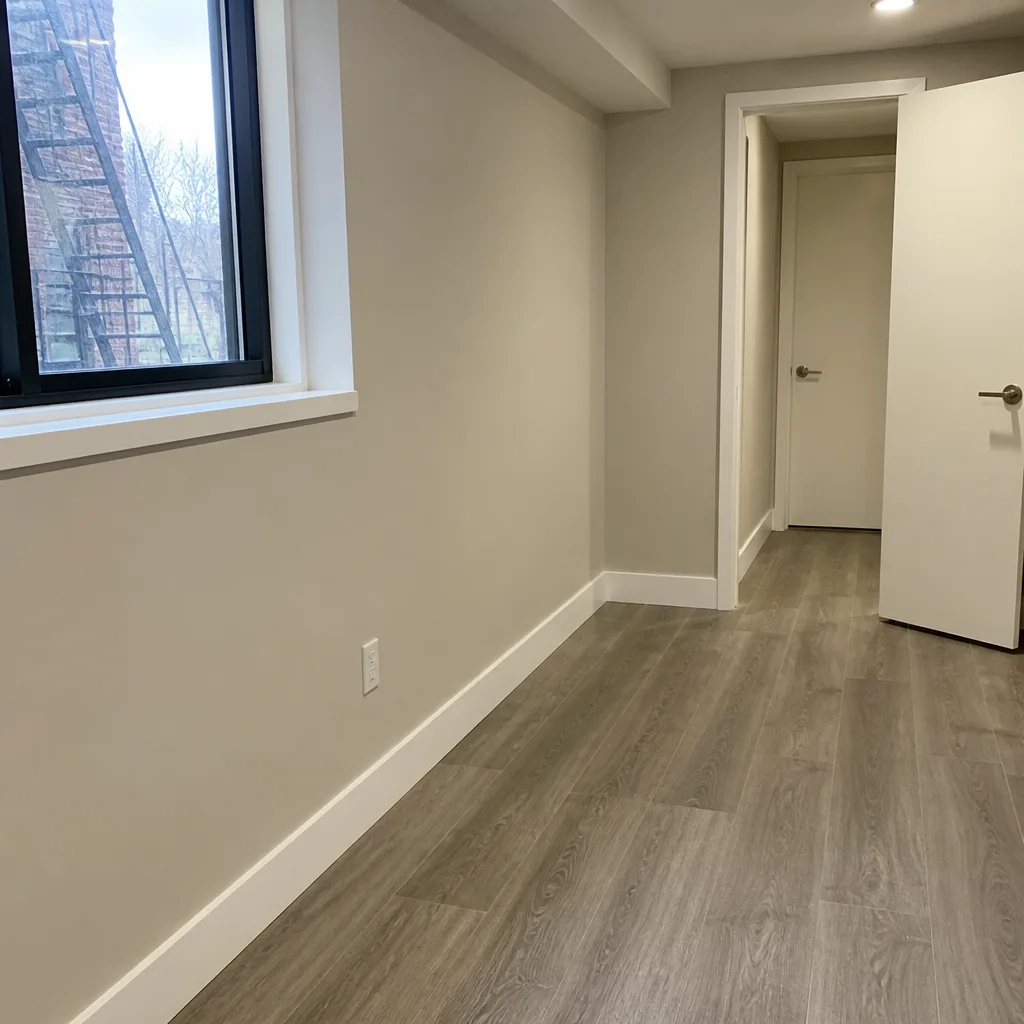 After
After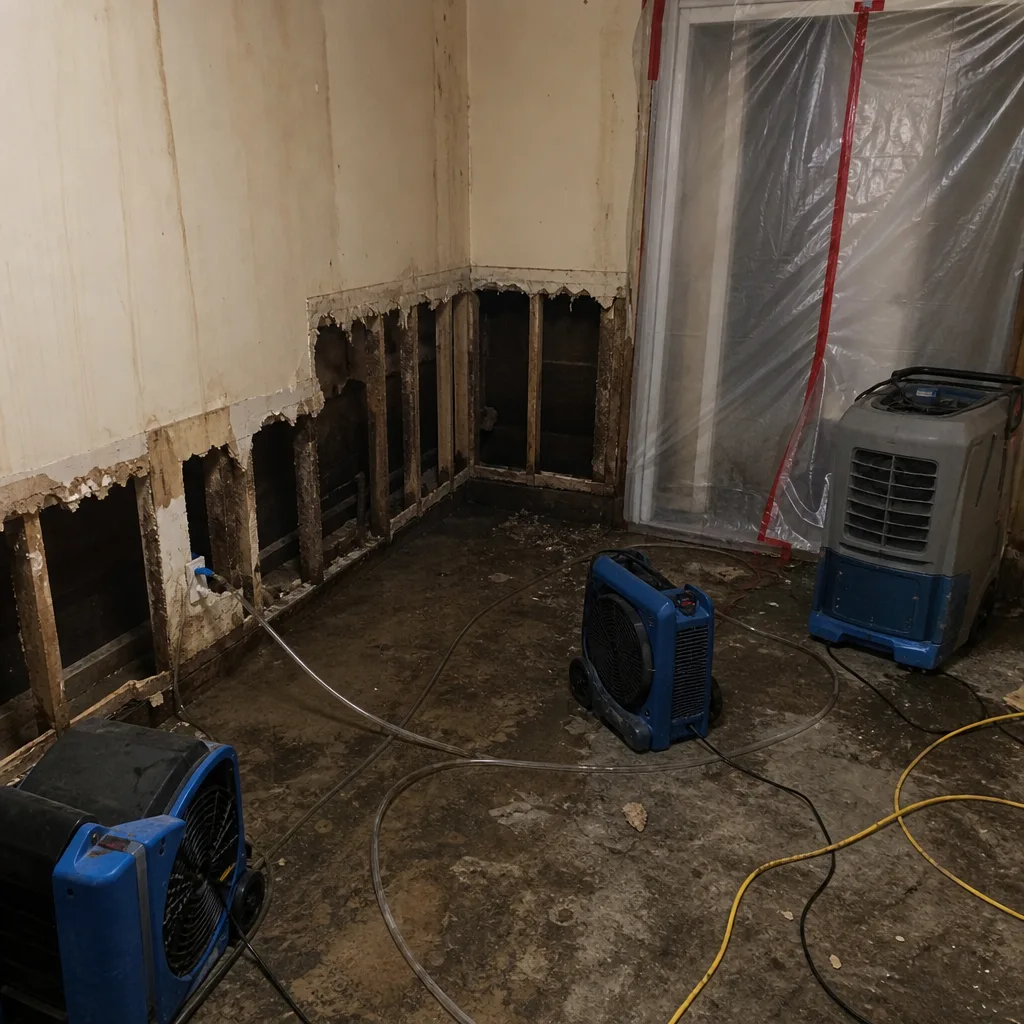 Before
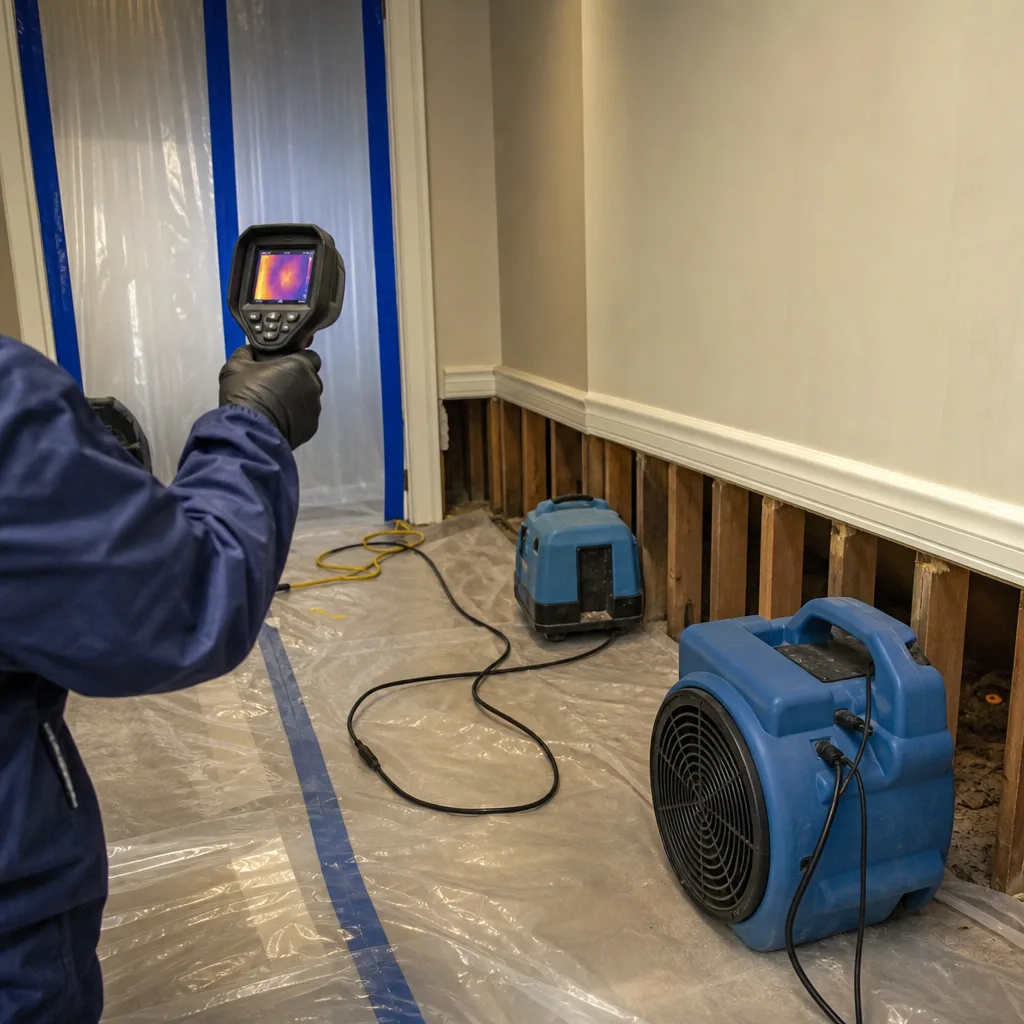 After
After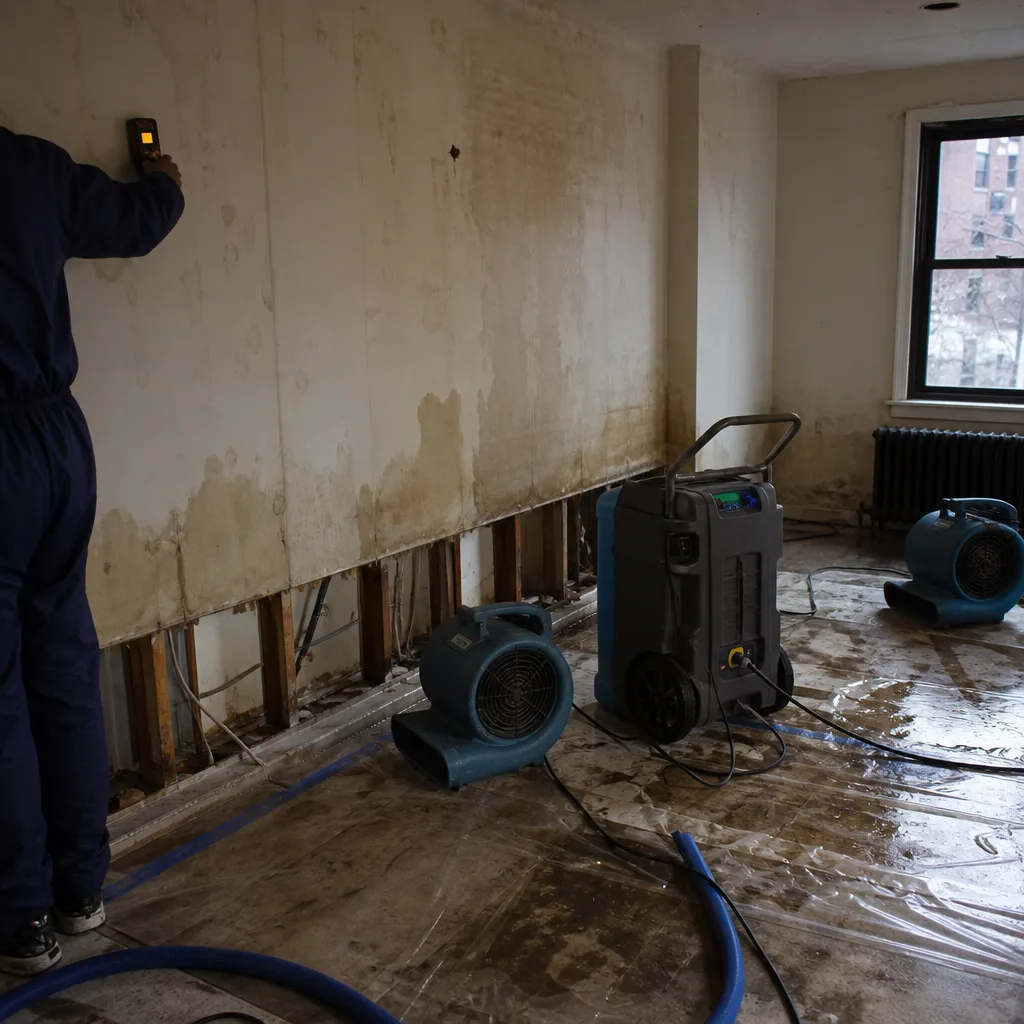 Before
 After
After24/7 Emergency Mold Remediation in Long Island City
Mold remediation in Long Island City typically costs $1,800-$6,500 depending on containment requirements, square footage, and whether hazmat abatement is triggered. Most jobs we handle in the Hunters Point and Court Square corridors are completed in three to seven days. If you’re seeing visible mold or smelling that musty, earthy odor, call (716) 452-0798 now. A live dispatcher answers at two in the morning, not a recording, and a certified crew can be on site the same visit.
Long Island City’s building stock doesn’t forgive delays. A small patch of mold behind a baseboard in a converted factory loft can spread through shared wall cavities within days, especially during Queens’ humid summer months. We respond to every call with a free visual inspection. The sooner we contain the growth, the less demolition you pay for. And in LIC, demolition often reveals things that require immediate professional decisions, which is exactly why you want a crew that has worked these buildings before.
Understanding Mold Remediation Severity in Long Island City Properties
Mold remediation work falls into distinct severity bands, and Long Island City’s buildings hit every one of them. At the low end, surface mold under 10 square feet can often be treated with antimicrobial cleaning and localized drying, no full containment required. The middle band, 10 to 100 square feet, demands HEPA-filtered air scrubbers, negative air pressure containment, and daily moisture readings until the dry standard is met. Above 100 square feet, or any time mold rests inside wall cavities spanning multiple rooms, we run full containment with decontamination chambers and clearance testing before anyone re-enters without PPE.
LIC’s converted loft buildings complicate every band. Pre-1980 factory stock on Jackson Avenue, Vernon Boulevard, and throughout Hunters Point frequently contains asbestos pipe insulation, transite ceiling panels, and lead paint buried in the same cavities where mold thrives. Opening a wall for mold treatment can trigger a mandatory asbestos abatement hold, a stop-work order that generic restoration outfits don’t anticipate. New high-rise towers along Center Boulevard present the opposite problem: stacked unit geometry means hidden condensation from a shared plumbing chase can recontaminate a treated unit within weeks. We read the moisture map, not just the visible stain.
Why Long Island City Property Owners Choose Floodline Restoration Co.
- 45-minute response commitment for emergency mold calls anywhere in Long Island City, from the waterfront to Newtown Creek.
- A live person answers 24/7, every day of the year. No phone tree, no callback promise, no automated system.
- IICRC-certified crews trained to WRT, FSRT, and AMRT standards, background-checked and uniformed on every job.
- Free visual inspection with moisture mapping and a written scope before any work begins. You decide with facts, not pressure.
- Direct insurance billing and adjuster coordination. We document, photograph, and log everything from the first hour.
- One crew from containment to reconstruction. No mid-job handoff to a different company, no inherited subcontractors.
Our Mold Remediation Process
Inspection & Assessment
We start with thermal imaging and moisture mapping across the affected area, including adjacent walls, floors, and shared cavities. In Long Island City lofts, that means checking century-old brick and timber for hidden moisture that visible mold alone won’t reveal.
Containment & Source Control
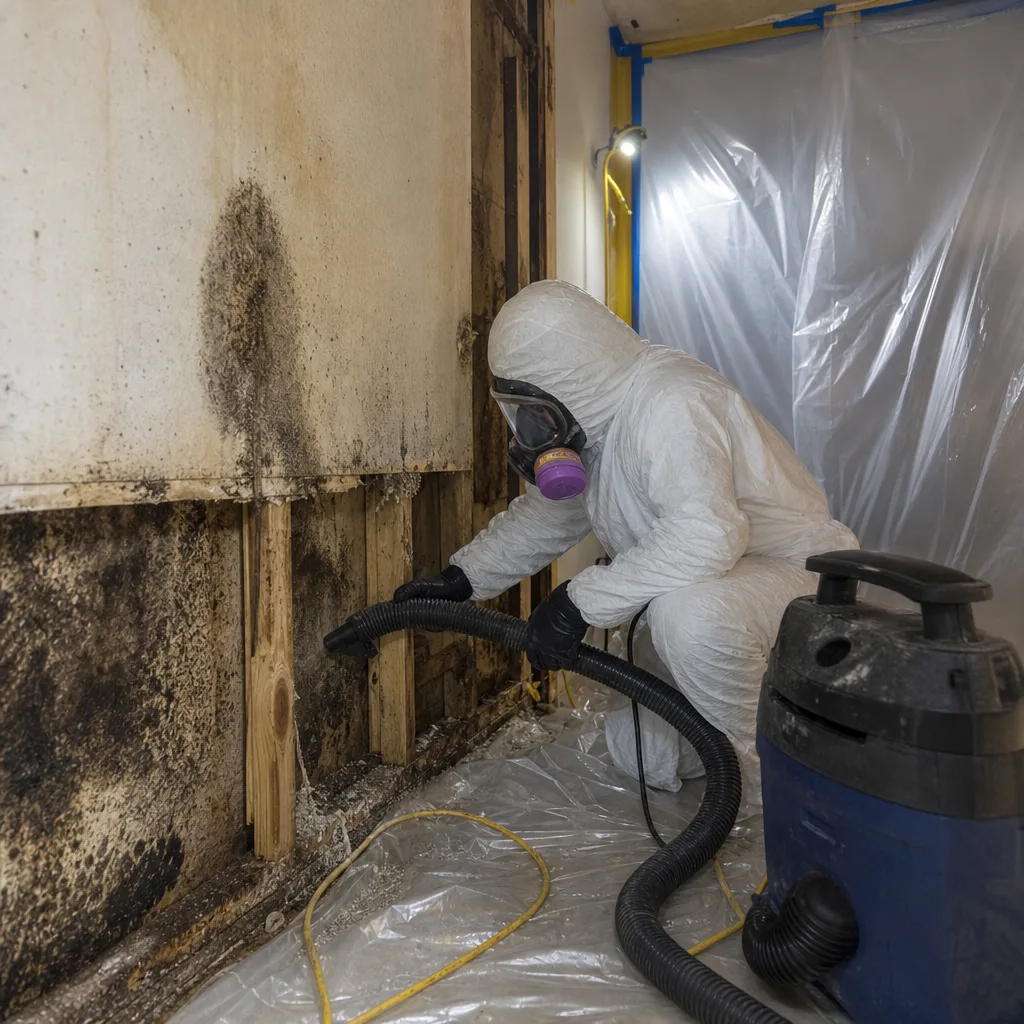
We seal the work area with 6-mil polyethylene and run HEPA-filtered negative air machines to prevent spore migration. Any suspected asbestos-containing materials are flagged immediately and addressed before we open walls.
Drying & Dehumidification
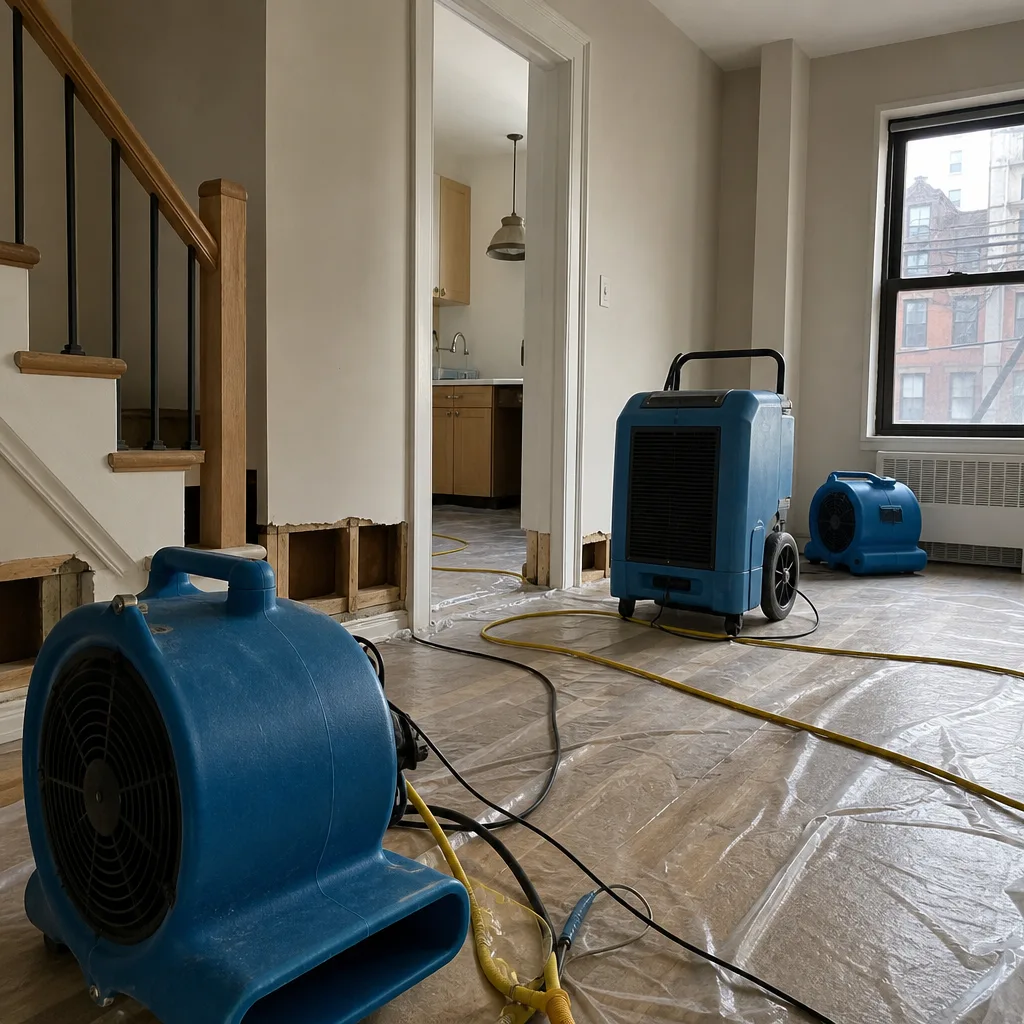
Professional-grade Dri-Eaz and Phoenix dehumidifiers pull moisture from structural cavities until daily hygrometer readings confirm the dry standard. We keep the drying log and give a copy to you and your carrier.
Removal & Cleaning
Affected drywall, insulation, and flooring are cut out and bagged for disposal. Remaining surfaces get antimicrobial treatment with EPA-registered products and HEPA vacuuming.
Air Quality Restoration
After remediation, we run HEPA air scrubbers and, where needed, hydroxyl generators to clear airborne spores. Clearance testing confirms spore counts have returned to normal background levels for Long Island City’s environment.
Repairs & Restoration
The same Floodline crew rebuilds what was removed: drywall, trim, flooring, paint. Your space returns to pre-loss condition and the 90-Day Done Right Promise covers it in writing.
Need Emergency Mold Remediation in Long Island City Now?
Crews minutes away, answering live 24 hours a day. The sooner we start, the less it costs.
Working With Your Insurance Company
Mold claims in Long Island City are handled differently depending on the cause of the moisture. A sudden pipe burst that leads to mold is typically covered under standard homeowners policies. Long-standing humidity issues, basement seepage from a high water table, or deferred maintenance are often not. Either way, we document everything from the first visit: moisture readings, thermal images, demolition photos, daily drying logs, and a line-item scope of work that meets carrier standards.
We’ve handled claims tied to Hurricane Sandy’s 2012 flooding, nor’easter backups, and everyday supply-line failures in Hunters Point and beyond. Curt Bowman and our team coordinate directly with adjusters so you never play messenger between Floodline and the carrier. The 90-Day Done Right Promise stays in force regardless of who pays the bill.
What We Provide Your Insurer
- Thorough documentation of the loss
- Photos of all damage, room by room
- Moisture readings and drying logs
- A detailed, line-item scope of work
- Direct coordination with your carrier
Built for Long Island City’s Loss Calendar
Long Island City’s mold season runs hot and humid from June through September, when East River air pushes indoor relative humidity past 65 percent and air conditioners struggle to keep century-old brick and timber dry. Condensation on cold water pipes inside pre-war walls feeds slow, hidden growth that owners don’t discover until a musty smell forces the issue.
Winter brings a different problem. January deep freezes burst supply lines in converted lofts where original plumbing runs through uninsulated exterior walls. Water travels down through multiple floors before shutoff, soaking plaster, subfloor, and the cavities between. Hunters Point’s FEMA flood-zone blocks face additional recurrence: spring thaw and heavy rain raise the water table, and ground-floor units near Newtown Creek see seepage that reactivates old mold colonies. Each season writes a different script, but the ending is the same if moisture isn’t pulled out and logged properly.
Mold Remediation Across Long Island City’s Neighborhoods
Hunters Point, from the waterfront piers east to 21st Street, carries Sandy’s legacy in its basements and lower-level lofts. Mold there is often tied to past flooding that was never fully dried, and it hides behind finishes installed in the rush to reoccupy after 2012. We expect moisture readings in the 20 to 40 percent range inside walls that look perfectly painted.
The Court Square corridor and Jackson Avenue have the densest concentration of converted factory lofts in Queens. These buildings share wall cavities across multiple units, which means mold from one bathroom leak can migrate into the neighbor’s space through original brick and timber framing. Our containment protocols account for that: we don’t treat one unit in isolation.
Center Boulevard and the waterfront high-rises present the stacked-cascade problem. A failed HVAC condensate line on floor 32 can drip inside a chase for months before anyone notices, feeding mold across several floors. Thermal imaging across shared chases is standard practice for us in those towers.
Over toward Dutch Kills and the Sunnyside Yard edge, smaller rowhouses and older apartment buildings mix with new construction. Crawl spaces in the older stock stay damp nine months a year, particularly after heavy summer rains, and we do a lot of crawl space treatment and humidity control work in that band of the neighborhood.
Specialized Mold Remediation Services We Offer in Long Island City
Mold Inspection & Testing
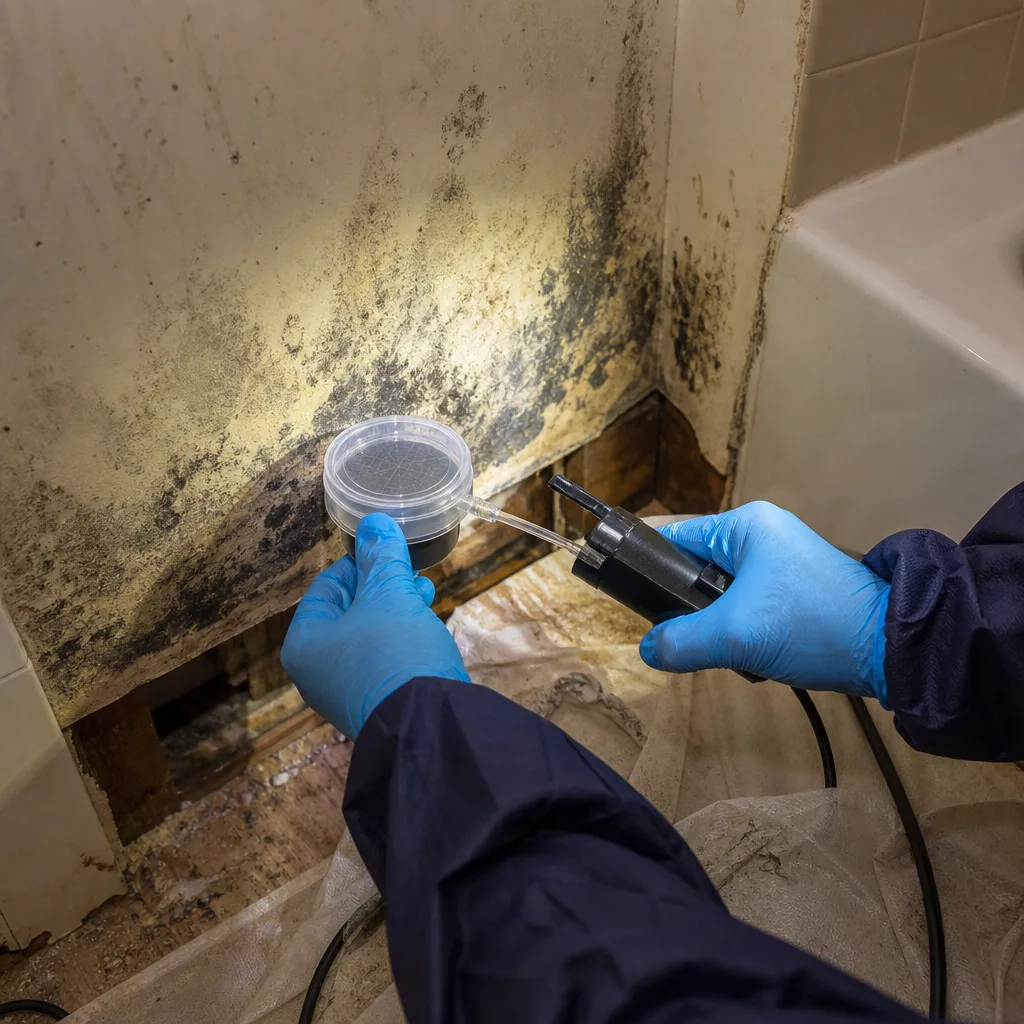
Our inspections pair visual assessment with moisture mapping, thermal imaging, and air or surface sampling where needed. In Long Island City’s converted lofts, we look specifically at the legacy materials: plaster walls, hardwood over timber joists, and pipe chases that haven’t been opened since the building was a factory. The inspection tells you what’s growing, where the moisture is coming from, and what removal will actually require.
Mold Removal
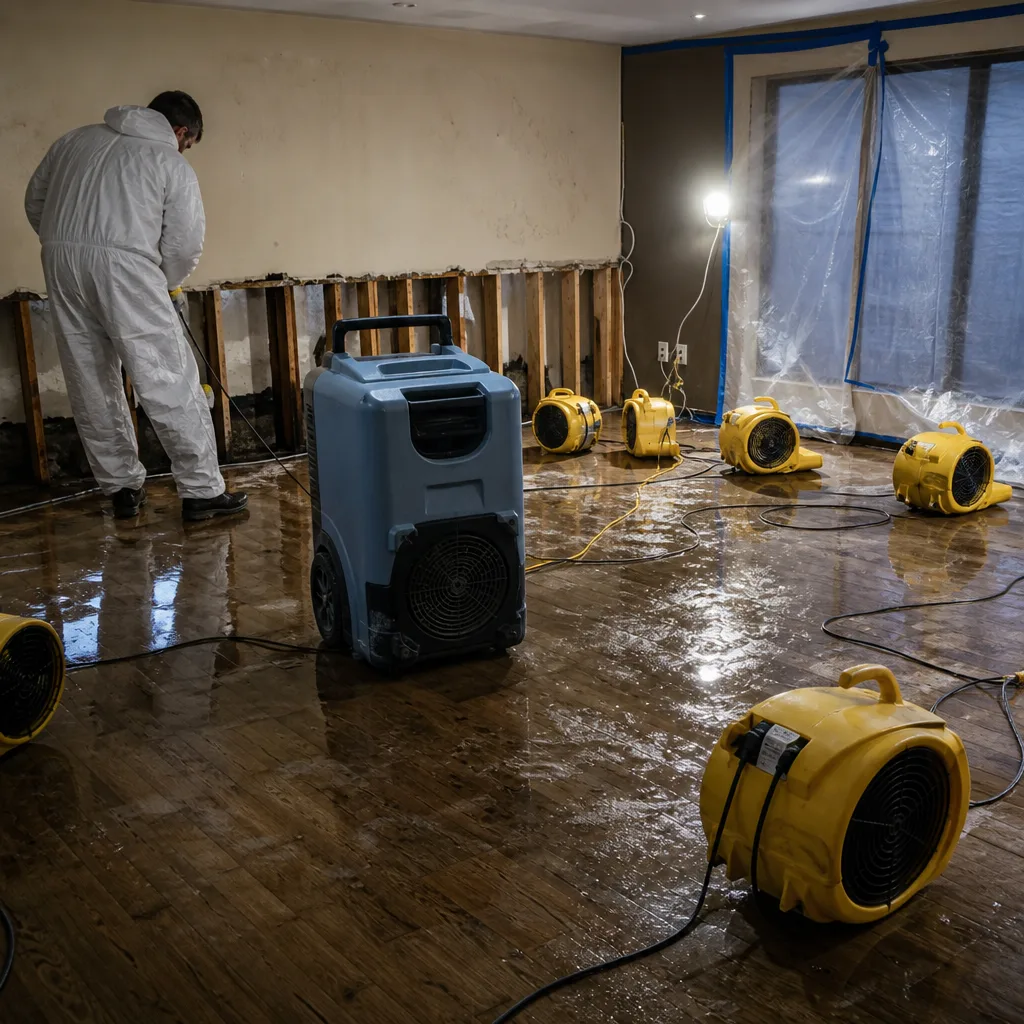
We remove mold at the source: cutting out affected drywall, insulation, plaster, and flooring under containment, then treating remaining surfaces with antimicrobial products. For a typical LIC loft, removal runs $1,800 to $4,500 depending on square footage. For a single high-rise room with contained growth, you’re at the lower end of that range.
Black Mold Remediation
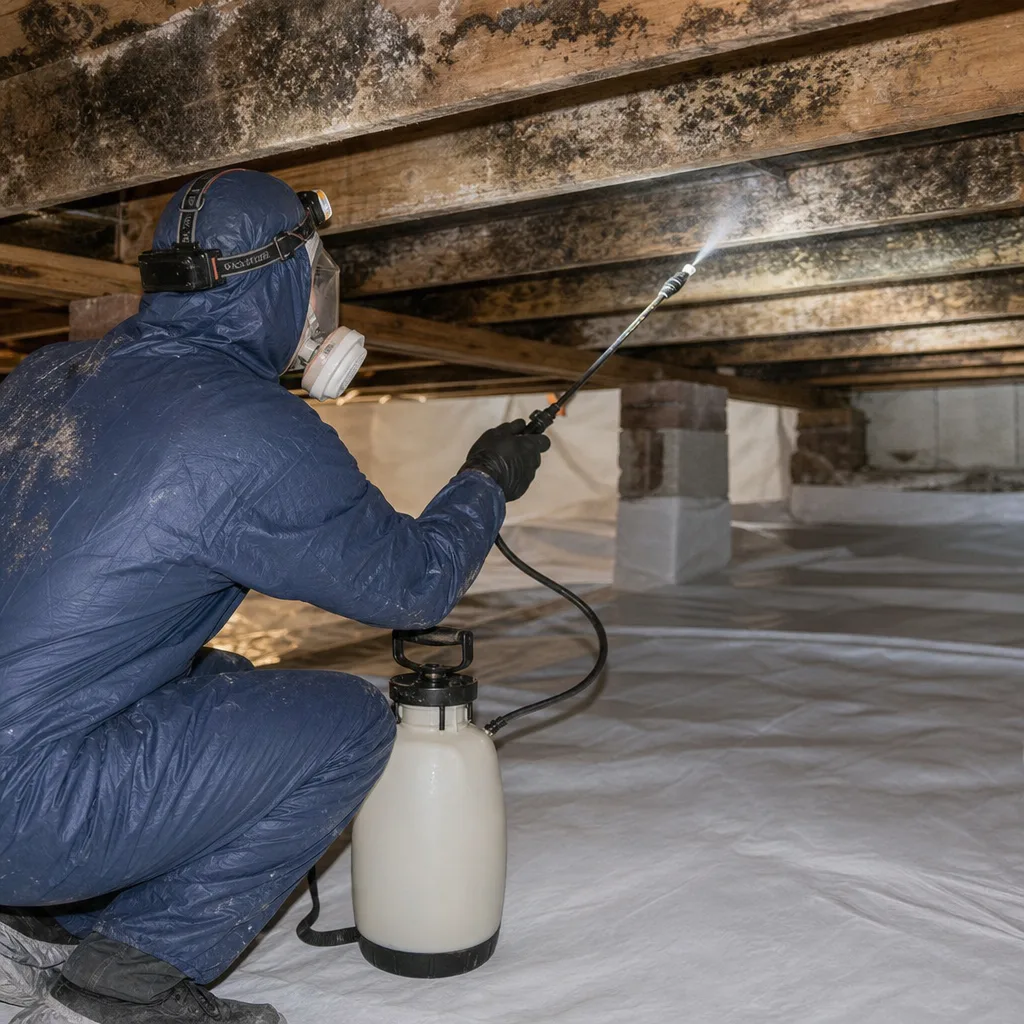
Stachybotrys, the black mold property owners fear most, grows on chronically wet cellulose: drywall, wood, paper backing. It appears most often in Long Island City after long-standing leaks or flood events where materials stayed wet for days. Remediation follows full containment protocols with negative air pressure, HEPA filtration, and post-remediation clearance testing. Black mold jobs in LIC typically run $3,000 to $8,000 depending on how far the growth extends.
Air Quality Restoration
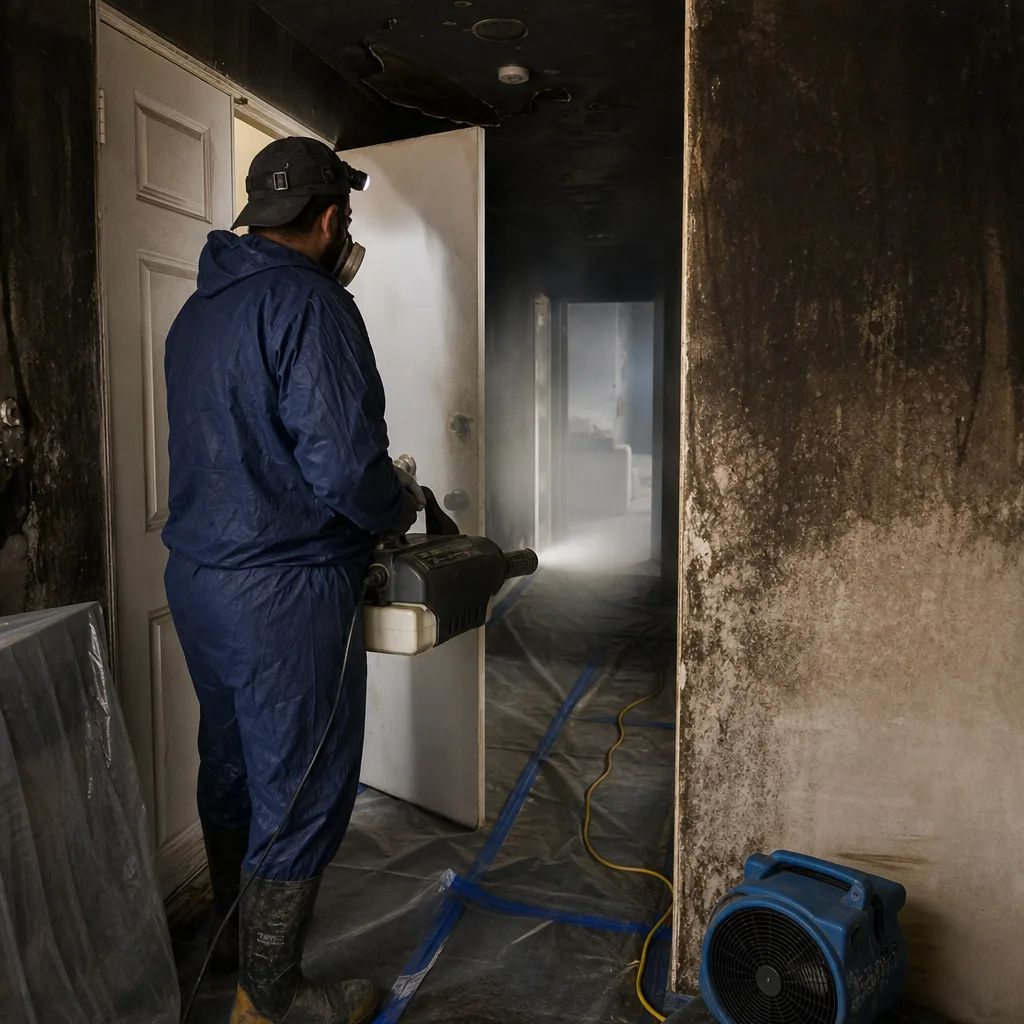
After physical mold removal, airborne spore counts can remain elevated for days. We run HEPA air scrubbers and hydroxyl generators to bring indoor air back to acceptable levels. In a converted loft where dust from demolition mixes with disturbed spores, this step matters as much as the removal itself. We provide clearance data showing the air is right before walking away.
Crawl Space Treatment
LIC rowhouses near Dutch Kills and along 37th Avenue frequently have dirt-floor crawl spaces that hold humidity year-round. We install vapor barriers, run dehumidifiers during the drying phase, and treat surfaces with antimicrobial agents to stop mold at its food source. Typical crawl space treatment in Long Island City runs $1,200 to $3,000 depending on size and access.
Moisture & Humidity Control
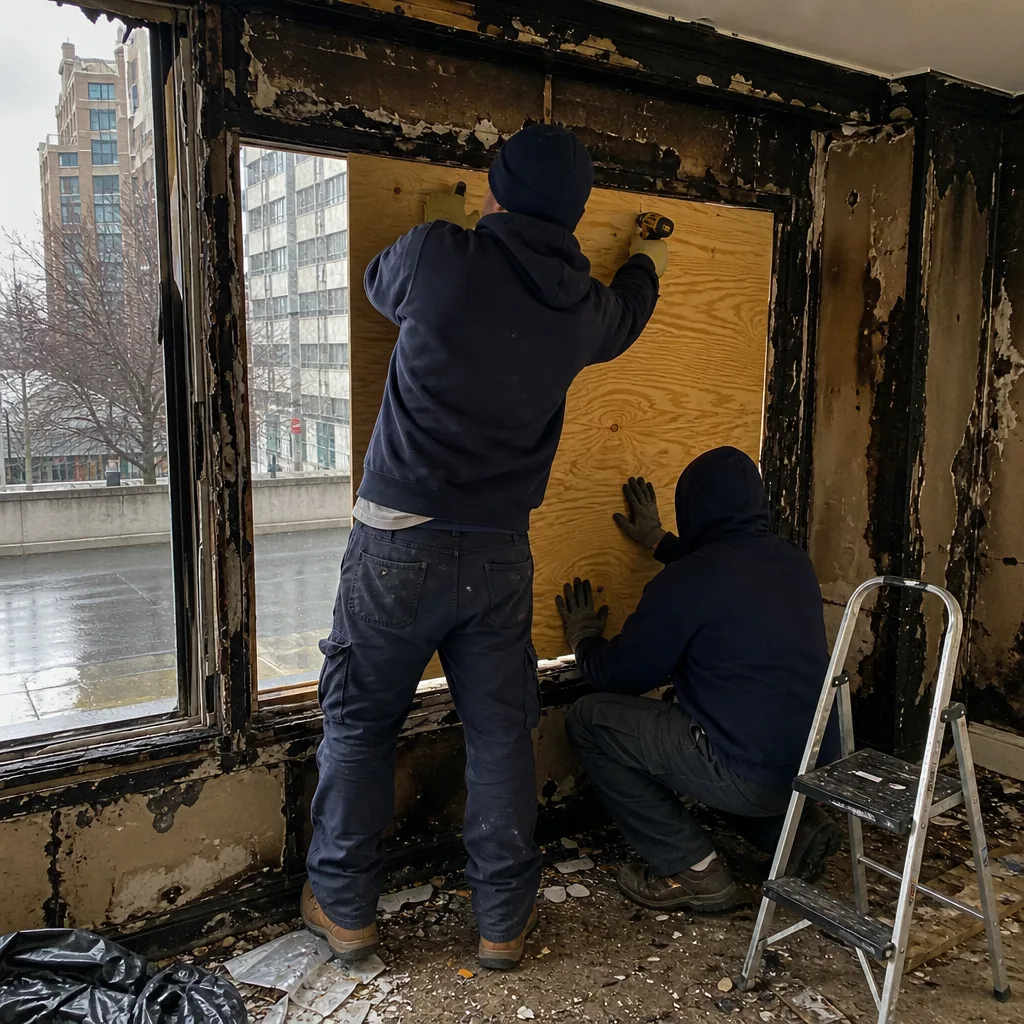
Mold returns when moisture returns. We identify the source, whether it’s a leaking supply line, a failed exhaust fan, missing vapor barrier, or simply the humid East River air defeating an undersized HVAC system. Then we recommend and install the fix, from crawl space encapsulation to whole-unit dehumidification, so the mold doesn’t have a place to restart.
What happens when you call
- 1
A real person answersNo phone trees - you reach a local pro.
- 2
You get an upfront price rangeHonest numbers before anyone is dispatched.
- 3
A background-checked tech heads outLicensed & insured, dispatched right away.
- 4
You approve before work beginsNothing starts until you say go.
Mold Remediation Costs in Long Island City, NY
A typical mold remediation in Long Island City runs $1,800 to $6,500. Small, contained jobs under 10 square feet start around $1,200. Full containment with extensive demolition in a converted loft can reach $12,000 to $20,000 when asbestos abatement, structural drying, and reconstruction are included. Black mold remediation in LIC averages $3,500 to $7,500.
What moves the price: square footage of affected material, whether wall cavities are involved, the presence of legacy materials like asbestos or lead, accessibility (fifth-floor walkups cost more than ground-floor units), and whether drying requires specialized equipment like Injectidry mats for hardwood. Insurance-covered claims typically pay the full scope when sudden, covered water damage caused the mold. Our free visual inspection gives you a firm written scope before any work starts, so you know the number before you commit. Call (716) 452-0798 for an exact quote, and ask about the $50 Off Any Repair Over $250 and the Senior & Veteran 5% discount.
We Also Serve Cities Near Long Island City
Floodline Restoration Co. provides mold remediation across western Queens. Our crews serve Astoria, Maspeth, Jackson Heights, and Elmhurst with the same 45-minute response commitment and 24/7 live dispatch. The same certification standards and 90-Day Done Right Promise apply regardless of which neighborhood the call comes from.
Long Island City Mold Remediation Questions, Answered
How does living in a FEMA AE or VE flood zone in Long Island City change mold remediation?
Properties in Long Island City’s AE and VE flood zones, especially around Hunters Point and near Newtown Creek, face recurring moisture intrusion that standard remediation doesn’t fully resolve. We treat the mold, but we also address the ongoing water source: drainage, vapor barriers, sump systems, and humidity control. Without that, you’re cleaning up the same problem again next storm season.
What should I expect if mold is found behind walls in my converted industrial loft in Hunters Point?
Expect a hold on demolition while we assess what’s inside the wall cavity. Pre-1980 loft buildings commonly contain asbestos pipe insulation, transite panels, and lead paint. If any are present, licensed abatement must happen before drying equipment can be set. We coordinate with the building’s abatement contractor so the project keeps moving rather than stalling.
Can mold in one unit of a modern LIC high-rise spread to units above or below?
Yes. Shared plumbing chases, HVAC risers, and floor penetrations create pathways for moisture and spores to move between stacked units in Long Island City’s high-rise towers. When we treat mold in one unit, we map adjacent spaces and check for hidden condensation or water staining that indicates the problem started elsewhere or has already migrated.
How quickly should I act after a water leak in my Long Island City apartment?
Within 24 to 48 hours. Mold spores begin colonizing wet drywall and wood in that window, especially during LIC’s humid summer months. The longer you wait, the more material requires removal and the higher the remediation cost. Call us the same day; we do free visual inspections and get containment started if needed.
Do old warehouse lofts in Long Island City have hidden mold risks that inspections often miss?
Yes, and they’re usually in the wall cavities. Century-old brick and timber construction holds moisture long after the visible surface dries. We’ve pulled moisture readings above 30 percent from wall cavities that looked dry from the outside. That’s why our inspections always include cavity probing and thermal imaging, not just surface swabs.
How fast can you actually get to my Long Island City property?
We commit to 45 minutes for emergency mold calls anywhere in Long Island City. A live person answers the phone at (716) 452-0798, and dispatch confirms the crew’s ETA while you’re still on the line. Most of our LIC calls happen the same visit, not the next day.
Will my insurance cover mold remediation in Long Island City?
If the mold resulted from a sudden, covered water loss, such as a burst pipe or storm damage, most policies cover remediation. Long-term seepage, high-humidity growth, or deferred maintenance generally is not covered. We document everything, provide drying logs and photos to your adjuster, and bill the carrier directly when coverage applies.
Can I stay in my Long Island City home during mold remediation?
For small, contained jobs, usually yes. For larger remediation with full containment, particularly black mold or anything involving asbestos abatement in pre-war loft buildings, you should plan to be out of the affected area for several days. We’ll tell you straight in the inspection: what the containment zone means, how long it lasts, and whether the home remains habitable.
Serving Long Island City, NY - Our Local Coverage Area
We’re based in the Long Island City area and know this community well. Use the map below to see our service coverage - if you’re nearby, we can almost certainly help.
Call Floodline Restoration Co. for Mold Remediation in Long Island City
We know Long Island City’s buildings because our crews work them every week: the Sandy-soaked Hunters Point lofts, the Jackson Avenue factory conversions, the Center Boulevard towers where problems travel between floors. When you call (716) 452-0798, a live person answers. We’ll schedule a free visual inspection, put the scope in writing, and do the job with the same crew from first cut to final coat. The 90-Day Done Right Promise stands behind every job in writing. No arguing, no runaround, no second-guessing.
*Written by Curt Bowman, Owner at Floodline Restoration Co., serving Long Island City’s mold remediation needs with honesty and a written guarantee.*