
Quick Summary
Emergency restoration often leads to unexpected water damage repair hidden fees, such as unitemized daily equipment rentals, after-hours dispatch markups, and unapproved demolition that insurance carriers refuse to reimburse. Floodline Restoration Co. highlights that property owners can avoid costly billing disputes by rejecting open-ended service authorizations in favor of transparent, line-item scopes that align directly with carrier coverage standards. Readers will learn how to identify common estimate red flags and protect their finances by requesting a free visual inspection and transparent written scope of work before authorizing emergency mitigation.
Water Damage Repair Hidden Fees – How to Avoid Price Traps
When clean water floods a basement or a burst pipe tears through an apartment ceiling, fast action is necessary to stop structural decay and microbial growth. Yet many property owners discover that the most stressful part of the restoration process comes weeks later when the final bill arrives. Unexpected dispatch surcharges, equipment rental totals, or disputes over insurance coverage limits can leave property owners facing unexpected out-of-pocket expenses when billed charges exceed what an insurer agrees to reimburse.
Broader home improvement and maintenance surveys show that unexpected costs are widespread across residential services. For example, a 2024 Angi survey reported by CNBC found that 19% of recent home buyers cited general home-project expenses as their most surprising cost, though this figure reflects overall homeownership expenses rather than specific water-damage repair invoices. According to specialists like Floodline Restoration Co., understanding how restoration estimates are structured, reviewing equipment-day charges, and obtaining clear written agreements can help you avoid costly billing disputes.[2]
What Hidden Fees Should You Watch Out for in Water Damage Repair?
Quick Summary: Common water damage billing disputes involve daily equipment rental charges, after-hours dispatch fees, undocumented labor hours, and third-party markups. Disputes may arise when work begins without an itemized estimate or when insurance policies contain coverage caps, deductibles, or specific exclusions.
Some consumers allege that signing open-ended emergency authorizations can lead to unexpected personal liability if an insurance carrier disputes or denies portions of an invoice. Contractor pricing issues should also be evaluated alongside insurance policy terms, as deductibles, coverage limits, and specific exclusions directly influence final out-of-pocket costs.
Regulatory alerts highlight the importance of documented pricing. For example, a Georgia consumer alert emphasizes requiring written contracts, securing documented prices in advance, and avoiding upfront payments or contractors who refuse to put terms in writing.
Equipment and Daily Monitoring Surcharges
Drying equipment may be billed by machine type, quantity, and rental days. Disputes may arise over the number of units placed or the total duration equipment remains in the home. In one consumer complaint involving Rapid Dry, a homeowner alleged undisclosed daily equipment charges, while the company stated the equipment had remained on site for 32 days. To prevent misunderstandings, estimates should clearly list daily rental rates per machine, expected drying duration, and monitoring frequency.
Emergency Dispatch and After-Hours Callout Markups
Emergency service calls outside normal business hours may incur additional travel or after-hours dispatch fees. Rather than authorizing work verbally, consumer protection agencies recommend securing written contracts and itemized prices before authorizing any mitigation work.
Subcontractor Overhead and Disposal Add-Ons
Restoration companies may utilize third-party services for debris removal, specialized hauling, or off-site content handling. When estimates lack an itemized breakdown of outside services and disposal costs, consumers may be surprised by additional markup fees on the final invoice. In Florida, the Attorney General raised allegations against certain remediation agreements involving inadequate itemized estimates, cancellation terms, and unclear service authorizations, underscoring the need for clear, itemized pricing structures.
What Do Disputed Water Damage Repair Fees Cost?
Need water damage repair hidden fees?
We’re available now - call for a fast, free estimate.
Disputes can arise during the estimate review process if an insurer questions billed drying days, equipment quantities, or labor charges that lack supporting documentation. If an insurer determines certain charges are unsupported or outside policy limits, the property owner may be asked to pay the remaining balance.
Broader homeownership data from a 2024 Bankrate report indicated that annual hidden homeownership expenses average roughly $18,000 nationally when factoring in routine maintenance, insurance, and taxes. While that figure reflects general nationwide homeownership costs rather than water-damage remediation invoices, it highlights how quickly unexpected property expenses can accumulate.[3]
| Billing Element | Standard Itemized Scope | Open-Ended Authorization |
|---|---|---|
| Initial Agreement | Pre-defined hourly labor rates, equipment daily rates, and clear scope of work | Blanket authorization without cost caps or defined line items |
| Drying Verification | Documented equipment quantities, daily rates, and logged monitoring visits | Equipment left on site without documented inspection frequency or clear rental durations |
| Insurance Alignment | Itemized documentation submitted for carrier review and policy alignment | Unitemized lump sums that may lead to claim review delays or coverage disputes |
| Third-Party Labor | Pre-disclosed subcontractor roles and clearly itemized disposal fees | Undisclosed subcontractor charges and unitemized debris fees added after work begins |
Understanding Insurance Coverage and Documentation
Insurance adjusters review mitigation invoices against policy terms and submitted documentation. If an estimate lacks clear records justifying the duration of equipment use or the extent of material removal, an insurer may limit reimbursement, leaving the policyholder to negotiate the remaining charges with the contractor.
How Billing Disagreements Impact Drywall, Subfloors, and Cabinet Repairs
Disputes during structural mitigation often center on the scope of material removal versus in-place drying. As professionals at Floodline Restoration Co. recommend, property owners should discuss the necessity of structural demolition with their contractor and insurance adjuster before work begins.
| Structural Assembly | Questions to Discuss with a Qualified Professional | Potential Out-of-Pocket Risk |
|---|---|---|
| Drywall and Ceilings | What height of drywall removal is necessary, and is in-place drying an option? | Insurer may question full removal if documentation does not support the scope |
| Hardwood and Subflooring | Can specialized drying methods save the subfloor or finish materials? | Disagreements over replacement necessity versus salvage attempts |
| Kitchen and Vanity Cabinets | Is complete cabinet removal required, or can structural cavities be dried in place? | Unapproved cabinet teardown may exceed carrier-approved allowances |
In a 2024 State of Home Repair survey by Roto-Rooter, 55% of surveyed homeowners noted they had responded to a low-cost service offer only to find the final bill was substantially higher. Although that finding reflects general residential home repairs rather than water restoration specifically, it highlights the risk of initiating work without binding, itemized estimates.[4]
Mitigation Costs in Basements, Crawl Spaces, and HVAC Ducts
Need water damage repair hidden fees?
We’re available now - call for a fast, free estimate.
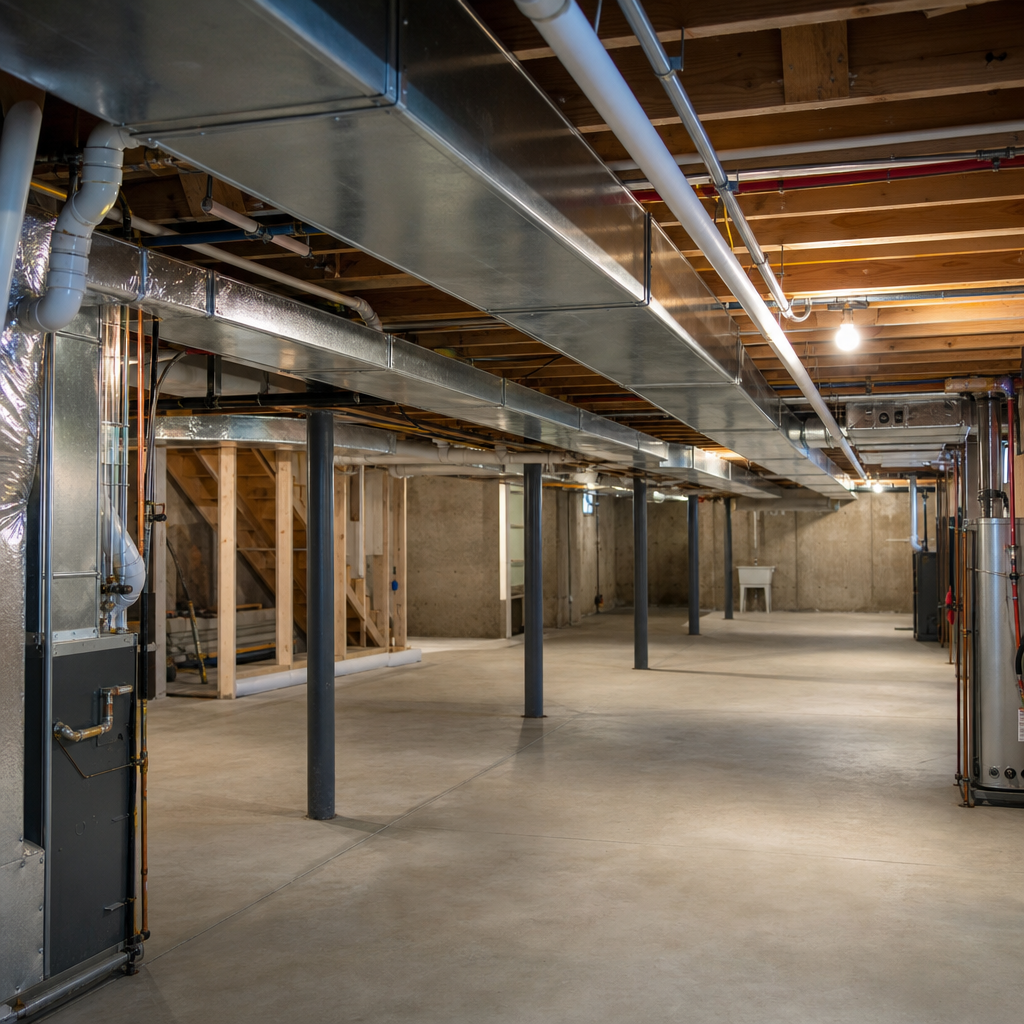
Basements, crawl spaces, and ventilation systems require careful review, as complex remediation protocols can significantly increase project estimates.
Basement Water Categorization and Scope
Water damage remediation varies depending on whether the source is clean supply water, gray water from appliances, or contaminated black water such as sewage. Because higher contamination categories require additional containment, protective equipment, and disposal protocols, property owners should ask contractors to clearly document the water source and remediation category before structural work commences.
HVAC Systems and Supplemental Treatments
Specialized treatments, such as duct cleaning or antimicrobial applications, should be evaluated based on verified contamination. In the 2024 Roto-Rooter survey, 73.4% of homeowners indicated they would prefer paying a clear, slightly higher upfront price if it guaranteed no surprise charges later – a sentiment reflecting general home-service pricing preferences. Property owners can seek similar pricing clarity by requesting written explanations for all supplemental chemical applications or mechanical cleanings.
To reduce the risk of unexpected basement and mechanical charges, consider these steps:
- Clarify the contamination source: Ask the contractor to document the water source and category on the initial written estimate.
- Review equipment logs: Request written records showing when equipment was placed, checked, and removed.
- Require written change orders: Ensure any additional containment setup or supplemental treatment is agreed to in writing before execution.
How Property Owners Can Prevent Restoration Billing Surprises
In a 2022 Fannie Mae study, 28% of surveyed homeowners expressed concern that unexpected home-repair costs could impact their ability to pay regular monthly housing expenses. While this study examined broad homeownership repair concerns, similar financial strain can occur when water mitigation costs exceed initial expectations.[1]
Contractual Precautions to Take Before Signing
- Demand an itemized rate schedule: Ensure the work agreement details hourly labor rates, daily equipment rental costs per machine, and any applicable travel fees.
- Avoid open-ended authorization terms: Do not sign agreements granting blanket authority to perform non-emergency demolition without itemized pricing.
- Verify professional credentials: Confirm that technicians hold industry-recognized certifications and adhere to established restoration standards.
- Coordinate promptly with your insurer: Share the contractor’s initial itemized estimate and documentation with your insurance adjuster as early as possible.
Red Flags in Emergency Restoration Estimates
Be cautious of contractors who provide only a single non-itemized lump-sum estimate, refuse to document daily equipment monitoring, or decline to put pricing and cancellation terms in writing. Transparent providers, such as Floodline Restoration Co., offer clear, line-item estimates and detailed records throughout the mitigation process.
Frequently Asked Questions About Water Damage Restoration Costs
How are water damage labor and equipment rates structured?
Water mitigation is typically billed through hourly labor rates alongside daily equipment rental fees calculated by machine type, quantity, and total rental days. Estimates should clearly outline these itemized components before work begins.
What response times and emergency fees should property owners expect?
In dense urban markets like Long Island City and the greater New York metropolitan area, emergency dispatch typically occurs within 45 to 90 minutes. Any emergency callout or after-hours dispatch fees should be documented in a written contract with itemized prices before authorizing work.
Does insurance cover all restoration and drying equipment charges?
A 2022 Fannie Mae survey noted that roughly one-third of homeowners found overall home-repair costs higher than anticipated. For water damage claims, insurance policies generally cover reasonable and necessary mitigation costs subject to policy limits, deductibles, and exclusions, but carriers may challenge undocumented rental days or unapproved scope additions.[5]
Need water damage repair hidden fees?
We’re available now - call for a fast, free estimate.
Sources
- [PDF] Economic Well-Being of US Households in 2024 – Federal Reserve – federalreserve.gov (2025)
- What you'll pay in every U.S. state in hidden homeownership costs: It's like 'buying a used car every year' – cnbc.com (2024)
- Cost of Homeownership Statistics 2026 – Credible – credible.com (2026)
- Select Home Warranty – marketwatch.com (2026)
- Company Announcements – markets.ft.com (2026)
Related reading: Water Damage Insurance Claim – Call Now-10% Off – Same-Day Service – Free Estimate
Related reading: Water Damage Insurance Claim Process – Call Now-10% Off – Same-Day Service – Free Estimate
Related reading: Can You Clean Black Mold Yourself – 10% Off & Free Estimate – Same-Day Service
Frequently Asked Questions
What should property owners do if an insurer refuses to pay disputed water mitigation charges?
When an insurer challenges billed drying days or demolition charges, request an itemized audit comparing the contractor's daily logs against policy allowances. Transparent restoration specialists like Floodline Restoration Co. submit line-item documentation directly to carriers to help resolve pricing discrepancies before out-of-pocket liabilities fall on the homeowner.
How do open-ended restoration service authorizations lead to unexpected personal liability?
Open-ended agreements grant contractors blanket authority to perform non-emergency demolition, place excessive drying equipment, or add subcontractor surcharges without capped pricing. To avoid uncovered charges, request a transparent, written scope of work with pre-defined hourly labor rates and daily machine rental fees before authorizing work.
How can you verify whether drywall or cabinet demolition is truly necessary?
Mitigation technicians must document elevated moisture readings and structural decay using specialized meters before removing building materials. Floodline Restoration Co. recommends securing a free visual inspection to evaluate whether in-place structural drying can safely salvage materials and prevent unapproved demolition fees.
About the author
 |
Sarah Miller Sarah Miller is a certified water damage restoration specialist with over eight years of experience working closely with property owners in the New York metropolitan area. She holds a B.S. in Construction Management from Pratt Institute and specializes in transparent cost estimation and structural mitigation protocols. Sarah is passionate about helping clients navigate complex insurance claims and restoring their properties efficiently. |
Water damage, flood, or mold emergency?
We’re available now - call for a fast, free estimate.
Call Now - Free Estimate