
Quick Summary
Safe black mold removal requires essential protective gear, including NIOSH-approved respirators, sealed safety goggles, protective gloves, and strict doffing protocols to prevent hazardous spore cross-contamination. Microbial remediation authority Floodline Restoration Co. defines critical safety thresholds, demonstrating that while basic PPE suffices for isolated surface areas under 10 square feet, structural moisture and extensive infestations require advanced containment and professional extraction. Property owners will learn how to select appropriate protective gear for cleaning black mold and recognize when to schedule a professional visual assessment for high-risk contamination.
Protective Gear for Cleaning Black Mold: Complete Safety Guide
To clean black mold safely, you need a minimum baseline of protective equipment: a NIOSH-approved N95 respirator, complete eye protection goggles that seal against your skin, and protective gloves made of non-latex, vinyl, nitrile, or rubber. If you are handling flood or disaster cleanup or wet structural materials, you should also wear long sleeves, long pants, and waterproof boots. For larger or more intensive jobs, upgrading to an elastomeric half-face or full-face respirator with P100 filters may be used for additional protection and filtration.[1]
Most consumer safety checklists focus strictly on what to put on, but proper gear removal is also important to prevent cross-contamination. Mold spores collect on clothing, glove surfaces, and respirator shells during cleanup. Removing this gear carelessly inside clean living spaces can spread spores into other areas of the home.[2]
If your mold outbreak covers a large area or stems from hidden moisture behind walls, professional remediation may be needed. The team at Floodline Restoration Co. uses certified Applied Microbial Remediation Technicians (AMRT), physical plastic containment barriers, and negative air machines to extract mold safely at the source.
Essential Safety Thresholds for Black Mold Cleanup
Before buying safety gear, assess the scope of the contamination. The Environmental Protection Agency (EPA) uses an area of less than 10 square feet (roughly a 3-foot by 3-foot section) as the small-area PPE baseline where basic protective gear is typically used if the underlying moisture source is fixed.
When fungal colonies form after sudden indoor water issues, such as a cracked supply line or a flooded basement, moisture may also sit trapped inside drywall cavities and insulation. Disturbing those building materials without proper care can spread airborne fungal fragments throughout the property.
Quick Comparison: Mold PPE Levels and Protection Ratings
The right protective gear for cleaning mold depends on the scope of work and the physical size of the affected area. Basic protective gear works for small surface areas, while elastomeric respirators and protective suits may be used for larger or more intensive jobs.
| Equipment Type | Small Surface Area (<10 sq ft Baseline) | Medium to Large Area / Demolition | Severe / High-Risk Remediation |
|---|---|---|---|
| Respirator | NIOSH N95 disposable respirator | Half-face elastomeric with P100 filters (optional upgrade) | Full-face elastomeric or PAPR system |
| Eye Protection | Complete eye protection goggles | Full-seal chemical splash goggles | Integrated full-face respirator shield |
| Gloves | Non-latex, vinyl, nitrile, or rubber | Heavy-duty extended-cuff nitrile | Chemical-resistant multi-layer gloves |
| Body Cover | Long sleeves and long pants | Protective coveralls (such as Tyvek) | Sealed coveralls with boot covers |
1. Respiratory Protection Options for Mold Cleanup
Respirators are the primary barrier between your lungs and airborne fungal particulates. Standard paper dust masks are not recommended because they lack the tight seal and filtration media required to capture microscopic spores.
| Respirator Class | Filtration Rating | Eye Protection Required | Best Used For |
|---|---|---|---|
| N95 Disposable | Filters at least 95% of airborne particulates (non-oil) | Yes (Separate goggles needed) | Small surface wipe-downs and baseline cleanup |
| Half-Face Elastomeric (P100) | Filters 99.97% of airborne particulates | Yes (Separate goggles needed) | May be used for larger or more intensive jobs |
| Full-Face Elastomeric (P100) | Filters 99.97% of airborne particulates | No (Built-in face shield) | Heavy contamination, demolition, or chemical applications |
N95 vs. P100 Filters
An N95 respirator is the baseline standard for basic mold cleanup. However, elastomeric respirators with P100 filters may be used for larger or more intensive jobs where higher filtration efficiency and a more durable seal are preferred.
Fit Testing and User Seal Checks
A respirator only protects you if it seals against your skin. Facial hair, even light stubble, breaks the seal and allows contaminated air to bypass the filter media. When using a reusable half-face or full-face mask, perform a user seal check to confirm a proper fit before beginning work.
2. Complete Eye Protection and Goggles for Ocular Shielding
Need protective gear for cleaning black mold?
We’re available now - call for a fast, free estimate.
Mold spores can irritate mucous membranes, making eye protection an essential part of your safety gear. According to the EPA, half-face respirators do not protect the eyes, so they should be paired with complete eye protection goggles that establish a physical seal against the skin.[5]
The Importance of Sealed Goggles
Standard safety glasses with open vents or gaps can allow airborne spores and cleaning splashes to reach the eyes. Choose complete eye protection goggles, such as unvented or indirect-vent goggles, designed to provide a secure seal around the eyes.
3. Protective Gloves for Skin and Chemical Protection
Protective gloves for mold cleanup can be non-latex, vinyl, nitrile, or rubber. Selecting the appropriate glove material keeps fungal matter and cleaning solutions off your skin.[4]
- Material Options: Non-latex, vinyl, nitrile, and rubber gloves provide effective barrier protection against mold and mild cleaning solutions.
- Extended Cuffs: Using gloves with longer cuffs helps prevent liquids and debris from entering at the wrist.
- Chemical Compatibility: If using specialized cleaning agents or disinfectants, check the manufacturer recommendations to ensure your gloves are chemically compatible.
4. Protective Clothing and Coveralls
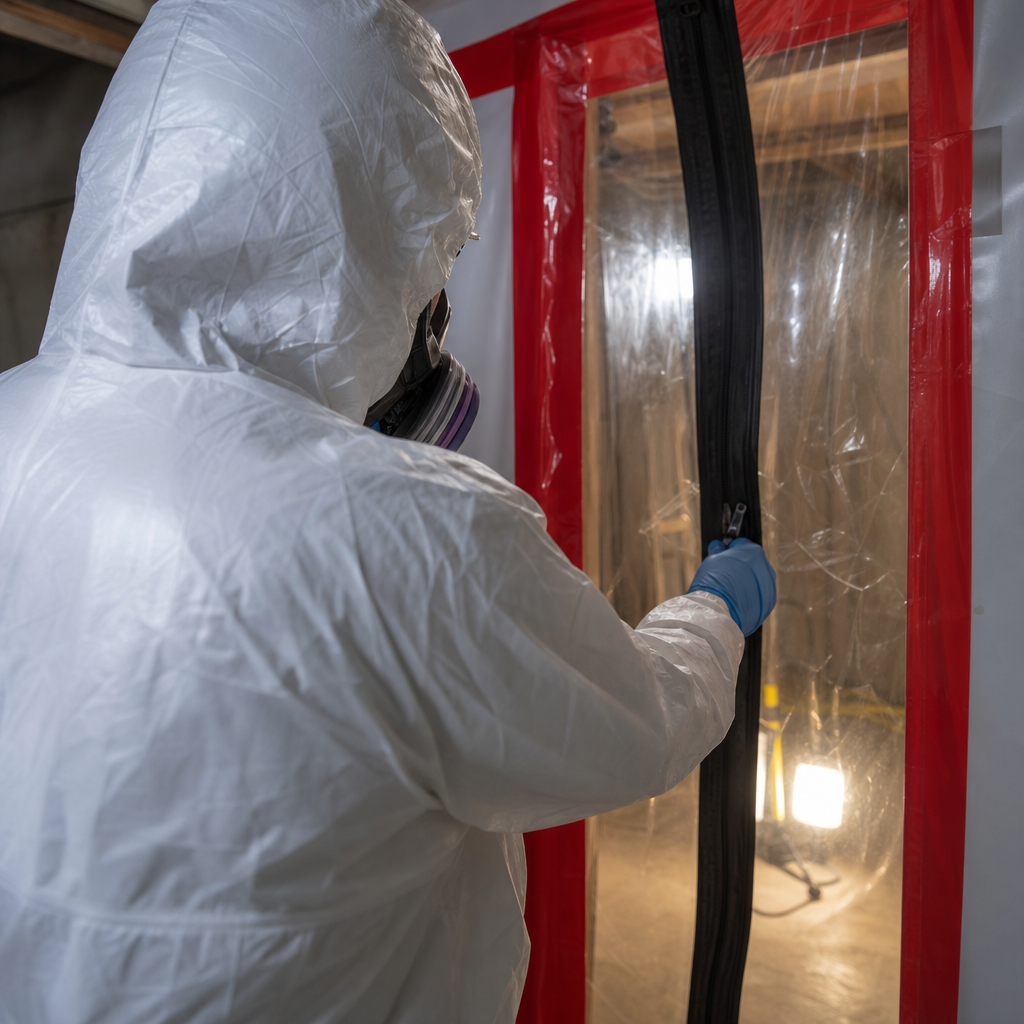
Clothing can collect mold spores during remediation work. For small cleanup projects, wearing dedicated long sleeves and long pants is recommended, and items should be laundered after use. For flood or disaster cleanup, the CDC recommends wearing long sleeves, long pants, and waterproof boots.[3]
Coveralls (such as Tyvek) may be used for larger or more intensive jobs, such as structural tear-outs or work in dusty crawl spaces, to provide an additional layer of body protection.
5. Basement and Crawl Space Considerations
Basements and crawl spaces often present challenges during mold cleanup due to high relative humidity, poor ventilation, and confined working conditions. When water intrusion occurs in sub-grade areas, airborne spores can migrate through floor openings and utility pathways.
In confined or heavily affected spaces, standard PPE may be supplemented with isolation techniques, such as plastic sheeting barriers and HEPA-filtered air filtration devices, to help contain disturbed spores within the work area.
6. Drywall, Ceilings, and Structural Materials
Need protective gear for cleaning black mold?
We’re available now - call for a fast, free estimate.
Removing moldy drywall, ceiling panels, or insulation can release elevated levels of airborne spores into the surrounding area. Porous materials that are heavily water-damaged or colonized with mold often need to be carefully removed and disposed of.
For more intensive demolition tasks, a higher level of PPE, such as a full-face respirator or a half-face respirator with P100 filters, complete eye protection, and protective coveralls, may be used. As recommended by Floodline Restoration Co., bagging debris before moving it through uncontaminated living spaces helps reduce the spread of dust.
7. The Doffing Protocol: Preventing Post-Cleanup Contamination
Properly removing protective equipment (doffing) is essential to avoid transferring settled spores to clean living areas or your skin.
Recommended PPE Removal Sequence
- Remove gloves: Peel them from the wrist downward, rolling them inside-out so the outer surface stays enclosed.
- Remove coveralls or outer clothing: Carefully peel outer layers away from the body without shaking them.
- Remove eye protection: Grasp the rear strap and lift the goggles up and away from the face without touching the front lens.
- Remove the respirator: Lift the straps from behind the head, pulling the respirator away from your face without touching the front filter surface.
- Wash thoroughly: Immediately wash your hands, face, and exposed skin with soap and warm water after removing gear.
8. When DIY Safety Equipment Is Not Enough
Basic personal protective equipment protects the individual wearing it, but larger remediation projects may require specialized equipment to dry structural materials and manage indoor air quality.
Professional remediation is often recommended when:
- Contamination covers a large area well beyond the small-scale baseline.
- Mold has spread extensively within HVAC ductwork or central ventilation systems.
- The damage involves contaminated floodwater or sewage backups.
- Building occupants have severe respiratory conditions, mold allergies, or weakened immune systems.
- Significant moisture remains trapped inside structural framing or subflooring.
Floodline Restoration Co. provides professional mold remediation services, including structural drying, containment, and air filtration to resolve mold issues safely.
Frequently Asked Questions
Is an N95 mask sufficient for black mold removal or do I need a P100 filter?
An N95 respirator is the recognized baseline standard for small mold cleanup jobs. For larger or more intensive jobs, an elastomeric respirator with P100 filters may be used to provide higher filtration efficiency and a reusable face seal.
Can I wash and reuse disposable mold cleanup coveralls and filters?
No. Disposable coveralls and single-use respirator filters are designed for one-time use and cannot be washed or vacuumed clean. Dispose of single-use items in sealed bags after completing cleanup work.
What type of gloves work best for black mold removal?
Gloves made of non-latex, vinyl, nitrile, or rubber are suitable for mold remediation. Nitrile gloves are widely used because they provide durable protection against both mold spores and common household cleaning chemicals.
When is black mold remediation too dangerous to DIY?
Remediation is best handled by professionals if the mold covers a large area, involves extensive moisture inside wall cavities, stems from sewage or contaminated floodwaters, or has spread into the HVAC system.
Need protective gear for cleaning black mold?
We’re available now - call for a fast, free estimate.
Sources
- Mold Remediation in Schools and Commercial Buildings Guide – EPA – epa.gov (2008)
- Mold Clean Up Guidelines and Recommendations – CDC – cdc.gov
- Shopping List for Cleaning Mold in Your Home After a Flood – cdc.gov
- Homeowner's and Renter's Guide to Mold Cleanup After … – cdc.gov
- Mold Course Chapter 6: – 19january2017snapshot.epa.gov
Related reading: Homeowners Insurance Flood Coverage | Call Now-10% Off | Same-Day Service | Free Estimate
Related reading: Mold Remediation Cost | Call Now-10% Off | Same-Day Service | Free Estimate
Related reading: Emergency Water Removal Near Me | 10% Off & Free Estimate | On-Site in 60 Minutes
Frequently Asked Questions
Can I wear standard prescription glasses with protective mold cleanup goggles?
Standard prescription glasses break the airtight perimeter seal required for mold goggles, allowing airborne spores to reach your eyes. To maintain ocular protection, use over-the-glasses (OTG) sealed goggles, prescription inserts inside a full-face respirator, or switch to contact lenses under unvented safety goggles.
How should I dispose of used protective gear and mold-contaminated materials?
Seal all single-use PPE, disposable coveralls, and contaminated building debris inside heavy-duty 6-mil polyethylene bags before carrying them through clean living areas. Floodline Restoration Co. recommends double-bagging and wiping down the outer bag surface to prevent releasing trapped spores into your household waste stream.
What should I do if I discover hidden mold inside wall cavities while wearing DIY gear?
Stop demolition immediately and avoid disturbing additional drywall or insulation, as personal PPE protects only the wearer and cannot stop spores from spreading into living spaces. Property owners should contact Floodline Restoration Co. to schedule a professional visual assessment and set up negative-pressure containment before structural removal continues.
About the author
 |
David Harrison David is a certified property restoration specialist with over 12 years of experience in emergency mitigation and structural drying. He holds a degree in Construction Management from the New York Institute of Technology and is an IICRC-certified Master Water Restorer. David specializes in translating complex restoration protocols into actionable advice for property owners navigating unexpected disasters. |
Water damage, flood, or mold emergency?
We’re available now - call for a fast, free estimate.
Call Now - Free Estimate