
Quick Summary
When property owners face sudden pipe bursts or flooding, rapid emergency water removal near me is essential to halt capillary moisture wicking and prevent costly structural deterioration. Floodline Restoration Co. delivers 24/7 rapid response across Long Island City within 45 minutes, deploying certified technicians equipped with industrial truck-mounted extractors, thermal imaging, and direct insurance billing support. Readers will understand mitigation pricing factors, immediate pre-arrival safety protocols, and how to contact live dispatch for urgent water extraction and structural drying.
Emergency Water Removal Near Me: Fast 45-Min Dispatch
When you are searching for emergency water removal near me, you need boots on the ground, not a call center queue. Floodline Restoration Co. dispatches local, in-house extraction crews across Long Island City and Western Queens within 45 minutes. Emergency mitigation typically ranges from $1,500 to $3,500 for standard residential losses, depending on water depth and contamination. Whether you are dealing with a frozen pipe split in an apartment, a commercial fire sprinkler discharge, or storm runoff filling a commercial basement, standing water penetrates drywall, subflooring, and timber within minutes.
As restoration professionals working in New York City, we see how even a two-hour delay can double total repair costs. Porous building materials soak up water through capillary action, pulling moisture deep into wall cavities where household fans cannot reach. Our certified technicians arrive equipped with high-powered, truck-mounted extraction units, industrial low-grain refrigerant (LGR) dehumidifiers, and thermal imaging cameras to track every drop of hidden water. We also document all moisture readings and communicate directly with your insurance carrier to keep your claim moving without friction.
Rapid Response: What Happens in the First 45 Minutes
Stopping water damage requires immediate physical extraction and rapid stabilization. When water enters a structure, the first 24 to 48 hours determine whether materials like subfloors and framing can be dried in place or if they must be completely demolished due to structural softening and mold colonization.
Immediate Steps to Take Before the Crew Arrives
While our emergency crew is on the way, take these protective steps if it is safe to do so:
- Shut off the main water supply: Locate the primary gate valve or ball valve to cut off pressurized flow during a pipe burst water cleanup.
- Turn off electricity to flooded areas: Switch off the circuit breakers feeding the flooded rooms. Never step into standing water to reach a breaker box; if the panel is in a wet basement, wait for our crew.
- Document visible damage: Take quick photos and videos of standing water, furniture levels, and affected personal property for your insurance adjuster.
- Avoid using household vacuum cleaners: Standard wet-dry vacs lack electrical safeguards for deep standing water and cannot remove water bound inside subfloors.
The Threat of Capillary Wicking in Urban Buildings
In multi-family properties, converted industrial lofts, and brownstones throughout Queens, pulling water off the floor surface only solves a fraction of the problem. Porous materials like gypsum board, hardwood, and century-old brick act like sponges. Through capillary action, water travels upward behind baseboards, saturating wall framing several feet above the visible floor line.
If a restoration contractor only removes the surface puddle, trapped moisture will rot the framing, corrode electrical conduits, and breed mold colonies within 48 hours. Our emergency water damage restoration crews map moisture boundaries behind walls using penetrating meters and infrared thermal diagnostics before finishing any extraction run.
What Does Emergency Water Removal Cost in Long Island City?
Need emergency water removal near me?
We’re available now - call for a fast, free estimate.
Most emergency water extraction projects in Long Island City cost between $1,500 and $5,000 for standard residential mitigation, with average drying projects settling around $3,000. Commercial water extraction or severe sewage intrusions can run higher depending on square footage, containment needs, and material disposal.
Standard Cost Table by Mitigation Service
| Service Type | Typical Cost Range | Common Scenario |
|---|---|---|
| Diagnostic Moisture Mapping & Thermal Imaging | $250 – $500 | Tracking hidden water pockets behind walls and beneath flooring |
| Clean Water Extraction (Category 1) | $1,200 – $2,800 | Supply line break, sink overflow, or burst pipe cleanup |
| Grey Water Extraction (Category 2) | $1,800 – $3,800 | Washing machine backup, dishwasher line break, sump overflow |
| Black Water & Sewage Removal (Category 3) | $2,500 – $7,000+ | Basement water removal, city main backup, tidal storm flooding |
| Structural Drying & Dehumidification Setup | $1,000 – $3,500 | Multi-day drying equipment setup using LGR units and air movers |
Key Factors That Dictate Project Cost
The primary factor in mitigation pricing is the water category:
- Category 1 (Clean Water): Water originating from sanitary supply lines. Extraction is direct, and many structural materials can be dried in place if handled quickly.
- Category 2 (Grey Water): Water containing chemical or biological contaminants, such as appliance discharge. Requires targeted removal of impacted padding and surface antimicrobial wash.
- Category 3 (Black Water): Highly contaminated water from sewage backups, storm flooding near waterways like Newtown Creek, or standing water left stagnant for over 48 hours. Requires containment, biohazard protocols, and the controlled removal of all porous materials.
Insurance policies generally cover sudden, accidental burst pipe water damage and sudden appliance failures. As a local water mitigation company, Floodline Restoration Co. bills your insurance carrier directly, providing daily moisture logs, psychrometric calculations, and itemized billing to keep your claim on track.
Structural Damage Risks: Drywall, Subfloors, and Masonry
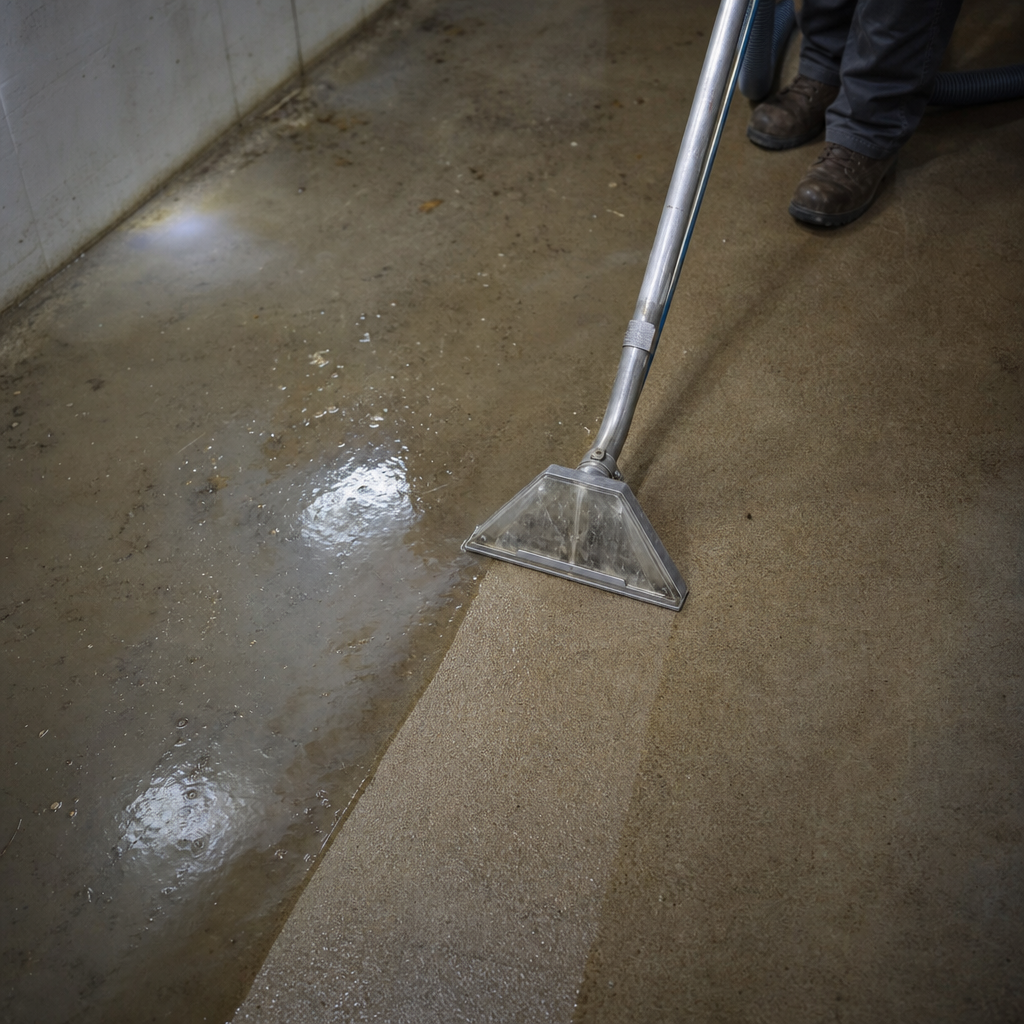
Water does not stay where it lands. In historic conversions and high-density apartments, water moves downward through subfloors, pooling on ceiling drywall below and spreading laterally along structural joists.
Drywall and Ceiling Cavity Saturation
Drywall softens quickly when exposed to water. When water pools on top of a ceiling from an upper-floor leak, the weight of the water can cause the drywall to collapse without warning. When our technicians detect elevated moisture levels in drywall assemblies, we perform controlled flood-cuts roughly 12 to 24 inches above the moisture line. This opens the wall cavity, allowing air movers to circulate dry air directly across wet framing studs.
Flooring and Subfloor Diagnostic Standards
Different flooring assemblies react differently to water saturation:
| Material | Primary Risk Factor | Restoration Protocol |
|---|---|---|
| Drywall & Plaster | Sagging, crumbling, hidden mold | Controlled flood-cut above water line; cavity drying |
| Plywood & OSB Subfloors | Edge swelling, delamination | High-powered extraction; replace OSB if swollen |
| Hardwood Flooring | Cupping, crowning, buckling | Specialty floor-mat suction panels to pull subfloor water |
| Historic Brick & Mortar | Capillary moisture retention, efflorescence | Targeted desiccant or LGR dehumidification to prevent rot |
Masonry and Industrial Timber in Historic Buildings
Many Long Island City lofts feature exposed brick and heavy timber framing. While brick appears solid, it is porous. Floodwaters enter the micro-pores of the masonry, traveling several feet upward over multiple days. If left unaddressed, this trapped moisture slowly rots the ends of floor joists pocketed into external brick walls. The team at Floodline Restoration Co. uses non-destructive moisture meters to ensure drying equipment runs until masonry readings return to dry baseline standards.
Professional Extraction vs. DIY Cleanup
Need emergency water removal near me?
We’re available now - call for a fast, free estimate.
Relying on a shop vacuum and household box fans creates a dangerous false sense of security. While the floor may look dry to the naked eye, the subfloor, sill plates, and insulation underneath remain soaked.
Why Consumer Equipment Fails
Consumer shop vacs only have enough static lift to skim standing water off the top surface of a floor. They cannot extract water trapped under floorboards or inside concrete pores. Furthermore, standard household fans simply circulate moist air around the room without lowering humidity, creating an ideal incubator for mold spores.
| Feature | Consumer Wet-Vac | Standard Janitorial Service | Floodline Pro Extraction |
|---|---|---|---|
| Extraction Power | Low lift, surface only | Medium static lift | High-CFM truck-mount / commercial extractors |
| Deep Moisture Detection | None (visual only) | Basic pin meters | Infrared thermal cameras & non-invasive meters |
| Dehumidification | None | Standard air circulation | Industrial LGR and desiccant units |
| Insurance Documentation | None | Invoices only | Daily psychrometric charts & carrier-approved logs |
Professional standing water pump out service and structural drying protect the long-term value of your property. Our 24/7 water extraction services remove both standing water and deep, bound moisture, verifying dryness with calibrated meters before pulling equipment from your property.
Basement Water Removal and Contaminated Flood Cleanup
Basements are vulnerable to hydrostatic pressure, failing sump pumps, and municipal sewer backups, especially in low-lying areas near urban waterfronts. A flooded basement requires specialized extraction and antimicrobial treatment to make the space safe for occupancy.
Sump Pump Failures and Ground Seepage
During heavy rains, ground water tables rise rapidly. If a sump pump fails, water can fill a basement within an hour. Because groundwater carries soil minerals and outdoor bacteria, it must be treated as contaminated water. Our basement water removal service uses submersible trash pumps to extract heavy volumes quickly, followed by high-vacuum extraction to clear residual water from concrete slabs.
Sewage Removal and Category 3 Sanitization
A sewer line backup presents an immediate biological risk. Raw sewage contains harmful pathogens, bacteria, and viruses that spread through direct contact and aerosolized particles. Our sewage removal and cleanup protocol follows strict safety standards:
- Containment: We seal off the affected basement or ground-floor area using plastic barriers and negative air machines to stop odors and airborne bacteria from migrating into living quarters.
- Bulk Extraction and Disposal: We pump out standing sewage and remove contaminated porous goods like carpeting, baseboards, and damaged drywall.
- Antimicrobial Treatment: We apply EPA-registered, hospital-grade disinfectants to all exposed structural surfaces, concrete, and framing.
- Structural Dehumidification: We deploy commercial dehumidifiers and HEPA air scrubbers to eliminate dampness and filter the air.
Frequently Asked Questions
How fast can an emergency water extraction team arrive?
Floodline Restoration Co. provides a 45-minute response window across Long Island City and surrounding neighborhoods. When you call our direct dispatch line, you speak with a local mitigation professional who routes our nearest on-duty truck directly to your location.
How much does professional emergency water removal cost?
Residential water extraction and drying usually costs between $1,500 and $3,500. Exact pricing depends on the amount of water, how many rooms are affected, whether sewage is present, and how much structural drying is required. Most sudden and accidental water losses are covered by property insurance policies.
Does homeowner or commercial property insurance cover water extraction?
Yes, standard property insurance policies generally cover emergency water mitigation for sudden events like burst pipes, water heater splits, and appliance supply line failures. Gradual leaks or unaddressed maintenance issues are typically excluded. We provide detailed photo documentation and moisture logs directly to your adjuster to help your claim move forward smoothly.
What should I do immediately while waiting for water removal specialists?
If you can do so safely, turn off the main water shutoff valve and switch off circuit breakers for flooded rooms. Move light furniture, documents, and valuables out of standing water, but do not enter rooms where water has reached electrical outlets or power strips.
How long does the complete water extraction and structural drying process take?
While standing water extraction takes only a few hours, complete structural drying usually requires 3 to 5 days. We monitor moisture levels in drywall, framing, and subfloors daily using thermal cameras and meters to ensure materials reach safe drying standards before equipment is removed.
What equipment is used for emergency water extraction and flood cleanup?
Our crews use high-powered truck-mounted extractors, submersible trash pumps, industrial low-grain refrigerant (LGR) dehumidifiers, commercial air movers, HEPA air filtration systems, and infrared thermal imaging cameras to locate, extract, and dry trapped moisture.
For immediate assistance with flood water extraction near me, burst pipe cleanups, or emergency basement drying, contact Floodline Restoration Co. now. Our dispatch team is on call 24 hours a day, 7 days a week, ready to mobilize in 45 minutes or less.
Need emergency water removal near me?
We’re available now - call for a fast, free estimate.
Frequently Asked Questions
Can saturated hardwood floors be saved during emergency water extraction, or do they always need replacement?
Hardwood floors can often be salvaged if emergency water removal begins before severe cupping or delamination sets in. Floodline Restoration Co. uses commercial floor-mat suction systems and targeted drying setups to pull moisture out of subfloors without requiring a complete teardown.
Do I have to pay out of pocket for emergency water removal before insurance covers the claim?
Most property owners are only responsible for their standard policy deductible rather than paying upfront mitigation costs. Floodline Restoration Co. bills insurance carriers directly, providing daily moisture logs and photographic proof to expedite claim approval.
How do technicians verify that trapped moisture behind walls and masonry is completely dry?
Because moisture travels deep into wall studs and porous brick, visual checks are not enough. Floodline Restoration Co. monitors daily progress using penetrating moisture meters and infrared thermal diagnostics until structural materials return to calibrated baseline dry standards.
About the author
 |
Sarah Miller Sarah Miller is a certified water damage restoration specialist with over eight years of experience working closely with property owners in the New York metropolitan area. She holds a B.S. in Construction Management from Pratt Institute and specializes in transparent cost estimation and structural mitigation protocols. Sarah is passionate about helping clients navigate complex insurance claims and restoring their properties efficiently. |
Water damage, flood, or mold emergency?
We’re available now - call for a fast, free estimate.
Call Now - Free Estimate