
Quick Summary
Navigating a homeowners insurance water damage claim requires swift action within the first 24 hours to prove water intrusion was sudden and accidental rather than the result of gradual maintenance issues. Floodline Restoration Co. advises that securing immediate emergency mitigation alongside psychrometric drying logs prevents insurers from reducing payouts or citing failure-to-mitigate policy clauses. Readers will understand policy coverage rules across structural repairs and can contact Floodline Restoration Co. for expert moisture mapping and carrier-ready documentation support.
Homeowners Insurance Water Damage: Settle Fast & Avoid Denials
When clean water floods a hallway or sewage backs up into a basement, the clock starts ticking immediately. How you handle the first 24 hours determines whether your carrier pays the full cost of restoration or pushes back with a denial. According to the Insurance Information Institute (III), water damage and freezing represent roughly one in four homeowners property claims annually, with an average payout hovering around $15,400. Yet claim adjusters regularly challenge these losses over issues of timing, maintenance, and containment.[1]
Floodline Restoration Co. provides rapid-response water extraction, structural drying, and carrier-ready documentation across Long Island City, from Hunters Point lofts to Court Square high-rises. Our IICRC-certified technicians map moisture pathways, record psychrometric drying logs, and build detailed line-item scopes using industry-standard pricing formats so your adjuster gets the objective data needed to approve coverage. Contact Floodline Restoration Co. today for an on-site inspection and immediate moisture containment.
Does Homeowners Insurance Cover Water Damage? Quick Coverage Rules
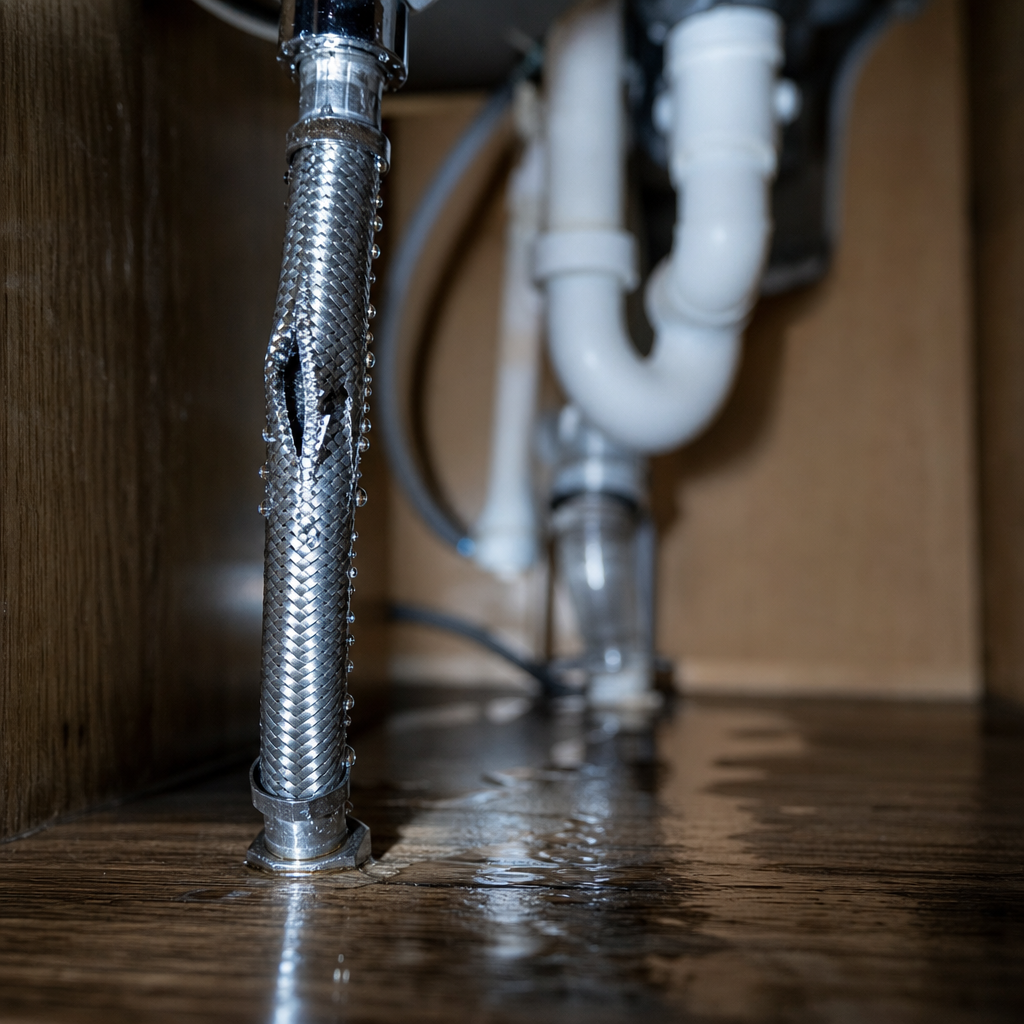
Does Homeowners Insurance Cover Water Damage? Quick Coverage Rules in brief: Standard property policies generally cover water damage that is sudden and accidental, such as a frozen pipe rupture, an appliance supply line failure, or a ruptured water heater. Coverage is typically denied for gradual leaks, unresolved maintenance issues, ground flooding, or sewer backups (unless you carry a specific endorsement).[3]
For a claim to qualify under a standard HO-3 homeowner or HO-6 condo policy, the water intrusion must happen abruptly within the building. Structural drying and teardown fall under Coverage A (Dwelling), while ruined furniture, rugs, and personal items fall under Coverage C (Personal Property). If a multi-story leak forces you out of your home during structural drying, Coverage D (Loss of Use) handles temporary living expenses.
While industry data from the III and ConsumerAffairs indicates that roughly 1 in 60 to 67 insured homes file a water or freezing claim each year, carriers scrutinize every submission. Approval hinges on proving the event was an unforeseen accident rather than a long-term problem.[2]
The Sudden and Accidental Rule
In insurance terms, “sudden and accidental” means the event occurred without prior warning. A split copper pipe behind a bathroom vanity meets this definition. A slow drip that rotted a subfloor over eight months does not. If an adjuster discovers dark fungal staining or deteriorated subflooring around the leak point, the insurer can deny the claim under the policy’s wear-and-tear exclusion. Clear moisture logs from day one help prove the structural saturation happened rapidly.
Key Steps for Fast Claim Approval
- Stop the water flow: Turn off your main shutoff valve or isolate the damaged fixture line immediately to prevent water from running into adjoining walls and lower units.
- Capture baseline visual evidence: Photograph and record video of standing water, swollen baseboards, and water lines on drywall before anything is removed or discarded.
- Get certified moisture mapping: Bring in a certified drying contractor to establish initial moisture baselines across all affected floors, framing, and drywall assemblies.
Why Calling Your Adjuster Before Securing Moisture Logs Causes Denials
Need homeowners insurance water damage?
We’re available now - call for a fast, free estimate.
Many property owners assume their first move should be calling the insurance company’s claims hotline. In practice, waiting for an insurance adjuster to visit your property before starting professional water extraction is one of the most common reasons claims get rejected or reduced.
Most standard property policies contain a strict “duty after loss” clause requiring the insured to protect the property from further damage. If you wait three to five days for an adjuster to walk through your home, standing moisture will wick upward into drywall, soak wall insulation, and trigger mold growth within 48 hours. When the adjuster finally inspects the property, they may classify the damage as preventable secondary damage, citing a failure to mitigate.[4]
The ‘Failure to Mitigate’ Policy Trap
When an adjuster flags a claim for failure to mitigate, the insurer can legally reduce or deny payment for any damage that occurred after the initial break. To protect your claim:
- Isolate the source immediately: Shut off the supply line and take timestamped photos of the ruptured component.
- Hire an IICRC-certified restorer right away: You do not need adjuster pre-approval to hire emergency drying services. Standard policies require emergency stabilization.
- Secure daily atmospheric readings: Independent moisture logs show that you acted immediately to dry the structure, neutralizing any argument that you allowed damage to spread.
How Psychrometric Drying Logs Protect Your Payout
Insurance adjusters rely on numbers, not verbal descriptions. Psychrometric drying logs provide scientific proof of structural drying progress. These logs record relative humidity, ambient temperature, surface moisture content, and grains per pound (GPP) – a measure of specific humidity in the air.
If an adjuster questions whether your hardwood floors or wall cavities really required commercial dehumidifiers and air movers for four days, your psychrometric records provide the answer. For example, during a 2024 supply line rupture in a Queens apartment, an insurer initially disputed drying charges for a kitchen subfloor. Floodline Restoration Co. supplied daily thermal imaging and moisture meter readings demonstrating that deep moisture levels were still above structural dry standards on day three. The adjuster approved the full scope without deductions.
Structural Repair vs. Replacement: Drywall, Hardwood, and Subfloors
Determining whether materials can be saved in place or require removal depends on the water category, duration of exposure, and material density. Clean supply water allows for more in-place drying options than contaminated water, provided extraction starts promptly.
| Structural Material | Restoration Criteria (In-Place Drying) | Replacement Considerations (Tear-Out) |
|---|---|---|
| Drywall & Ceilings | Minimal water contact, firm gypsum core, no sagging, under 16% moisture equivalent after drying. | Sagging gypsum, soft or crumbling core, contaminated water contact, or insulation trapped behind vapor barriers. |
| Hardwood Flooring | Surface cupping only, solid subfloor beneath, fasteners holding, drying equipment placed within 24 hours. | Severe board buckling, broken tongue-and-groove joints, crowning, or delaminated finish layers. |
| Plywood / OSB Subfloor | Flat plane, solid structural integrity, no swelling along board joints, dried within 48 hours. | Swollen edges, soft spots under foot traffic, ply separation (delamination), or hidden mold growth beneath. |
Drywall and Ceilings: Moisture Wicking and Sagging Risks
Drywall wicks water upward through capillary action. Water can rise several feet inside wall cavities, saturating fiberglass insulation that stays wet indefinitely if left unopened. Restoration crews use non-invasive moisture meters and thermal cameras to identify the exact moisture boundary, cutting clean flood cuts along studs only where necessary to aerate the framing.
Hardwood and Laminate Flooring: Cupping vs. Buckling
When solid hardwood absorbs water from underneath, the edges of the planks expand and rise, a condition known as cupping. If addressed quickly with commercial injection drying mats and desiccant dehumidification, cupped boards can often settle back into place. Buckling occurs when the wood expands so forcefully that boards pull free from the subfloor nails. Once buckling happens, the floor must be torn out and replaced.
Subfloor, Joists, and Cabinetry: Detecting Hidden Pockets
Water moves along the path of least resistance, often pooling under kitchen cabinets, behind shower pans, and beneath multi-layered subflooring. If an adjuster writes an estimate based solely on visible surface damage, thousands of dollars in hidden subfloor rot may be missed. Certified moisture mapping proves the existence of trapped moisture pockets before your claim is settled.
Covered Losses vs. Excluded Water Damage: Know the Differences
Need homeowners insurance water damage?
We’re available now - call for a fast, free estimate.
Understanding the distinction between covered perils and excluded events prevents unexpected out-of-pocket costs after an emergency.
Homeowners policies typically cover water damage when it is sudden and accidental.
Burst Pipes and Plumbing Ruptures
A sudden freeze that splits a supply line or a pressurized copper fitting that fails under normal use is covered by default under standard HO-3 and HO-6 policies. The policy pays to dry the structure, repair damaged sheetrock, and replace ruined flooring. Note that while insurance pays for the resulting water cleanup and repairs, it typically does not pay for the plumbing fitting itself, which remains the owner’s maintenance responsibility.
External Flood Damage vs. Internal Water Intrusion
There is a fundamental legal difference between internal water damage and flood damage. Internal pipe breaks, sink overflows, and appliance failures fall under standard homeowners insurance. Rising water from outdoor street flooding, storm surges from the East River, or heavy surface runoff entering basement windows is defined as a flood. Standard home policies exclude floods entirely; covering these events requires a separate policy through the National Flood Insurance Program (NFIP) or a private flood carrier.
Sewage Backup and Sump Pump Failures
Standard policies routinely exclude damage caused by municipal sewer main backups or mechanical sump pump failures. To protect against these frequent urban issues, property owners must add a specific Water Backup and Sump Discharge or Overflow endorsement to their policy. This rider provides a dedicated coverage limit (often between $5,000 and $25,000) for drain and sewer incidents.
| Loss Scenario | Standard HO-3 Policy | Requires Endorsement | Requires NFIP Policy |
|---|---|---|---|
| Burst Plumbing Line | Covered | No | No |
| Sewer / Sump Overflow | Excluded | Yes (Water Backup Rider) | No |
| Groundwater Seepage / Surface Flood | Excluded | No | Yes |
| Accidental Appliance Overflow | Covered | No | No |
What Does Homeowners Insurance Water Damage Cost?
The total cost to restore water damage depends on the water category (Clean, Gray, or Black), the square footage affected, and how quickly extraction begins. When a claim is approved, your carrier covers the authorized mitigation and structural repair costs minus your deductible.
Estimated Industry Cost Considerations for Water Restoration
Professional restoration companies and insurance adjusters calculate costs using Xactimate, an industry-standard software that prices labor, machinery, and materials based on local market rates. Below is a breakdown of common mitigation and restoration service scopes:
| Restoration Service Scope | Scope Factors & Cost Variables |
|---|---|
| Emergency Inspection & Moisture Assessment | Thermal imaging, pin-meter probing, mapping, and psychrometric setup. |
| Water Extraction & Structural Drying | Commercial LGR dehumidifiers, HEPA air scrubbers, and centrifugal air movers deployed across drying chambers. |
| Controlled Demolition | Removal of saturated drywall (flood cuts), wet insulation, baseboards, and non-salvageable flooring. |
| Antimicrobial & Sanitization Application | EPA-registered antimicrobial washes applied to exposed framing to prevent mold colonisation. |
| Sewage / Category 3 Biohazard Extraction | Full personal protective equipment protocols, hazardous waste disposal, and deep sanitization. |
Note: Final billing is determined by equipment run time, affected square footage, and structural material requirements. Contact Floodline Restoration Co. for an exact on-site assessment.
Insurance Deductibles vs. Total Claim Payouts
Your policy deductible is the out-of-pocket amount you are responsible for before insurance coverage applies. If your covered mitigation and rebuild total is $18,000 and your policy deductible is $1,500, the carrier issues a net payment of $16,500.
- Direct Carrier Billing: Professional restorers can submit standardized Xactimate invoices directly to your carrier’s claims department, reducing out-of-pocket stress.
- Line-Item Justification: Every piece of equipment, from air movers to desiccant units, must be supported by daily moisture logs to ensure full reimbursement.
- Rebuild vs. Mitigation Payouts: Insurers often issue separate checks for emergency mitigation services and subsequent structural rebuild work.
Frequently Asked Questions About Water Damage Claims in Long Island City
How much does water damage restoration cost in NYC?
Water restoration costs in NYC depend on building accessibility, water contamination class, and affected structural layers. A minor clean-water supply line failure involving one room typically costs between $2,500 and $5,000, while multi-level failures or black-water sewage backups in commercial or residential buildings can exceed $15,000 to $30,000. When covered under your policy, these expenses are paid by insurance minus your deductible.
Does insurance cover drying equipment and structural cleanup?
Yes. Property insurance policies cover the cost of emergency water extraction, air movers, commercial dehumidifiers, and sanitizing agents, provided the water source was sudden and accidental. Proper documentation, including daily moisture logs and equipment tracking, is necessary to support the claim with your adjuster.
What contractor credentials should I check before hiring?
Always hire a restoration contractor certified by the Institute of Inspection, Cleaning and Restoration Certification (IICRC). Key credentials include Water Restoration Technician (WRT), Applied Structural Drying (ASD), and Applied Microbial Remediation Technician (AMRT). In multi-family and commercial properties across Long Island City, ensure the contractor carries full liability insurance and provides digital, line-item estimates compatible with major insurance carrier platforms.
Need homeowners insurance water damage?
We’re available now - call for a fast, free estimate.
Sources
- Water Leak Detection and Property Insurance Statistics (2026) – rapideyeinspections.com (2026)
- Water Damage Insurance Claims Statistics (2026) | ConsumerAffairs® – consumeraffairs.com (2026)
- The Rising Cost of Water Damage in American Homes in 2026 – thesource.com (2026)
- Water Damage Statistics and Information – thisoldhouse.com (2025)
Related reading: Water Extraction Cost Per Sq Ft Lic – Call Now-10% Off – Same-Day Service – Free Estimate
Related reading: Flooded Basement Cleanup Cost | Call Now-10% Off | Same-Day Service | Free Estimate
Related reading: Water Extraction Cost Per Square Foot | Call Now-10% Off | Same-Day Service | Free Estimate
Frequently Asked Questions
Does homeowners insurance pay to fix the actual broken pipe that caused the leak?
Standard policies cover the resulting water extraction, structural drying, and drywall repairs, but they typically exclude the cost of repairing or replacing the broken pipe itself. The damaged plumbing line or fixture is classified as a maintenance item and must be paid out-of-pocket.
Can an insurance carrier deny my water claim if mold appears before the adjuster arrives?
Insurers often cite mold as evidence of a gradual, pre-existing leak to justify claim denials. Floodline Restoration Co. counters this by establishing timestamped psychrometric logs and moisture mapping on day one, providing scientific proof that the moisture was sudden and accidental rather than long-term neglect.
What should I do if the adjuster disputes the amount of drying equipment used?
Ask your adjuster for a formal line-item breakdown of disputed charges and submit your daily atmospheric drying logs as objective proof of structural saturation. Floodline Restoration Co. builds carrier-ready Xactimate estimates backed by IICRC drying standards, ensuring every dehumidifier and air mover is fully justified to protect your settlement.
About the author
 |
Sarah Miller Sarah Miller is a certified water damage restoration specialist with over eight years of experience working closely with property owners in the New York metropolitan area. She holds a B.S. in Construction Management from Pratt Institute and specializes in transparent cost estimation and structural mitigation protocols. Sarah is passionate about helping clients navigate complex insurance claims and restoring their properties efficiently. |
Water damage, flood, or mold emergency?
We’re available now - call for a fast, free estimate.
Call Now - Free Estimate