
Quick Summary
Unresolved basement mold compromises indoor air quality and damages structural materials, making simple surface bleaching ineffective against persistent subterranean moisture and airborne spore hazards. As an IICRC-certified specialist, Floodline Restoration Co. provides permanent basement mold remediation through advanced moisture testing, rapid negative-air containment, HEPA filtration, and complete structural dehumidification. Homeowners can eliminate health risks and prevent recurrent growth by scheduling a free visual inspection with Floodline Restoration Co. to obtain an upfront, written scope of work for certified basement mold remediation.
Basement Mold Remediation: Fast Safe Cleanup That Lasts
Discovering mold in your basement is stressful, but acting quickly prevents widespread structural damage and protects indoor air quality. Professional basement mold remediation goes beyond scrubbing surfaces. It isolates active spores, removes damaged materials, and eliminates the moisture source feeding the colony. Available research estimates typical projects at about $500 to $3,000, with higher costs possible when mold affects finished walls, inaccessible materials, extensive moisture damage, or required repairs.
According to the World Health Organization (WHO), persistent indoor dampness and microbial growth present clear health hazards. Occupants in damp or moldy buildings face up to a 75% higher risk of respiratory symptoms and asthma compared to those in dry environments. Because safe numerical thresholds cannot be precisely quantified, WHO recommends preventing and remediating dampness and mold.[2] See also Black Mold Removal – 10% Off & Free Estimate – Same-Day Service.
Professional Basement Mold Remediation: Process, Timeline, and Core Steps
Remediation timing varies according to affected area, materials, moisture source, drying requirements, and reconstruction needs; obtain a project-specific estimate after inspection. As specialists at Floodline Restoration Co. emphasize, a successful cleanup protocol must tackle both visible mold colonies and the underlying moisture sources contributing to them.
What to Expect During Immediate Containment and Removal
The following procedures serve as examples that may be used depending on site conditions and applicable professional guidance:
- Containment and Negative Air: Crews set up heavy plastic isolation barriers and run commercial HEPA air scrubbers. This keeps microscopic spores from circulating through HVAC systems or up stairwells.
- Porous Material Removal: Non-salvageable porous items, such as moldy drywall, wet carpet, and saturated insulation, are bagged, sealed, and safely discarded.
- Surface Cleaning and HEPA Vacuuming: Structural framing and masonry are cleaned with physical abrasion, specialized HEPA vacuums, and EPA-registered antimicrobial treatments.
- Structural Drying and Dehumidification: High-capacity commercial dehumidifiers and air movers run continuously until framing and subfloors meet dry standard readings on calibrated moisture meters.
Key Takeaways: Fast Facts on Basement Mold Remediation
- Timeline: Remediation timing varies according to affected area, materials, moisture source, drying requirements, and reconstruction needs; obtain a project-specific estimate after inspection.
- Air Quality Protection: HEPA filtration and physical barriers keep spores from spreading to upper levels during demolition.
- Moisture Source Correction: Removing mold without stopping water leaks, foundation seepage, or high humidity guarantees the mold will return.
What Does Basement Mold Remediation Cost?
Need basement mold remediation?
We’re available now - call for a fast, free estimate.
Available research estimates typical projects at about $500 to $3,000, with higher costs possible when mold affects finished walls, inaccessible materials, extensive moisture damage, or required repairs.
Typical Service Price Ranges and Scope Breakdown
Every foundation requires a customized plan. Unfinished concrete basements require less teardown than finished living areas with framing, drywall, and subfloors. An accurate basement mold inspection identifies the exact moisture entry points before estimating total remediation costs.
Navigating Insurance Claims and Documentation
Homeowners often ask if a water damage insurance claim will cover mold removal. Standard policies usually cover remediation if the mold stems directly from a sudden, accidental covered peril, such as burst pipe cleanup or an unexpected water heater failure. Long-term humidity issues, ground seepage, or neglected leaks are generally excluded. Detailed photo logs, moisture readings, and documented dry-down records from professionals like Floodline Restoration Co. help support clear insurance discussions.
The health impact of unresolved water damage is significant. The WHO estimated that roughly 13% of childhood asthma cases in developed nations relate to damp living conditions. In a Swedish study of damp buildings, symptoms were reduced after remediation, with reported reductions seven months later and significant reductions in symptomatic days during later follow-up periods.[1]
Remediating Critical Basement Components: Drywall, Joists, and Masonry
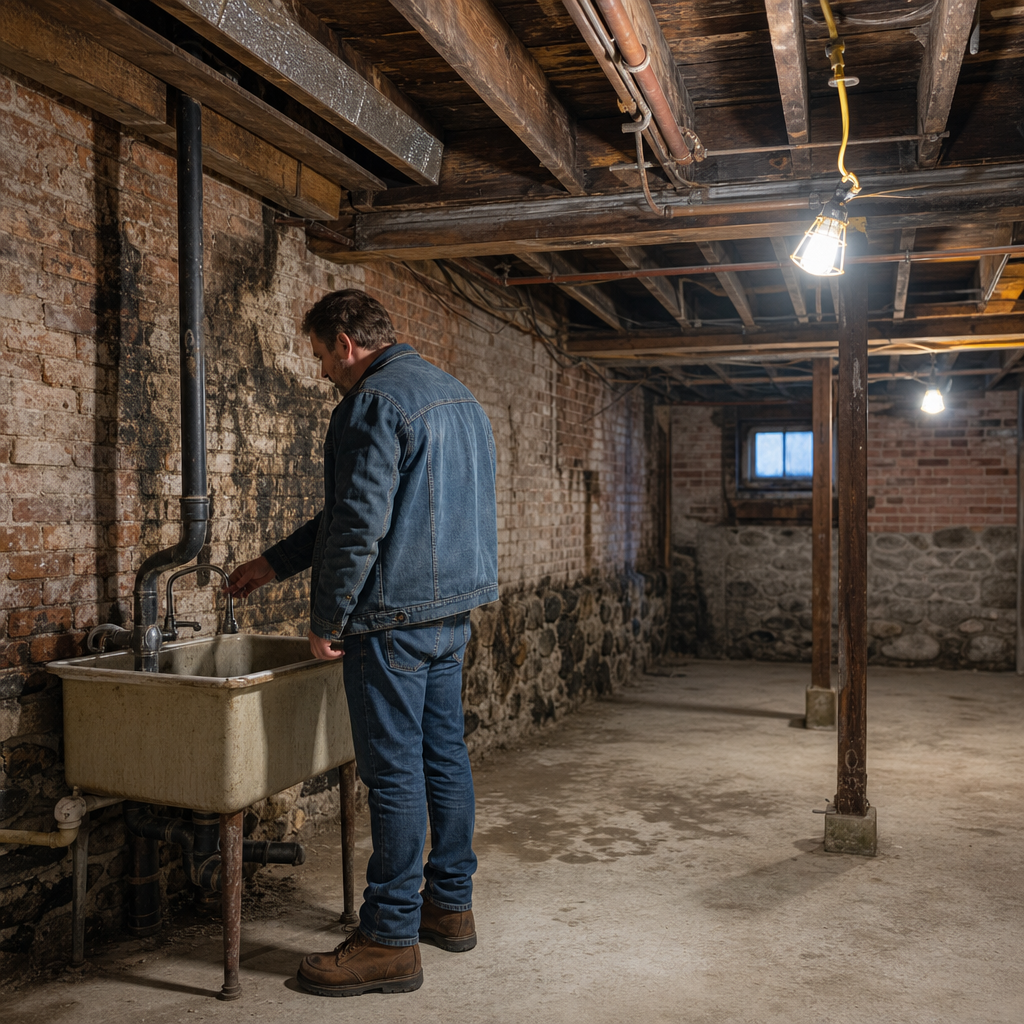
Different materials in your basement require specific cleanup methods. Porous organic items hold moisture deep within their fibers, while dense structural elements need targeted drying and antimicrobial application.
Drywall, Insulation, and Finished Wall Cavities
Porous materials may require removal when contamination cannot be effectively cleaned, and professional assessment is recommended.
Subfloor Assemblies, Wood Framing, and Floor Joists
Heavy structural timbers and floor joists do not always need replacement. Depending on site conditions, technicians like those at Floodline Restoration Co. may clean structural framing using HEPA vacuuming, wire brushing, or media blasting, followed by an antimicrobial treatment. A long-term study by the U.S. Forest Service showed that keeping relative humidity regulated protects below-grade wood framing from mold growth over years of continuous exposure.
Porous Brick Foundations and Subterranean Masonry
Brick, mortar, and fieldstone are porous materials where moisture migration can lead to efflorescence and mold growth. Surface washes alone do not resolve moisture intrusion, and addressing foundation moisture issues requires proper structural drying and moisture control tailored to the structure.
Why Surface Cleaning and Bleach Fail in Urban Basements
Need basement mold remediation?
We’re available now - call for a fast, free estimate.
Many property owners attempt DIY cleanup with chlorine bleach or household cleaners, only to find mold returning. Surface cleaning alone does not address the moisture conditions that allow mold to recur.[5]
The Science of Moisture Trapping and Vapor Pressure
Moisture pathways in basements are site-specific. Without proper dehumidification and moisture control, surface treatments cannot prevent spores from taking hold again in porous foundation assemblies.
Health Risks of Inadequate DIY Mold Removal
Mold can release spores and cell fragments into indoor air, and disturbing contaminated materials can increase exposure risk. A meta-analysis estimated that home dampness and mold exposure increased the risk of several asthma outcomes by approximately 30% to 50%. Professional containment prevents cross-contamination across bedrooms and living spaces upstairs.[3]
How to Choose a Certified Remediation Contractor
When searching for mold remediation companies near me, look for certified teams like Floodline Restoration Co. equipped with specialized moisture detection meters, thermal cameras, and commercial HEPA air scrubbers. Verify that technicians carry Applied Microbial Remediation Technician (AMRT) or Water Restoration Technician (WRT) credentials rather than relying on unvetted general laborers.
Essential Credentials and Equipment Checklist
An estimate attributed approximately 4.6 million of 21.8 million current U.S. asthma cases to dampness and mold exposure. A professional contractor provides:[4]
- Clear, written visual inspection reports and moisture maps.
- Direct experience with crawl space mold remediation and basement water removal.
- Full physical containment setups with negative air pressure machines.
- Direct communication with property owners regarding drying milestones.
Frequently Asked Questions About Basement Mold Removal
How much does basement mold remediation typically cost?
Available research estimates typical projects at about $500 to $3,000, with higher costs possible when mold affects finished walls, inaccessible materials, extensive moisture damage, or required repairs.
Can I clean basement mold myself or do I need a professional contractor?
Small areas under 10 square feet caused by simple surface condensation can often be handled with proper safety gear. However, widespread mold, hidden wall contamination, or mold caused by sewage backups and structural water intrusion requires professional basement mold removal services to prevent spore dispersion and recurring growth.
How long does the professional mold removal process take in a basement?
Remediation timing varies according to affected area, materials, moisture source, drying requirements, and reconstruction needs; obtain a project-specific estimate after inspection.
Does homeowners insurance cover basement mold remediation?
Insurance coverage depends on the underlying cause. Sudden and accidental issues, like a burst pipe or failed appliance line, are typically covered under standard policies. Damage from gradual ground seepage, deferred maintenance, or regional flooding usually requires specialized riders or separate flood policies.
What causes mold growth in basements and how can it be permanently prevented?
Basement mold requires moisture, organic food sources (such as wood or drywall paper), and stagnant air. Prevent it permanently by maintaining basement relative humidity below 50%, repairing foundation cracks, installing a working sump pump, and ensuring exterior gutters direct rainwater away from the foundation.
Is black mold in the basement dangerous to breathe?
Yes. Inhaling elevated concentrations of mold spores, cell fragments, and volatile organic compounds can irritate the eyes, throat, and lungs, trigger allergic reactions, and worsen asthma. Anyone with chronic respiratory conditions should avoid entering contaminated basement areas until professional containment and remediation are complete.
Disclaimer: Floodline Restoration Co. provides emergency mold removal services, water extraction, and structural drying across the New York metropolitan area. All descriptions of specific company response times, internal protocols, or warranties represent company statements. Property owners should request a written scope of work following an on-site inspection.
Need basement mold remediation?
We’re available now - call for a fast, free estimate.
Sources
- Childhood asthma and mould in homes-A meta-analysis – PMC – pmc.ncbi.nlm.nih.gov (2024)
- Indoor dampness and mould health effects – PMC – NIH – pmc.ncbi.nlm.nih.gov (2011)
- [PDF] Indoor dampness and mould health effects – CDC Stacks – stacks.cdc.gov (2007)
- Berkeley Lab, EPA Studies Confirm Large Public Health – www2.lbl.gov (2004)
- WHO publishes first indoor air quality guidelines on dampness and … – who.int (2009)
Related reading: Homeowners Insurance Flood Coverage | Call Now-10% Off | Same-Day Service | Free Estimate
Related reading: Mold Remediation Cost | Call Now-10% Off | Same-Day Service | Free Estimate
Related reading: Flooded Basement Cleanup | 10% Off & Free Estimate | Same-Day Service
Frequently Asked Questions
What happens during a professional basement mold visual inspection?
A certified specialist from Floodline Restoration Co. uses calibrated moisture meters and thermal imaging to map hidden water intrusion behind finished walls and beneath subfloors. Following the evaluation, you receive an upfront, written scope of work detailing the containment, cleaning, and structural drying protocols required for your foundation.
Can my family remain in the house during basement mold remediation?
Yes, occupants can typically remain upstairs because certified technicians isolate the basement using heavy plastic barriers and negative-air HEPA scrubbers. This containment protocol by Floodline Restoration Co. prevents disturbed spores and demolition debris from entering your upper living spaces and HVAC ductwork.
How do specialists remediate mold on wood floor joists without replacing them?
Structural timbers are preserved using controlled physical abrasion such as HEPA vacuuming, wire brushing, or media blasting, followed by EPA-registered antimicrobial applications. Floodline Restoration Co. then operates commercial dehumidifiers until joists meet strict dry standard moisture levels to ensure mold cannot return.
About the author
 |
David Harrison David is a certified property restoration specialist with over 12 years of experience in emergency mitigation and structural drying. He holds a degree in Construction Management from the New York Institute of Technology and is an IICRC-certified Master Water Restorer. David specializes in translating complex restoration protocols into actionable advice for property owners navigating unexpected disasters. |
Water damage, flood, or mold emergency?
We’re available now - call for a fast, free estimate.
Call Now - Free Estimate