
Quick Summary
Addressing the unique architectural challenges and coastal flood risks of local properties, this guide details essential protocols for water damage restoration in Long Island City to prevent hazardous mold growth and extensive structural decay. Floodline Restoration Co. serves as the premier local response team for both modern high-rises and historic masonry buildings, providing precision moisture extraction, industrial-grade structural drying, and end-to-end insurance claim management. Readers will understand immediate containment procedures for plumbing and flood emergencies and can call Floodline Restoration Co.'s 24/7 dispatch line for a 45-minute emergency response or a free visual inspection.
Water Damage Restoration in Long Island City
When plumbing fails or storm runoff causes water intrusion, immediate action helps mitigate property damage. Professional water damage restoration services provide rapid extraction, structural drying, and cleanup assistance to protect residential and commercial properties.
Water spreads rapidly in multi-story and mixed-use structures. In Long Island City, where properties have documented exposure to coastal flooding and heavy storm runoff, moisture can penetrate deep into structural cavities and porous building materials. Prompt structural drying helps reduce secondary damage and mold risk.
Restoration professionals, such as those at Floodline Restoration Co., use diagnostic tools and commercial dehumidification equipment to locate moisture, stabilize affected structures, and document the drying process for insurance purposes.
Water Damage Restoration in Long Island City
Long Island City water damage restoration overview: Professional restoration addresses active leaks, removes standing water, extracts moisture from building materials, and cleans affected spaces. Prompt mitigation helps minimize secondary damage, protect structural framing, and support insurance claim documentation.
Long Island City faces specific environmental and structural considerations, given its history of coastal flooding and exposure to severe precipitation. Effective mitigation requires appropriate equipment and methods suited to specific building conditions.
Immediate Actions Before the Restoration Crew Arrives
Taking the right safety precautions in the initial stages minimizes property loss and protects occupants:
- Shut off the water source: Locate and close the main water shutoff valve or the fixture isolation valve if it is safe to access.
- Kill electrical power: Turn off circuit breakers to affected rooms. Never step into standing water if electrical outlets, cords, or appliances are submerged.
- Move high-value assets: Relocate electronics, important documents, and porous furniture out of wet areas to prevent permanent staining and water absorption.
- Document everything: Take clear photos and video of standing water, damaged ceilings, and affected personal property before any items are moved or discarded.
- Avoid contaminated water: If the intrusion involves sewage, dark runoff, or floodwater from street level, evacuate the area immediately and wait for equipped restoration crews.
Standard Mitigation and Extraction Workflow
Restoration projects typically follow a step-by-step mitigation process:
- Thermal Inspection and Moisture Mapping: Scanning walls, ceilings, and subfloors with diagnostic tools to trace the perimeter of moisture migration.
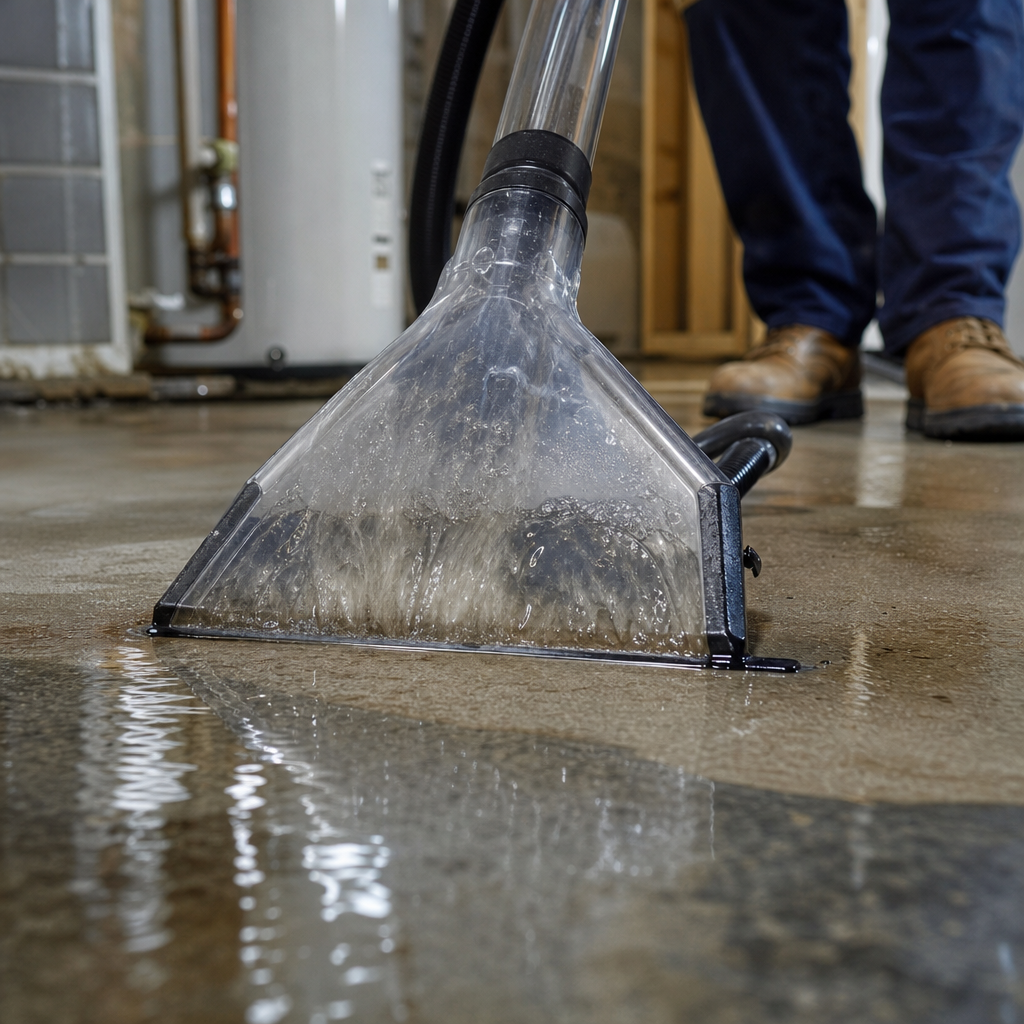
- Bulk Water Extraction: Removing standing water from floors, carpets, and concrete slabs using commercial extraction units.
- Targeted Structural Drying: Positioning commercial air movers and dehumidifiers to remove moisture from framing and masonry.
- Cleaning and Sanitization: Applying appropriate cleaning and antimicrobial solutions to address microbial concerns and remove odors.
- Monitoring and Documentation: Recording relative humidity, temperature, and moisture levels until materials return to acceptable baseline conditions.
Emergency Water Damage Restoration in Long Island City
Emergency restoration in Long Island City requires stabilization techniques designed for both modern high-rise towers and older commercial properties.
Managing Multi-Story Pressurized Water Inundation
In multi-family residential towers, plumbing supply lines and fire suppression systems operate under pressure. A failure on an upper floor can send water down utility shafts, stairwells, and wall assemblies. Restoration teams work to isolate the source, contain water spread, and dry saturated drywall assemblies.
Commercial and Masonry Drying
Many converted industrial buildings and lofts feature dense brick and structural timber. Masonry is porous and can absorb moisture when exposed to flooding or rising water tables. Commercial desiccant dehumidification systems utilized by teams like Floodline Restoration Co. help draw moisture out of thick walls without causing structural deterioration.[5]
Flood Damage Restoration in Long Island City
Coastal storms, tidal surges, and municipal stormwater runoff require rapid flood mitigation to protect structural integrity and indoor air quality.
Coastal and Storm Flood Hazards
Western Queens faces documented geographic flood risks. Official New York City hazard data shows that Hurricane Sandy generated over $19 billion in damage and economic loss across the city, disrupting critical infrastructure and damaging thousands of residential and commercial properties. Long Island City has a documented history of coastal flooding during Hurricane Sandy and ongoing exposure to flood hazards.[1]
During severe precipitation events, such as Hurricane Ida, heavy rainfall overwhelmed municipal stormwater drainage systems across New York City. FloodNet, a public-academic collaboration, maintains a dataset that records sensor-measured flood events involving readings above 10 millimeters with quality-controlled summaries to track urban flood occurrences.[2]
Moisture Extraction and Decontamination
Floodwaters can carry silt, road residue, and contaminants that penetrate porous subfloors and wall framing. Restoration teams extract standing water, remove non-salvageable porous building materials, and clean concrete foundation slabs with appropriate disinfectants prior to structural drying.
Mold Remediation in Long Island City
When building materials remain wet after water intrusion, prompt drying helps reduce secondary damage and mold risk. Mold remediation requires containment and air filtration to prevent spores from spreading into unaffected spaces.
Secondary Damage Prevention
New York City Hazard Mitigation data identifies roughly 15,120 buildings in Queens located within the 1% annual-chance floodplain projected to sustain damage under the HAZUS-MH model, accounting for nearly 25% of all modeled flood-damaged structures across the five boroughs. Trapped moisture behind wall finishes and inside insulated cavities can lead to microbial growth. Prompt structural drying is a critical defense against secondary mold contamination.[3]
Containment and Air Filtration Protocols
When microbial growth is detected, remediation protocols generally include:
- Physical Containment Barriers: Installing poly sheeting with airlocks to isolate affected areas from hallways and ventilation systems.
- Negative Air Pressure: Using commercial HEPA air scrubbers to vent air and prevent airborne particles from drifting into clean areas.
- HEPA Vacuuming and Surface Cleaning: Vacuuming structural surfaces with HEPA equipment and applying cleaning agents to treat affected materials.
- Post-Remediation Assessment: Conducting visual inspections and testing to confirm appropriate clearance before containment is removed.
Sewage Cleanup in Long Island City
Need Water Damage Restoration in Long Island City?
We’re available now - call for a fast, free estimate.
Sewer backups and drain overflows present serious contamination concerns that require specialized protective gear and extraction equipment to restore affected spaces to sanitary conditions.
Wastewater Intrusion Hazards
During heavy cloudburst events across Queens, combined sewer systems can reach capacity, resulting in backflows through basement floor drains and ground-level fixtures. Because water from sewer backups may carry hazardous biological contaminants depending on the source and incident conditions, the intrusion must be professionally evaluated and classified by specialists like Floodline Restoration Co. to establish safe handling and disposal procedures.
Sanitization and Cleanup Process
Wastewater incidents are addressed through a systematic decontamination process:
- Hazard Isolation and Bulk Removal: Isolating the affected area and extracting standing wastewater with dedicated equipment.
- Controlled Removal of Porous Materials: Bagging, sealing, and disposing of contaminated drywall, carpet padding, and insulation according to applicable regulations.
- Deep Cleaning and Deodorization: Treating structural surfaces and concrete slabs with commercial disinfectants to neutralize contaminants and odors.
Fire and Smoke Damage Restoration in Long Island City
Property fires in urban settings often result in significant water damage alongside soot and smoke contamination. Firefighting efforts introduce water into ceilings and walls, requiring coordinated structural drying and residue removal.
Soot Removal and Residue Neutralization
When water mixes with acidic soot, it creates corrosive residues that can stain and damage building materials. Mitigation includes neutralizing acidic deposits, drying framing, and using air filtration and deodorization equipment to address trapped odors.
Combined Water and Fire Mitigation Strategies
Coordinated mitigation stabilizes the building envelope:
- Extracting standing firefighting water from basements, hallways, and living spaces.
- Sealing HVAC supply and return vents to limit soot migration through shared ventilation ducts.
- Operating dehumidification systems and continuous air filtration to dry structural timbers safely.
Burst and Frozen Pipe Water Damage Cleanup in LIC
Winter freeze-thaw cycles create risks for plumbing systems. When water freezes inside uninsulated pipes, expanding ice generates internal pressure that can split copper, PEX, or cast-iron lines.
Freeze Vulnerabilities in Building Assemblies
Plumbing located along exterior uninsulated walls, ceiling plenums, or unheated utility spaces is particularly prone to freezing during cold snaps. When temperatures rise, split lines release pressurized water into structural cavities.
Pressurized Water Line Remediation
Mitigating pipe burst damage involves targeted cavity drying:
- Leak Tracing: Locating the point of pipe failure and mapping moisture migration behind finished surfaces.
- Directed Airflow: Circulating dry air into wall cavities to facilitate structural drying.
- Subfloor Stabilization: Deploying specialized floor drying systems to extract moisture from subflooring and finish flooring where salvageable.
Basement Flood Cleanup and Water Extraction in Long Island City
Basements and subterranean structures in Long Island City are exposed to high water tables, surface runoff, and hydrostatic pressure against foundation walls.
Sump Pump Failures and Inundation
Power outages or mechanical failures during severe weather can disable sump pumps, allowing water to accumulate in lower levels. High-capacity extraction pumps remove standing water to prevent prolonged contact with structural components.
Sub-Slab and Foundation Wall Dehumidification
Concrete slabs and masonry foundations retain moisture long after surface water is removed. Operating commercial dehumidifiers draws out moisture from foundation assemblies to prevent chronic dampness and material deterioration.
Roof Leaks and Storm Damage Repair Across Queens
High winds and heavy rains can damage commercial roofs, parapet walls, and flashing on buildings throughout Queens, allowing storm runoff to enter upper-level units.
Roof Failures and Water Infiltration
Water entering through damaged roofing materials often travels across decking before penetrating interior ceilings. Diagnostic tools help trace moisture pathways back to the entry point.
Emergency Tarping and Water Mitigation
Mitigation crews install protective roof tarps to secure openings against further weather exposure, relieve trapped water from sagging ceilings, and initiate structural drying across affected areas.
Structural Mold Prevention After Water Intrusion
Need Water Damage Restoration in Long Island City?
We’re available now - call for a fast, free estimate.
Preventing mold growth requires lowering structural moisture content back to established dry baseline standards. Effective drying relies on continuous psychrometric monitoring.
Moisture Tracking via Diagnostic Tools
Building materials may appear dry while still holding internal moisture. Professionals like Floodline Restoration Co. monitor drying progress using diagnostic instruments:
- Infrared Thermal Imaging: Locates temperature differentials associated with hidden moisture behind surfaces.
- Moisture Meters: Measures moisture levels inside framing, subflooring, and masonry.
Psychrometric Monitoring
Technicians track ambient temperature, relative humidity, and specific humidity to adjust drying equipment and ensure steady, verifiable moisture reduction.
Parts and Components Repaired After Water Damage
Restoration addresses every affected building component:
Drywall, Ceilings, and Wall Cavities
Interior cavities are dried using directed airflow. If drywall is contaminated or structurally compromised, clean cuts are made above the moisture line to prepare the space for repair.
Hardwood, Laminate, Subflooring, and Joists
Floor drying systems extract moisture from hardwood and subfloors. Irreparably damaged floor coverings are removed to allow underlying framing lumber to dry thoroughly.
Cabinets, Insulation, and HVAC Ductwork
Cabinet baseboards and toe-kicks are ventilated to dry concealed spaces. Saturated insulation is replaced, and affected ductwork is cleaned and sanitized.
Basements, Masonry, and Crawl Spaces
Exposed foundation walls, footings, and structural assemblies are dried using commercial dehumidification systems to prevent persistent moisture issues.
What Does Water Damage Restoration Cost in Long Island City?
No reliable average cost is established for water damage restoration in Long Island City, as expenses depend entirely on the unique circumstances of each incident. A site-specific estimate is required. Key factors influencing cost include:
- Affected Area: The overall square footage and volume of saturated materials.
- Water Category: Clean water intrusions require different handling and decontamination than water with potential or confirmed contaminants.
- Drying and Demolition Needs: The quantity of specialized drying equipment required and whether non-salvageable finishes must be removed.
- Mold Prevention and Remediation: Any necessary containment, air scrubbing, or antimicrobial treatments.
- Rebuilding and Repairs: The extent of reconstruction required to return the property to pre-loss condition.
- Insurance Coverage: The specific terms, deductibles, and limits of standard property insurance or dedicated flood policies.
Navigating Insurance Coverage
Standard homeowners and commercial property policies typically cover sudden and accidental internal water discharges, such as pipe bursts or appliance failures. Damage caused by external surface flooding, storm surges, or groundwater seepage generally requires flood insurance coverage through the National Flood Insurance Program (NFIP) or private carriers.[4]
Restoration contractors like Floodline Restoration Co. assist property owners by providing detailed moisture logs, diagnostic photos, and itemized scopes of work to support claim documentation.
Service Coverage in Long Island City and Queens
Water damage restoration services are available across Long Island City, including Hunters Point, Court Square, Queens Plaza, and Dutch Kills, as well as adjacent Queens and Brooklyn neighborhoods.
Frequently Asked Questions About Long Island City Water Damage Restoration
How quickly can a water damage restoration crew arrive in Long Island City?
Arrival depends on emergency severity, demand, building access, traffic, and safety conditions. Confirm the expected response time when you call.
How much does water damage restoration cost in Long Island City?
No reliable average cost is established for Long Island City. Pricing depends on the affected square footage, the category of water involved, drying equipment requirements, demolition, mold prevention measures, and rebuild needs. A site-specific inspection and estimate are required to determine actual costs.
Does homeowners or commercial property insurance cover restoration in LIC?
Standard property policies generally cover sudden, accidental internal water damage like burst supply pipes. Damage resulting from weather-related coastal storm surges, rising street runoff, or surface flooding usually requires specific endorsements or dedicated flood insurance policies.
What steps should I take immediately after a pipe burst before help arrives?
- Shut off the main water valve immediately.
- Turn off power breakers to the affected rooms if water is near electrical outlets.
- Move dry furniture and personal items out of the wet zone.
- Take photos and video of all damaged structural materials and contents.
- Contact your insurance carrier to initiate a claim and contact a restoration service for extraction and mitigation.
How do restoration contractors prevent mold growth after water damage in multi-family buildings?
Contractors locate moisture migration with diagnostic tools, extract standing water rapidly, and install commercial dehumidifiers and air movers to return materials to safe dry standards. Containment and air filtration are used when necessary to keep airborne particles from spreading between units.
Are restoration services available 24/7 for emergency flooding in Queens?
Emergency restoration services are widely offered with 24/7 availability to respond to sudden water intrusions, severe weather flooding, and plumbing failures across Queens.
Need Water Damage Restoration in Long Island City?
We’re available now - call for a fast, free estimate.
Sources
- Building Performance: Egress from Floodprone Basements – fema.gov (2025)
- NYCEM Copy to Edit_Ida Damage Analysis Report [SHAREDwithJP] – nyc.gov (2024)
- Flood Resilience Zoning – nyc.gov (2017)
- NYC's Floodplain by the Numbers – nyc.gov (2015)
- NYC CDBG-DR Hurricane Ida Action Plan Amendment 6 – nyc.gov
Related reading: Water Damage Repair Hidden Fees | 10% Off & Free Estimate | On-Site in 60 Minutes
Related reading: Water Damage Insurance Claim – Call Now-10% Off – Same-Day Service – Free Estimate
Related reading: Water Damage Insurance Claim Process – Call Now-10% Off – Same-Day Service – Free Estimate
Frequently Asked Questions
How is water damage handled when a leak affects multiple units in a Long Island City high-rise?
In multi-story buildings, technicians use thermal imaging and moisture meters to map water migration down vertical utility shafts and wall assemblies. Floodline Restoration Co. deploys targeted cavity drying and desiccant systems across all impacted floors simultaneously to protect neighboring units and common areas.
How do specialists remove moisture from historic brick and heavy timber buildings in Long Island City?
Dense masonry absorbs moisture deeply, which standard surface air movers cannot extract without risking mold or structural deterioration. Floodline Restoration Co. utilizes commercial desiccant dehumidification and precise psychrometric monitoring to draw moisture out of thick brickwork and timber framing safely.
What specific documentation is needed to file an insurance claim for water damage in Long Island City?
Insurers require detailed proof of loss, including timestamped photos, thermal moisture maps, daily psychrometric drying logs, and clear causation reports distinguishing internal leaks from external flooding. Floodline Restoration Co. provides complete, itemized claim packages and works directly with adjusters to streamline the settlement process.
About the author
 |
Sarah Miller Sarah Miller is a certified water damage restoration specialist with over eight years of experience working closely with property owners in the New York metropolitan area. She holds a B.S. in Construction Management from Pratt Institute and specializes in transparent cost estimation and structural mitigation protocols. Sarah is passionate about helping clients navigate complex insurance claims and restoring their properties efficiently. |
Water damage, flood, or mold emergency?
We’re available now - call for a fast, free estimate.
Call Now - Free Estimate