
Quick Summary
Addressing hidden moisture intrusion and indoor fungal contamination requires professional black mold removal to prevent ongoing structural decay and respiratory health risks in Long Island City properties. Lasting elimination relies on isolating affected areas, removing saturated porous materials, and executing thorough structural dehumidification, core protocols delivered by Floodline Restoration Co. alongside direct insurance documentation support. After reading, property owners will understand the complete professional remediation workflow and can immediately connect with Floodline Restoration Co. to schedule a free visual mold inspection or request 24/7 emergency dispatch.
Mold Removal in Long Island City: Moisture Control and Remediation Guidance
When moisture accumulates in buildings, mold remediation requires addressing the underlying moisture source rather than relying only on surface cleaning. Indoor mold includes many fungal species, and visible color alone does not establish species or specific health risk. Damp indoor environments are associated with respiratory symptoms, allergies, asthma, and immune-system effects. Addressing mold and moisture promptly helps prevent ongoing dampness problems.[1]
Indoor mold is never limited to a single organism. The World Health Organization (WHO), after reviewing more than 100 studies on indoor air quality, confirmed that hundreds of fungal and bacterial species can grow indoors whenever excess moisture is available. According to specialists at Floodline Restoration Co., prevention or minimization of persistent dampness and microbial growth on interior surfaces and building structures is the primary risk-reduction approach. Effective remediation requires identifying and correcting the moisture source, establishing containment to prevent contaminated dust from spreading, removing or cleaning contaminated materials, and thoroughly drying affected areas.[4]
Immediate Containment and Professional Assessment
Quick Summary: Professional mold remediation isolates affected areas to prevent contaminated dust from spreading while identifying moisture intrusion points. Rather than relying on superficial chemical sprays alone, remediation focuses on correcting moisture problems, removing or cleaning contaminated materials, and drying structural components.
Addressing Moisture in Building Assemblies
Applying surface chemicals or liquid biocides directly onto damp masonry and plaster without addressing water intrusion does not resolve microbial growth. Added liquids can introduce further moisture into porous building assemblies. Lasting remediation relies on identifying the moisture source, isolating the work area, removing porous materials that cannot be adequately cleaned, and achieving thorough structural drying.
Step-by-Step Remediation Workflow
To address mold contamination while minimizing the spread of dust to adjacent living or working spaces, remediation generally follows this sequence:
- Moisture Assessment and Inspection: Locating the boundaries of water intrusion and damp materials inside wall cavities, ceilings, and flooring assemblies.
- Containment and Dust Control: Isolating the affected zone to prevent airborne dust and spores from spreading into occupied areas of the building.
- Controlled Material Removal: Carefully removing contaminated porous elements that cannot be salvaged, such as water-damaged drywall and saturated insulation.
- Cleaning and Vacuuming: Cleaning salvageable structural framing, joists, and masonry surfaces to remove fungal growth and debris.
- Structural Drying: Operating dehumidification and drying equipment to remove residual moisture from framing lumber, subflooring, and masonry until normal moisture levels are reached.
Emergency Water Damage Restoration
Addressing active water intrusion promptly helps prevent mold from developing. Extracting standing water and drying wet building materials within 24 to 48 hours is the primary method to prevent microbial amplification.
Active Extraction and Moisture Detection
Water can migrate along subfloors and plumbing penetrations into lower levels. Water extraction equipment removes bulk water, while moisture meters and assessment tools map the extent of dampness within drywall, flooring, and structural framing.[5]
Structural Dehumidification
Damp indoor environments are associated with respiratory symptoms, allergies, asthma, and immune-system effects. As practiced by Floodline Restoration Co., dehumidification equipment removes bound moisture from subfloors, plaster, and structural framing to prevent conditions that support ongoing microbial growth.[2]
Flood Damage and Storm Cleanup
Flooding introduces external water and sediment into ground-floor spaces and basements, saturating building assemblies.
Remediating Porous Substrates and Sub-Grade Walls
Porous foundation walls and structural assemblies require methodical remediation following flood events:
- Extract standing water, silt, and sediment using appropriate pumping and extraction equipment.
- Remove saturated porous materials, such as drywall and insulation, above the water line.
- Clean affected structural surfaces to remove residues and contaminants.
- Operate drying equipment to eliminate dampness trapped inside concrete and framing materials.
Because the WHO notes there is no universally safe numerical exposure threshold for indoor mold, practical remediation focuses on eliminating visible growth, addressing moisture sources, and achieving structural dryness.
Sewage Cleanup and Contaminated Water Remediation
Sewer backups and drain line failures introduce contaminated water that carries bacteria, viruses, and other biological contaminants alongside elevated mold risks.
Contaminated Water Protocols
Remediating contaminated water requires containment, appropriate personal protective equipment (PPE), and controlled disposal:
- Isolate the affected area to prevent bio-aerosols and dust from entering living spaces and ventilation pathways.
- Extract wastewater and safely dispose of unsalvageable contaminated porous materials such as carpeting and drywall.
- Clean and sanitize non-porous and semi-porous surfaces.
- Verify thorough structural drying to prevent subsequent fungal colonization, a key protocol emphasized by Floodline Restoration Co.
Fire, Smoke, and Water Damage Mitigation
Extinguishing a structure fire introduces significant amounts of water, creating conditions favorable to fungal growth alongside smoke deposits. Remediation requires managing moisture extraction and surface cleanup simultaneously.
Coordinated Debris Removal and Cavity Drying
Technicians remove soot residues and clean surfaces while operating drying equipment to remove moisture from saturated floor joists and wall cavities before mold can become established.
Burst and Frozen Pipe Remediation in Multi-Story Properties
Plumbing failures in multi-story buildings can allow water to travel downward through vertical chases and floor assemblies, affecting multiple levels.
Cavity Drying Across Shared Assemblies
Remediating multi-level water leaks requires coordinated drying and inspection:
- Inspect spaces beneath the water source to trace moisture pathways through ceilings and walls.
- Drain trapped water from ceiling cavities to reduce the risk of material collapse.
- Use targeted drying techniques to direct dry air into damp wall and floor assemblies.
Basement Flooding and Below-Grade Moisture
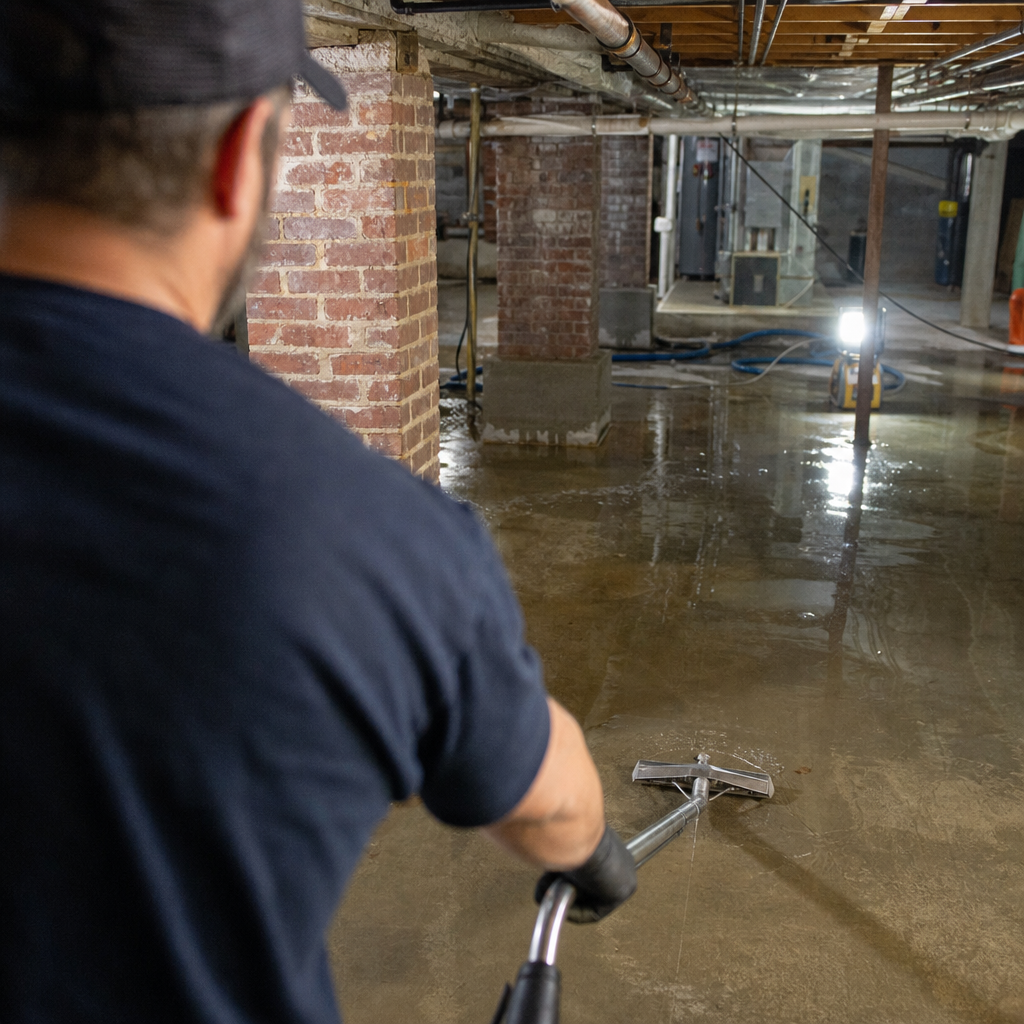
Below-grade spaces frequently encounter elevated groundwater levels and moisture intrusion through foundation walls during heavy rain events. When drainage systems fail, moisture can penetrate interior finishes and framing.
Sub-Grade Moisture Control
Remediating a damp or flooded basement requires water extraction, cleaning of affected surfaces, and continuous dehumidification to draw moisture out of structural materials. Proper drainage and moisture management help keep subterranean humidity within acceptable levels.
Roof Leaks and Building Enclosure Intrusion
Leaks in roofing membranes, flashing, and exterior masonry allow rainwater to penetrate structural decks and wall assemblies. Water entering from above can travel along structural framing before emerging into interior spaces.
Insulation Removal and Joist Remediation
Saturated insulation holds moisture against roof decks and framing. Remediation, as outlined by Floodline Restoration Co., involves removing soaked insulation, cleaning structural timber and metal framing, and drying building materials until moisture returns to baseline levels.
Parts and Components Restored During Remediation
Depending on material porosity and the severity of water damage, building components are either cleaned and dried in place or carefully removed:
Drywall, Ceilings, and Wall Cavity Framing
Porous drywall that has supported active mold growth is removed under containment. Structural wood studs and metal framing are cleaned, vacuumed, and dried thoroughly.
Hardwood, Engineered Flooring, Subflooring, and Joists
Hardwood and plywood subfloors are evaluated to determine whether specialized drying equipment can restore them in place or whether saturated layers require removal.
HVAC and Air Handling Equipment
Air distribution systems exposed to moisture or particulate contamination require inspection, mechanical cleaning, and filter replacement to prevent circulating dust through the building.
Frequently Asked Questions About Mold Removal
How much does professional mold removal cost?
No authoritative average cost has been verified for mold remediation. Pricing varies depending on the size of the affected area, the types of materials involved, the severity of moisture damage, structural accessibility, contents handling, and the extent of required repairs.
Can I remove mold myself or do I need a professional?
EPA guidance generally allows for self-cleanup if the affected area is small (less than about 10 square feet, or roughly a 3-foot by 3-foot patch). For larger areas, extensive water damage, hidden mold inside wall cavities, or situations involving vulnerable occupants, seeking professional remediation guidance is recommended.
How do professionals get rid of mold?
Professionals like Floodline Restoration Co. address mold by identifying and correcting the moisture source, establishing containment to prevent contaminated dust from spreading, removing unsalvageable porous materials, cleaning contaminated structural surfaces, and drying affected framing and building components.
What are the health risks of exposure to dampness and mold?
The WHO indicates that indoor dampness and mold are associated with respiratory symptoms, allergies, asthma, and immune-system effects. Visible mold includes many different species, and visible color alone does not establish species or specific health risks.[3]
How long does the mold remediation process take?
Project duration varies based on the extent of mold contamination, the severity of moisture damage, the volume of material to be removed, required structural drying times, and any necessary repairs.
Does property insurance cover mold removal?
Insurance coverage for mold remediation depends on specific policy terms and whether the mold resulted from a covered water event or from ongoing maintenance issues. Property owners should review their policy details and consult their insurance providers regarding coverage terms.
Sources
- [PDF] Indoor dampness and mould health effects – CDC Stacks – stacks.cdc.gov (2007)
- Health effects associated with dampness and mould – ncbi.nlm.nih.gov (2007)
- Building dampness and mold in European homes in relation to … – pubmed.ncbi.nlm.nih.gov (2017)
- Health Risks of Dampness and Mold in Houses – Indoor Air – iaqscience.lbl.gov
- Exposure to residential mold and dampness and the … – PubMed – pubmed.ncbi.nlm.nih.gov
Related reading: Homeowners Insurance Flood Coverage | Call Now-10% Off | Same-Day Service | Free Estimate
Related reading: Mold Remediation Cost | Call Now-10% Off | Same-Day Service | Free Estimate
Related reading: Flooded Basement Cleanup | 10% Off & Free Estimate | Same-Day Service
Frequently Asked Questions
How does Floodline Restoration Co. assist with insurance claims for black mold removal?
Floodline Restoration Co. directly documents moisture intrusion points, structural damage, and meter readings to provide the clear photographic evidence insurance adjusters require. Our team communicates with your carrier to expedite claims processing for sudden water damage events.
What is included in a test-first black mold inspection in Long Island City?
Technicians from Floodline Restoration Co. use moisture meters and diagnostic tools to pinpoint hidden water intrusion behind drywall, ceilings, and subfloors. This evaluation maps the exact contamination perimeter, ensuring containment protocols target only affected building assemblies.
Why is immediate professional containment required for black mold removal?
Attempting removal without containment allows microscopic spores and contaminated dust to spread throughout indoor living areas and HVAC systems. Floodline Restoration Co. deploys 24/7 emergency dispatch to establish negative air pressure barriers and HEPA filtration, isolating microbial growth safely.
About the author
 |
David Harrison David is a certified property restoration specialist with over 12 years of experience in emergency mitigation and structural drying. He holds a degree in Construction Management from the New York Institute of Technology and is an IICRC-certified Master Water Restorer. David specializes in translating complex restoration protocols into actionable advice for property owners navigating unexpected disasters. |
Water damage, flood, or mold emergency?
We’re available now - call for a fast, free estimate.
Call Now - Free Estimate