
Quick Summary
Basement flooding creates urgent safety risks, structural foundation hazards from hydrostatic pressure, and rapid mold colonization within 24 to 48 hours. Floodline Restoration Co. delivers an effective emergency response by executing staged water extraction to prevent wall collapse, removing contaminated porous materials, and deploying industrial dehumidification for verified structural drying. Homeowners will understand critical utility safety steps and can contact Floodline Restoration Co. for immediate 24/7 emergency water extraction and a free visual inspection to protect their property.
Flooded Basement Cleanup: Fast Water Removal and Repair
When water pours into a basement, fast action saves thousands of dollars in structural framing, electrical equipment, and finished interiors. Standing water wicks up drywall within hours, ruins mechanical systems, and creates a breeding ground for mold within 24 to 48 hours. Prompt water removal and drying help stop water damage at the source, extract standing water safely, and dry structures down to baseline moisture levels.
Flooded Basement Cleanup: Emergency Response and What to Expect
Emergency cleanup protocol: A proper cleanup follows a sequence to protect both the building and the occupants. First, shut off power and gas from a dry location. Second, locate and stop the source of water (or wait for exterior flash flooding to recede). Third, stage water extraction carefully to avoid damaging foundation walls. Fourth, remove saturated porous materials like drywall, carpet pad, and insulation. Finally, clean surfaces and run dehumidifiers and air movers until moisture meters confirm the structure is dry.
Every basement flood presents unique safety hazards and technical requirements. Whether dealing with a supply line burst, a storm surge, or a sewer backup, the initial hours determine how much of your property can be preserved. Prompt intervention within the first day also assists with documenting damage for insurance purposes.
Immediate Response Checklist
- Cut the utilities: Switch off the main electrical breaker and gas supply before stepping anywhere near the basement. If the electrical panel is in the flooded area, call your utility provider or a licensed technician immediately.
- Stop the inflow: For plumbing emergencies like a burst pipe or water heater failure, turn off your main shutoff valve. For sump pump failure, inspect the float switch and check backup power.
- Schedule controlled extraction: In areas with saturated ground soils, rapid pumping can cause foundation walls to crack under external soil pressure. Extraction should be staged carefully.
- Document everything: Photograph standing water lines, mechanical assets, and damaged personal belongings before removing any materials.
What You Need for Safe Basement Water Extraction
Entering a flooded basement without proper safety gear and equipment carries biological and physical risks. Floodwater can contain sewage, chemical runoff, contaminants, and hidden electrical currents.[2]
Personal Protective Equipment (PPE)
- Steel-toe rubber boots with heavy traction to prevent slips and puncture injuries from submerged debris
- Heavy-duty gloves paired with puncture-resistant outer work gloves
- N95 or P100 respirators to filter out bioaerosols, particulates, and mold spores
- Eye protection and waterproof protective clothing for contaminated water incidents
Water Extraction and Structural Drying Equipment
Clearing a flooded basement requires appropriate extraction and drying tools. Restoration work by teams like Floodline Restoration Co. commonly uses submersible pumps, heavy-duty extractors, commercial dehumidifiers, air movers, and moisture-measuring tools.
Step 1: Eliminate Electrical and Structural Hazards Before Entry
Need flooded basement cleanup?
We’re available now - call for a fast, free estimate.
Never step into standing basement water until the space is confirmed electrically safe. Submerged outlets, extension cords, water heaters, and baseboard heaters can energize water, turning the basement into a lethal hazard.
Checking Electrical and Gas Systems
Turn off the power to the entire basement circuit from the main electrical panel located on an upper floor. If your electrical panel is submerged in the basement, do not enter the water to reach it. Call your local utility to shut off power safely. If you smell natural gas, evacuate the building immediately and alert emergency services from a safe distance.
Structural Integrity and Contamination
Before beginning work, inspect structural framing, support columns, and foundation walls for signs of lateral bowing, shifted masonry, or cracked floor slabs. Water contamination levels should also be evaluated:
- Clean Water: Water originating from broken clean-water supply lines or overflowing fixtures.
- Contaminated Water: Water containing chemical or biological contaminants, such as discharge from appliances or sump pump overflows.
- Severely Contaminated Water: Unsanitary water from sewer backups, river inundation, or surface runoff requiring strict containment and removal of affected porous materials.
Step 2: Stop the Water Source and Document Damage for Insurance
Locate the primary point of failure immediately. If a pipe split inside a wall cavity, close the main internal shutoff valve. If a sump pump failed during heavy rainfall, check the float switch for obstructions and test the secondary backup system.
Insurance documentation requires clear proof of loss. Before moving or discarding damaged items, complete the following documentation steps:
- Take wide-angle and close-up photos and video of standing water depth against baseboards and foundation walls.
- Record serial numbers and model tags on boilers, water heaters, furnaces, washers, and dryers.
- Create an itemized inventory list of ruined personal possessions, tools, and stored items.
- Obtain moisture readings from your restoration contractor, such as Floodline Restoration Co., to verify trapped moisture inside framing cavities.
Step 3: Execute Controlled Water Extraction
A major risk during flooded basement cleanup is pumping out all standing water too quickly after a storm. In urban centers like New York City, heavy rain saturates the surrounding ground, creating immense hydrostatic pressure against exterior foundation walls.
Analysis of 17 years of flood reports shows that approximately 45% of reported flood cases occurred during rain events with 60-minute intensities below the nominal 10-year design criterion. Furthermore, data shows flood risk to basement housing across New York is heavily concentrated in South and East Brooklyn, South Queens, the East Coast of Staten Island, and the East Bronx. In fact, an estimated 4,078 basement units house low- and moderate-income renters in areas vulnerable to major flooding.
The Danger of Foundation Collapse
Historic urban foundations (such as century-old brick, fieldstone, and unreinforced concrete masonry) depend on internal water pressure to balance the external weight of water-logged soil. If water is pumped out too quickly while the surrounding earth is fully saturated, the sudden pressure differential can crack foundation walls, heave floor slabs upward, or cause walls to buckle inward.
Controlled Drainage
Water should be pumped out in stages to allow surrounding groundwater levels to recede, helping prevent severe structural damage to foundation walls and floors.
Step 4: Remove Saturated Drywall, Insulation, and Subflooring
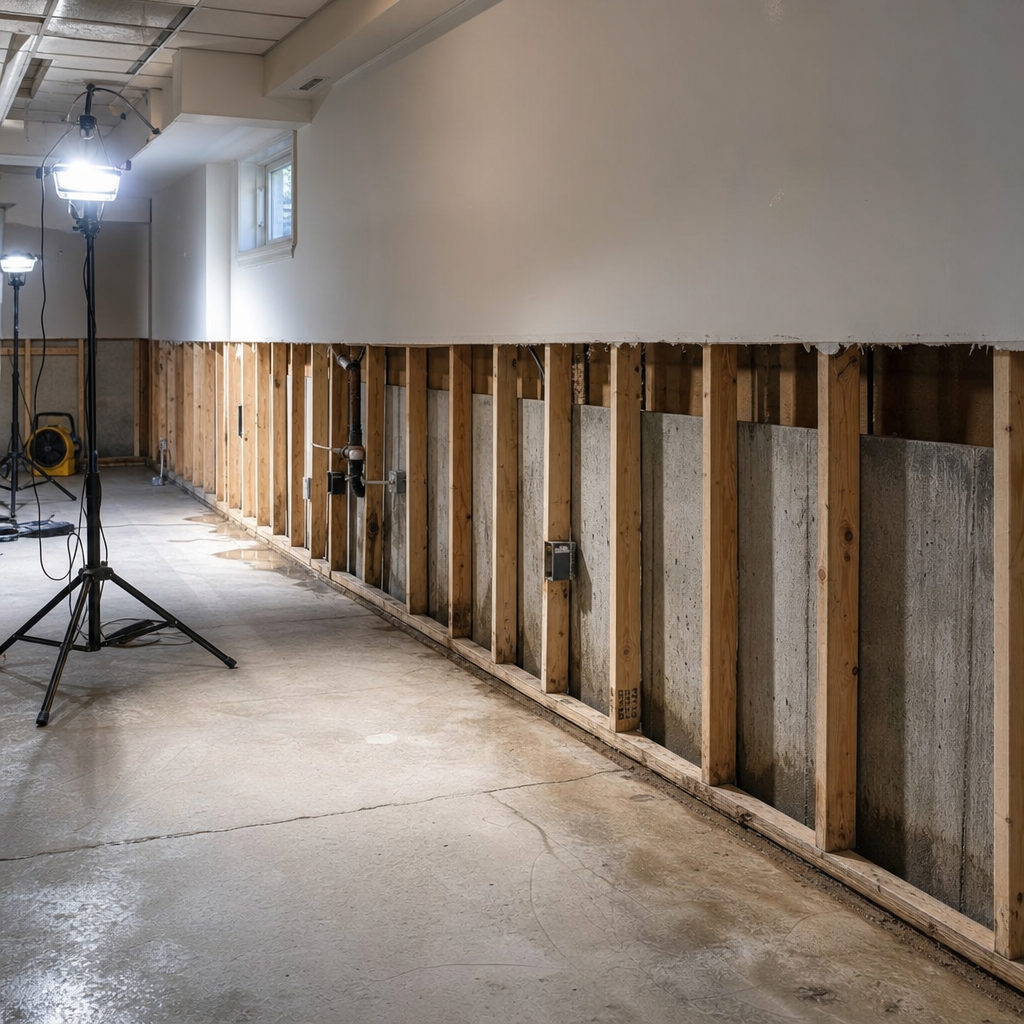
Once standing water is removed, demolition must target materials that hold moisture and harbor contaminants. According to Floodline Restoration Co., porous materials exposed to contaminated water generally cannot be salvaged and must be removed.
Flood Cuts and Wall Cavities
Drywall absorbs moisture quickly, drawing water up beyond the visible waterline. Cutting drywall above the highest wet mark exposes the internal wall cavity, allows wet insulation to be removed, and permits airflow across studs and foundation plates.
Flooring and Subfloor Removal
Carpets, carpet padding, laminate planks, and hardwood floors laid over concrete must usually be removed after severe flooding. Moisture trapped between flooring and the slab prevents proper drying, leading to persistent odors and structural decay.
Step 5: Sanitize and Decontaminate Surfaces
Need flooded basement cleanup?
We’re available now - call for a fast, free estimate.
Concrete, masonry, and dimensional framing lumber can usually be salvaged if cleaned and disinfected properly. After debris is cleared, exposed hard surfaces must be treated.
- Cleaning: Concrete slabs and brick walls are scrubbed to remove silt, sediment, and contaminants.
- Antimicrobial application: Disinfectants and antimicrobial treatments are applied to framing lumber and concrete surfaces to address bacteria and mold spores.
- Air filtration: Air filtration devices run during cleanup to capture mold spores, dust, and airborne particles.
Step 6: Deploy Dehumidification and Structural Drying
Removing standing water is only part of the process; structural drying extracts moisture trapped inside building materials. Drying should begin as soon as possible, ideally within 24 to 48 hours, and the overall duration varies depending on specific conditions, ambient humidity, airflow, and building materials.
Commercial dehumidifiers pull moisture out of the air, while air movers direct airflow across wet surfaces to accelerate evaporation. Daily moisture readings, as performed by Floodline Restoration Co., help ensure that materials reach safe moisture levels before rebuilding begins.
What Does Flooded Basement Cleanup Cost?
The cost to clean up and dry a flooded basement depends on the square footage of the space, the depth of standing water, contamination levels, and the extent of demolition required.
Nationally, flooded basement cleanup costs average around $4,000, with typical projects falling within a range of $2,000 to $7,000 depending on the severity of the damage and the scope of work needed.[1]
Exact costs depend on property size and damage severity.
Frequently Asked Questions About Flooded Basement Cleanup
How much does flooded basement cleanup cost?
Basement water cleanup costs average around $4,000, with a typical range of $2,000 to $7,000. Final pricing is determined by the square footage affected, contamination level, the volume of demolition required, and drying equipment runtime.[3]
What immediate steps should I take when my basement floods?
First, turn off electrical power from an upper floor or outdoor meter before touching water. Second, shut off the main water valve if the issue is a burst pipe. Third, contact a professional restoration provider such as Floodline Restoration Co. and your insurance provider. Finally, photograph the water levels and damaged assets before removing any items.
Does homeowners insurance cover flooded basement cleanup?
Standard homeowners insurance usually does not cover flood damage, and basement flood coverage is often restrictive. In addition, sewer backup damage typically requires a specific rider or endorsement on your policy.
How long does it take to dry out a flooded basement completely?
Drying should begin as soon as possible, ideally within 24 to 48 hours. The total duration varies depending on conditions, the extent of water intrusion, airflow, and the types of building materials affected.
Is it safe to enter a flooded basement?
No, entering a flooded basement is dangerous until electrical and gas utilities are confirmed off. In addition to shock hazards, floodwaters often conceal physical debris, structural shifts, and dangerous contaminants that present health and safety risks.
Can I clean up a flooded basement myself or hire a professional?
Small amounts of clean water from a known household leak can sometimes be managed independently if caught immediately. However, deep water, storm runoff, sewer backups, or water that has sat for more than 24 hours often requires professional extraction and drying equipment to prevent structural damage and mold growth.
How do I prevent mold growth after basement water damage?
To stop mold before it starts, water extraction and drying should begin as soon as possible, ideally within 24 to 48 hours. Saturated porous materials such as drywall, insulation, and carpet padding should be removed, and surfaces should be thoroughly cleaned and dried.
Need flooded basement cleanup?
We’re available now - call for a fast, free estimate.
Sources
- Flood Restoration Cost and Cleanup Services (2026) – insidercost.com (2026)
- Millions more US homes are at risk of flooding than previously known, new analysis shows – cnn.com
- Average Cost Of Flooded Basement Cleanup And Water Damage Repair – safeandsanitaryhomes.org
Related reading: Basement Flood Cleanup | Call Now-10% Off | Same-Day Service | Free Estimate
Related reading: Homeowners Insurance Flood Coverage | Call Now-10% Off | Same-Day Service | Free Estimate
Related reading: Mold Remediation Cost | Call Now-10% Off | Same-Day Service | Free Estimate
Frequently Asked Questions
How does Floodline Restoration Co. assist homeowners with basement flooding insurance claims?
Floodline Restoration Co. provides end-to-end insurance claim handling by recording detailed moisture logs, capturing high-resolution photo evidence, and cataloging itemized property losses. This comprehensive documentation provides direct proof of loss to streamline the claims process with your insurance adjuster.
Why is rapid water pumping dangerous for flooded basement foundations?
Pumping out standing water too quickly while surrounding exterior soils are waterlogged creates an intense hydrostatic pressure differential. This sudden imbalance can cause foundation walls to buckle inward or heave concrete floor slabs, which is why Floodline Restoration Co. executes staged extraction to safely equalize pressure.
How do professionals verify that basement framing is completely dry before rebuilding?
Because moisture often remains trapped deep inside wall framing and concrete slabs long after the surface feels dry, visual inspection alone is insufficient. Technicians from Floodline Restoration Co. deploy industrial thermal imaging and calibrated moisture meters to confirm structural materials have reached baseline dryness before reconstruction begins.
About the author
 |
David Harrison David is a certified property restoration specialist with over 12 years of experience in emergency mitigation and structural drying. He holds a degree in Construction Management from the New York Institute of Technology and is an IICRC-certified Master Water Restorer. David specializes in translating complex restoration protocols into actionable advice for property owners navigating unexpected disasters. |
Water damage, flood, or mold emergency?
We’re available now - call for a fast, free estimate.
Call Now - Free Estimate