
Free visual inspection and a written scope of work before any mitigation begins - photos, moisture readings, and drying logs go in your claim file
The scope we write is the scope we bill. Anything new gets shown to you, in writing, before we touch it.
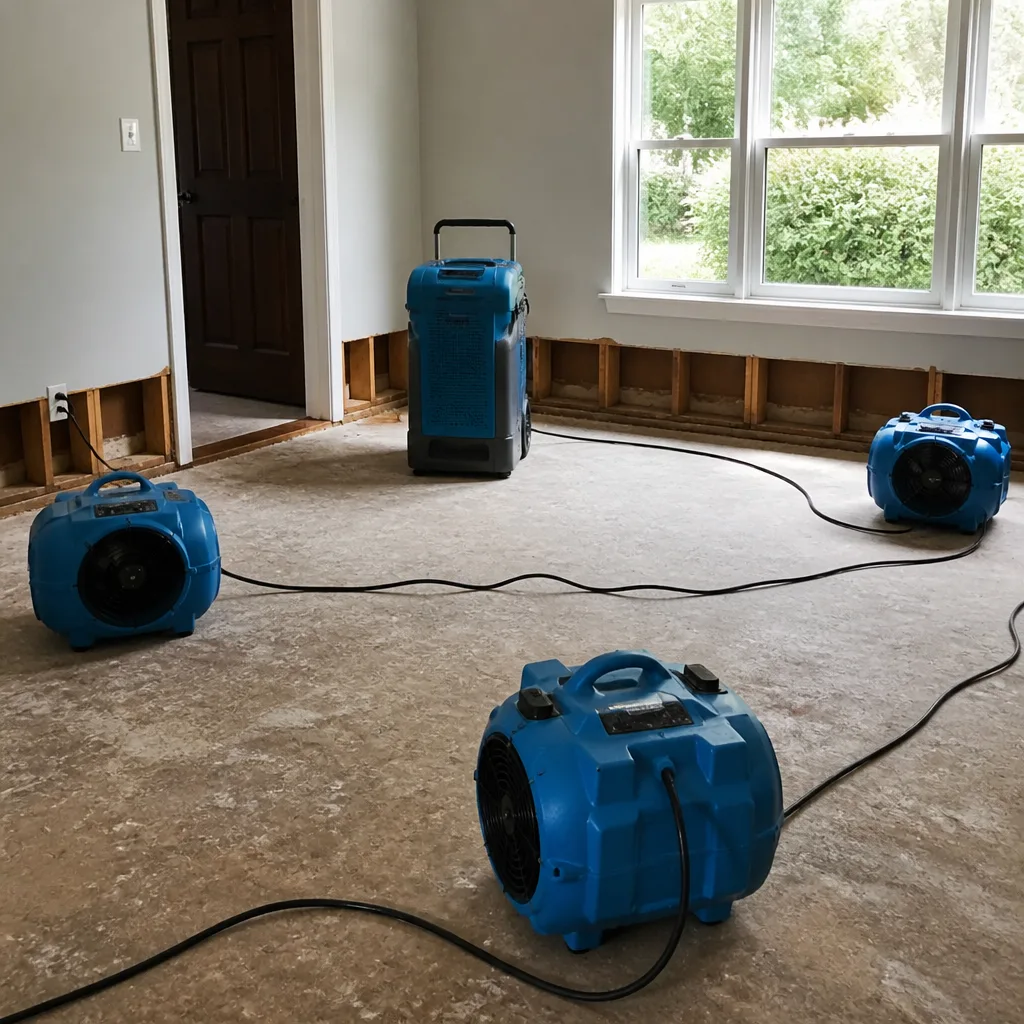
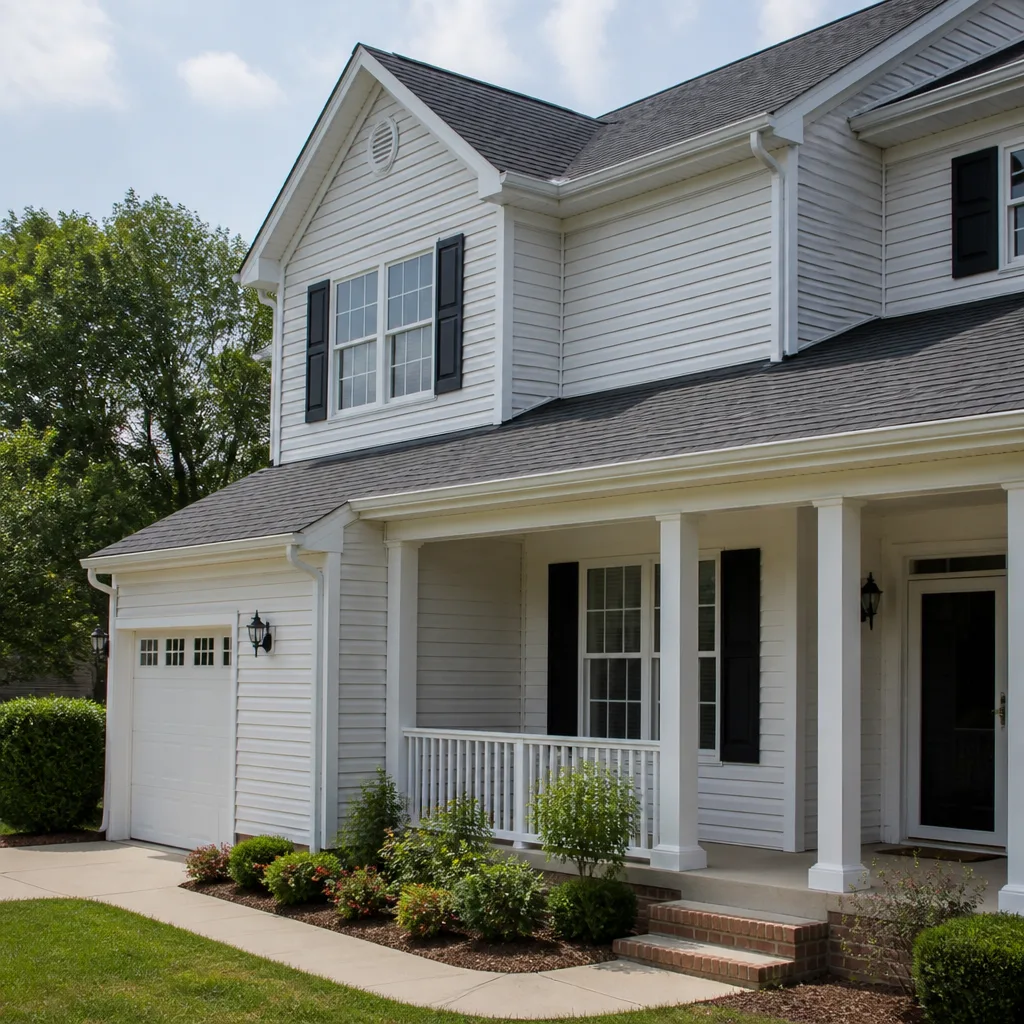
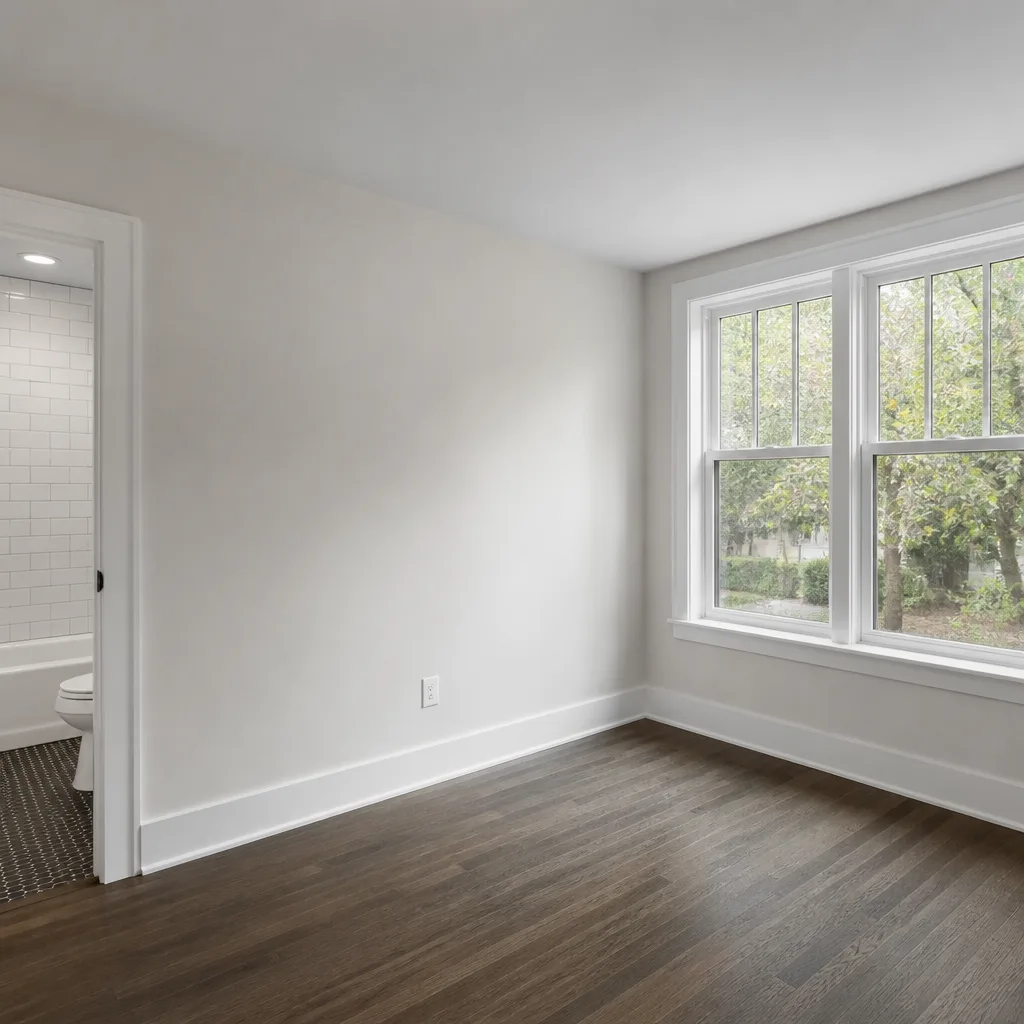
 Before
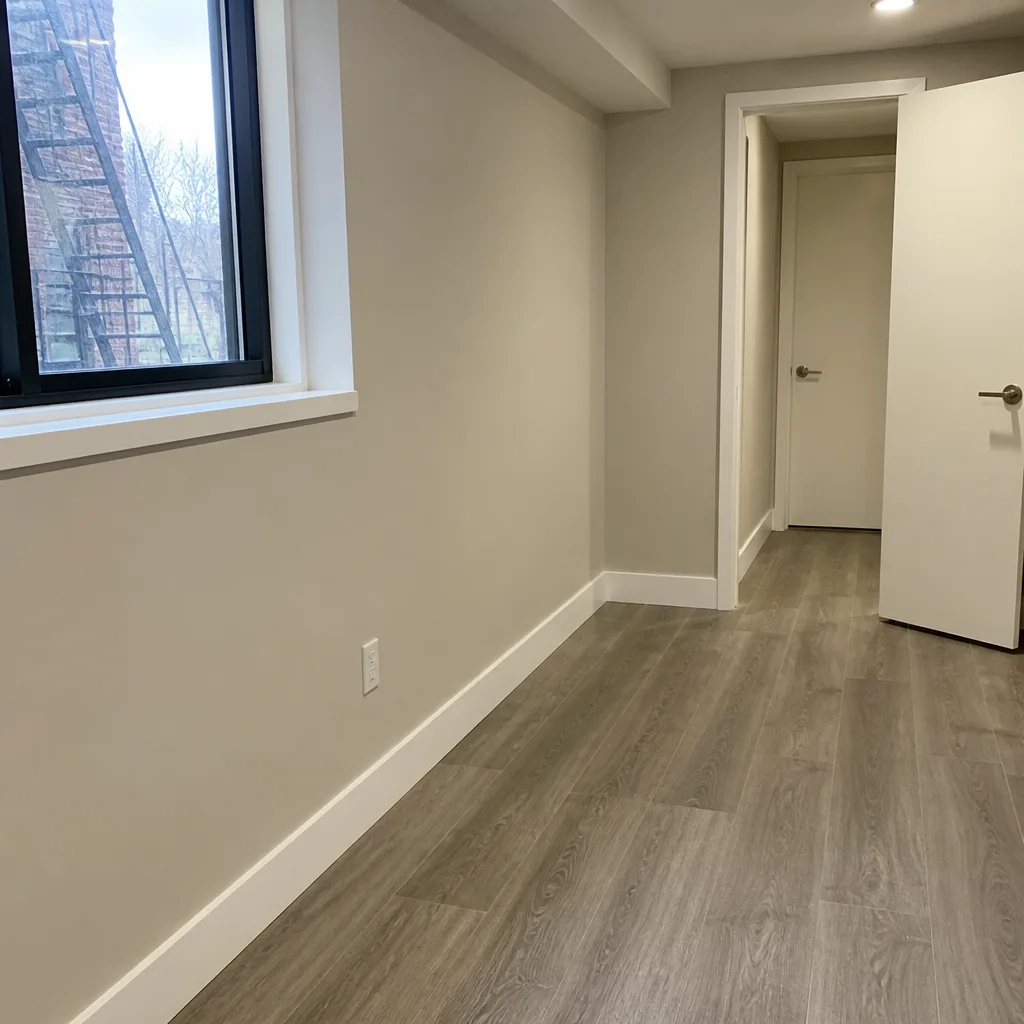 After
After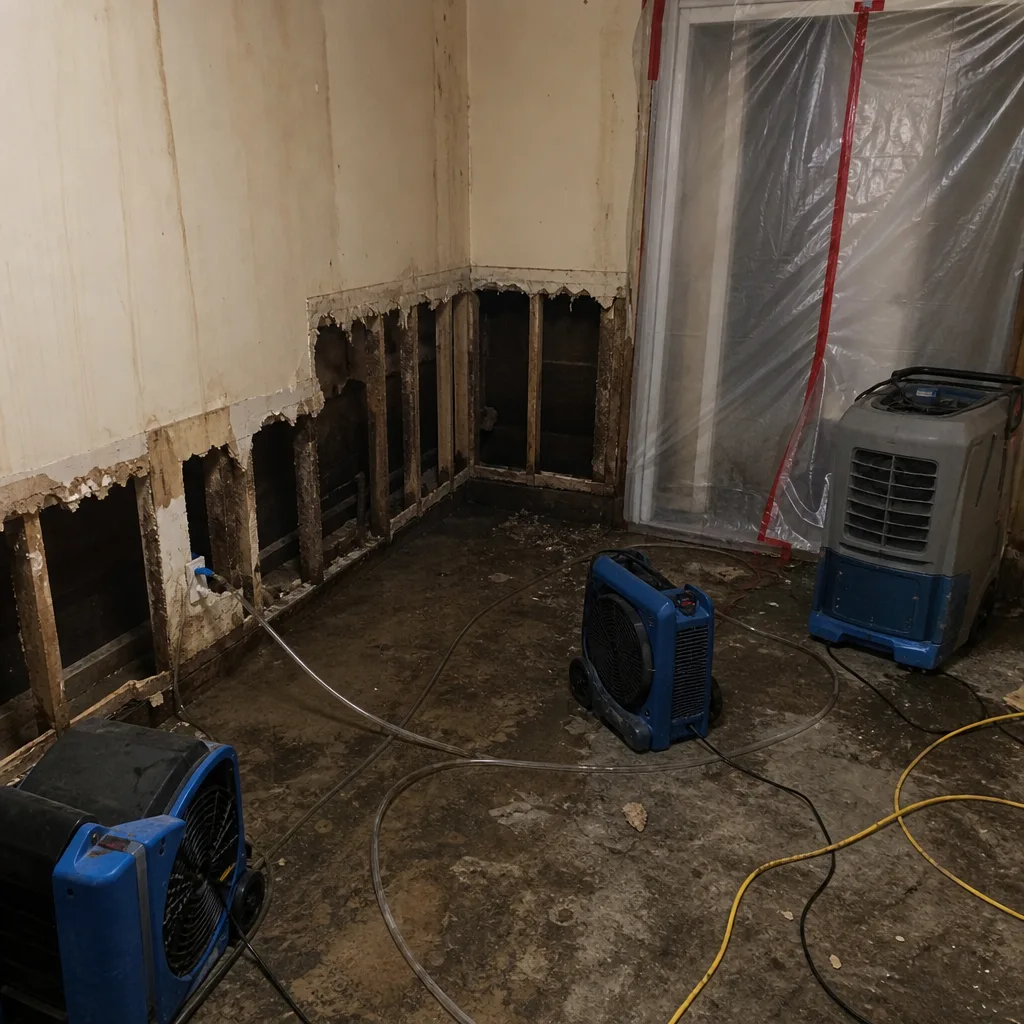 Before
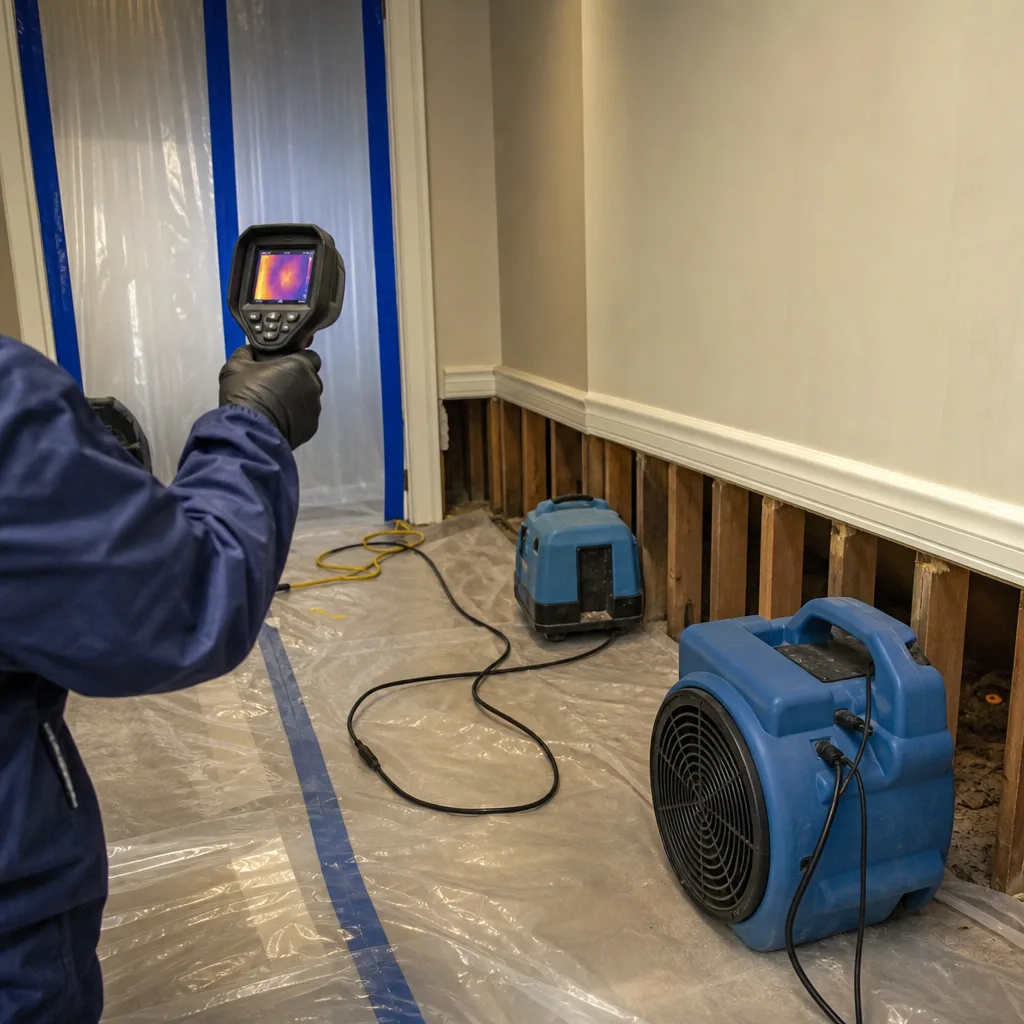 After
After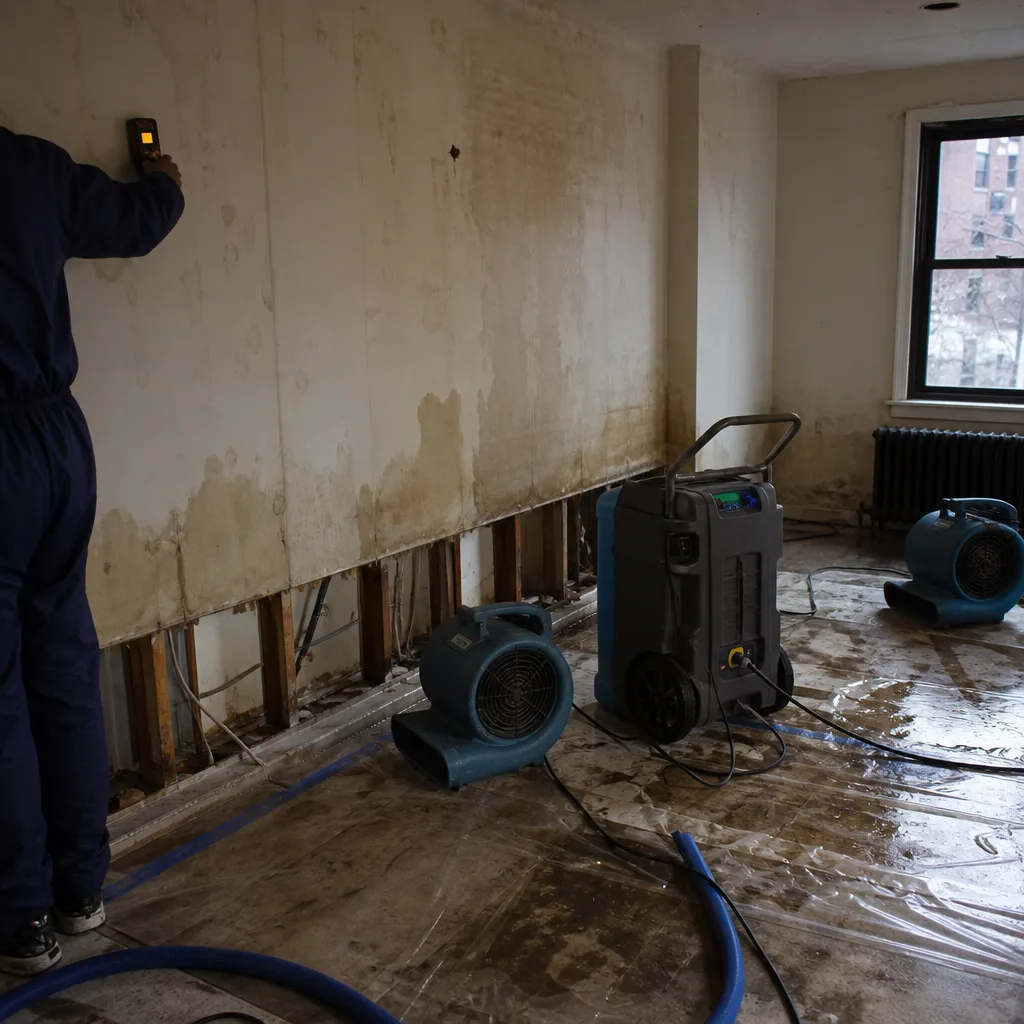 Before
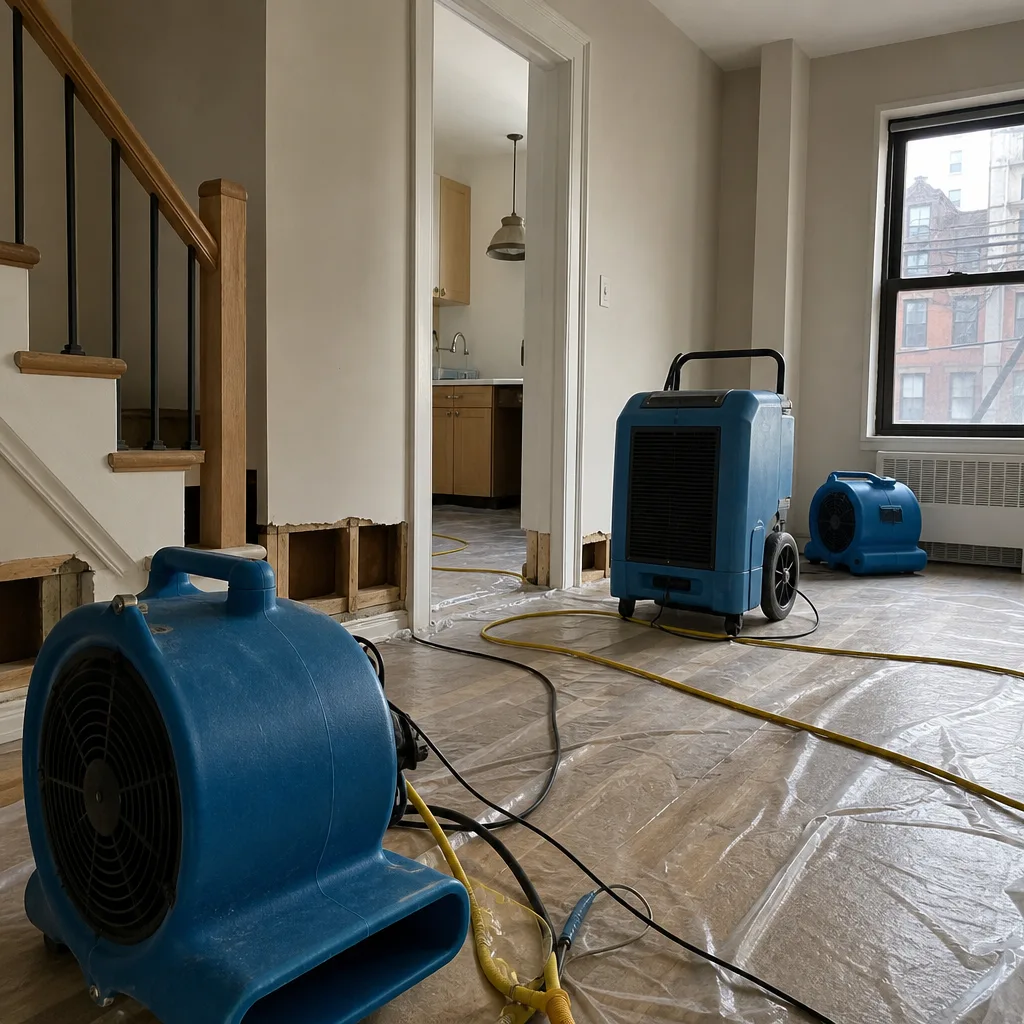 After
After24/7 Emergency Mold Remediation in Upper Manhattan
Mold remediation in Upper Manhattan typically runs $1,800-$6,500 depending on how far the moisture has traveled through shared walls and whether asbestos or lead-paint abatement is required before we can open the cavities. In a pre-war co-op where a pipe leak has been feeding mold behind horsehair plaster for months, full containment, abatement, and structural drying is usually a 5- to 10-day job. You can reach a live dispatcher at (716) 452-0798 any hour of the day or night. We answer with a person, not a recording, and we dispatch crews inside Upper Manhattan from our New York City office.
If you’re seeing black staining spreading across a ceiling in Washington Heights or smelling that musty basement odor in a Hamilton Heights hallway, don’t wait for the stain to double. Mold feeds on the same wet cavities the water created, and in shared-wall buildings the colony rarely stops at your unit line. Call now and we’ll have a certified tech on site to map the moisture, set containment, and tell you in plain English what you’re up against.
Understanding Mold Remediation Severity in Upper Manhattan Properties
Mold in Upper Manhattan’s housing stock isn’t the same animal you see in a 1990s sheetrock townhouse. Most buildings here went up between 1890 and 1940: five-to-seven-story brick tenements in Harlem, Beaux-Arts rowhouses off Convent Avenue, large elevator co-ops in Inwood and south Washington Heights built with original cast-iron drain stacks, steam radiator risers, and horsehair-plaster walls over wood lath. Those materials hold water differently. Horsehair plaster wicks moisture up a wall like a candle wick, and once a plaster cavity is damp, it stays damp for weeks. That’s the environment where mold colonies go from a surface nuisance to a structural problem behind the wall.
Severity breaks down in practical terms: a Level 1 job is surface contamination under about 10 square feet, often from condensation on colder north-facing plaster. A Level 2 job involves moisture that has soaked wall cavities, baseboards, or subfloor and requires containment, air scrubbing, and demolition. A Level 3 job in this city usually means a plumbing or steam-pipe leak that has been feeding the same wall for months or years, with moist readings running up three floors of a shared chase and visible mold in multiple units. Those are the jobs where we set hard containment with negative air, run HEPA air scrubbers through the warranty, and apply antimicrobial treatment to framing after the wet plaster is cut out.
Why Upper Manhattan Property Owners Choose Floodline Restoration Co.
- 45-minute response commitment - a live dispatcher confirms a crew and an ETA the moment you call. Not a call center. Not a callback.
- 24/7 live answer, every time - at 2 a.m. a person picks up. A certified crew is on the road while you’re still on the phone with us.
- IICRC-certified crews - our techs hold WRT, FSRT, and AMRT certifications, trained to IICRC, RIA, and IFA standards, background-checked and uniformed on every job.
- Free visual inspection with moisture mapping - we don’t guess. Thermal imaging, hygrometers, and penetrating probes tell us exactly where the water is before we cut anything.
- Direct insurance billing - our office talks to your carrier and your adjuster. You don’t carry paperwork between us and them.
- One team from extraction to reconstruction - we don’t hand you off after dry-out. The same certified crew runs containment, drying, and the rebuild if walls need opening.
Our Mold Remediation Process
Inspection & Assessment
We start with a room-by-room visual inspection and moisture mapping using thermal imaging and penetrating probes. The goal is finding the water source, because mold doesn’t exist without water. In a pre-war building that often means reading the wall cavities above and below your unit until the trail runs dry.
Containment & Stabilization
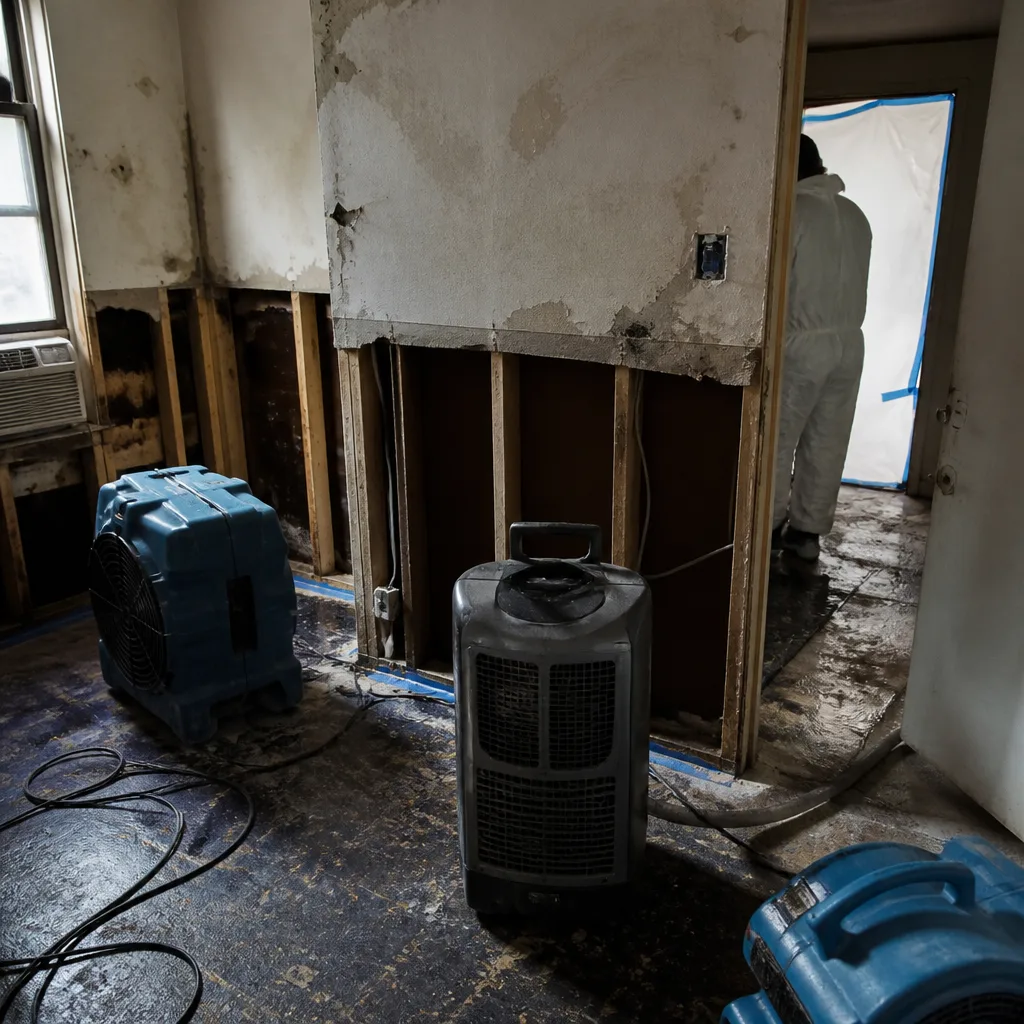
Before we disturb a single square inch of contaminated surface, we seal the work area with 6-mil poly and establish negative air pressure so spores can’t migrate into the hallway or neighboring apartments. Air scrubbers with HEPA filtration stay running through the entire job.
Source Removal
Wet plaster, lath, and baseboard that can’t be dried are cut out and bagged inside the containment area. We don’t just spray it and paint over it. Mold has roots; the material has to go and the cavity has to open for treatment.
Drying & Dehumidification
We set Dri-Eaz dehumidifiers and Phoenix axial air movers to dry the open framing and surrounding cavities. Daily moisture readings are logged until every location hits its dry standard. You get the log. So does your insurer.
Cleaning, Antimicrobial Treatment & Air Quality Restoration
All remaining surfaces inside containment get HEPA-vacuumed and wiped down. We apply an EPA-registered antimicrobial to the framing and any surface that contacted mold. Air quality clearance testing follows, and we don’t sign off until the numbers say clean.
Repairs & Restoration
We replace the plaster or drywall we opened, prime, paint, and put the room back together. The crew that did the remediation does the rebuild. That’s the point of hiring a full-cycle contractor.
Need Emergency Mold Remediation in Upper Manhattan Now?
Crews minutes away, answering live 24 hours a day. The sooner we start, the less it costs.
Working With Your Insurance Company
Most Upper Manhattan mold jobs are covered under water-damage provisions, but only when the documentation holds up. The carrier wants to know the loss happened, that it’s sudden and accidental (a burst pipe, a failed supply line, an overflow), and that you took reasonable steps to stop further damage. Our crew starts documenting from the first hour: photos of every affected surface before demolition, infrared moisture maps, and a room-by-room log as the drying progresses. We handle the adjuster directly, so the claim doesn’t stall while you’re trying to explain what a moisture log means.
What We Provide Your Insurer
- Thorough documentation of the loss
- Photos of all damage, room by room
- Moisture readings and drying logs
- A detailed, line-item scope of work
- Direct coordination with your carrier
Built for Upper Manhattan’s Loss Calendar
Upper Manhattan gets its mold seasons in waves. January and February are the months when deep freezes burst supply lines in uninsulated risers, and in old brick tenements the leak soaks the same shaft wall from the fourth floor to the first before anyone notices the ceiling stain. Spring thaw and coastal storms push groundwater into Harlem and Inwood basements through foundation cracks that haven’t been touched since the building carried coal heat. June through August, heavy convective thunderstorms hammer the flat and low-slope roofs that top nearly every pre-war building from St. Nicholas Avenue west to Riverside Drive, and ponding water finds its way into top-floor units over days and weeks. Come October, the steam heat comes back on, and every weak fitting in a hundred-year-old radiator riser gets its first real pressure test since April. That’s October through December in Washington Heights: hidden pinhole leaks inside walls that don’t show themselves until the tenant upstairs reports a smell.
Mold Remediation Across Upper Manhattan’s Neighborhoods
The way we approach a mold job in Washington Heights depends on the block. The large elevator buildings along Fort Washington Avenue and Pinehurst Avenue are mostly 1920s cooperatives with original steam risers and shared plumbing chases. A visible mold bloom on a fourth-floor ceiling there usually means a pinhole in a copper riser three floors up, and the repair requires coordination with the building’s super and the apartment upstairs before containment goes up. In Harlem, the brownstones and rowhouses along Strivers’ Row and the blocks around Mount Morris Park are a different animal: party walls, shared roof drains, and original cast-iron stacks that run inside the wall between two separately owned houses. We’ve done jobs where the water damage started in one brownstone kitchen and crossed the party wall before the first floor even showed visible staining. Inwood has the hill properties between Broadway and the Cloisters, and Park Terrace West in particular catches wind-driven rain on the exposed west side in a way the cross streets don’t. Multistory buildings there show top-floor mold from parapet and roof scupper failures, not plumbing. And in Hamilton Heights and Sugar Hill, the restored limestone rowhouses and pre-war high-rises along Edgecombe Avenue hide steam-line failures inside ornate plaster ceilings that cost real money to open and rebuild correctly.
One thing holds true everywhere we work above 110th Street: the mold isn’t the whole job. The water came from somewhere, and in a shared building that somewhere is often behind someone else’s wall. If we only remediate what you can see, the colony comes back in six weeks because the wet cavity above you never dried. That’s why our Mold Remediation team always reads the chase, not just the room. The line the water left is where we start.
Specialized Mold Remediation Services We Offer in Upper Manhattan
Mold Inspection & Testing
A proper inspection in a pre-war building means more than swabbing the visible stain. We read moisture in the wall cavities, check the base of the shared stack wall in the apartments above and below, and look at the condition of radiator returns and steam risers behind your walls. Testing tells you the species. Inspection tells you where the water is. Both are part of the free visual assessment.
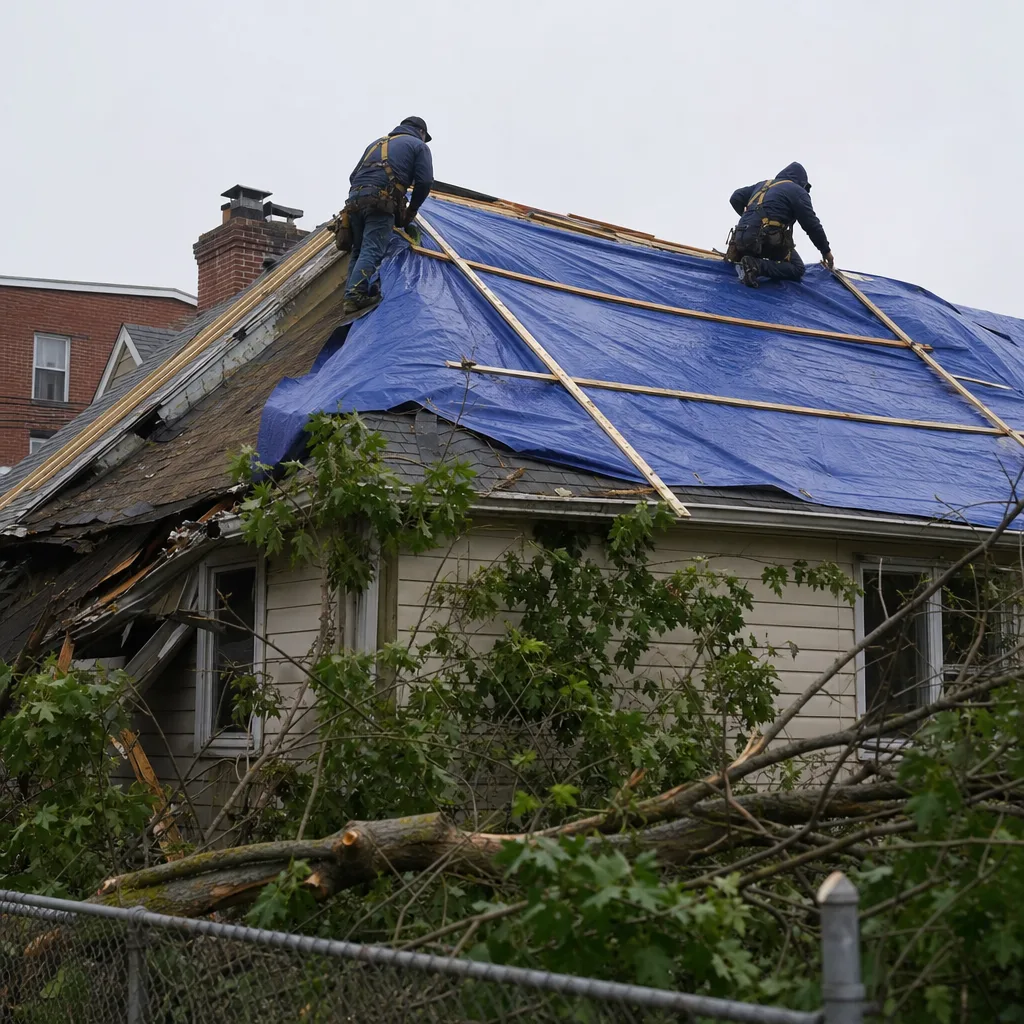
Mold Removal
We cut out the contaminated plaster and lath, bag it inside containment, and dispose of it legally. The framing underneath gets HEPA-vacuumed, treated with antimicrobial, and dried to its pre-loss moisture content before new wall material goes up.
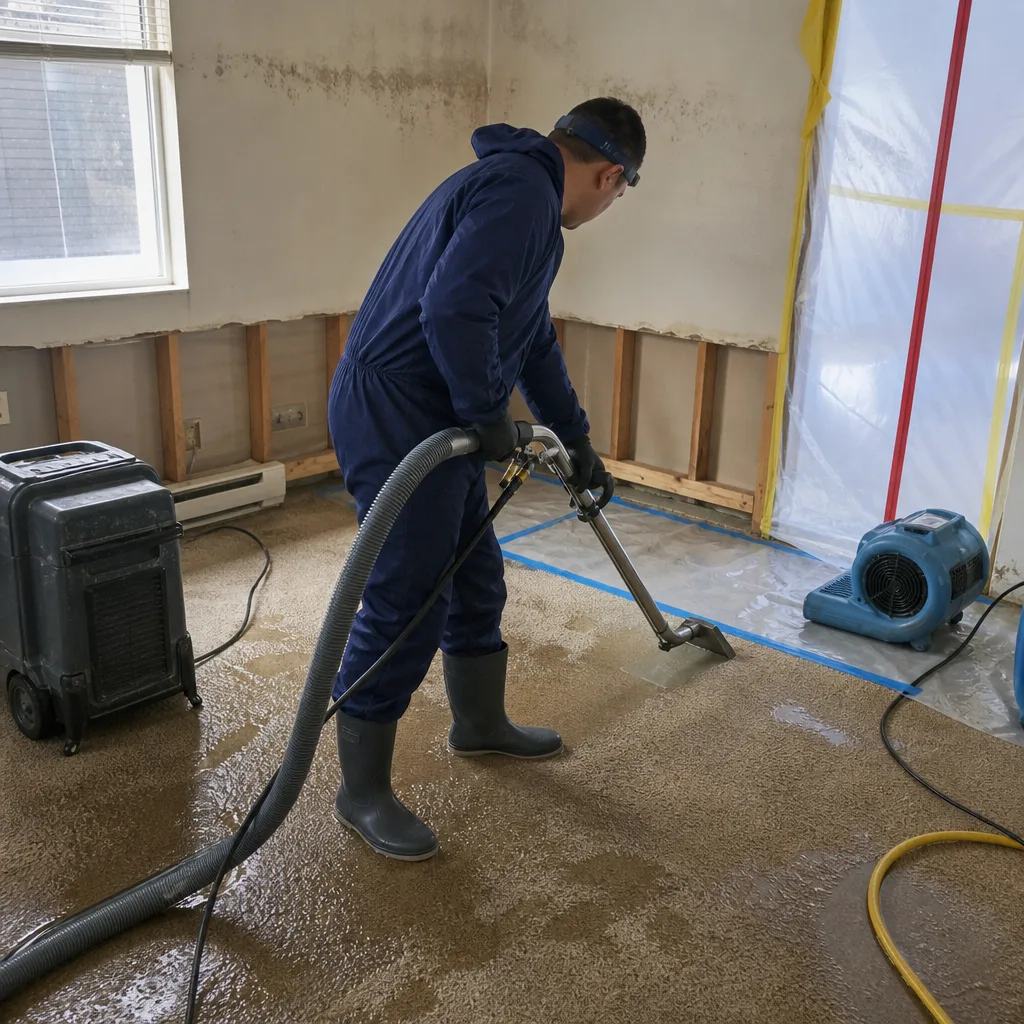
Black Mold Remediation
Stachybotrys chartarum, the black mold people ask about by name, likes cellulose and constant water. Horsehair plaster and old lath are a perfect meal. The key with black mold isn’t the color of the mold; it’s finding every bit of wet organic material it’s feeding on. We remove all of it, not just the part you can see.
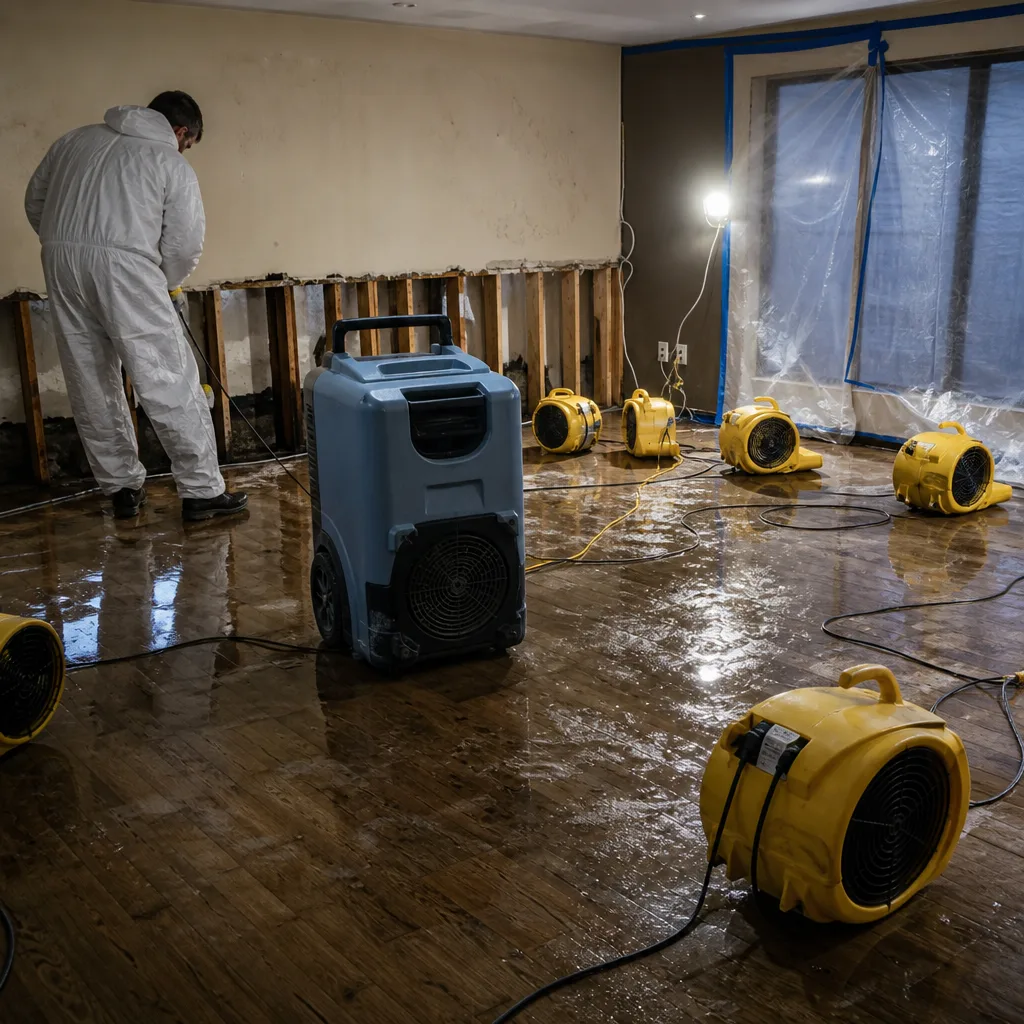
Air Quality Restoration
After structural drying and source removal, we run HEPA air scrubbers until the air inside the containment area tests clean. We provide post-remediation clearance results so you, your co-op board, and your carrier all have the same numbers.
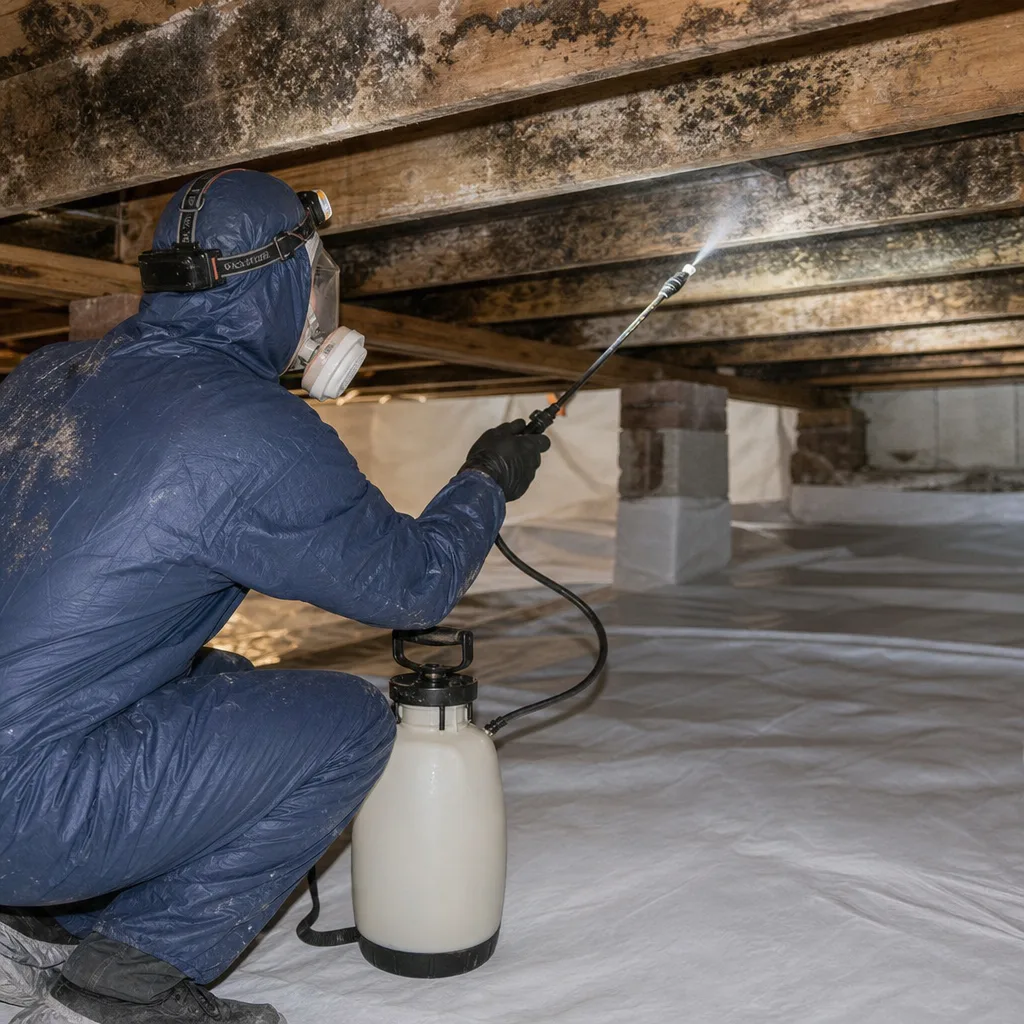
Moisture & Humidity Control
Many Upper Manhattan buildings still run steam heat with no central air conditioning, which keeps interior humidity high from late spring to early fall. We will tell you honestly if your mold problem is partly a ventilation problem, and what to do about it: the crawl space under an Inwood hill house, the bathroom in an unventilated Harlem brownstone, or a basement in a Hamilton Heights co-op that has not seen proper airflow since the furnace was coal-fired.
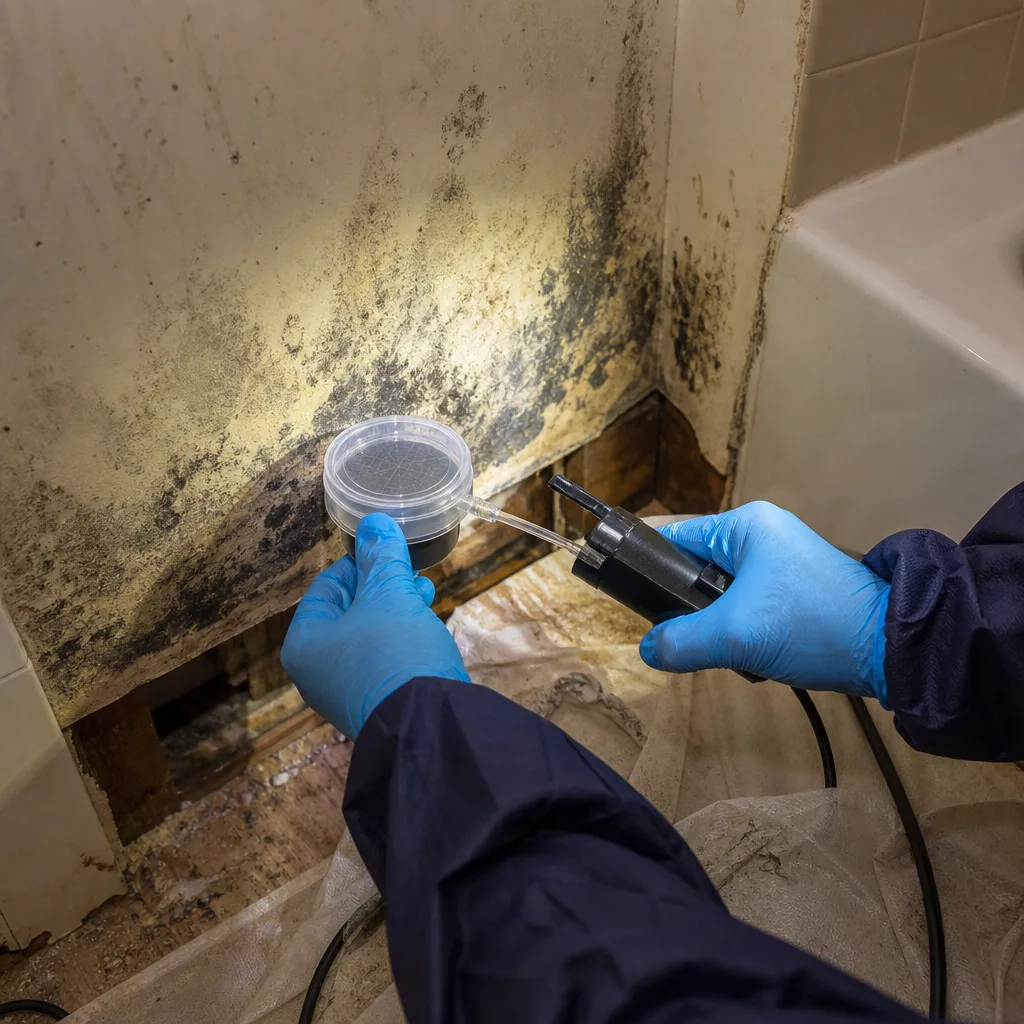
Crawl Space Treatment
The older brownstones and townhouses across Harlem and Sugar Hill have shallow crawl spaces under the front parlor that hold damp air against the joists all summer long. We treat the wood, install vapor barriers, and dry the space to a standard, not just to an opinion. If the joists are gone, we tell you before we quote, and the rebuild is included in the same scope.
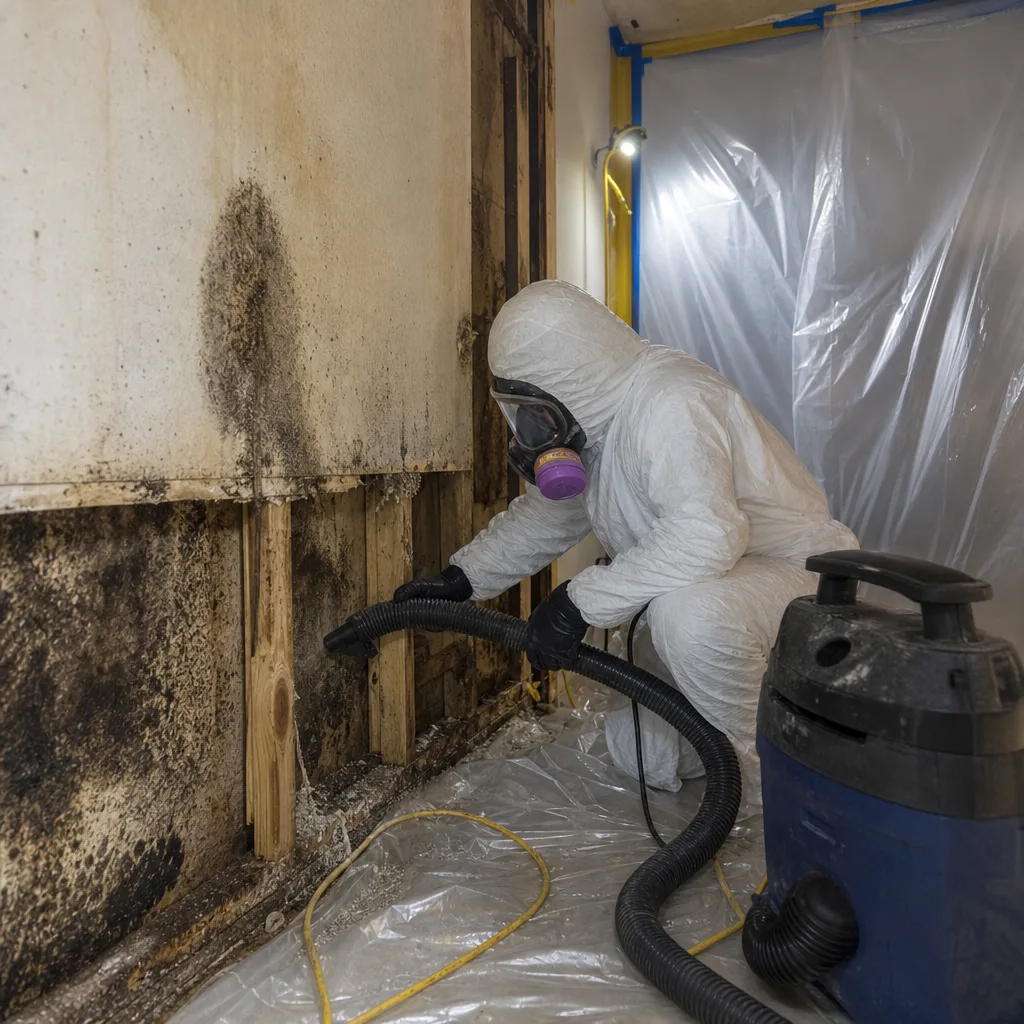
Black Mold Remediation
In a mixed-use Upper Manhattan building, a first-floor storefront with a long-running roof leak can drive mold spores into the apartments above it through the floor joists and the elevator shaft. We will check the commercial space, the stairwell, and the basement all in the same job. The problem is never just the room where you smell it.
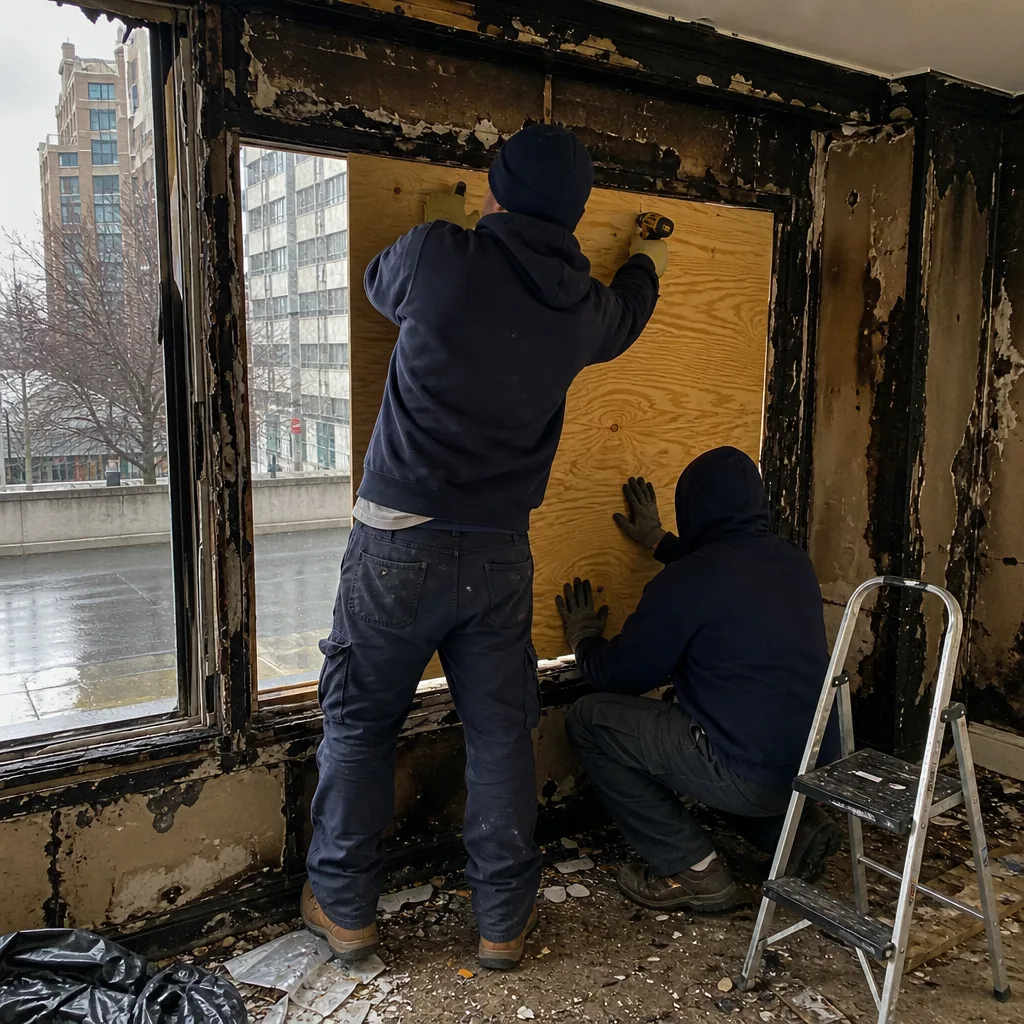
What happens when you call
- 1
A real person answersNo phone trees - you reach a local pro.
- 2
You get an upfront price rangeHonest numbers before anyone is dispatched.
- 3
A background-checked tech heads outLicensed & insured, dispatched right away.
- 4
You approve before work beginsNothing starts until you say go.
Mold Remediation Costs in Upper Manhattan, NY
Straight numbers, so you know what to expect. A contained mold removal with air scrubbing and antimicrobial treatment in a single apartment runs $1,800-$4,200. A multi-floor stack-wall job involving three or more units, asbestos or lead-paint abatement, and structural drying runs $5,000-$12,000. A full gut-and-rebuild after a long-term steam riser leak in a pre-war co-op can reach $25,000+. The variables that move the price: square footage opened, how many stories the water traveled, whether an asbestos survey is required before demolition, and whether the building’s management company demands certified abatement before any work starts. If the mold is tied to a sudden and accidental pipe failure, most homeowner and co-op policies cover the remediation and rebuild when documented correctly. If it is long-term seepage, your out-of-pocket is likely. Our estimate is free, in writing, and you get the same line-item scope we send to your adjuster. Call (716) 452-0798 and we will map it before we quote it.
We Also Serve Cities Near Upper Manhattan
Floodline Restoration Co. responds to Upper Manhattan mold calls and we cross the bridges daily for the same work in Long Island City, Greenpoint, Williamsburg, and Murray Hill. Same crews, same live dispatch, same written guarantee.
Serving Upper Manhattan, NY - Our Local Coverage Area
We’re based in the Upper Manhattan area and know this community well. Use the map below to see our service coverage - if you’re nearby, we can almost certainly help.
Upper Manhattan Mold Remediation Questions, Answered
Why does mold remediation in Washington Heights require checking the apartment above and below mine?
Because in most Washington Heights buildings built before 1940, the plumbing stack and the steam risers run through a shared wall chase that connects every floor. Your mold may be fed by a leak three floors above you, seeping down through the same wall cavity. We read the chase with penetrating probes before we ever open your wall, because treating only your unit will fail when the wet cavity in the adjoining apartment re-inoculates the space within weeks. Call (716) 452-0798 for moisture mapping that goes beyond your apartment line.
How do Category 2 or 3 water leaks in a Harlem pre-war building change the mold removal approach?
Category 2 water carries significant contamination, and Category 3 water is sewage or floodwater with pathogens. When either one soaks a Harlem brownstone party wall or a basement subfloor, we treat the wet material as both a water loss and a mold event: full containment goes up, contaminated plaster is removed as regulated waste, and framing gets antimicrobial treatment before drying starts. The standard is higher, the drying log gets more readings, and clearance testing is non-negotiable.
My Inwood building keeps a log of water damage in the basement. Why does my apartment still smell musty?
Because the moisture in the basement has been evaporating into the stack wall and the stairwell for months, and the air moves upward through old buildings the way smoke moves through a chimney. We regularly find elevated moisture readings on the first and second floors of Inwood buildings with chronic basement seepage, even when no pipe ever leaked up there. The fix is drying the basement to standard and sealing pathways, not just cleaning the basement floor. Get your building manager to call us; we will map the whole stack.
Will mold return after remediation if my radiator pipes still leak inside the walls?
Yes, and fast. That is why the first step on any Upper Manhattan remediation is stopping the water source. If your steam riser has a pinhole inside the wall, we will coordinate with your super to shut the riser, repair the fitting, and pressure-test it before we put the wall back. We do not cover up a leak with new sheetrock and hope. You would see us back in six months, and we do not want that any more than you do.
Does black mold removal in an Upper Manhattan co-op require lead and asbestos testing before we start cutting?
For buildings predating 1940, yes, in almost every case. NYC Local Law 1 requires lead-safe work practices on any pre-1978 building, and plaster walls in older buildings often contain asbestos fibers. A certified survey tells us what we can cut and how we have to contain it. Any contractor who skips that step is risking a DOB shutdown mid-demolition and a fine for your building. We protect you from that.
How fast can someone actually get to my Upper Manhattan apartment for mold?
If you call (716) 452-0798, a live dispatcher answers, and we commit to a crew on site within 45 minutes inside Upper Manhattan. We are staging equipment in the area every day, and our techs know the buildings from 110th Street to the 220s.
How long does mold remediation take in a pre-war building?
A contained single-room job runs 2 to 4 days including clearance testing. A full stack-wall job in a shared building can run 7 to 14 days, depending on how many floors are involved, whether abatement is required, and how long the drying log takes to hit its targets on framing that has soaked through 70 winters.
What should I do in the first 30 minutes when I see serious mold in my Upper Manhattan apartment?
Stop the water if you can see the source and it is safe to turn a valve. Shut the door to that room. Do not run fans from the hallway into the room, because you will blow spores across a shared building. Do not try to scrub black mold off a plaster wall; you will drive the spores deeper and spread them through the air. Call us at (716) 452-0798, and we will walk you through the next 30 minutes on the phone while the crew is en route.
Written by Curt Bowman, Owner at Floodline Restoration Co. We’re proud to serve Upper Manhattan with full-cycle restoration and the 90-Day Done Right Promise, in writing, on every job.