
Free visual inspection and a written scope of work before any mitigation begins - photos, moisture readings, and drying logs go in your claim file
The scope we write is the scope we bill. Anything new gets shown to you, in writing, before we touch it.
 Before
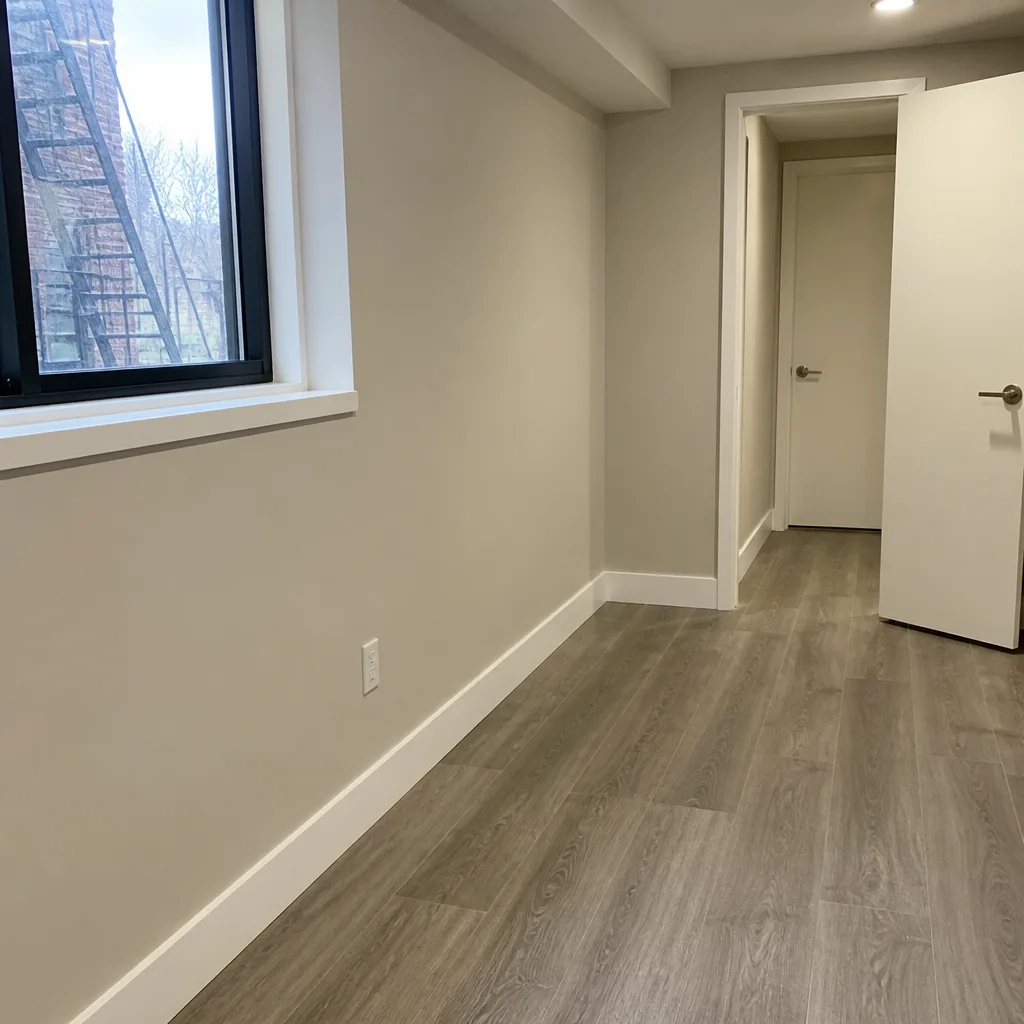 After
After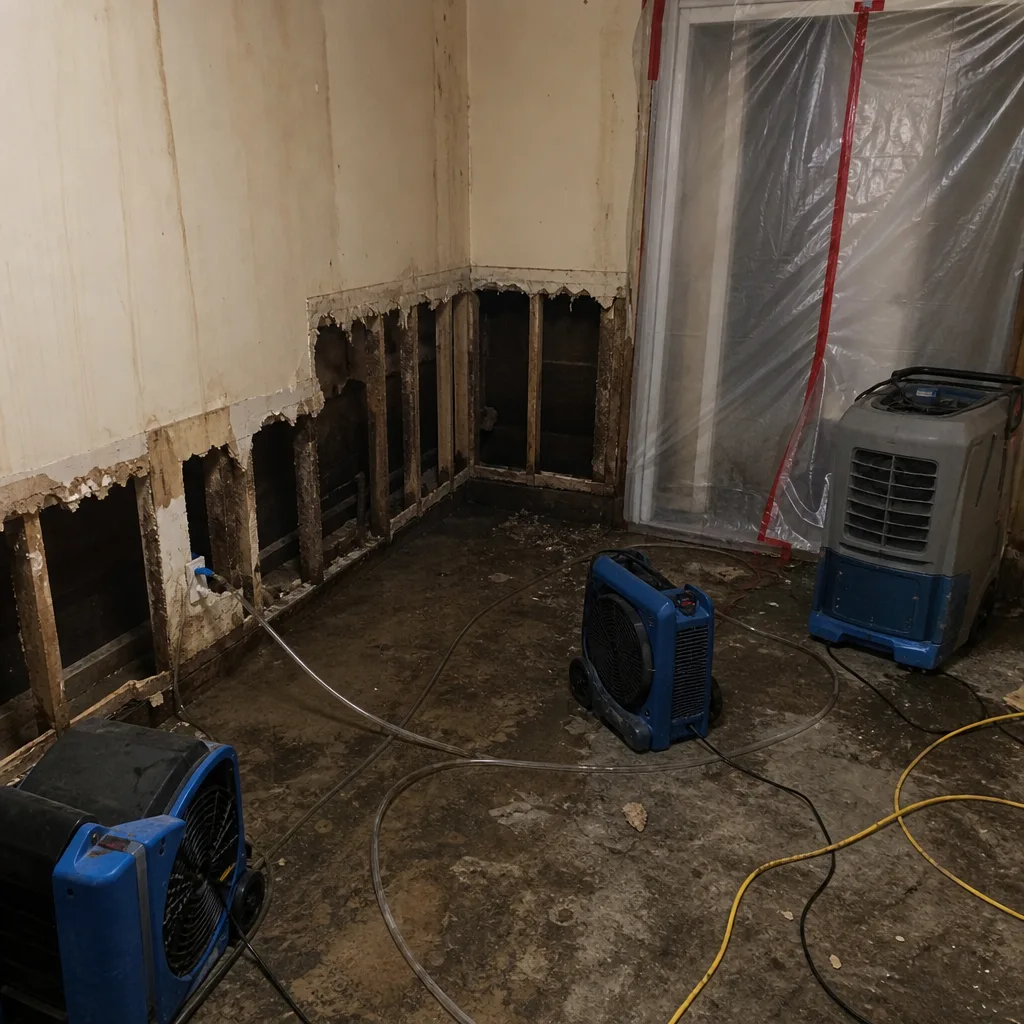 Before
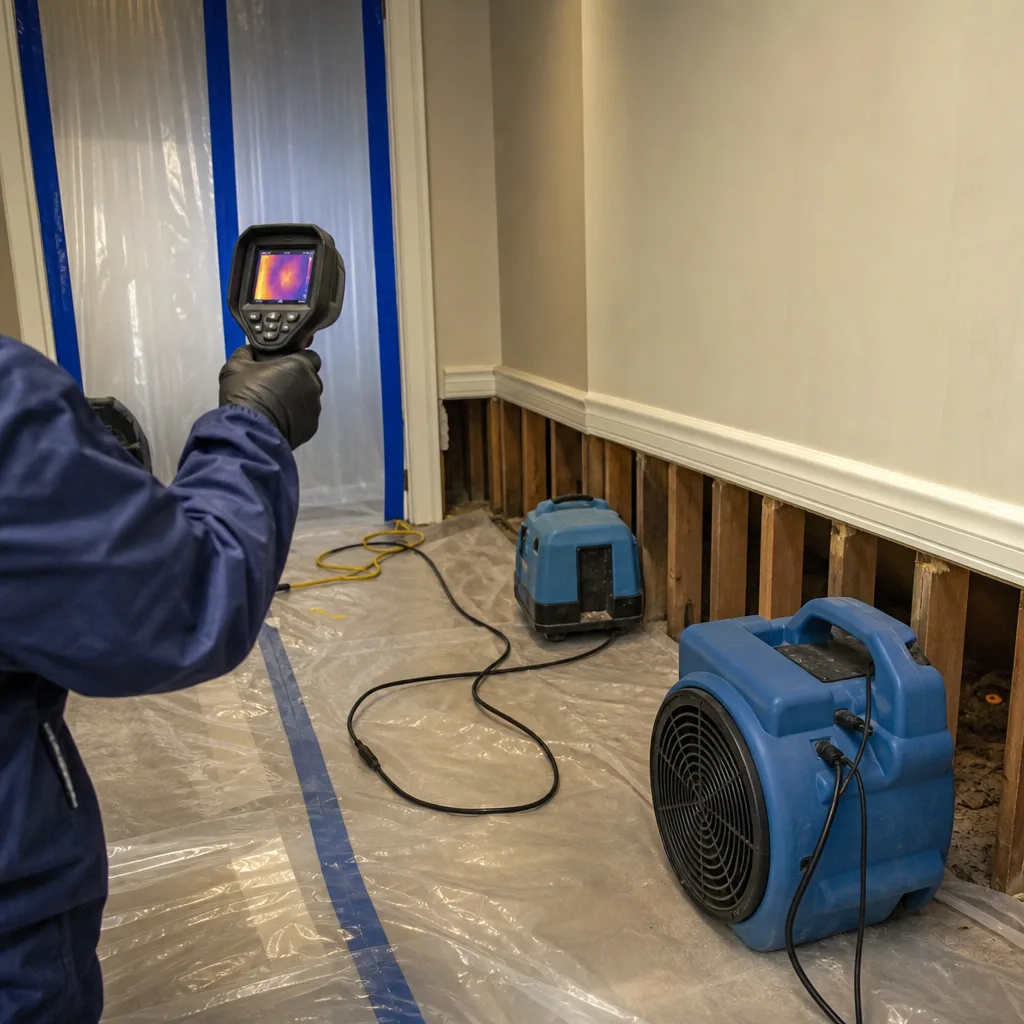 After
After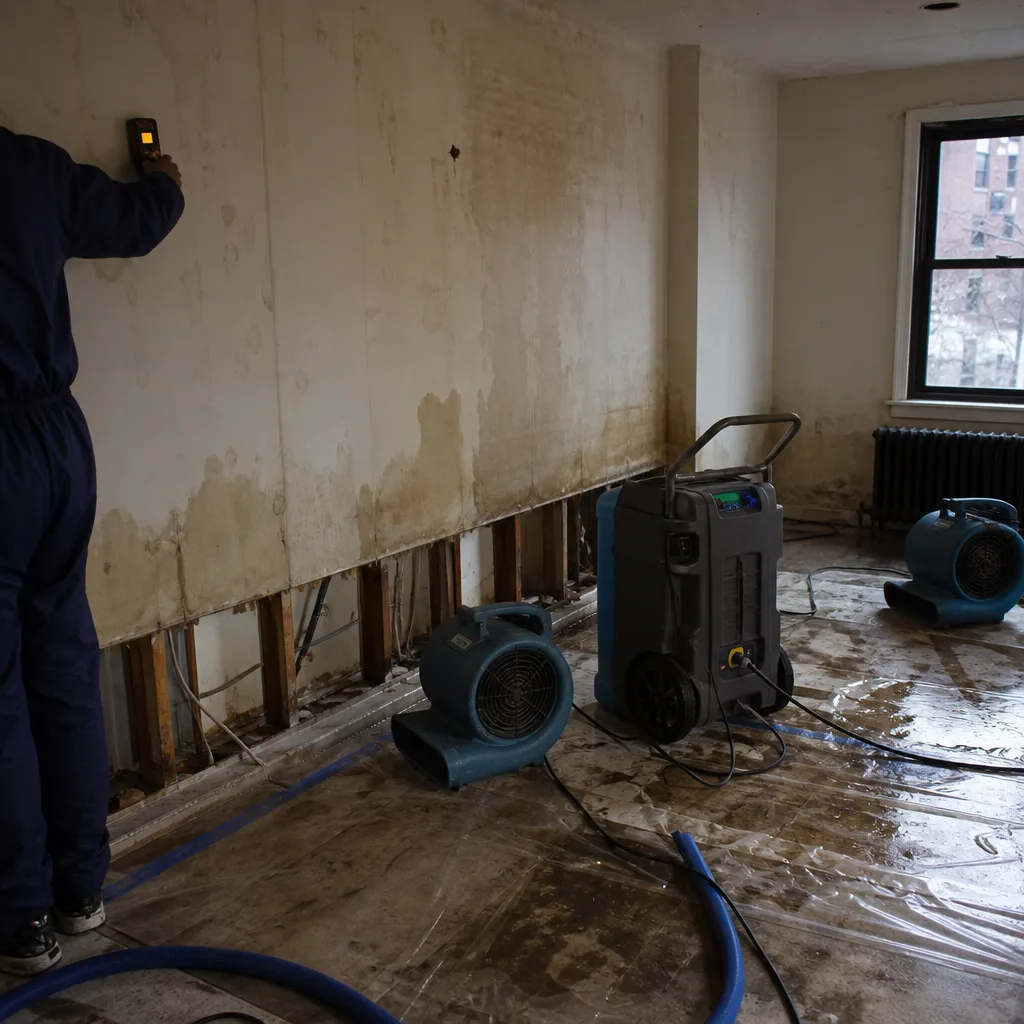 Before
 After
After24/7 Emergency Commercial Restoration in Murray Hill
Commercial water damage in Murray Hill rarely waits for business hours. A cast-iron waste stack lets go at 6 p.m., a nor’easter drives rain through a flat roof at midnight, or a supply line freezes and ruptures on a Sunday morning. When it happens, the first call you make determines whether you’re looking at three days of drying or three weeks of reconstruction. Floodline Restoration Co. answers live at (716) 452-0798, 24 hours a day, every day of the year. A real dispatcher picks up, not a recording. Crews are dispatched into Murray Hill within the hour, and the first extraction usually starts running before the insurance adjuster has even returned your call.
The reason speed matters this much isn’t just about inconvenience. Water moves through pre-war construction in predictable but aggressive ways. It travels horizontally through wood lathe behind plaster, wicks up into original baseboards, and saturates the dead air space inside demising walls. Every hour that water sits in those cavities expands the damaged area and pushes the job from cleanup into rebuild territory. Our Commercial Restoration team starts with extraction, not estimates. The estimate comes after we’ve stopped the spread.
Understanding Commercial Restoration Severity in Murray Hill Properties
Not all water damage is the same, and Murray Hill’s building stock makes classification especially important. Category 1 water is clean water, typically from a ruptured supply line. Category 2 is contaminated water, like washing machine overflow or sump pump discharge. Category 3 is grossly contaminated, carrying sewage, bacteria, or ground infiltration. In Murray Hill’s co-op buildings, where original cast-iron waste stacks date to the 1920s and 1930s, Category 3 water from a failed drain line is more common than most owners expect. It demands full containment, antimicrobial treatment, and often removal of porous materials, not just drying.
Structural drying in a pre-war Murray Hill building is different from drying a modern commercial space. Plaster walls absorb water differently than drywall. They hold more moisture, release it more slowly, and hide the problem behind layers of paint and wallpaper. Brick party walls between buildings create cold surfaces where condensation hides. Garden-level offices below grade trap humidity unless air movement is engineered deliberately. Our moisture mapping includes thermal imaging and hygrometer readings taken daily, not just on day one, because the dry standard in a 1920s brownstone conversion on East 37th Street is a moving target until the log proves otherwise.
Why Murray Hill Property Owners Choose Floodline Restoration Co.
- 45-minute response commitment. When you call from a flooded storefront on Lexington Avenue, our dispatcher commits to having a crew rolling toward you inside 45 minutes. Not a callback. Not a voicemail.
- Live answer, 24/7. A person answers at 2 a.m. on a Tuesday. The same person can tell you exactly who is on their way and when they’ll arrive.
- IICRC-certified crews. Our technicians hold WRT, FSRT, and AMRT certifications. They know what Category 3 water in a demising wall means and they document accordingly.
- Free visual inspection. Before any equipment runs, we walk the space with you and identify what’s wet, what’s at risk, and what the immediate priorities are. The inspection costs nothing.
- Direct insurance billing. We bill your carrier directly. You’re not floating a five-figure mitigation bill while an adjuster decides when to show up.
- One team from extraction to reconstruction. The same uniformed, background-checked crew that extracts the water dries the space, treats the antimicrobials, and rebuilds what needed removing. No mid-job handoff to a subcontractor you’ve never met.
Our Commercial Restoration Process
Inspection & Assessment
We arrive, walk the space, and identify the water source, category, and migration path. Thermal imaging and moisture meters map the damage behind walls and under floors before any equipment placement decisions get made.
Extraction & Stabilization
Standing water comes out first. Professional truck-mounted and portable extraction units remove the bulk of the water, and we stabilize the area to prevent further spread into adjacent units or floors.
Drying & Dehumidification
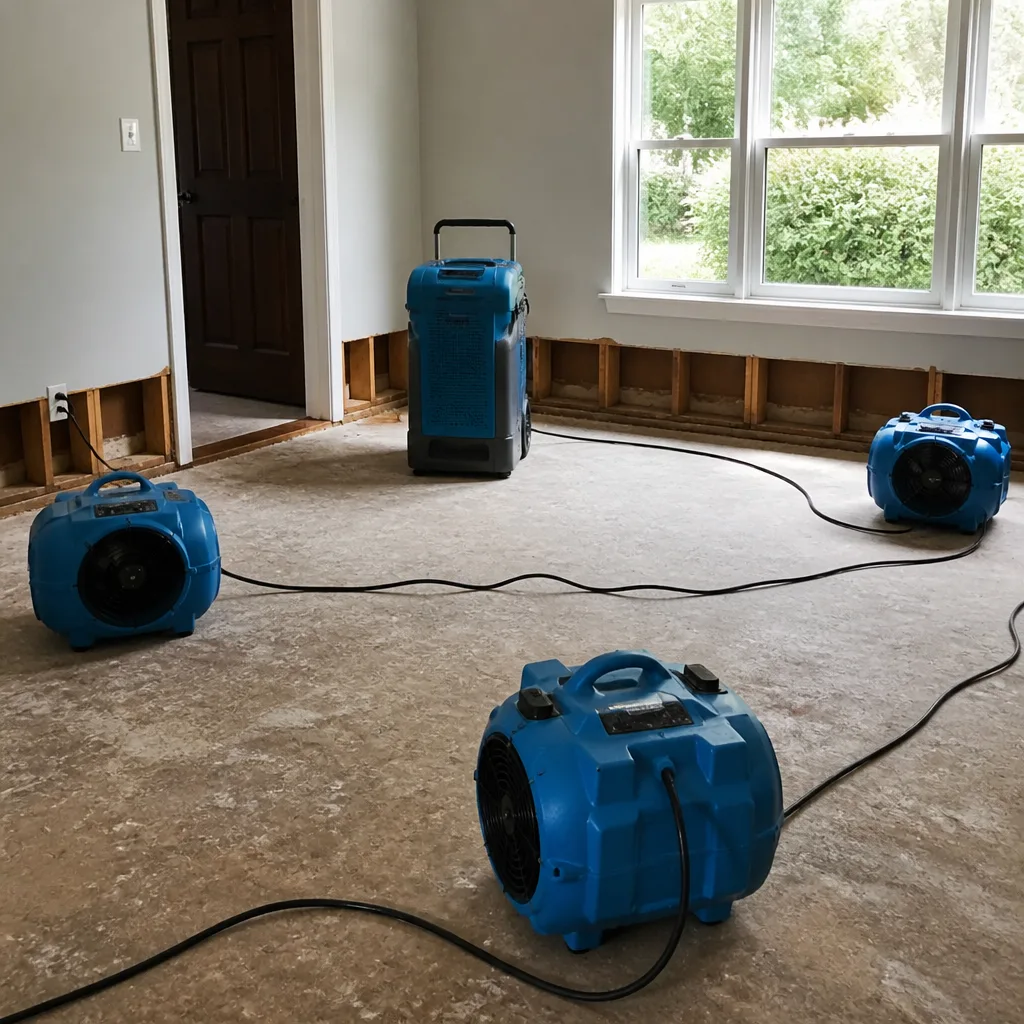
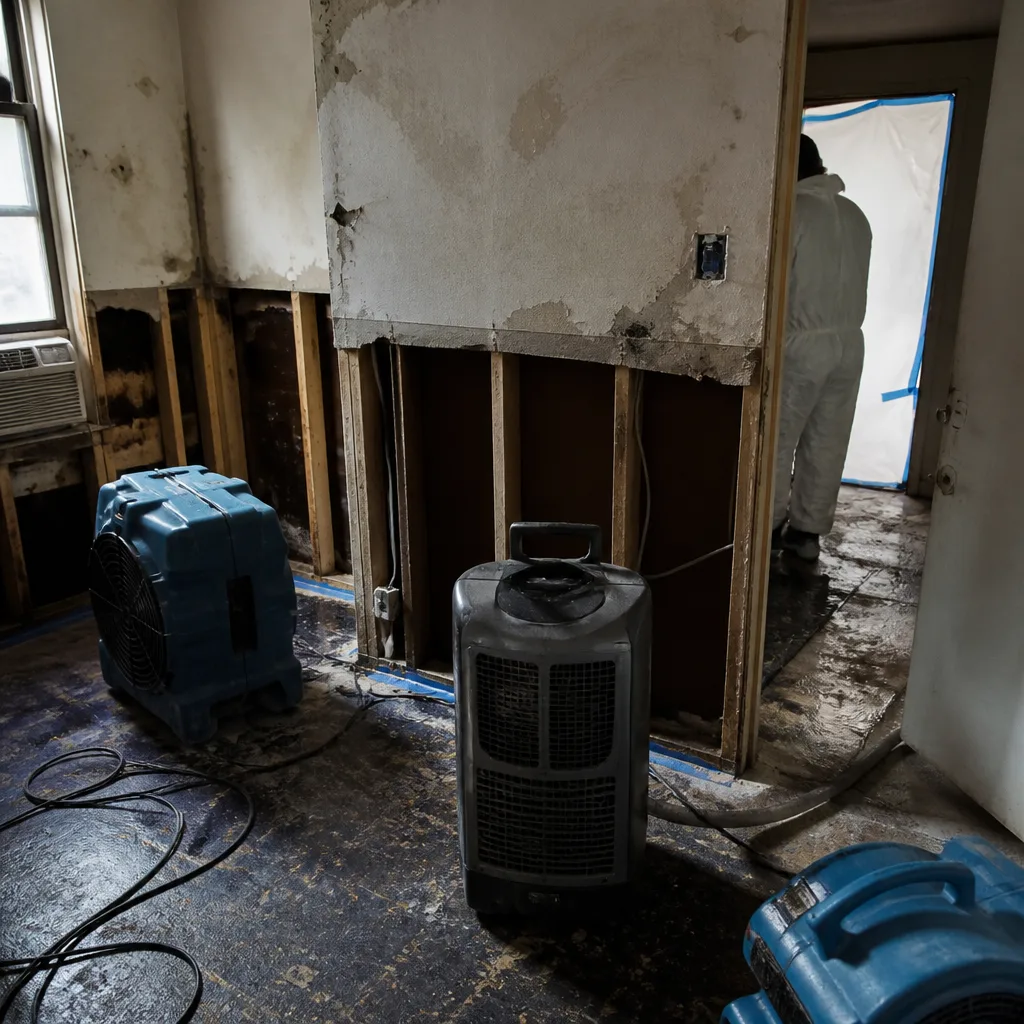
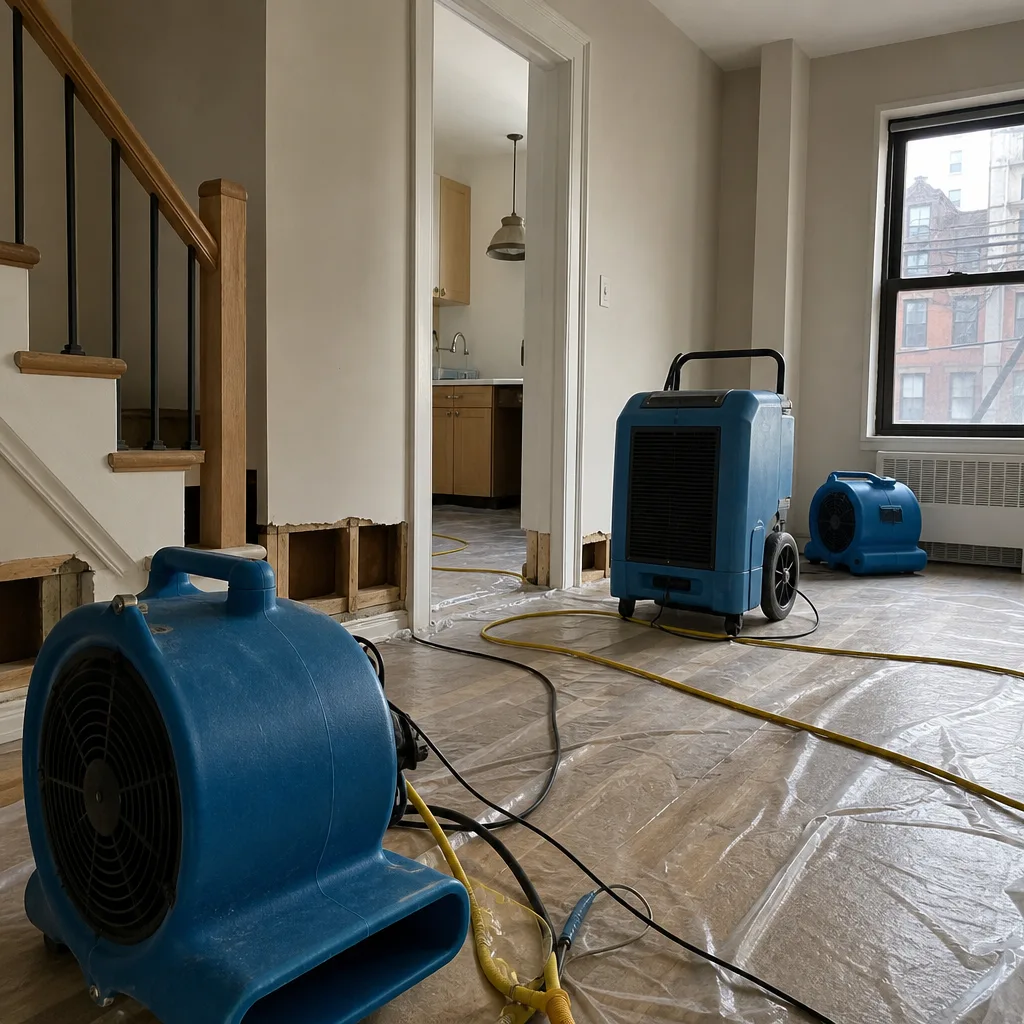
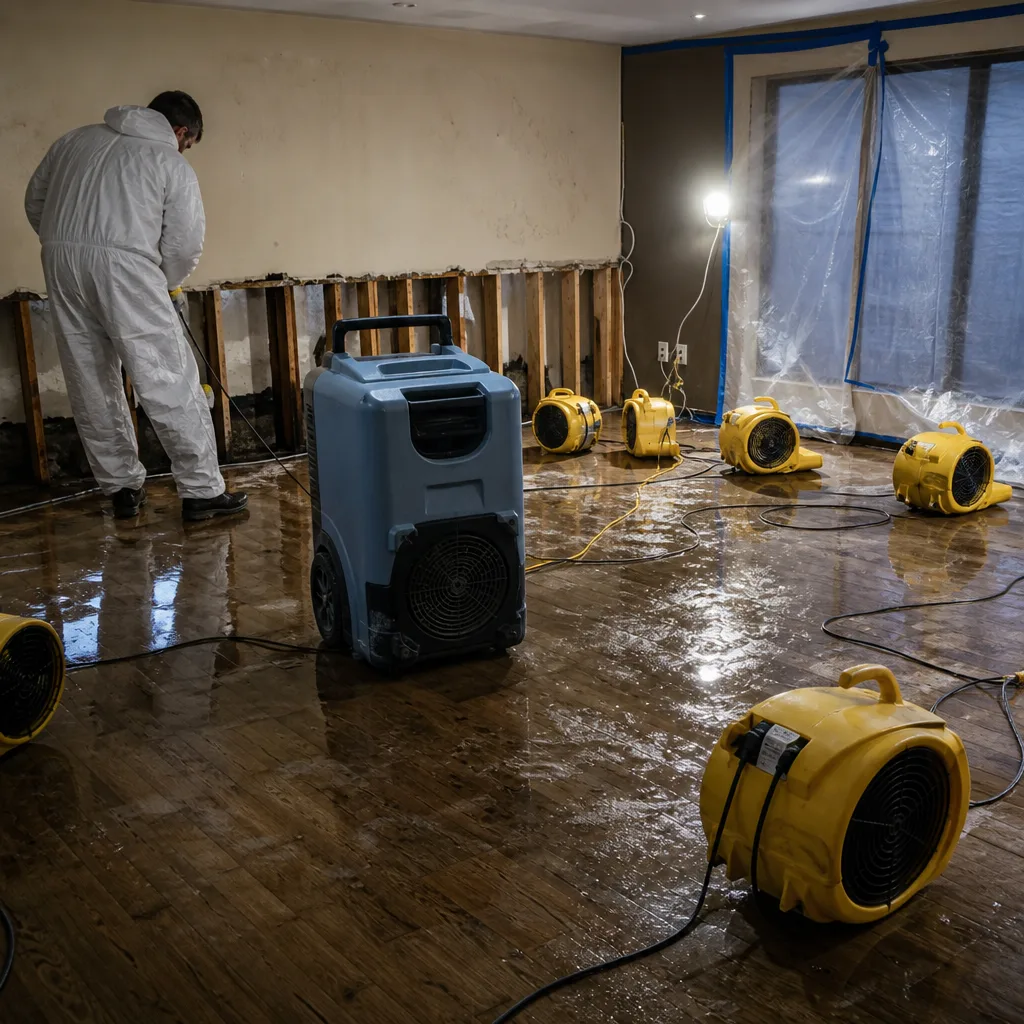
Dri-Eaz dehumidifiers and commercial air movers are positioned based on the moisture map, not guesswork. In Murray Hill’s below-grade spaces, we add specialty floor-drying systems. Daily readings track progress against the dry standard.
Cleaning & Sanitization
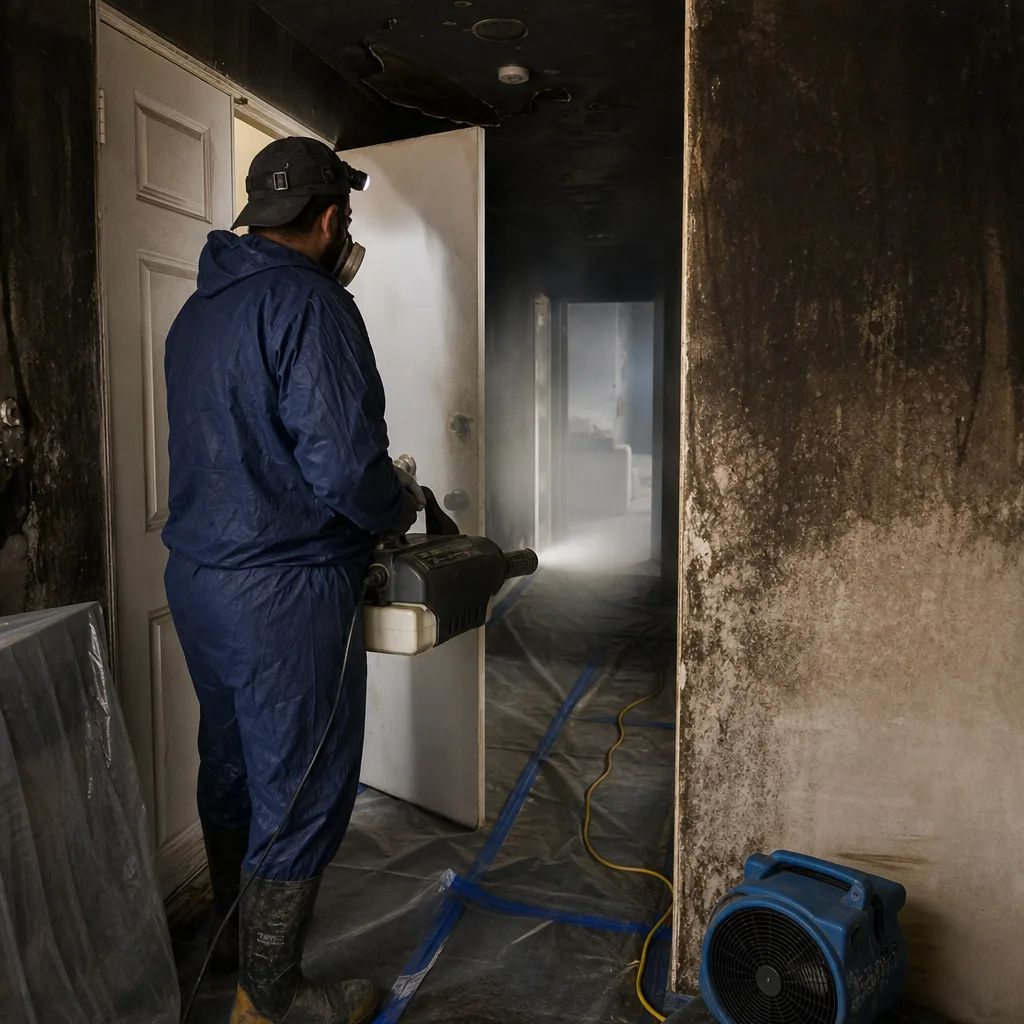
Surfaces get cleaned and treated with appropriate antimicrobials. For Category 3 water, this includes full containment and HEPA air scrubbing to prevent cross-contamination during the drying phase.
Documentation & Insurance Coordination
Every step is logged: photos, moisture readings, equipment placement, daily drying charts. We send the full file to your carrier and coordinate directly with the adjuster so you don’t have to translate restoration terms into insurance language.
Repairs & Restoration
Once the dry standard is met, the same crew handles the rebuild: drywall, plaster repair, flooring, paint, trim. The 90-Day Done Right Promise applies to the entire job, in writing, from first extraction to final coat.
Need Emergency Commercial Restoration in Murray Hill Now?
Crews minutes away, answering live 24 hours a day. The sooner we start, the less it costs.
Working With Your Insurance Company
Commercial water damage claims in Murray Hill co-ops and office buildings come with paperwork that can stall restoration for days if the documentation isn’t right from the first hour. We build the file as we work, not after. Photos of every affected area, room by room. Moisture readings that show exactly where the water went and how dry the space got before equipment came out. A line-item scope of work that your carrier can process without follow-up questions. When the building’s managing agent or co-op counsel gets involved, having that documentation ready changes the conversation from “we’ll investigate” to “we’ll process.”
What We Provide Your Insurer
- Thorough documentation of the loss
- Photos of all damage, room by room
- Moisture readings and drying logs
- A detailed, line-item scope of work
- Direct coordination with your carrier
Built for Murray Hill’s Loss Calendar
Murray Hill’s water damage calendar follows a pattern that a local restoration firm knows before the first call comes in. January and February bring frozen supply lines in older buildings where original piping runs close to exterior walls. The 36th to 39th Street blocks between Park and Lexington see this every deep freeze. March through May is thaw season, when roof drains that froze solid start releasing ice melt into flat roof assemblies, and the first warm rain finds every parapet crack that winter opened. Summer convective storms hit fast, overwhelming roof drains on pre-war buildings whose original leaders were never sized for today’s rainfall intensity. And fall nor’easters drive wind-driven rain horizontally into brick facades and window openings on the upper floors of Murray Hill’s office buildings. We plan for these cycles. You won’t catch us learning about roof-drain overflow patterns for the first time while your ceiling is collapsing.
Commercial Restoration Across Murray Hill’s Neighborhoods
Murray Hill isn’t one uniform building type. The blocks between Park Avenue and Lexington Avenue in the 30s are dominated by pre-war high-rises and co-op buildings, many built between 1905 and 1945. These buildings have cast-iron waste stacks, galvanized supply branches, and steam-heat risers that are a century old. Water losses here tend to be vertical, running down through multiple floors from one failed pipe or roof penetration. The brownstone blocks east of Third Avenue, closer to the old Kips Bay edge, are lower and denser. Garden-level commercial spaces sit partially below grade, which means ground infiltration and hydrostatic pressure are constant concerns. The historic Beaux-Arts buildings along Madison and the retail corridors on Park Avenue South have their own challenges: original plaster ornamentation, high ceilings, and building boards that scrutinize every restoration decision. Response times through Midtown traffic matter too. Our crews know the cross streets and the one-way patterns well enough to get from dispatch to a flooded retail space on East 39th Street without losing 20 minutes to a turn restriction.
Specialized Commercial Restoration Services We Offer in Murray Hill
Office & Retail Restoration
A flooded office on the 12th floor of a Murray Hill co-op building means wet carpet, saturated gypsum, and nervous tenants below. We extract and dry with the same urgency whether it’s one office or an entire floor plate. Documentation matters here, because co-op boards and commercial leaseholders both need to see exactly what was done and when.
Multi-Unit & HOA Restoration
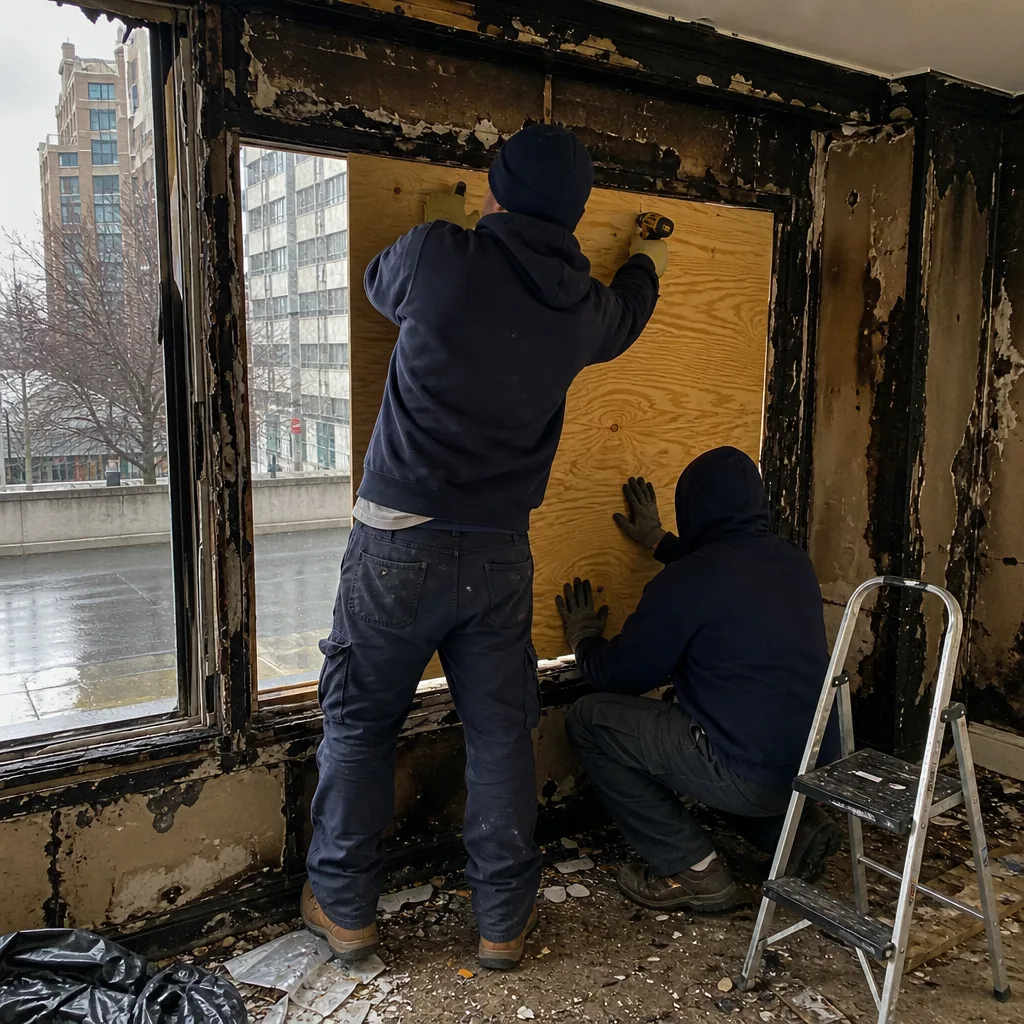
This is where Murray Hill’s co-op complexity hits hardest. When water originates in a demising wall, the question of who owns the pipe, the shareholder or the building corporation, can halt work for days. We’ve handled enough of these to know how to keep containment running and drying equipment at low power while counsel sorts out responsibility, and we document everything so no party can claim the restoration itself made things worse.
Industrial Facility Cleanup
Murray Hill has fewer industrial spaces than some neighborhoods, but the ones that exist around the edges of the district, particularly along the east side toward the East River, have their own demands. Concrete floors, large open spans, and machinery that can’t simply be moved. We bring the same drying science but scale the equipment up: larger dehumidifiers, more air movement, more aggressive extraction.
Large-Loss Response
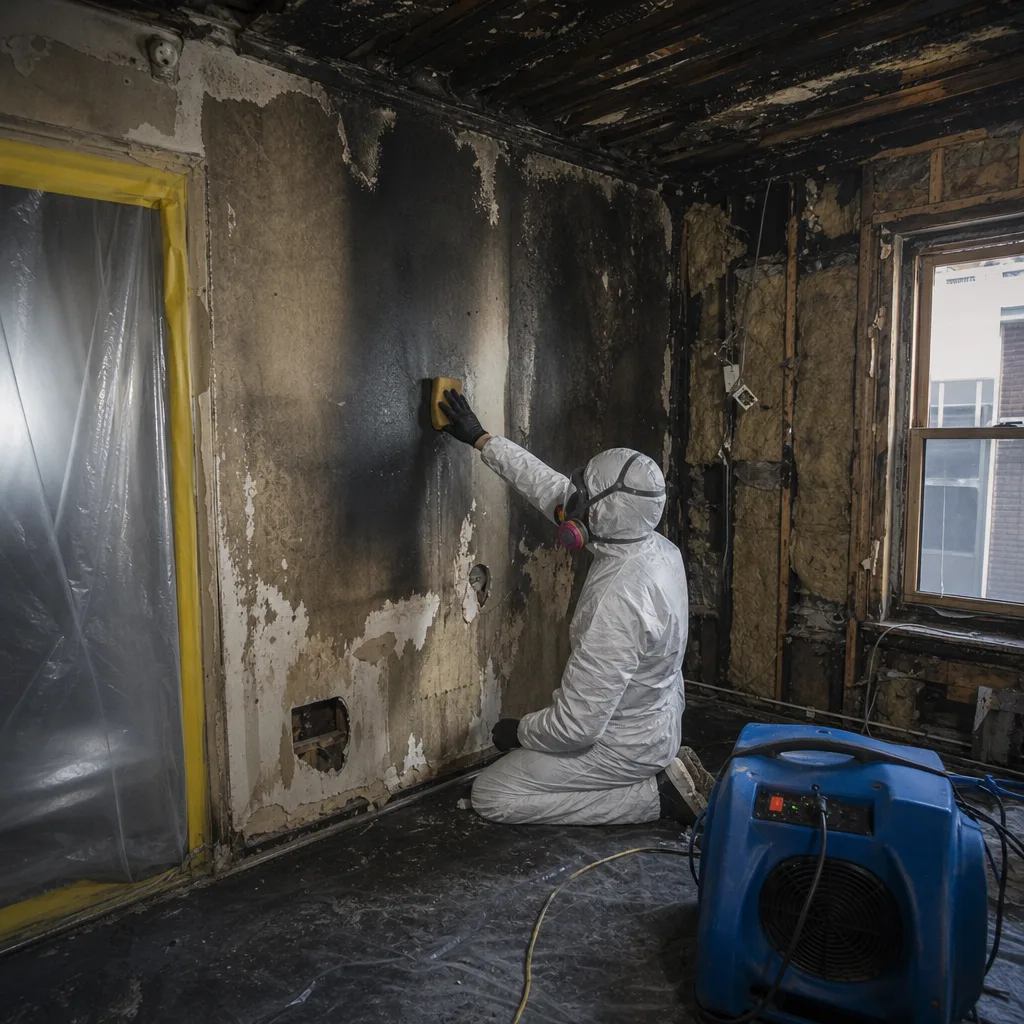
When a fire suppression system discharges across three floors of an office building, or a roof collapse drops water through a retail space into a basement, you need more than a truck and a pump. We coordinate multiple crews, staged equipment, and a documented plan that keeps the building’s management, tenants, and carrier all informed. Large-loss restoration in a dense neighborhood like Murray Hill also means managing street access and building service elevator schedules.
Business Interruption Minimization
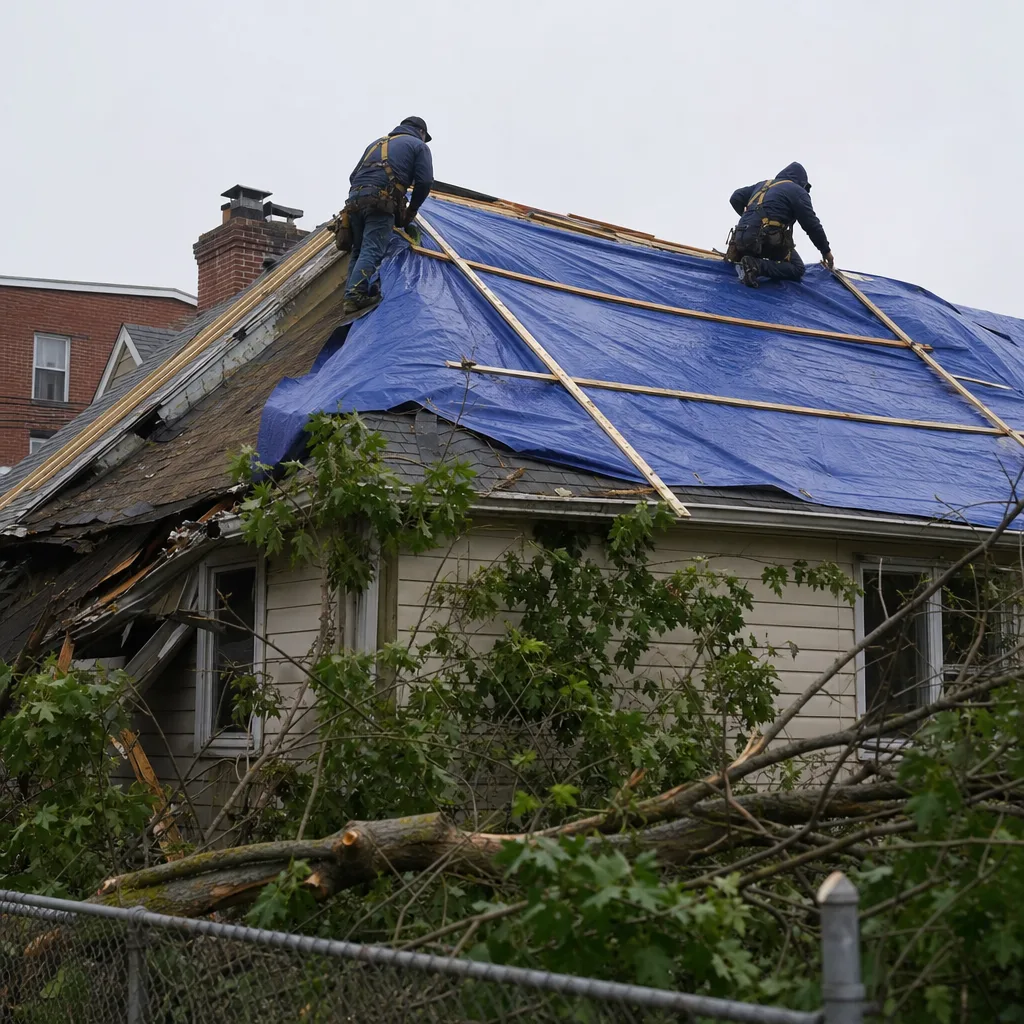
Every day a retail space or office is closed is revenue lost. Our goal on every commercial job in Murray Hill is to get the business back operating as fast as the drying science allows. Sometimes that means phased drying so front-of-house can reopen while back-of-house finishes. Sometimes it means performing work overnight so daytime operations continue. We schedule around your business, not the other way around.
Document & Inventory Recovery
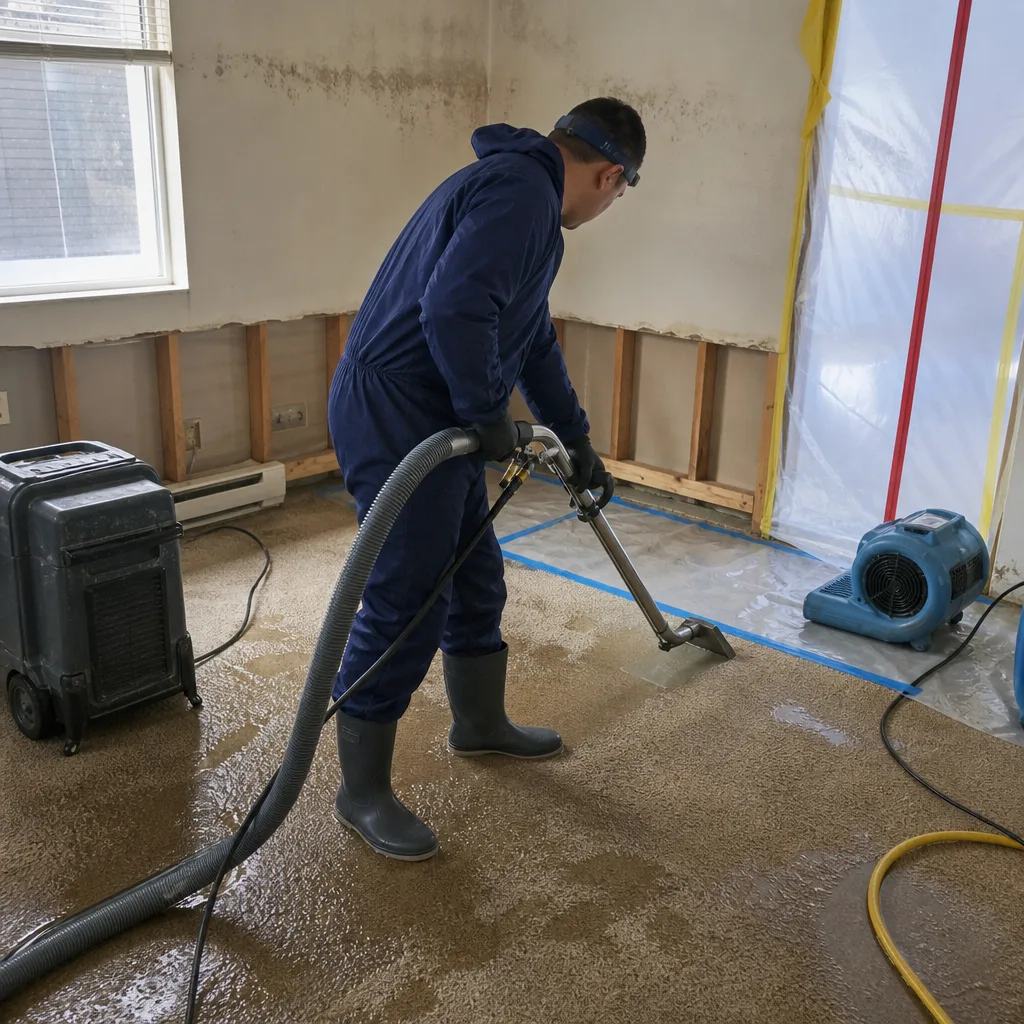
Offices in Murray Hill hold files, records, and equipment that water can destroy in hours. We coordinate content pack-outs, document drying, and inventory stabilization as part of the restoration scope. What’s salvageable gets treated. What isn’t gets documented for the claim.
What happens when you call
- 1
A real person answersNo phone trees - you reach a local pro.
- 2
You get an upfront price rangeHonest numbers before anyone is dispatched.
- 3
A background-checked tech heads outLicensed & insured, dispatched right away.
- 4
You approve before work beginsNothing starts until you say go.
Commercial Restoration Costs in Murray Hill, NY
Water extraction and drying for a small commercial space in Murray Hill, something like a 600-square-foot garden-level office on East 38th Street, typically runs $2,800 to $4,500 when the loss is Category 1 or 2 and caught within the first few hours. A larger retail space with Category 3 water, full containment, and antimicrobial treatment will land between $8,000 and $18,000 depending on how far the water migrated and what porous materials need removal. Multi-floor losses in pre-war co-op buildings, where water stacks through ceilings and walls, regularly exceed $25,000. The variables that move the price: water category, affected square footage, whether plaster or drywall can be dried in place or must be removed, and how long the space sat wet before extraction started. We give you a firm, written scope before work begins, and we bill your carrier directly. No surprises on the bill, and no negotiating between you and the insurance company about what a moisture reading means.
We Also Serve Cities Near Murray Hill
Commercial restoration crews from Floodline Restoration Co. regularly cover Long Island City, Greenpoint, Williamsburg, and Upper Manhattan. If your business sits just outside Murray Hill proper, the same live-dispatched, IICRC-certified response applies. Call (716) 452-0798 and you’ll get the same 45-minute commitment.
Serving Murray Hill, NY - Our Local Coverage Area
We’re based in the Murray Hill area and know this community well. Use the map below to see our service coverage - if you’re nearby, we can almost certainly help.
Murray Hill Commercial Restoration Questions, Answered
Who pays for commercial water damage in a Murray Hill co-op when a pipe bursts inside a demising wall?
The answer depends on the co-op’s proprietary lease. In most Murray Hill buildings, the branch line serving a single unit is shareholder responsibility, while the building corporation owns the main stack and building systems. But that line blurs inside demising walls, and managing agents routinely halt work until counsel interprets the lease. You need a restoration company that can pause and document rather than escalate. Call (716) 452-0798 and we’ll walk you through how we handle co-op standstills.
Why does your crew sometimes stop work and wait on a Murray Hill job?
Because Murray Hill co-op boards and managing agents often require legal sign-off before restoration proceeds in shared walls or building systems. We don’t fight that process; we work with it. Equipment stays running at low power, containment stays in place, and we document every reading while counsel resolves the liability question. The alternative is working without authorization and creating a billing dispute that stalls the entire claim.
Can you dry out a garden-level commercial unit in Murray Hill without removing the original plaster walls?
Sometimes, but not always. Original plaster walls in Murray Hill brownstone offices can hold moisture long after the surface feels dry. We use thermal imaging and moisture meters to determine whether the wall cavity has reached the dry standard. If readings plateau above safe levels, spot removal and targeted drying are faster and cheaper than letting hidden mold develop behind intact plaster. Our job is to tell you the truth about drying, not to preserve plaster at the cost of a later mold claim.
What is the biggest cause of upper-floor water damage in Murray Hill office buildings?
Roof-drain overflow and parapet-level water infiltration during nor’easters and summer convective storms. Murray Hill’s flat-roofed pre-war buildings have roof assemblies that were never designed for today’s rainfall intensity, and the original drains are often undersized. Water builds up, finds an opening, and travels down through the building. Upper-floor ceilings in these buildings show recurring water claims in the same spots year after year.
How quickly should I call for water extraction in a Murray Hill retail space?
Call the moment you see water. Not the next morning, not after you’ve tried to mop it up. Water in a pre-war building’s floor and wall cavities starts creating secondary damage within hours. Call (716) 452-0798 and our crew can be on site inside 45 minutes, with extraction equipment running the same visit. Estimates are free.
How long does commercial drying take in a Murray Hill pre-war building?
Most commercial drying jobs in Murray Hill take three to five days when caught early. Below-grade spaces with masonry walls can take longer, sometimes seven to ten days, because the building materials hold moisture differently than modern drywall. We don’t pull equipment until the moisture log shows the dry standard has been met and held, and we give that log to you and your carrier.
Will my insurance cover commercial water damage restoration?
Most commercial policies cover sudden and accidental water damage, but the specific coverage depends on the cause and your policy language. We document everything from the first hour and bill your carrier directly. The file we build, including photos, moisture readings, and the line-item scope, is designed to make the claim process straightforward and to remove you from the middle of the negotiation.
What should I do in the first 30 minutes after discovering water damage in my Murray Hill building?
Shut off the water source if you can safely identify it. Move electronics and documents out of the water. Take photos before anything gets touched. Then call (716) 452-0798. Don’t run fans from the hardware store, don’t pull up carpet yourself, and don’t use a shop vac on Category 3 water. Let a certified crew assess the category and contamination risk before anything gets disturbed.
Written by Murray Hill restoration expert and Floodline Restoration Co. owner Curt Bowman. Our crews serve Murray Hill commercial properties from the brand’s New York City office, with live dispatch 24 hours a day, every day.