
Free visual inspection and a written scope of work before any mitigation begins - photos, moisture readings, and drying logs go in your claim file
The scope we write is the scope we bill. Anything new gets shown to you, in writing, before we touch it.
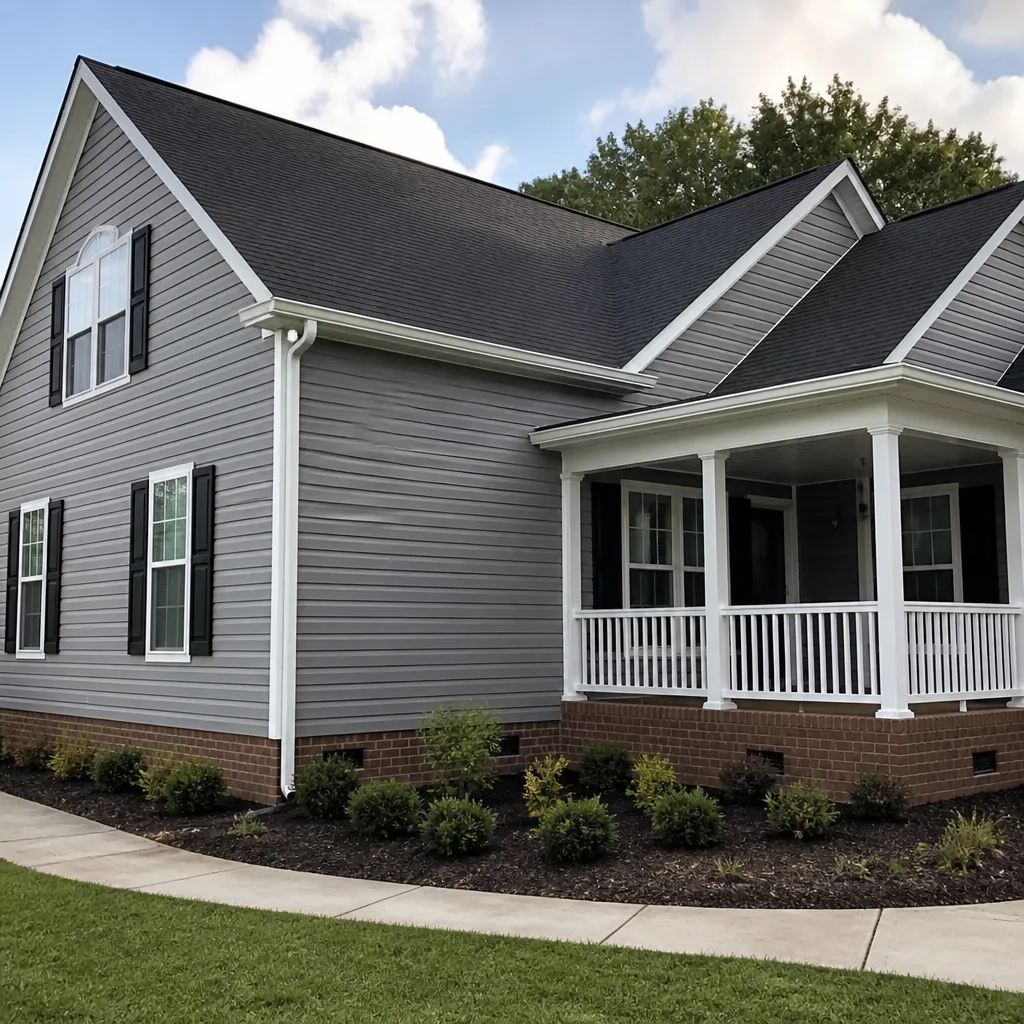
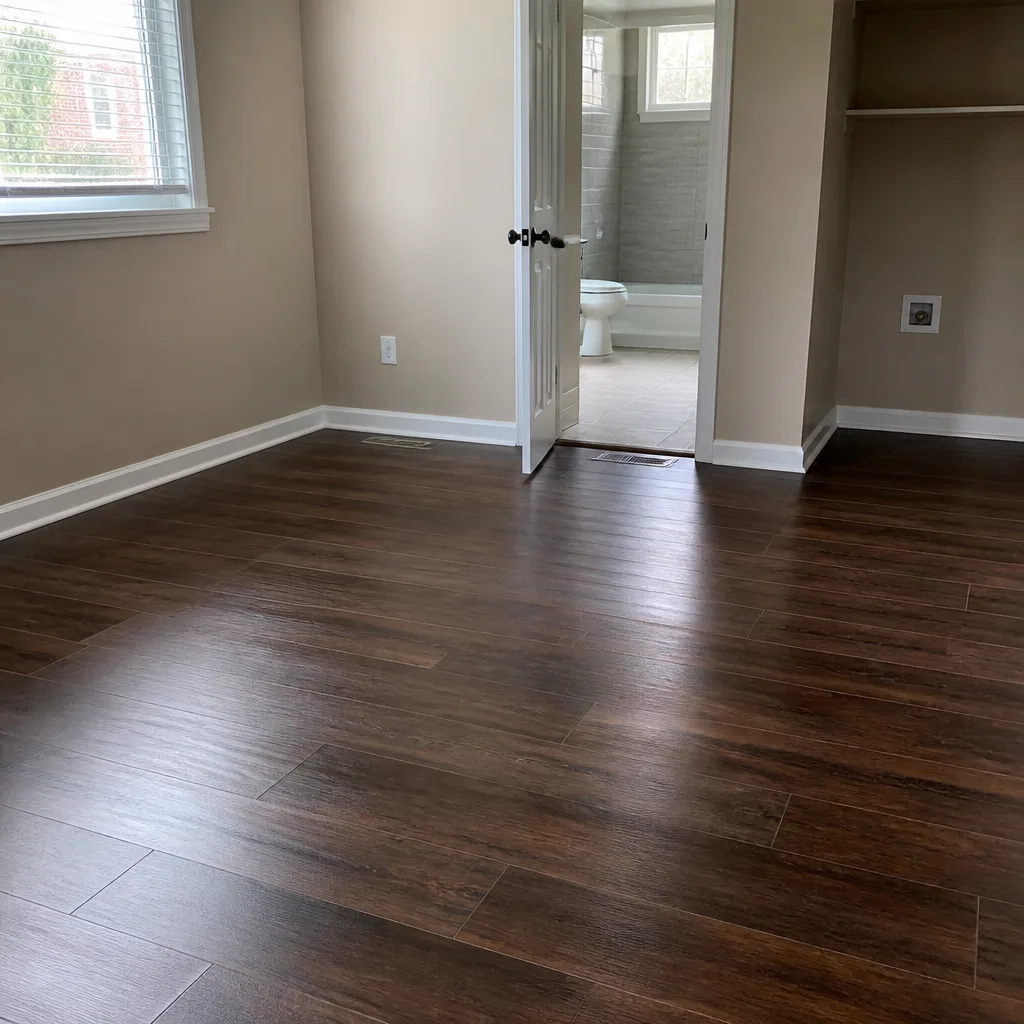
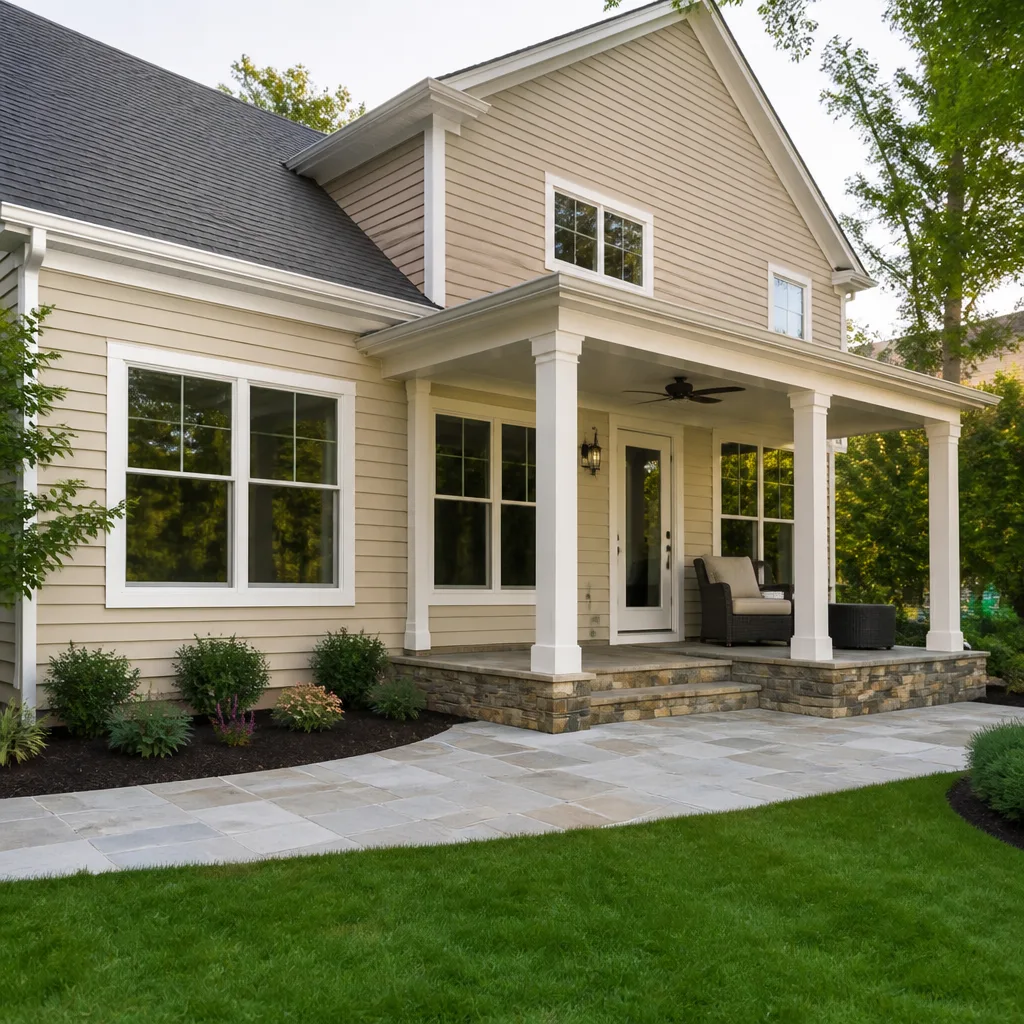
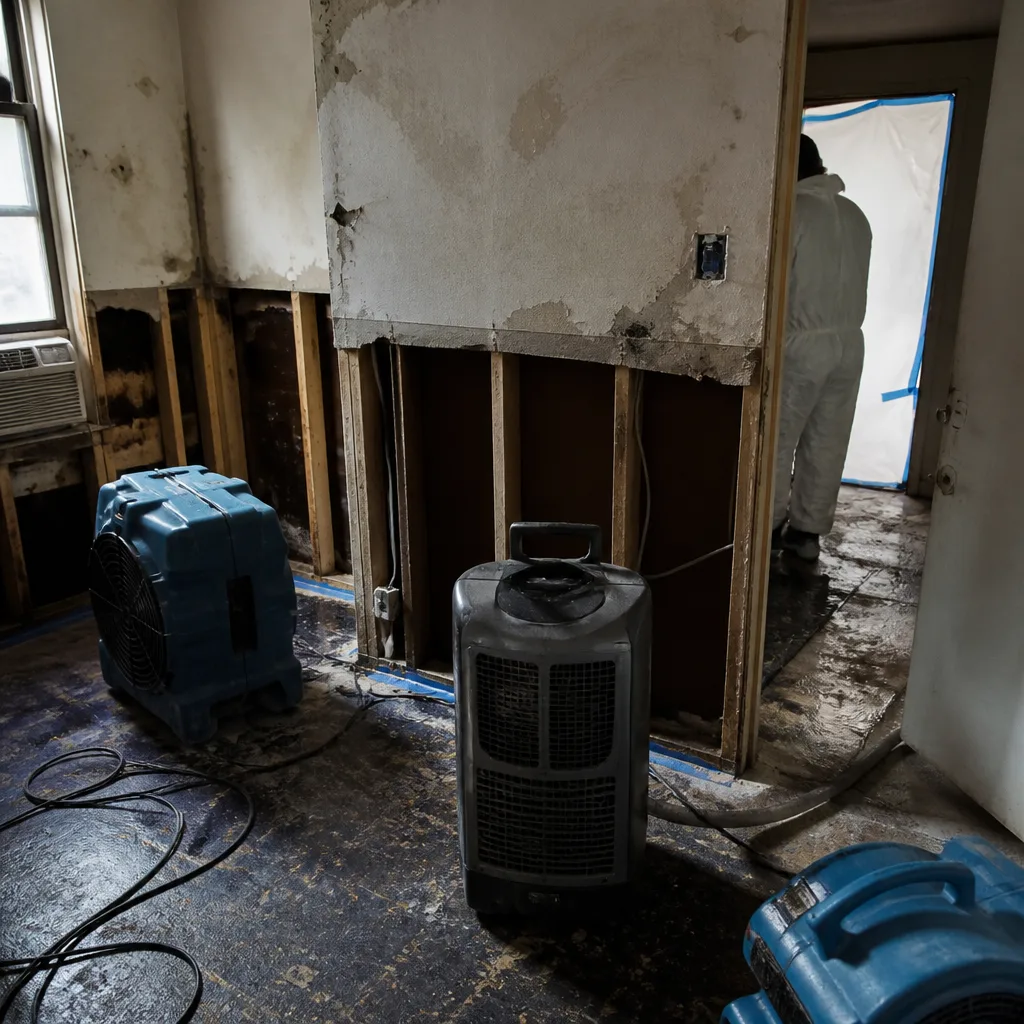 Before
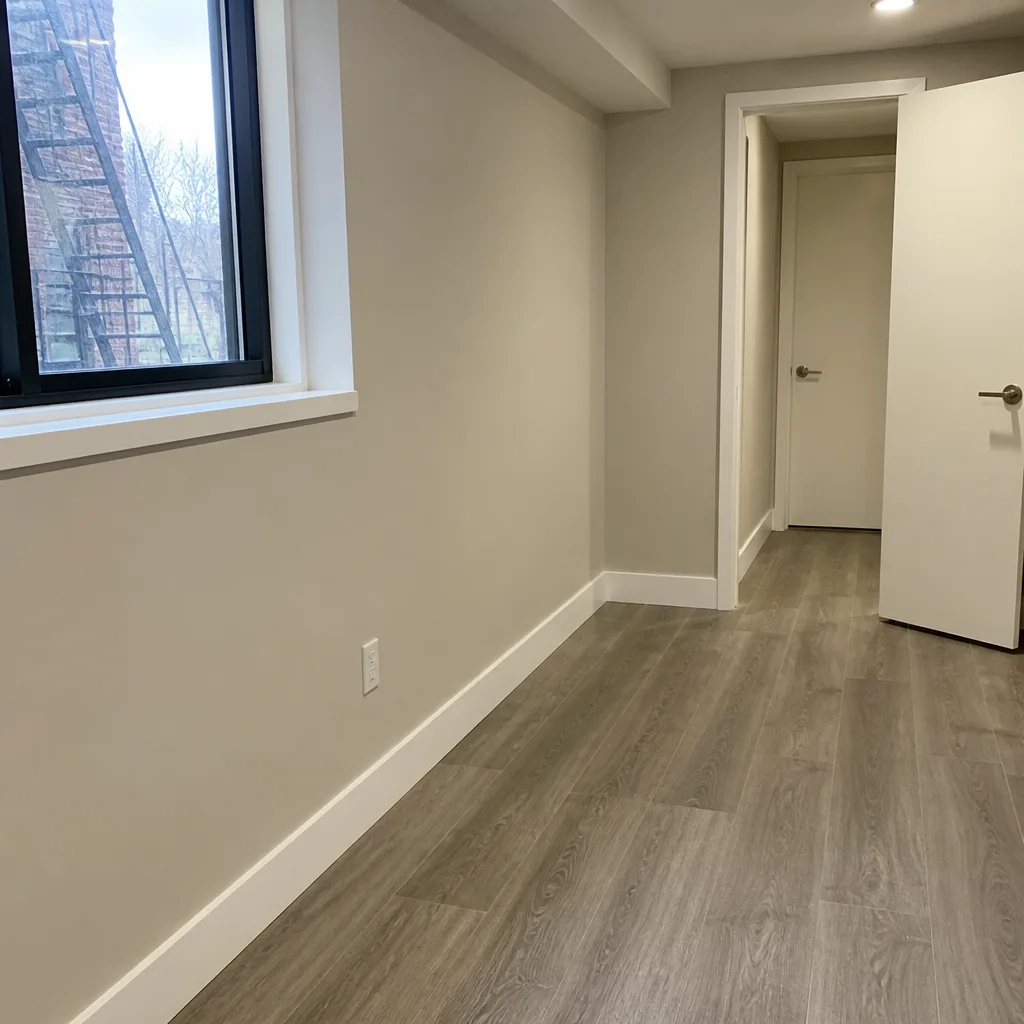 After
After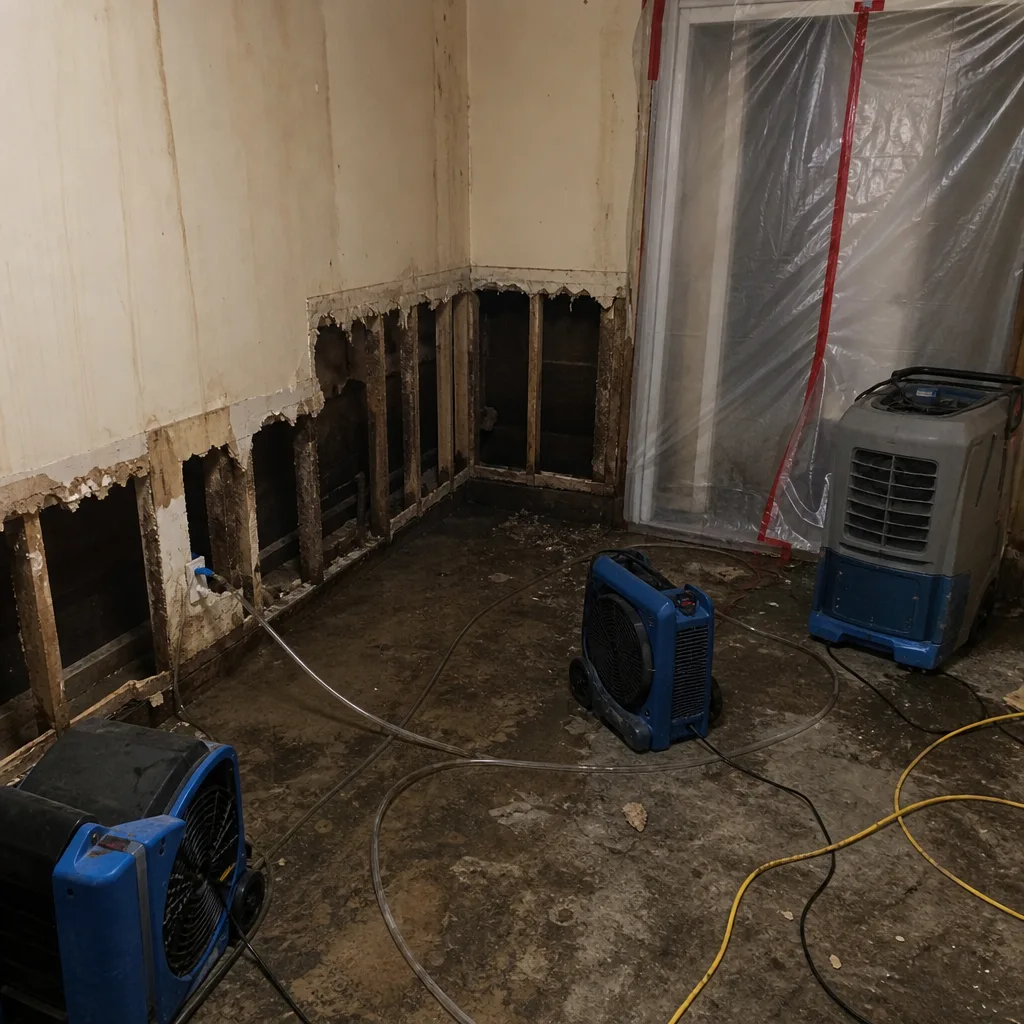 Before
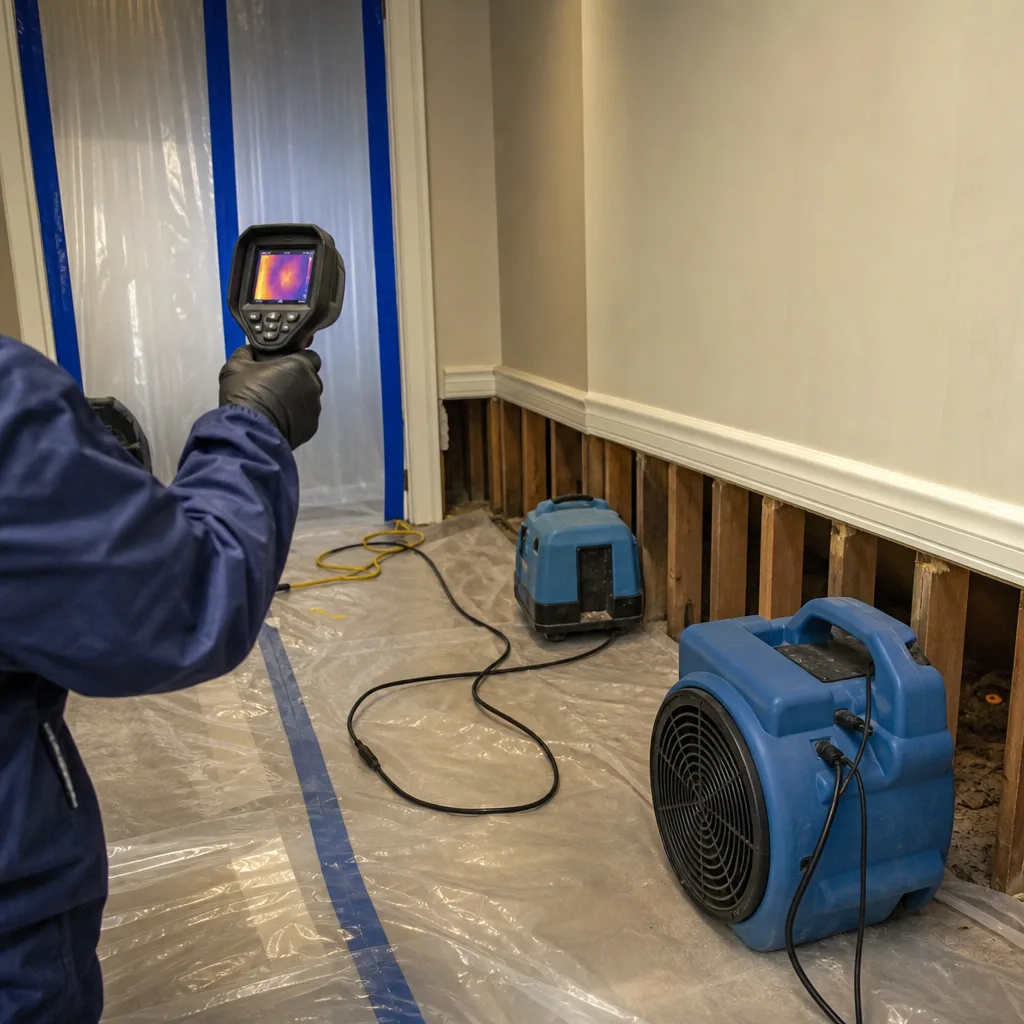 After
After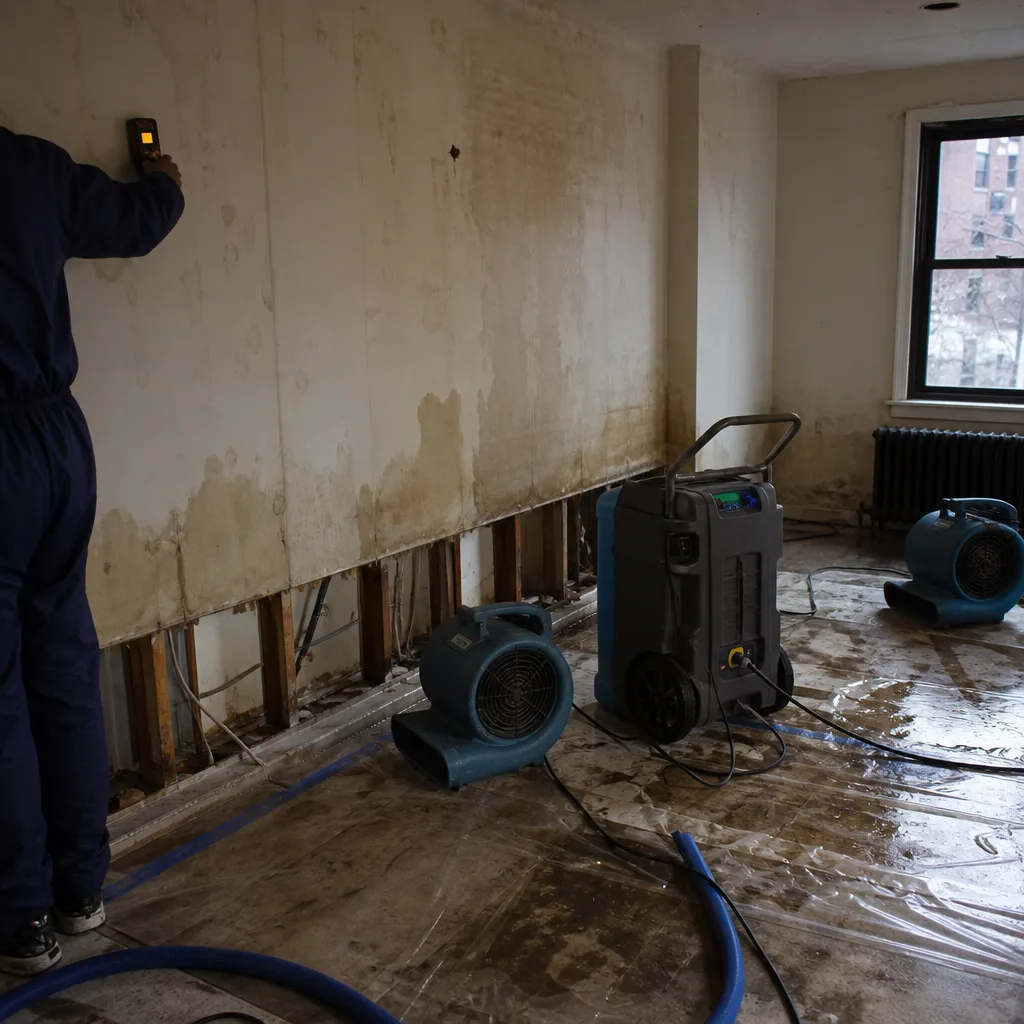 Before
 After
After24/7 Emergency Water Damage Restoration in Elmhurst
Water damage restoration in Elmhurst typically costs between $1,800 and $6,500 depending on how far the water traveled and whether sewage is involved. A burst supply line in a finished basement apartment usually lands between $2,400 and $4,200 once drying and basic rebuild are included. The phone at (716) 452-0798 is answered by a live dispatcher at any hour, and a certified crew can be rolling toward your block in Elmhurst within 45 minutes of your call.
We’ve been doing this work long enough to know that the first hour decides the final bill. Water from a failed cast-iron drain line in a 11373 rowhouse doesn’t wait. It moves through wall cavities, soaks into 1920s-era plaster and lath, and starts feeding mold within 24 to 48 hours. Every minute the water sits, the scope grows. Our crews arrive with commercial extraction equipment already on the truck, not a clipboard and a sales pitch. We start pulling water the same visit, document everything for your insurer, and stay until the structure is dry enough to rebuild.
Understanding Water Damage Restoration Severity in Elmhurst Properties
Not all water is the same, and Elmhurst’s building stock tends to produce the serious kind. Restoration professionals classify water into three categories: Category 1 is clean water from a supply line or fixture. Category 2 carries significant contamination and is called gray water. Category 3 is black water, meaning sewage, floodwater, or anything that has sat long enough to breed bacteria. In Elmhurst, where the combined sewer system backs up during heavy rain events across ZIP codes 11373 and 11380, Category 3 losses are common enough that we treat any basement backup as a biohazard until proven otherwise.
Moisture mapping matters more in pre-war rowhouses than in modern construction. Brick party walls, old plaster over lath, and decades of accumulated renovations mean water travels along paths you can’t see from the stain on the ceiling. We use thermal imaging and hygrometers to trace the actual migration, then set drying chambers around the affected area. Structural drying is measured, logged, and reported, not guessed at. In attached brick buildings, a water event in one unit often means checking the neighboring unit’s shared wall for wicking before it becomes a dispute between two owners and two adjusters.
Why Elmhurst Property Owners Choose Floodline Restoration Co.
- 45-minute response commitment. We dispatch crews stationed near Elmhurst, not from a distant office. A live dispatcher confirms the address, the crew’s ETA, and the truck’s equipment load before you hang up.
- 24/7 live answer, always a person. No automated phone tree, no “leave a message and we’ll get back to you.” If it’s 2 a.m. and a drain line just let go into a basement apartment on 45th Avenue, a human being picks up and starts the dispatch.
- IICRC-certified crews. Our technicians carry WRT and ASD certifications and train to RIA and IFA standards. The person holding the moisture meter knows how to read it.
- Free visual inspection. For non-emergency assessments, we’ll walk the property, map the affected area, and give you a written scope without charging for the visit.
- Direct insurance billing. The homeowner never plays messenger between us and the carrier. We document, communicate, and bill directly.
- One team from extraction to reconstruction. The same certified crew that runs extraction and sets drying equipment also handles the rebuild. No mid-job handoff, no inherited subcontractors, no “that’s a different company” conversation.
Our Water Damage Restoration Process
Inspection & Assessment
We arrive, walk the property with you, and identify the water category, the source, and the extent of migration. Thermal imaging and moisture meters give us a map, not a guess. We document everything photographically before we touch equipment.
Extraction & Stabilization
We remove standing water with truck-mounted and portable extraction units. In Elmhurst basements where a sewage backup is involved, we set containment before extraction begins so contaminated air doesn’t move through the rest of the home.
Drying & Dehumidification
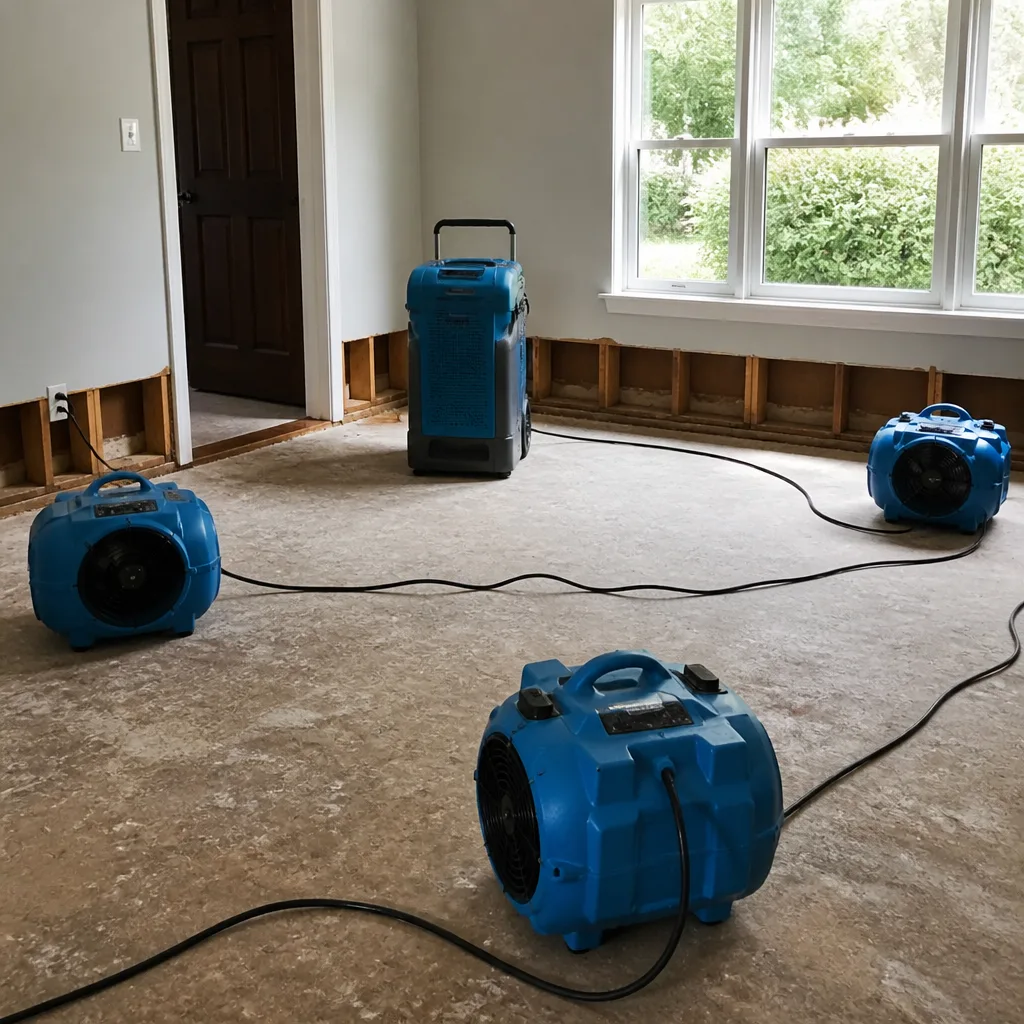
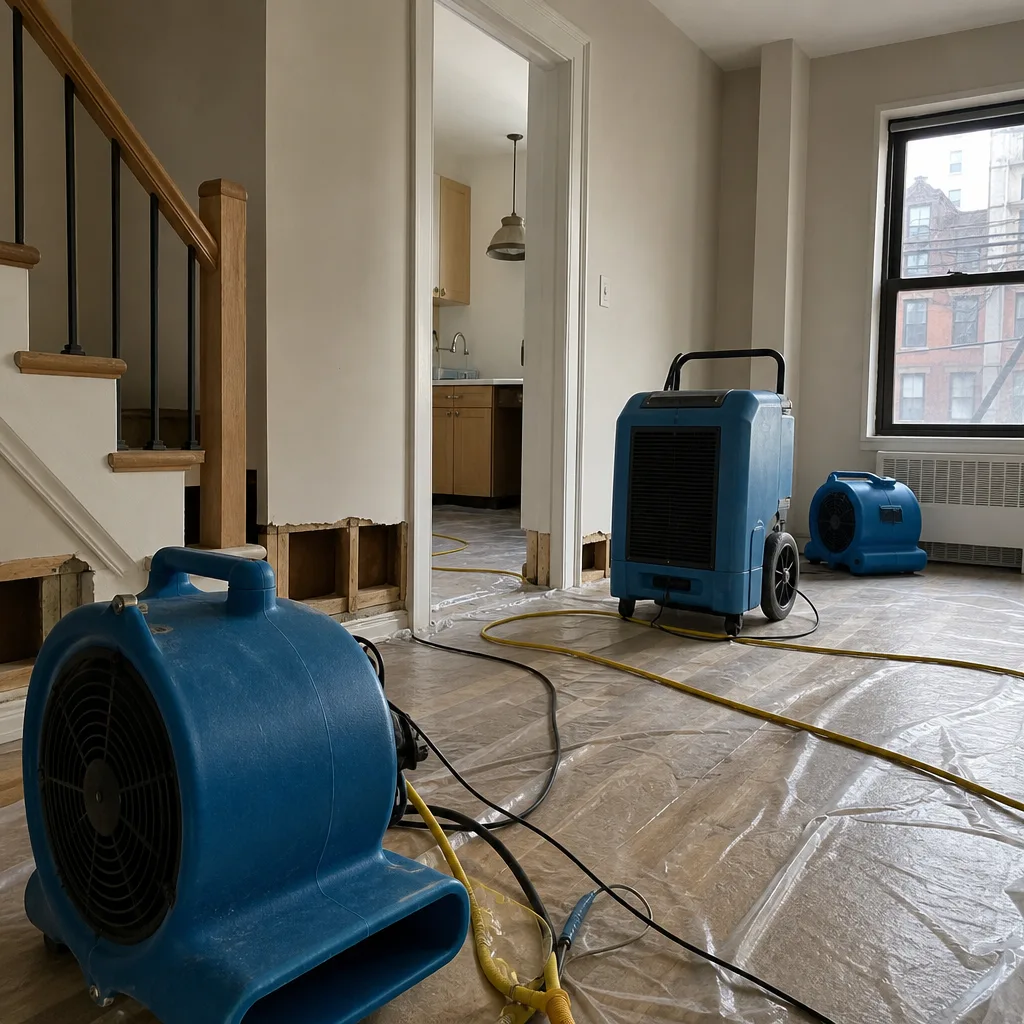
Commercial air movers, Dri-Eaz and Phoenix dehumidifiers, and Injectidry mats for hardwood and hard-to-reach cavities run on a cycle we monitor daily. Readings get logged until the structure reaches dry standard, and you receive the log.
Cleaning & Sanitization
Affected surfaces are cleaned with antimicrobial treatments appropriate to the water category. For Category 3 losses, we remove contaminated porous materials like carpet, pad, and damaged drywall, then sanitize what remains.
Moisture Verification & Clearance
Before we call a job dry, we verify with the meter, not the calendar. Every room gets a final reading. If materials need replacement, we don’t rebuild over wet framing. The numbers have to prove it’s dry.
Repairs & Restoration
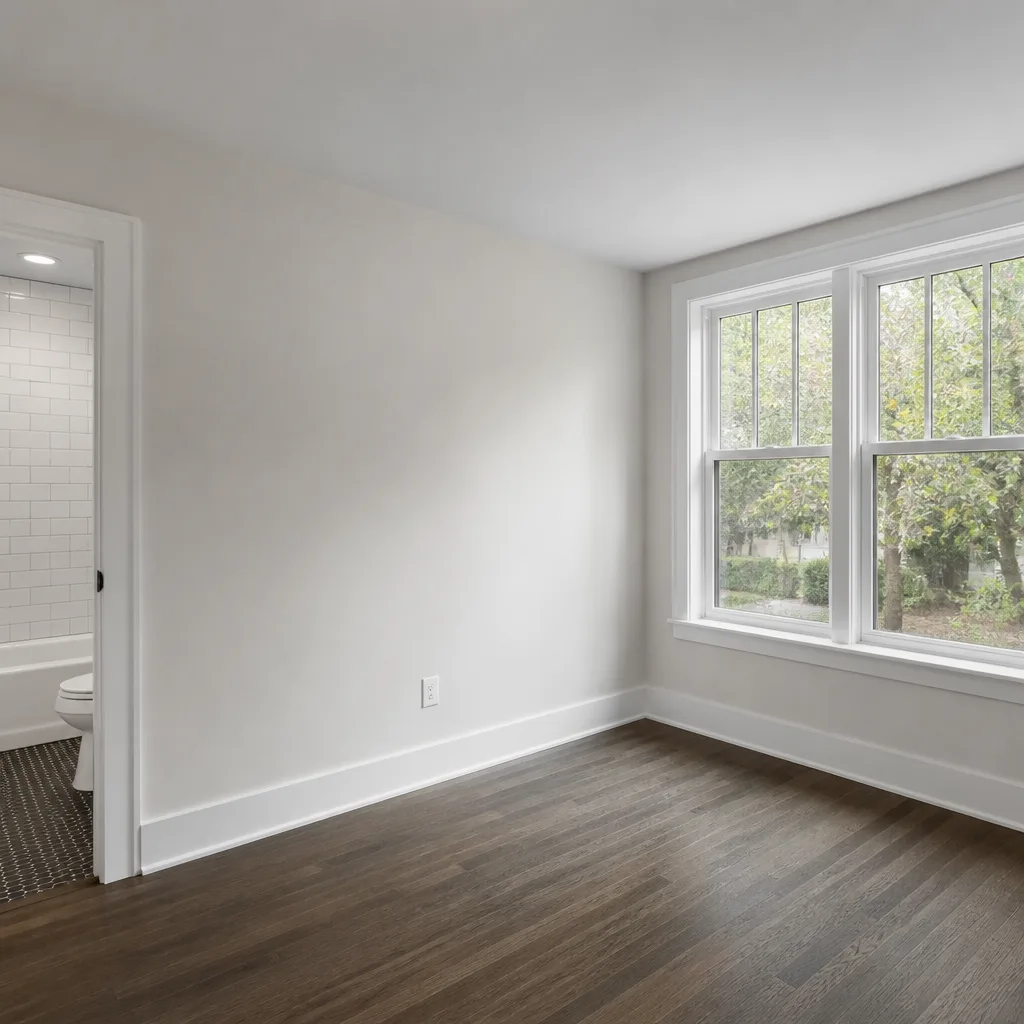
Our own crew handles the rebuild, from drywall and flooring to cabinetry and paint. The same team that extracted the water sees the job through to the finished room, backed by the 90-Day Done Right Promise in writing.
Need Emergency Water Damage Restoration in Elmhurst Now?
Crews minutes away, answering live 24 hours a day. The sooner we start, the less it costs.
Working With Your Insurance Company
Water damage claims in Elmhurst get complicated fast, especially when an attached rowhouse shares a wall, a basement has been converted to living space, or two insurance policies are involved. We’ve handled hundreds of these files and know what carriers need to move a claim forward. Documentation begins the first hour, not after the fact. We photograph the loss room by room, log moisture readings on a schedule, and prepare a line-item scope of work using industry-standard estimating software that adjusters recognize. When your adjuster calls, we talk to them directly. When they request drying logs, we send the full record. You don’t have to translate our work into insurance language. That’s our job.
What We Provide Your Insurer
- Thorough documentation of the loss
- Photos of all damage, room by room
- Moisture readings and drying logs
- A detailed, line-item scope of work
- Direct coordination with your carrier
Built for Elmhurst’s Loss Calendar
Elmhurst’s water damage patterns follow a rhythm, and anyone who has lived here through a few seasons knows the beat. January deep freezes crack supply lines in unheated crawl spaces and along exterior walls in 1920s brick rowhouses, sending clean water through ceilings overnight. By March, the thaw releases water that has been sitting against foundations, and older parged basement walls start weeping through mortar joints. Summer and early fall bring the flash thunderstorms that overwhelm NYC’s combined sewer system, and in low-lying central Queens, that means sewage backing into basement drains across 11373 and 11380. Add in the occasional nor’easter that drives rain sideways into brick facades, and you have a loss calendar that keeps our extraction equipment busy year-round. Each season produces a different damage profile, and our crews arrive with the right approach already in mind because they know what the season does to these particular buildings.
Water Damage Restoration Across Elmhurst’s Neighborhoods
Elmhurst is dense. The blocks around Queens Boulevard and Broadway move to their own rhythm, and an emergency response truck has to know how to thread through it. Near the Grand Avenue corridor, we work a lot of attached brick rowhouses where a shared party wall means water from one unit migrates into the next and two insurance carriers end up in the same conversation. Over by the Elmhurst Avenue area and down toward the 11380 side, the housing stock shifts toward two- and three-family homes, many with basement units that have been finished and rented over the years. The NY-25 and Long Island Expressway corridors put us within minutes of the Maspeth border, and we’ve run countless jobs off Junction Boulevard where converted basements meet recurring sewer backups. In the blocks around Moore Homestead Playground, we see the older one- and two-family rowhouses with original cast-iron stacks that have finally given up. Each pocket of Elmhurst has a slightly different building profile, and our moisture mapping accounts for that. We don’t treat a 1930s attached brick home on Elbertson Street the same way we treat a 1960s semi-detached near the Maspeth line.
Specialized Water Damage Restoration Services We Offer in Elmhurst
Emergency Water Extraction
Standing water in a finished Elmhurst basement has to come out immediately. Our truck-mounted extraction units pull hundreds of gallons per hour, and we arrive with the equipment running, not waiting for a follow-up visit. In converted basement apartments with drywall, carpet pad, and personal property at risk, the speed of extraction determines whether the space is salvageable or a gut job.
Basement Water Removal
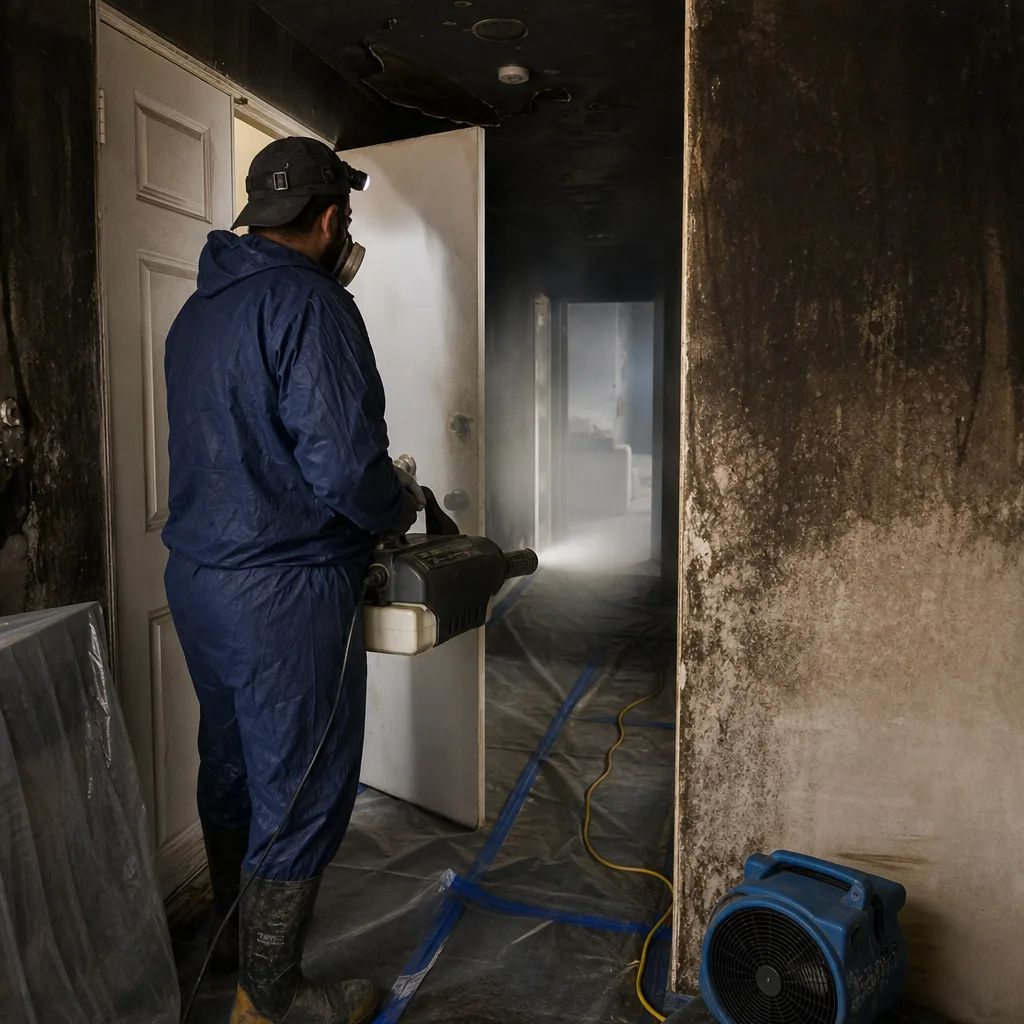
Basement water damage in Elmhurst is rarely a simple mop-up. Between unpermitted living units, aging cast-iron drains, and the combined sewer backups that hit 11373 and 11380 during heavy rain, a “wet basement” call is usually a Category 2 or 3 job. We handle the full contaminated-water protocol: containment, removal, disposal, sanitization, and drying to a verifiable standard.
Flood Cleanup
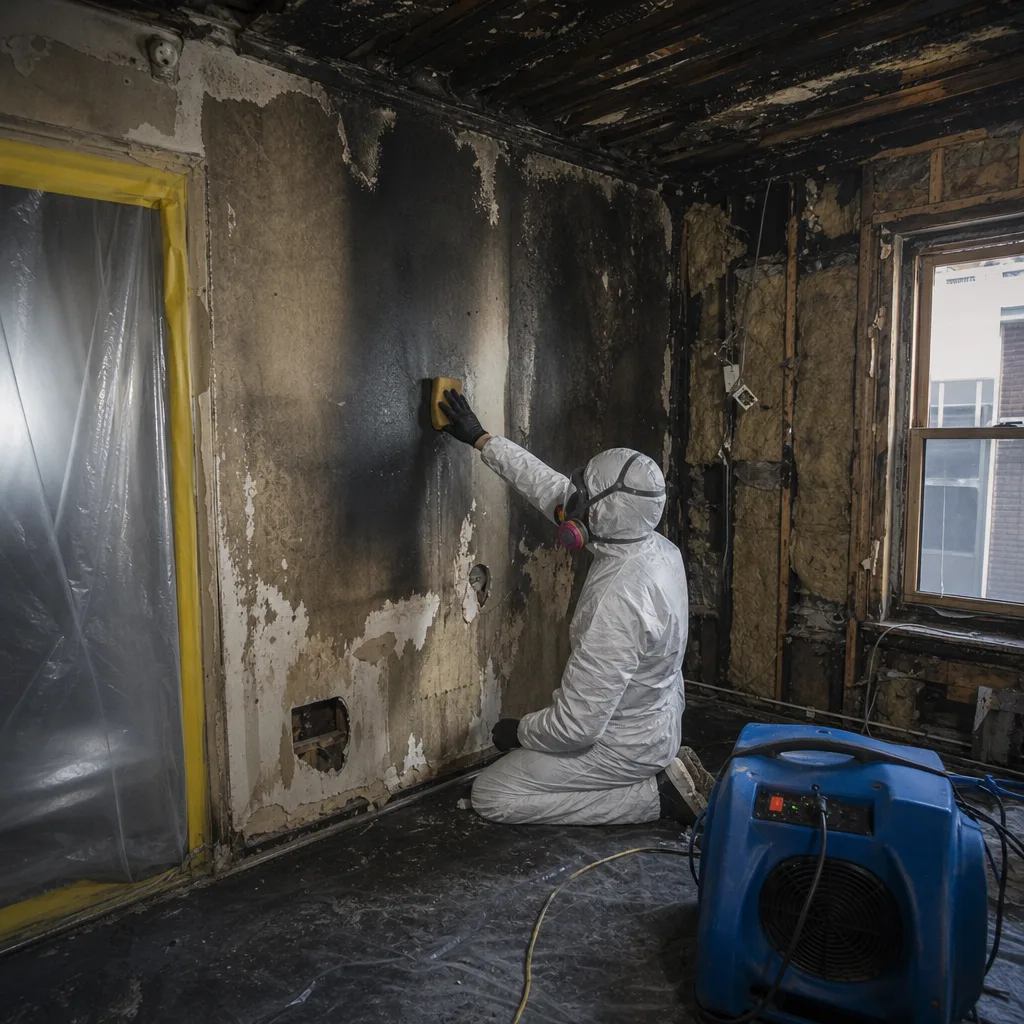
When stormwater or sewage enters a rowhouse, the cleanup isn’t just about water. It’s about contaminated silt, bacteria, ruined insulation, and drywall that has to come out. Our flood cleanup crews work in Tyvek suits and respirators when the job calls for it, and they document the entire removal for your carrier.
Burst Pipe Restoration
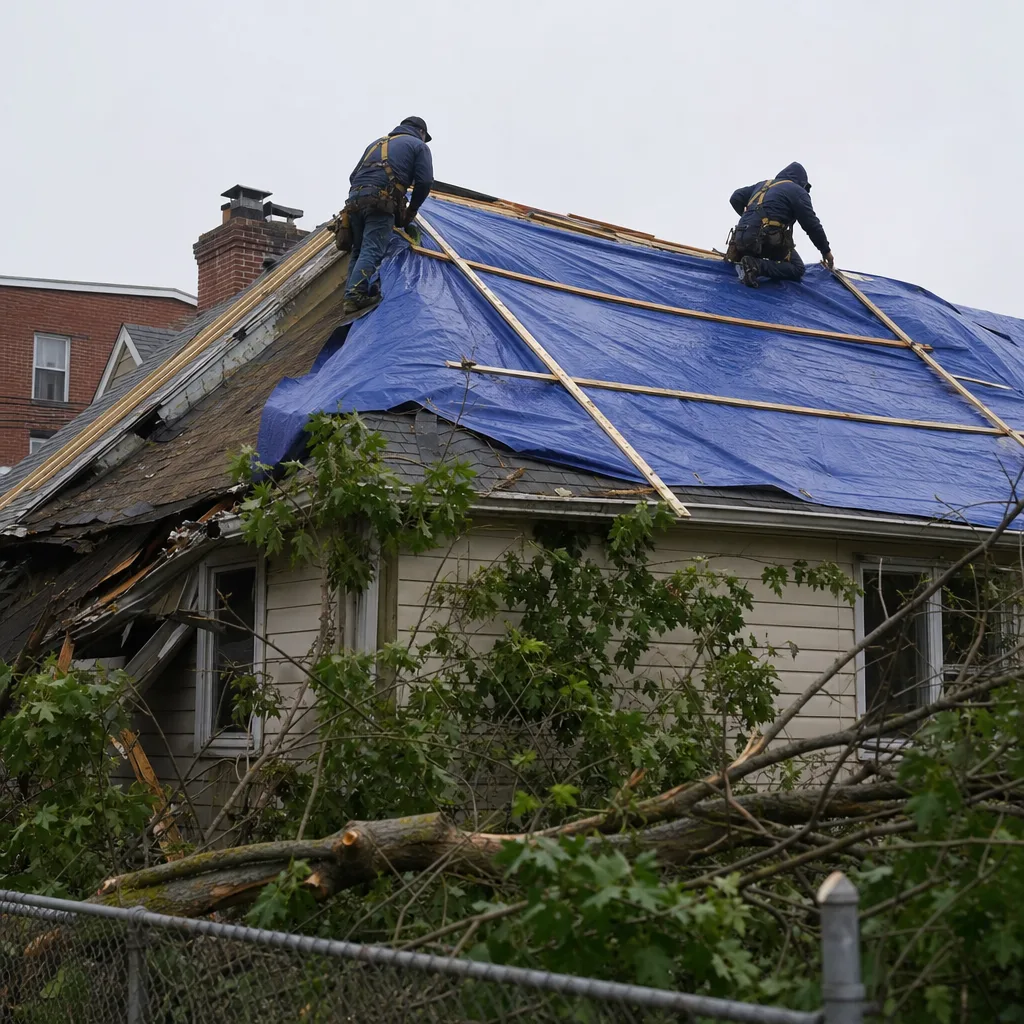
Winter freezes burst supply lines in unheated additions and poorly insulated exterior walls across Elmhurst every January. The water is often Category 1, but it has usually traveled through finished spaces before anyone notices. We trace the migration path, dry behind walls and under flooring, and rebuild what the water ruined.
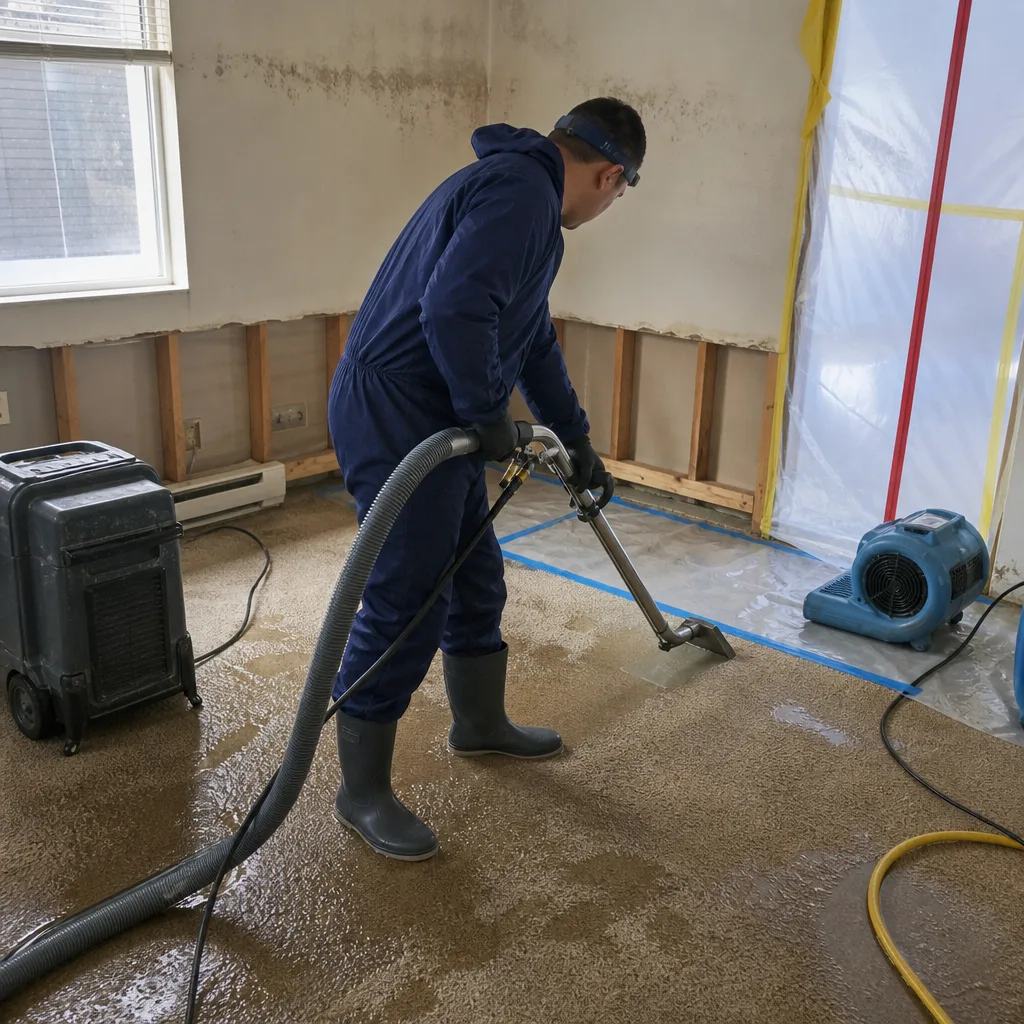
Structural Drying & Dehumidification
Drying a pre-war rowhouse is different from drying a suburban split-level. Brick holds moisture differently than frame construction. Plaster over lath wicks water upward. Shared basement slabs in attached buildings don’t dry evenly. We use Dri-Eaz and Phoenix dehumidifiers sized to the cubic footage, and we verify with daily readings until the structure meets drying standard.
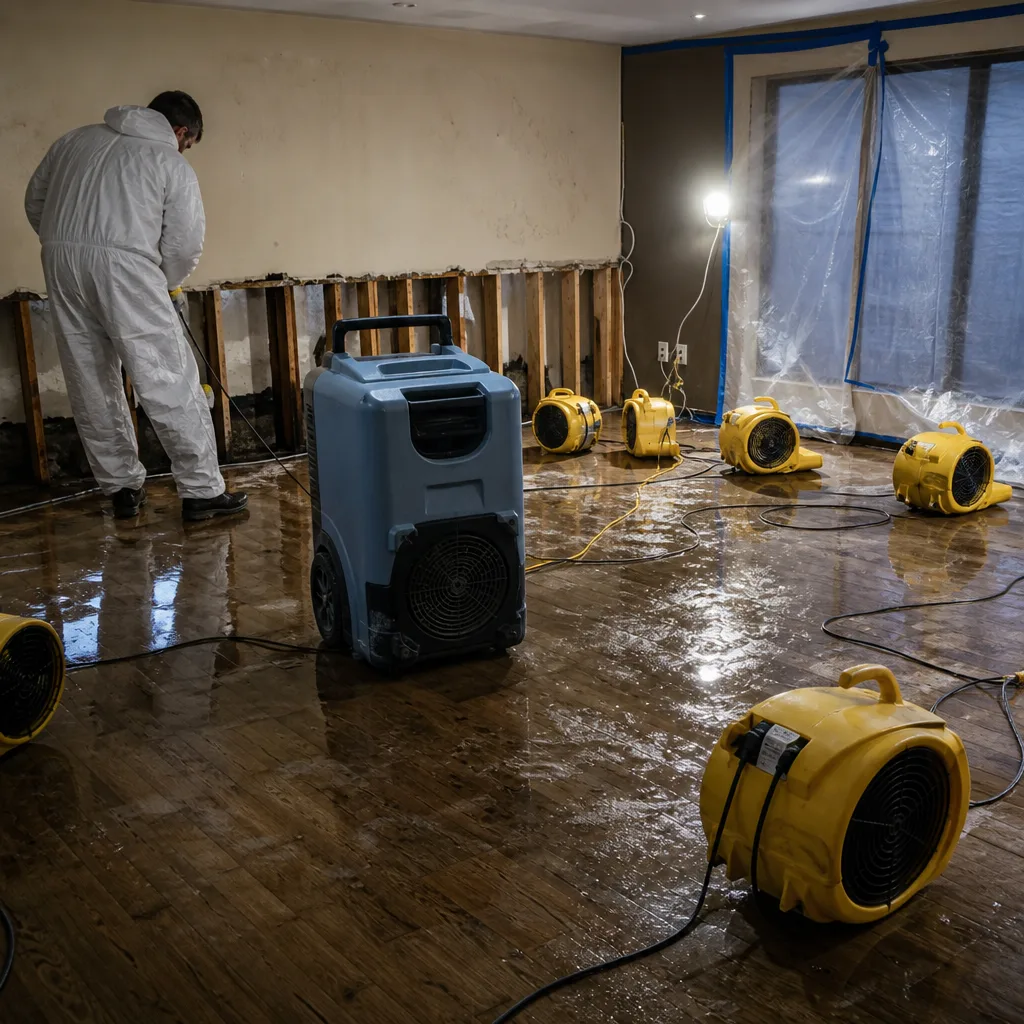
Ceiling & Roof Leak Water Damage
Elmhurst’s flat and low-slope roofs, combined with aging brick parapets and clogged roof drains, produce ceiling damage patterns that look minor on the surface and hide soaked insulation above. We dry the ceiling cavity, not just the stain, and we check for early mold growth before it spreads through the floor joists.
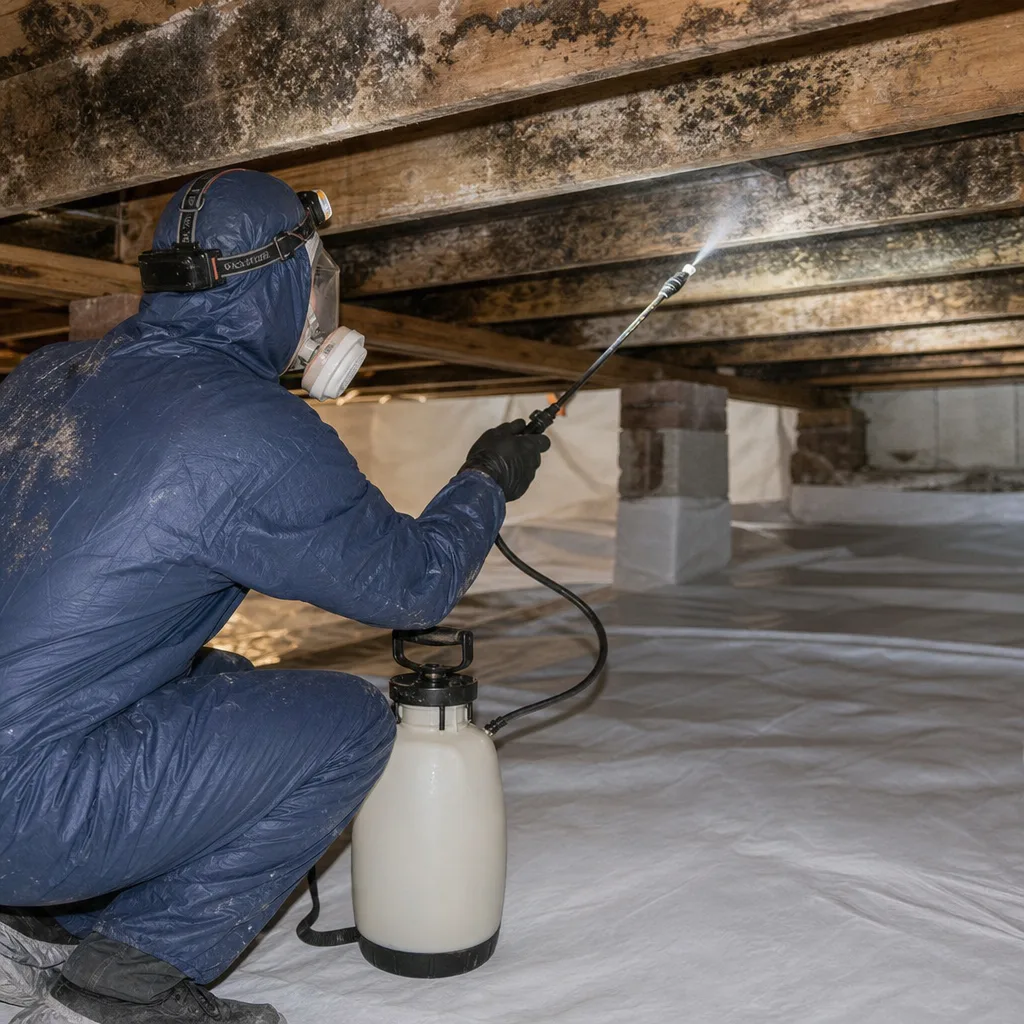
What happens when you call
- 1
A real person answersNo phone trees - you reach a local pro.
- 2
You get an upfront price rangeHonest numbers before anyone is dispatched.
- 3
A background-checked tech heads outLicensed & insured, dispatched right away.
- 4
You approve before work beginsNothing starts until you say go.
Water Damage Restoration Costs in Elmhurst, NY
A typical water damage restoration job in Elmhurst runs between $1,800 and $6,500. Emergency water extraction alone, without drying or rebuild, generally lands between $800 and $1,600 for a standard basement. Structural drying with commercial equipment and daily monitoring usually adds $1,200 to $2,800 depending on square footage and how many rooms are affected. When a Category 3 sewage backup hits a finished basement in 11373 or 11380, the full remediation scope including containment, removal of contaminated materials, sanitization, and drying typically runs $4,000 to $8,500 before rebuild. Rebuild costs depend on finishes: basic drywall and paint start around $2,500, while a full basement apartment restoration can reach $15,000 or more. What moves the price most is time. Water that sits for 48 hours costs more to remediate than water caught in the first hour. Call (716) 452-0798 for a free visual inspection and a written scope before any work begins.
We Also Serve Cities Near Elmhurst
Our crews cover the surrounding Queens neighborhoods daily: Elmhurst to the south, Jackson Heights to the north, Maspeth and Ridgewood to the east, and Long Island City to the west. If you live near the borders, we’re already close by. The same 45-minute response commitment and 24/7 live answer apply across the service area.
Serving Elmhurst, NY - Our Local Coverage Area
We’re based in the Elmhurst area and know this community well. Use the map below to see our service coverage - if you’re nearby, we can almost certainly help.
Elmhurst Water Damage Restoration Questions, Answered
Why do so many Elmhurst water damage calls involve sewage in basement apartments?
Elmhurst sits low in central Queens on a combined sewer system, meaning stormwater and sewage share the same pipes. During heavy rain, the system backs up and pushes Category 3 black water through basement drains and floor toilets in 11373 and 11380. Add in aging cast-iron drain lines in 1920s-1940s rowhouses, and sewage intrusion is one of the most common calls we run in this neighborhood. Call (716) 452-0798 if you’re seeing backup in your basement drains.
Will my insurance cover water damage if my Elmhurst basement apartment is unpermitted?
It depends on your policy and how the unit is classified, but unpermitted basement conversions create real coverage disputes. Many carriers exclude damage to illegal living units or specific plumbing work done without permits. We document the loss thoroughly and work with your adjuster on what the policy actually covers. Our direct insurance billing means we handle that conversation for you.
How fast can mold start on my wet Elmhurst basement drywall?
Mold can begin colonizing on wet drywall within 24 to 48 hours in the warm, humid conditions common in Elmhurst basements during summer. Winter freeze-thaw cycles add moisture but slow growth; summer heat accelerates it. The fastest way to prevent a mold remediation job on top of a water damage job is to get commercial drying equipment running within hours, not days. Call (716) 452-0798 for immediate extraction and drying.
What’s different about drying a pre-war Elmhurst rowhouse versus a newer home?
Pre-war rowhouses have brick structural walls, plaster over lath, and original timber framing that hold moisture differently than modern drywall-on-stud construction. Brick wicks water sideways into shared party walls, and plaster dries slower than gypsum board. We set drying chambers with more air movement and lower humidity targets, and we monitor until the meter confirms the structure is dry, not just until the surface feels dry.
Do I need to worry about mold in my unheated Elmhurst basement during winter freeze-thaw cycles?
Yes, especially in older rowhouses where freeze-thaw stress opens mortar joints and lets water seep through foundation walls. An unheated basement that stays damp through winter creates conditions for mold growth even when the rest of the house feels dry. We inspect for moisture intrusion points and can set drying or waterproofing recommendations before you have a full mold problem on your hands.
How fast can a crew actually get to my Elmhurst property?
We commit to a 45-minute response time from dispatch for emergency water damage calls in Elmhurst. Our crews are stationed in the area and know the streets from Queens Boulevard to Grand Avenue. The dispatcher who answers at 2 a.m. is the same person who confirms the truck is rolling.
Is cleanup enough, or do I need full remediation?
If the water is clean and caught within hours, extraction and drying may be sufficient. If the water is Category 2 or 3, or if it has soaked into drywall and insulation, full remediation is necessary to prevent mold and structural damage. We won’t sell you a remediation scope you don’t need. The free visual inspection gives you an honest answer with moisture readings and photographs.
What should I do in the first 30 minutes after discovering water damage in Elmhurst?
Shut off the water source if you can do so safely. Don’t touch the water if it’s a sewage backup. Don’t run electrical appliances in the wet area. Then call (716) 452-0798. The sooner our extraction crew starts, the less the total job costs and the more of your belongings we can save.
Written by Curt Bowman, Owner at Floodline Restoration Co., serving Elmhurst property owners since 2010.