
Quick Summary
Knowing what to do when facing a burst pipe is essential to halt rapid flooding and prevent tens of thousands of dollars in severe structural damage. Property owners should immediately shut off the main water supply, eliminate electrical hazards, document losses, and call Floodline Restoration Co. for rapid emergency water extraction and structural drying. Readers will gain a clear 5-step action plan to safely isolate plumbing ruptures, protect concealed wall cavities and subfloors, and navigate insurance claims with professional mitigation support from Floodline Restoration Co.
What to Do About a Burst Pipe: Stop Flooding in 5 Fast Steps
When a pipe breaks, every second counts. Between January 2024 and June 2025 alone, State Farm processed over 20,000 frozen pipe and winter water loss claims, paying out more than $628 million with an average claim exceeding $30,000. Knowing exactly what to do when a pipe bursts can mean the difference between a minor cleanup and tens of thousands of dollars in structural repairs.[1]
Safety Warning: Never enter standing water if electrical outlets, cords, or appliances are submerged. Keep everyone away from the flooded area and contact an electrician or emergency services immediately if you suspect an electrical hazard. See also Water Damage Restoration Cost & Pricing in Long Island City – Call Now-10% Off – Same-Day Service – Free Estimate.
What to Do When a Pipe Bursts: Immediate Emergency Action Steps
Emergency action summary: Shut off the main water valve immediately, address electrical hazards safely, open faucets to drain remaining water, check for hidden leaks, and contact a licensed plumber. Contact restoration professionals after the leak is controlled if drying or damage assessment is needed.
-
Step 1: Shut Off the Main Water Supply Immediately
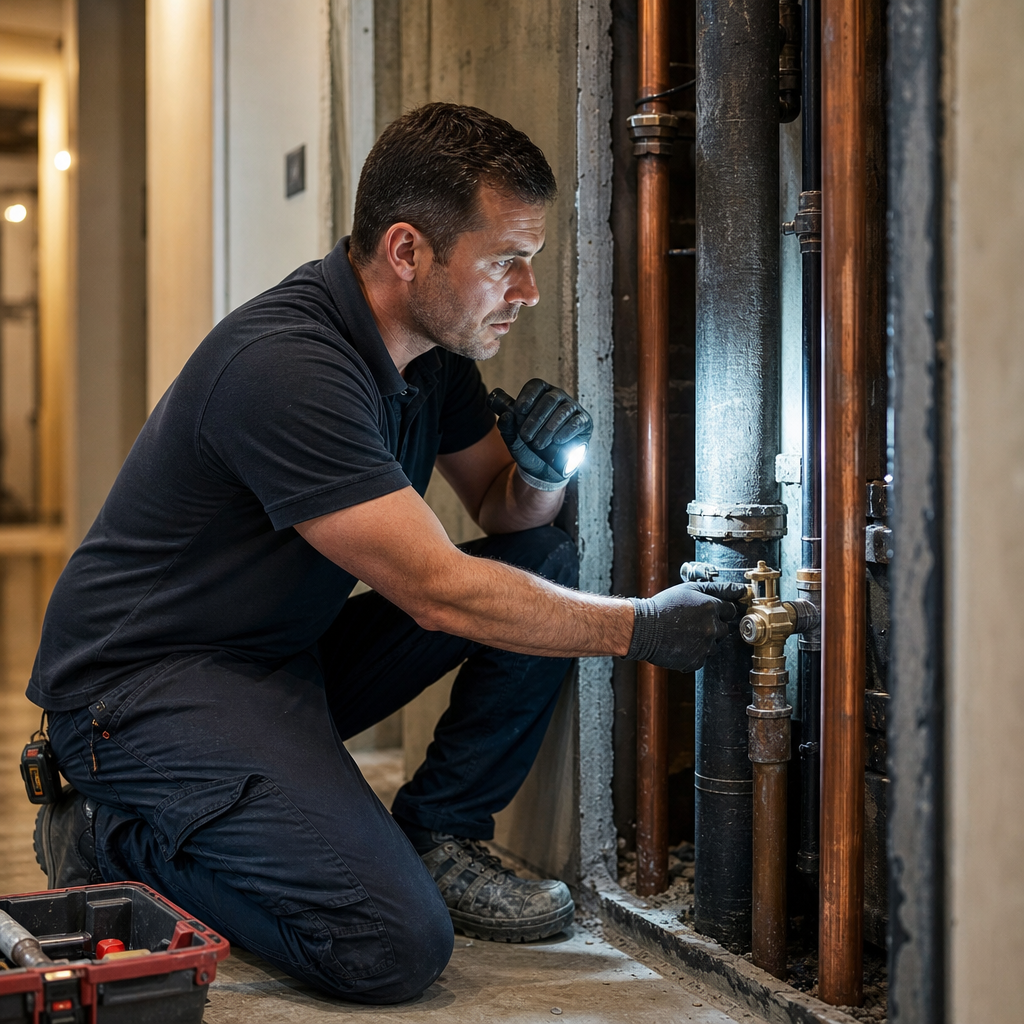
Find your main water shut-off valve and turn it clockwise until it stops. In single-family homes, this valve is usually in the basement, utility closet, or near the water meter at the street. In multi-unit buildings or apartments, check your unit’s internal riser panel or isolation valve under the sink or water heater closet. Acting fast is essential: research from the University of Illinois Extension shows that a crack as small as one-eighth of an inch can dump up to 250 gallons of water into a building in a single day.[4]
-
Step 2: Address Electrical Hazards Safely
Do not enter standing water to reach electrical equipment. Shut off electricity at the circuit breaker only if the panel is safely accessible; otherwise, contact a qualified electrician or emergency services.
-
Step 3: Relieve Residual Line Pressure and Drain Faucets
Opening the lowest faucet and a higher faucet can help drain remaining water and assist drainage.
-
Step 4: Check for Hidden Leaks
Guidance from Clemson University extension specialists advises checking for hidden leaks and contacting a licensed plumber. Inspect adjacent walls, ceilings, and crawlspaces for signs of moisture after shutting off the water.
-
Step 5: Contact a Licensed Plumber
Bring in a licensed plumber right away to assess the break, replace ruptured pipe sections, and test the line before turning the water back on, as advised by Floodline Restoration Co.[5]
Who to Call: Plumber and Restoration Professionals
A burst pipe often involves plumbing repairs and structural mitigation. Contact restoration professionals after the leak is controlled if drying or damage assessment is needed.
The Plumber’s Role: Mechanical Repair and Pipe Replacement
A licensed emergency plumber handles the physical plumbing infrastructure. They cut out split sections of copper, PEX, or cast iron, solder or crimp new fittings, and check line pressure. If your pipes froze during a cold snap, state guidance (including advisories from the Michigan state emergency management division) urges property owners to isolate the main supply immediately. When working with frozen lines, never apply open flames, blowtorches, or propane heaters to the pipe. Open flames and torches create a fire hazard and can damage plumbing.
The Restoration Specialist’s Role: Mitigation and Structural Drying
While the plumber handles the plumbing lines, water mitigation technicians from teams like Floodline Restoration Co. focus on the building structure. They extract standing water, remove saturated materials, and set up drying equipment to remove moisture from structural framing.
Addressing Water Losses
Data from the Insurance Information Institute indicates that between 2019 and 2023, the average homeowners claim for water damage and freezing was approximately $15,400. Getting drying equipment running within the first 24 to 48 hours is the most reliable way to keep repair costs from doubling.[3]
Water Damage Behind Drywall and Ceilings: Repair vs. Replace
Drywall loses its structural integrity quickly when exposed to standing water, especially when trapped behind insulation.
Identifying Concealed Moisture
Water leaking inside a wall cavity often travels down studs and pools on horizontal sill plates, saturating baseboards and spreading into flooring without leaving an obvious stain on the wall surface. Technicians at Floodline Restoration Co. use moisture meters and thermal imaging tools to map moisture footprints behind plaster and sheetrock, confirming whether water has migrated to other rooms.
Ceilings and Saturated Drywall
Industry data shows that water damage and freezing claims affect roughly 1.5 out of every 100 insured homes each year. If an overhead pipe bursts, water collects on top of ceiling drywall and insulation, creating heavy, sagging pockets. If you notice sagging or bubbling ceilings, keep people away from the unstable area and contact qualified professionals to assess and handle the hazard safely.
Restoring Flooring and Subfloors After a Pipe Break
Need what to do burst pipe?
We’re available now - call for a fast, free estimate.
According to the Michigan Committee for Severe Weather Awareness, approximately 250,000 homes are damaged by frozen pipes each winter. Subflooring often takes the brunt of this damage. When water sits on hardwood, engineered planks, or laminate, moisture seeps through the joints into the underlying plywood or OSB subfloor. While surface water can be mopped up quickly, experts at Floodline Restoration Co. note that trapped moisture underneath can cause cupping, crowning, and delamination if not properly dried.[2]
Managing Vertical Riser Leaks in Multi-Unit Buildings
Pipe bursts in multi-unit buildings present unique considerations when water travels through shared utility shafts or party walls.
General considerations for multi-unit properties include:
- Notifying building management or maintenance immediately to isolate the water supply.
- Alerting residents in units directly below or adjacent to the leak so they can move valuables out of the water path.
- Documenting the point of origin and water migration for building management and insurance records.
Does Insurance Cover Burst Pipe Damage? Navigating the Claims Process
Homeowners insurance generally may cover sudden and accidental burst-pipe water damage, subject to policy terms, deductibles, exclusions, and maintenance-related limitations.
Insurers often review property maintenance history. If a pipe froze due to lack of adequate heat during an unheated vacancy, or if a leak went unaddressed for an extended period, coverage may be limited or denied based on policy terms.
Documentation for Claims
To protect your claim, build a clean record of the event from hour one:
- Take clear, date-stamped photos and videos of standing water, damaged personal property, and the ruptured pipe before cleanup starts.
- Keep the damaged section of pipe that the plumber removes; insurance adjusters frequently ask to inspect the failed fitting.
- Save all work orders, itemized invoices, and records provided by contractors like Floodline Restoration Co.
Frequently Asked Questions About Burst Pipe Emergencies
What should I do first when a pipe bursts?
First, shut off the main water valve immediately. Next, address electrical hazards safely, open faucets to drain remaining water, check for hidden leaks, and contact a licensed plumber. Contact restoration professionals after the leak is controlled if drying or damage assessment is needed.
Can I use a torch to thaw frozen pipes?
No. Open flames and torches create a fire hazard and can damage plumbing. Use safer methods such as a hair dryer, heat tape, or warm towels instead.
Does standard homeowners insurance cover burst pipe water damage?
Homeowners insurance generally may cover sudden and accidental burst-pipe water damage, subject to policy terms, deductibles, exclusions, and maintenance-related limitations.
Need what to do burst pipe?
We’re available now - call for a fast, free estimate.
Sources
- What major winter storm Fern could mean for your money – cnbc.com (2025)
- Preventing Frozen Pipes – State of Michigan – michigan.gov
- gethydrion.com › news › water-damage-statistics-2026Water Damage Statistics 2026: US & European Data - Hydrion – gethydrion.com (2026)
- What to Do When a Pipe Bursts in Your Home – nationwide.com (2024)
- Frozen pipes can cause major damage - here's how to prevent them – newsnationnow.com
Related reading: Water Damage Restoration Cost – Call Now-10% Off – Same-Day Service – Free Estimate
Related reading: Average Cost Apartment Flood Restoration Lic | 10% Off & Free Estimate | Same-Day Service
Related reading: Water Damage Cleanup Cost – Call Now-10% Off – Same-Day Service – Free Estimate
Frequently Asked Questions
How quickly should professional water mitigation begin after a pipe bursts?
Structural drying and water extraction should ideally begin within 24 to 48 hours to prevent mold colonization, drywall collapse, and permanent subfloor warping. Floodline Restoration Co. provides rapid 45-minute on-site emergency response to extract standing water and stabilize building materials before damage escalates.
How do restoration contractors locate hidden moisture inside walls and ceilings?
Technicians use non-invasive tools such as infrared thermal imaging cameras and digital moisture meters to detect water trapped inside wall cavities and subflooring. Floodline Restoration Co. maps these concealed moisture footprints precisely, allowing targeted structural drying without unnecessary demolition of dry materials.
What specific documentation is required to support a burst pipe insurance claim?
Insurers require date-stamped photos of the flooding, the physical section of ruptured pipe retained by your plumber, and itemized repair logs. Floodline Restoration Co. assists property owners throughout the claims process by supplying comprehensive moisture readings, dry-out logs, and itemized mitigation invoices.
About the author
 |
David Harrison David is a certified property restoration specialist with over 12 years of experience in emergency mitigation and structural drying. He holds a degree in Construction Management from the New York Institute of Technology and is an IICRC-certified Master Water Restorer. David specializes in translating complex restoration protocols into actionable advice for property owners navigating unexpected disasters. |
Water damage, flood, or mold emergency?
We’re available now - call for a fast, free estimate.
Call Now - Free Estimate