
Quick Summary
Water damage restoration cost typically ranges from $1,342 to over $15,000 based on water contamination categories, material saturation, and required structural drying times. Floodline Restoration Co. protects property owners from predatory pricing and unnecessary demolition by providing upfront visual inspections, line-item estimates, and direct insurance support. Readers will understand how mitigation services are priced across each operational stage and learn how to secure an accurate, itemized scope of work without overpaying.
Water Damage Restoration Cost: How to Avoid Overpaying
When clean water leaks through a ceiling or a sewer line backs up into a basement, property owners often face an immediate financial question: what is this going to cost? According to ConsumerAffairs citing HomeAdvisor, indicative estimates place baseline water damage restoration between $1,342 and $6,044, while severe water damage can exceed $15,000. According to specialists at Floodline Restoration Co., real-world pricing depends on water depth, contamination category, structural assembly materials, and drying times.[1]
According to the Insurance Information Institute, water damage and freezing accounted for roughly 22 percent of all homeowners insurance claims in 2007 with an average claim of $5,531, rising to an average severity of $15,400 across 1.50 claims per 100 insured homes by 2023. The Insurance Information Institute includes covered mold-related damage within its water damage and freezing category. However, repair bills often climb higher than necessary due to vague initial estimates, unnecessary demolition, and hidden equipment charges.[2]
Understanding how water mitigation is priced gives property owners the leverage to protect their structures without overpaying.
What Is the Average Water Damage Restoration Cost?
What is the average water damage restoration cost in brief? ConsumerAffairs, citing HomeAdvisor, provides an indicative estimate for baseline mitigation jobs between $1,342 and $6,044, while severe water damage can exceed $15,000. Total expenses stem directly from the category of water (clean, grey, or black), how deep the water sat, how long building materials remained saturated, and whether those materials can be dried in place or must be replaced.[3]
Restoration pricing is not a fixed one-size-fits-all number. Pricing factors break down into primary operational stages: water extraction, structural dehumidification, and post-drying reconstruction.
Typical Cost Differences for Clean, Grey, and Black Water
Contamination category affects labor, protective procedures, disposal, and pricing.
| Water Category | Relative Cost Level | Source Examples & Scope Considerations |
|---|---|---|
| Category 1 (Clean Water) | Lowest baseline cost | Supply line bursts, sink overflows, falling rainwater. Materials can often be dried if addressed promptly. |
| Category 2 (Grey Water) | Moderate cost | Washing machine discharge, dishwasher leaks, sump pump failures. Contamination category affects labor, protective procedures, disposal, and pricing. |
| Category 3 (Black Water) | Highest baseline cost | Sewage backups, river water. Contamination category affects labor, protective procedures, disposal, and pricing. |
What Does Water Damage Restoration Cost by Service Type?
Every restoration project breaks down into distinct phases. Understanding standard line items helps property owners review quotes and spot padded invoices before work begins.
| Restoration Service Type | Cost Determinants |
|---|---|
| Moisture Assessment | Inspection scope, moisture mapping |
| Emergency Water Extraction | Gallons extracted, standing water depth, extraction equipment access |
| Structural Drying | Dehumidification equipment, air movement, and duration on-site |
| Mold Remediation | Containment zones, antimicrobial treatment, air filtration |
| Sewage & Biohazard Decontamination | Safety staging, waste disposal, disinfection |
| Reconstruction & Build-Back | Drywall, subfloor, trim, and flooring installation |
Square-Foot Calculators vs. Room-by-Room Scopes
Online square-footage calculators often generate inaccurate expectations. They assume flat open spaces and uniform materials. Real buildings contain layered flooring, interior wall cavities, plumbing chases, and varying ceiling heights.
FEMA notes that its flood-damage estimates are scenario-based figures for specified home sizes and water depths, rather than universal prices for private restoration projects. A reliable contractor like Floodline Restoration Co. inspects room by room, measuring moisture content inside building materials before writing a line-item estimate based on standard industry pricing software.[5]
Drywall, Ceilings, and Structural Cavities: Repair vs. Replace Costs
Need water damage restoration cost?
We’re available now - call for a fast, free estimate.
Drywall and ceiling repairs can add significantly to restoration bills depending on water exposure and material damage.
Ceiling Sagging and Overhead Pipe Burst Mitigation
When an overhead pipe leaks, water pools on top of ceiling drywall and insulation. If cellulose or fiberglass insulation remains saturated for extended periods, the ceiling material degrades, which may require removal.
Evaluating Wall Assemblies
FEMA states that 3 inches of floodwater can require replacement of drywall, baseboards, carpets, furniture, and other materials, showing that costs depend heavily on water depth and building assemblies.
Hardwood Floors and Subflooring: Salvaging vs. Full Tear-Out
Wood flooring and subflooring present unique restoration challenges when exposed to moisture.
Cupping, Crowning, and Moisture Trapped in Subfloors
When hardwood absorbs moisture from below, the bottom of each plank expands faster than the top, causing the edges to curl upward (cupping). If water sits too long, the wood fibers compress against each other (crowning).
Flooded Basements: Managing Sub-Grade Intrusion
Basement water issues present unique challenges because moisture interacts directly with structural foundations, perimeter walls, and building mechanics.
Basement Extraction and Sump Pump Failures
When sump pumps fail or storm runoff overwhelms drainage lines, basements can fill with water rapidly. Emergency extraction must happen promptly to protect mechanical and electrical systems.
Porous Building Materials and Foundation Seepage
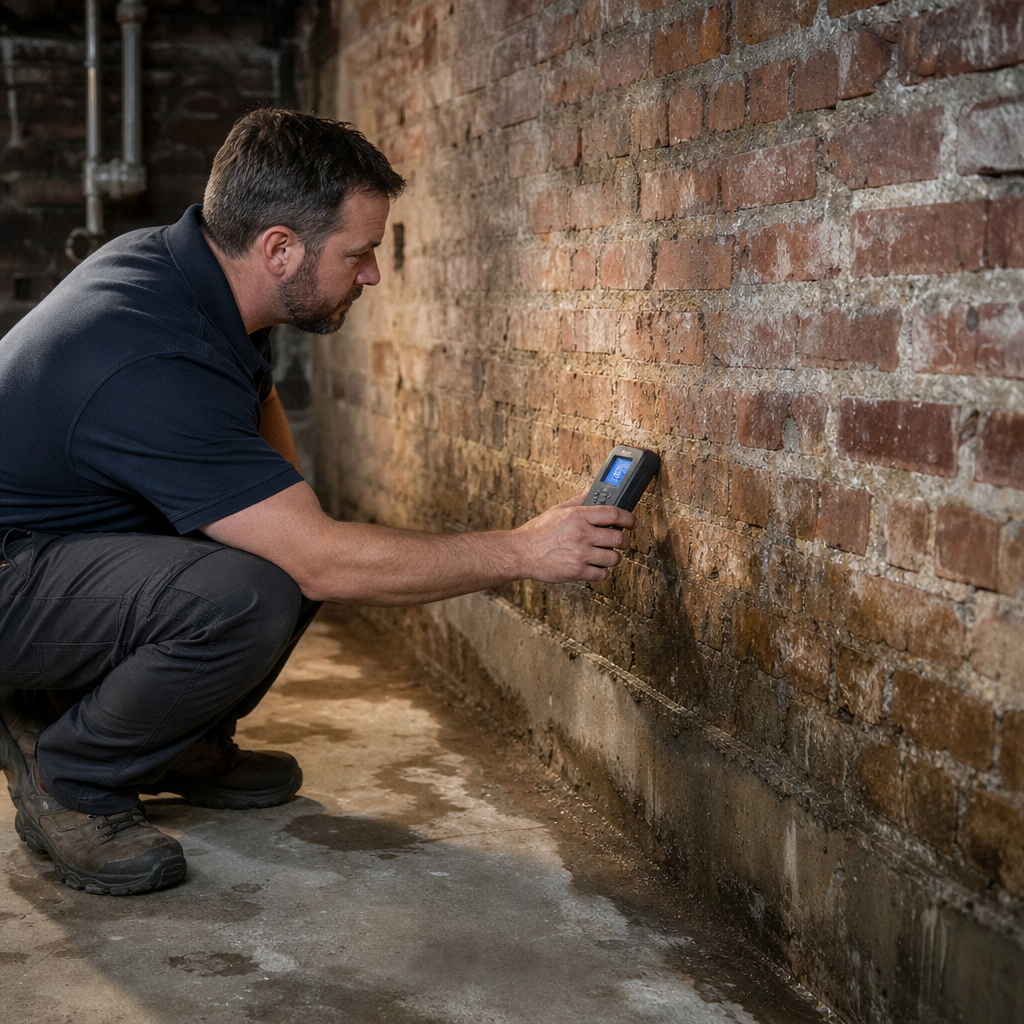
Older residential and commercial properties often feature exposed brick, stone masonry, and concrete slabs. As noted by Floodline Restoration Co., these porous materials absorb water, requiring thorough structural drying to remove trapped moisture.
Does Property Insurance Cover Water Damage Restoration?
Need water damage restoration cost?
We’re available now - call for a fast, free estimate.
Understanding insurance coverage helps property owners manage potential out-of-pocket costs, though actual coverage always depends on the specific policy, deductible, exclusions, limits, and cause of loss.
Covered Perils vs. Excluded Events
Standard homeowners and commercial property policies often cover water damage that is sudden and accidental, subject to policy terms, deductibles, exclusions, and limits. Examples may include:[4]
- Burst frozen pipes during sudden winter temperature drops
- Supply line breaks beneath sinks or behind toilets
- Sudden appliance failures, such as water heater tanks bursting
- Fire sprinkler system malfunctions
Coverage is generally denied for gradual leaks, rot, or long-term neglected maintenance. Rising floodwaters from heavy coastal storms or overflowing rivers are typically excluded under standard property insurance and require a separate flood insurance policy, such as through the National Flood Insurance Program (NFIP) or private flood insurers.
Navigating Claims Without Billing Surprises
To support an insurance claim, consider following these documentation steps:
- Immediate Photo and Video Logs: Document standing water, the initial source of failure, and damaged property before items are altered.
- Line-Item Pricing: Ensure your restoration contractor provides an itemized estimate outlining specific services and equipment.
- Moisture Logs: Ensure the mitigation team tracks moisture readings and drying progress throughout the restoration project.
How to Choose a Transparent Restoration Contractor
When emergency water enters a building, taking time to verify a contractor protects your property from predatory practices.
Industry Certifications and Direct Technicians
Ensure that technicians hold relevant industry credentials, such as certifications from the Institute of Inspection, Cleaning and Restoration Certification (IICRC). As Floodline Restoration Co. emphasizes, qualified credentials show the team understands proper structural drying standards.
Red Flags to Avoid
- Lead-Broker Networks: Beware of generic toll-free dispatch services that sell emergency calls to unvetted third parties.
- Lump-Sum Quotes: Avoid accepting a single flat-price bid that does not list specific services, labor categories, and equipment charges.
- Premature Demolition: Be cautious of contractors who begin aggressive demolition without first assessing moisture levels to determine whether materials can be salvaged.
Frequently Asked Questions About Water Damage Restoration Costs
How much does water damage restoration cost on average?
According to ConsumerAffairs citing HomeAdvisor, baseline residential mitigation jobs typically range between $1,342 and $6,044 as an indicative estimate, while severe water damage can exceed $15,000.
Does homeowners insurance cover water damage restoration costs?
Coverage depends on the specific policy, deductible, exclusions, limits, and cause of loss. Standard policies often cover sudden and accidental water damage, such as a burst pipe, while gradual leaks and overland flooding are typically excluded.
How is water damage repair cost calculated per square foot?
A reliable universal per-square-foot price cannot be stated. Estimates depend on affected area, water category, materials removed, drying equipment and duration, labor, disposal, and reconstruction.
What is the difference in cost between clean, grey, and black water cleanup?
Clean water (Category 1) generally involves lower costs when handled promptly. For grey water (Category 2) and black water (Category 3), contamination category affects labor, protective procedures, disposal, and pricing.
How much does it cost to repair water-damaged ceilings versus floors?
Repair costs vary depending on the extent of saturation, the materials involved, and whether assemblies can be dried in place or require removal and reconstruction.
Can I clean up water damage myself or do I need a professional?
While small surface spills can often be handled independently, structural water intrusions typically require professional drying equipment and moisture measurement tools to address moisture trapped within building assemblies.
Protect Your Property With Clear, Upfront Pricing
As advised by Floodline Restoration Co., do not let an emergency lead to inflated restoration bills or unnecessary demolition. A detailed visual inspection, moisture assessment, and itemized scope of work ensure your property is dried thoroughly, safely, and at a fair price.
Need water damage restoration cost?
We’re available now - call for a fast, free estimate.
Sources
- Flood Insurance and the NFIP – fema.gov
- View PDF – fema.gov
- STORM WATER MANAGEMENT – cincinnati-oh.gov
- Average Insurance Payout for Water Damage (2026) – consumershield.com (2026)
- Restoration Cost Statistics (2026) – rapideyeinspections.com (2026)
Frequently Asked Questions
How many days does structural drying take and how does that impact restoration costs?
Structural drying typically takes three to five days depending on material saturation, humidity, and the porosity of affected building assemblies. Floodline Restoration Co. performs daily moisture mapping to demobilize commercial dehumidifiers and air movers as soon as dry standards are met, preventing unnecessary daily equipment rental fees.
What happens if an insurance adjuster's estimate is lower than the restoration quote?
Discrepancies usually happen when initial adjuster scopes miss hidden moisture trapped behind wall cavities or beneath subflooring. Floodline Restoration Co. eliminates out-of-pocket friction by submitting detailed line-item moisture logs and industry-standard documentation directly to your carrier to approve necessary supplemental costs.
Can I stay inside my property during the water damage restoration process?
Occupants can generally remain home during minor Category 1 clean water dryouts if living spaces and utilities remain functional. However, Floodline Restoration Co. recommends temporary relocation if Category 3 black water contamination is present or if widespread industrial air movers and containment barriers restrict access to essential rooms.
About the author
 |
Sarah Miller Sarah Miller is a certified water damage restoration specialist with over eight years of experience working closely with property owners in the New York metropolitan area. She holds a B.S. in Construction Management from Pratt Institute and specializes in transparent cost estimation and structural mitigation protocols. Sarah is passionate about helping clients navigate complex insurance claims and restoring their properties efficiently. |
Water damage, flood, or mold emergency?
We’re available now - call for a fast, free estimate.
Call Now - Free Estimate