
Quick Summary
Navigating water damage restoration costs in Long Island City is often complicated by open-ended hourly fees and unexpected demolition charges during urgent emergencies. Floodline Restoration Co. mitigates expenses by utilizing non-invasive moisture mapping and in-place drying technology to preserve building materials rather than performing costly tear-outs. Property owners will understand standard industry pricing factors across clean water, mold, and black water categories while learning how to secure an upfront, itemized scope of work.
Water Damage Restoration Costs and Price Factors
Figuring out what water cleanup should actually cost in Long Island City usually starts under stressful circumstances: standing water on a hardwood floor, water dripping through a ceiling, or a basement taking on storm runoff. Water damage is among the most frequent property insurance claims in the country, affecting nearly 1 in 60 insured homes each year. The last thing any property owner needs during an emergency is an opaque bill filled with surprise line items and open-ended hourly fees.
Floodline Restoration Co. provides pricing estimates based on on-site diagnostics before work starts. Our 24/7 dispatch team serves residential lofts, apartment complexes, brownstones, and commercial facilities across western Queens.
Water Damage Restoration Costs and Price Estimates
Water damage restoration costs in brief: According to general industry estimates, standard clean water extraction and drying usually ranges between $1,200 and $4,500 per room. Full structural restoration for larger or contaminated losses typically runs from $3,000 to $15,000 across the industry, depending on the water category, building materials, and total dry time. Floodline Restoration Co. provides on-site visual assessments throughout Long Island City to give you an itemized, written scope before drying begins.
Real-world water damage restoration pricing depends on three main variables: the contamination category of the water, how far moisture has migrated into the structure, and whether building materials can be dried in place. Generic online estimators cannot account for the way water travels through multi-story buildings or dense urban architecture.
Upfront Pricing Without Hidden Equipment Surcharges
National square-footage calculators frequently miss the mark in Long Island City. Century-old brick masonry, layered subfloors, concrete slabs, and high-rise freight access all affect how air moves and how technicians set up drying systems. In most urban water losses, unnecessary demolition (not the runtime of the drying equipment) is the single largest driver of inflated bills. When technicians rush to rip out salvageable plaster, hardwood, and custom millwork, replacement expenses skyrocket. Targeted, in-place structural drying focuses on saving those assemblies first.
Why Written Scopes Protect Property Owners
According to the Insurance Information Institute, roughly 1 in 60 insured homes files a water damage or freezing claim annually. When you are managing a flooded apartment restoration cost in Long Island City, open-ended billing creates needless stress. Instead of dealing with unpredictable water mitigation hourly cost figures from contractors working on vague terms, property owners should demand a clear, itemized scope of work before extraction and drying equipment is turned on.
Emergency Water Damage Restoration in Long Island City
Emergency restoration in Queens requires fast containment, high-capacity extraction, and calibrated drying systems to stabilize residential units, retail spaces, and industrial buildings. Rapid stabilization prevents water from traveling down utility risers and shared party walls, protecting both the building envelope and your budget.
Signs of Structural Water Intrusion
Water follows gravity and capillary action through subfloors and wall cavities, making early detection critical. Property owners should watch for:
- Cupping or crowning in hardwood floors and swelling around baseboards
- Peeling paint, bubbling wallpaper, or soft drywall
- Sagging ceiling panels and dark water rings beneath upper-floor plumbing lines
- Moisture pooling along foundation walls, utility chases, or elevator pits
Rapid On-Site Response
The speed of response directly dictates total repair costs. Insurance Information Institute data shows that the average water damage and freezing claim paid by insurers was $13,954 between 2018 and 2022.[3]
To reduce downtime and prevent secondary damage, Floodline Restoration Co. follows a direct response workflow:
- Live 24/7 Dispatch: Direct communication with response coordinators stationed for travel across Queens and northern Brooklyn.
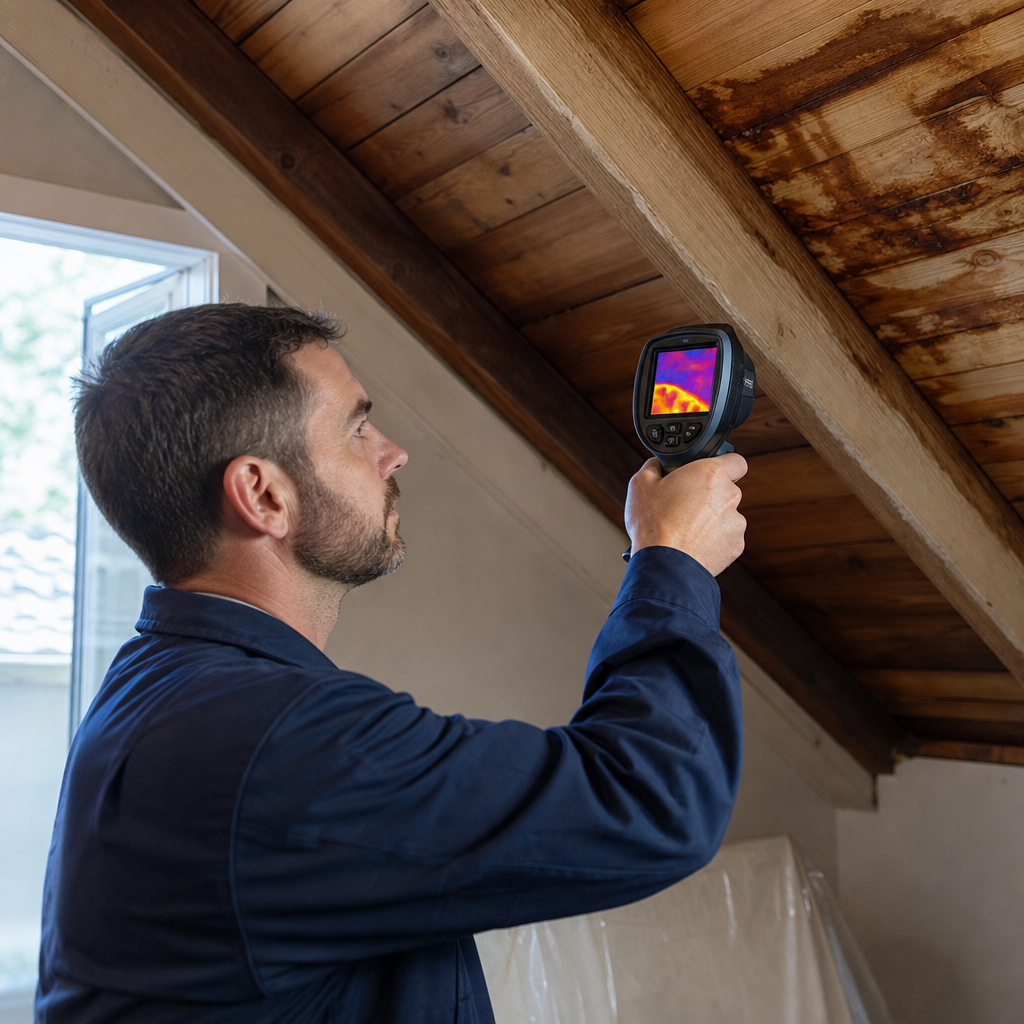
- Moisture Mapping: Infrared thermal cameras and non-invasive moisture meters trace hidden water behind walls and under floors before anyone cuts into drywall.
- Focused In-Place Drying: Industrial extraction paired with targeted air movement helps dry structural timber and subflooring in place, reducing overall rebuild costs compared to full gut-outs.
Whether you need an emergency water removal estimate for a ground-floor retail shop or a complete flood damage repair scope for a residential building, upfront communication keeps expenses predictable.
Flood Damage Restoration for Ground Floor and Basement Losses
Ground-floor and basement water events in Long Island City often involve high water tables, surface runoff, or storm surges. Stabilizing below-grade areas requires heavy-duty pumping, thorough sanitization, and continuous psychrometric monitoring to ensure concrete and framing dry thoroughly.
East River and Storm Surge Challenges
Properties near the East River and Newtown Creek face unique risks during heavy weather events. Surge water often carries silt, street runoff, and biological contaminants deep into subterranean spaces. Having a local team manage extraction prevents costly delays and secondary contamination.
Preventing Permanent Structural Degradation
Protecting historic Queens masonry and structural timbers requires controlled drying rather than indiscriminate gutting:
- Submersible Pumping: High-volume pumps evacuate bulk water quickly to relieve hydrostatic pressure against foundation walls.
- Cavity and Subfloor Drying: Positive-pressure air delivery and desiccant dehumidifiers remove moisture from deep within structural framing.
- Daily Moisture Tracking: Technicians record psychrometric data daily until all structural materials reach dry standards.
Mold Remediation: Inspection and Sanitization
Professional mold remediation stops active fungal growth, cleans contaminated air, and addresses the underlying moisture source. Because mold spores can germinate within 24 to 48 hours in damp environments, immediate intervention keeps cleanup costs manageable by containing the issue before it spreads through HVAC systems.
Identifying Hidden Moisture and Microbial Growth
Trapped moisture behind baseboards, under cabinets, and within ceiling plenums quickly leads to microbial growth. Thermal imaging helps locate hidden damp spots without invasive demolition, keeping remediation focused and cost-effective.
HEPA Filtration and Containment Barriers
To capture airborne spores and prevent cross-contamination into clean areas of the building, technicians use a disciplined containment process:
- Isolation Barriers: Setting up poly containment zones under negative air pressure using commercial HEPA air scrubbers.
- Antimicrobial Treatment: Cleaning structural framing with EPA-registered botanical antimicrobials to eliminate fungal roots.
- Clearance Verification: Checking moisture levels and particulate counts to confirm the space meets strict indoor air quality standards.
Sewage Cleanup and Hazardous Black Water Extraction
Need floodline restoration water damage price?
We’re available now - call for a fast, free estimate.
Category 3 black water events (such as municipal sewer backups or outdoor floodwaters) introduce dangerous biological contaminants that require immediate containment, personal protective equipment, and hospital-grade sanitization.
Health Risks of Category 3 Black Water
Unlike clean supply-line leaks, black water carries bacteria, viruses, and parasites such as E. coli and salmonella. In multi-family or mixed-use buildings, these biohazards can quickly spread through shared drain stacks or subfloor cavities. According to FEMA and the National Flood Insurance Program, just 1 inch of water in a typical home can cause up to $25,000 in damage, making swift, professional containment essential.[2]
Code-Compliant Sanitization and Disposal
Handling raw sewage requires strict adherence to safety standards:
- Isolation: Sealing off the contaminated zone under negative pressure to prevent airborne pathogen spread.
- Controlled Removal: Safely bagging and disposing of porous items that cannot be sanitized, such as saturated carpet padding or low-density drywall.
- Disinfection: Deep-cleaning all non-porous and semi-porous surfaces with hospital-grade disinfectants.
- Discreet Waste Transport: Using sealed containment bins and unmarked vehicles when client privacy is a priority.
Fire and Smoke Damage Restoration and Water Mitigation
Properties recovering from a fire often suffer more structural damage from firefighting water than from the flames themselves. Floodline Restoration Co. manages both issues simultaneously, extracting extinguishment water while neutralizing corrosive soot before it permanently stains building finishes.
Tackling Corrosive Soot and Water Extinguishment Runoff
Mitigation after fire suppression requires a coordinated approach:
- Immediate extraction of standing water to prevent subfloors and framing from warping under prolonged exposure.
- Soot capture using dry-chemical sponge techniques before moisture locks acidic residues into paint and tile.
Deep Odor Neutralization and Structural Cleaning
Hydroxyl generators and thermal fogging neutralize complex smoke compounds embedded in brick, plaster, and timber, removing stubborn odors without masking agents.
Burst and Frozen Pipes: Winter Water Damage Solutions
Sub-zero winter weather in New York puts tremendous stress on uninsulated plumbing lines in exterior chase walls, brownstone crawl spaces, and commercial draft corridors. When a pressurized pipe bursts, hundreds of gallons can pour through multiple floors within minutes.
Freeze-Thaw Vulnerabilities in Urban Plumbing
Severe winter weather and frozen pipe failures represent a major source of residential and commercial property claims. Quick response stops water migration before it degrades high-value finishes throughout lower units.
Cavity Drying Without Excessive Wall Removal
Rather than tearing out custom tile, cabinetry, and plaster walls, technicians use specialized cavity-drying systems. These units direct warm, dry air into wall cavities through small, discreet access points, drying structural studs and subflooring while keeping expensive millwork intact.
Basement Flooding in Long Island City Commercial and Residential Properties
Basements in converted industrial lofts and residential buildings face heavy hydrostatic pressure from high groundwater levels. Rapid pumping and high-volume dehumidification stabilize concrete slabs and foundation footings before moisture causes long-term structural issues.
Sump Pump Failures and Rising Subsurface Water
Mechanical sump pump failures during heavy rainstorms allow subsurface water to enter rapidly. FEMA data indicates that 1 inch of water can cause up to $25,000 in damage. Floodline Restoration Co. uses truck-mounted extraction units to clear bulk water quickly, relieving pressure on the foundation.
Subfloor Drainage and Dehumidification
Technicians combine heavy-duty submersible pumps with Low-Grain Refrigerant (LGR) and desiccant dehumidifiers. This setup draws moisture out of porous concrete and masonry, preventing chronic dampness and efflorescence.
Roof Leaks and Storm Damage from East River Weather Events
Coastal storm systems along the East River frequently push rain under roof flashings and membrane seams. In multi-story buildings, water travels downward along vertical utility chases and structural beams, often surfacing several floors below the initial breach.
Wind-Driven Rain and Multi-Story Ceiling Infiltration
Severe weather, wind, and water infiltration account for frequent property damage claims. Instead of opening full ceiling spans on every floor, technicians use thermal diagnostics to track the exact moisture path, opening only the specific areas needed for structural drying.
Emergency Tarping and Overhead Drying
Stopping active roof leaks and overhead water intrusion involves four clear steps:
- Tarping and Sealing: Securing damaged roof membranes to halt incoming water immediately.
- Overhead Cavity Drying: Injecting dry air into ceiling spaces to dry joists without removing entire ceiling assemblies.
- Insulation Management: Extracting saturated insulation that holds water against ceiling drywall.
- Targeted Dehumidification: Running high-capacity drying equipment through vertical shafts to pull moisture from masonry and timber.
Sewage Backups and Municipal Drain Overflow Mitigation
Combined municipal storm and sewer lines in New York City can become overwhelmed during intense rainfall, pushing backflow into ground-floor businesses and garden apartments. Fast biohazard cleanup restores safety while minimizing structural tear-out.
Combined Sewer Surcharges During Heavy Rains
When combined sewers surcharge, contaminated water enters floor drains and low plumbing fixtures. Selective extraction and strict containment allow technicians to remove only non-salvageable porous items, protecting the rest of the property from secondary contamination.
Antimicrobial Washdown and Air Scrubbing
Complete decontamination follows three main phases:
- Disposal of saturated porous materials in compliance with municipal health codes.
- Thorough application of hospital-grade antimicrobials paired with HEPA air scrubbing.
- ATP surface testing to verify that all surfaces meet objective cleanliness and sanitation standards.
Mold After Water Damage: Stopping Secondary Structural Decay
Need floodline restoration water damage price?
We’re available now - call for a fast, free estimate.
Preventing mold growth after a leak or flood comes down to controlling the drying environment within the first 48 hours. When moisture stays trapped in subflooring or wall cavities, mold spores multiply and can compromise structural timbers over time.
The Critical 48-Hour Drying Window
Mold can begin growing on damp drywall and wood within 24 to 48 hours of water exposure. Detailed moisture mapping and psychrometric tracking ensure materials reach dry baseline levels before microbial issues develop.
Structural Timber and Subfloor Protection
Proper drying reaches deep into dense framing and tongue-and-groove subfloors. Technicians apply penetrating antimicrobial coatings to exposed framing, providing lasting protection against rot and fungal development.
Fire and Smoke Damage Cleanup: Soot, Odor, and Water Extraction
Cleaning up after a fire requires managing water, soot, and smoke odor simultaneously. Extinguishment water mixes with soot to create an acidic residue that can quickly etch stone, glass, and metal fixtures if left unaddressed.
Handling Wet Soot and Acidic Residues
Secondary water and smoke damage frequently compounds direct fire damage in residential properties. Neutralizing these acidic residues immediately prevents permanent damage to underlying surfaces.
Preserving Building Systems and Air Ducts
Technicians protect the rest of the building through targeted decontamination:
- Water Removal: Extracting extinguishment water from floors, elevator shafts, and basements.
- Duct Isolation: Sealing HVAC registers to stop smoke particles from circulating through shared air paths.
- Odor Elimination: Using commercial hydroxyl systems to break down smoke molecules inside porous building materials.
Parts and Components We Repair Across Long Island City Properties
Floodline Restoration Co. restores structural elements throughout Queens and Brooklyn, prioritizing targeted in-place drying over aggressive demolition. According to professional restoration standards, drying building materials in place can salvage clean-water-affected components when mitigation starts promptly.
Drywall and Ceilings
Moisture meters and thermal imaging identify the exact boundary of wet drywall, allowing us to dry sound gypsum in place and remove only structurally compromised or contaminated sections.
Hardwood, Engineered, and Laminate Floors
Specialized vacuum drying panels extract water directly through hardwood planks, reversing minor cupping and saving original flooring wherever possible.
Subfloor and Structural Joists
Desiccant dehumidifiers pull deep-seated moisture from tongue-and-groove subfloors and heavy support beams, preventing long-term warping.
Carpet and Underlayment Padding
For clean water losses, commercial carpets can often be extracted, sanitized, and dried in place, replacing only the porous padding underneath.
Kitchen and Bathroom Cabinetry
Precision toe-kick and cavity drying systems blow warm, dry air behind base cabinets, saving expensive stone countertops and custom millwork from removal.
Wall and Attic Insulation
Saturated batt or loose-fill insulation is extracted cleanly, followed by thorough drying and sanitization of the surrounding wall cavity.
HVAC Ductwork and Ventilation Systems
Duct systems are inspected, dried, and sanitized to ensure spores and soot do not travel into living spaces.
Basements, Crawl Spaces, and Masonry Foundations
High-capacity dehumidifiers draw bound moisture from porous concrete slabs, brick party walls, and mortar joints.
What Does Water Damage Restoration Cost?
Water damage restoration cost overview: Total pricing depends on contamination level, affected square footage, and required equipment runtime. Industry estimates for standard clean water drying run from $1,200 to $4,500 per room. Mold remediation typically ranges from $1,500 to $6,000, while sewage cleanup costs between $2,000 and $10,000 according to industry data. Full structural insurance claims generally fall between $3,000 and $15,000 across the industry. Contact Floodline Restoration Co. for an itemized written estimate based on an on-site assessment.[1]
A reliable restoration estimate reflects measured moisture levels and structural requirements rather than rough square-foot assumptions. Clear documentation helps you and your insurance provider understand every line item.
Detailed Breakdown of Restoration Price Ranges
| Service Category | Typical Industry Price Range | Primary Cost Drivers | Standard Approach |
|---|---|---|---|
| Clean Water Drying (Cat 1) | $1,200 – $4,500 | Equipment count and runtime | In-place extraction and structural drying |
| Mold Remediation | $1,500 – $6,000 | Containment size and air filtration | Negative air setup and antimicrobial treatment |
| Sewage / Black Water (Cat 3) | $2,000 – $10,000 | Hazardous disposal and sanitization | Biohazard removal and hospital-grade washdown |
Key Factors That Drive Total Water Damage Expenses
The water contamination category, structural accessibility, and the response timeline are the primary drivers of total expense. Insurance Information Institute data shows that the average water damage and freezing claim paid by insurers was $13,954 between 2018 and 2022, with expenses rising quickly when standing water is left unmitigated for several days.
The Role of Demolition vs. Targeted Structural Drying
Aggressive teardowns add heavy rebuild costs for new drywall, paint, flooring, and carpentry. Using industrial desiccant dehumidifiers and precision drying mats allows technicians to dry framing and flooring where they stand. This in-place approach preserves original architecture and controls overall repair expenses.
Long Island City and Surrounding Queens Neighborhood Service Areas
Floodline Restoration Co. provides 24/7 emergency water damage response across Long Island City and neighboring communities, helping residential and commercial property owners avoid unnecessary structural loss.
Immediate Queens and Brooklyn Coverage
Our response teams cover Hunters Point, Court Square, Queensbridge, Dutch Kills, Sunnyside, Astoria, Woodside, and Greenpoint. Stationing teams locally helps ensure prompt arrival when timing matters most.
Commercial Corridors and Residential Communities
With access along Queens Plaza, Jackson Avenue, and Vernon Boulevard, our urban response units can reach residential brownstones, high-rise luxury towers, and commercial loading docks across the area.
Frequently Asked Questions About Water Damage Restoration Pricing
Restoring water damage generally falls within an industry estimated range of $3,000 to $15,000 for standard residential and commercial claims. Preserving structural materials through in-place drying keeps costs transparent and minimizes post-cleanup repairs.
How much does water damage restoration typically cost?
Total pricing depends on the water category and the extent of structural migration. Industry estimates for clean water room dry-outs generally range between $1,200 and $4,500, while complex multi-room or contaminated losses typically fall between $3,000 and $15,000. Floodline Restoration Co. provides an upfront, itemized scope based on on-site inspection before work begins.
What factors influence the total cost of water damage restoration?
Total costs depend on the water contamination class (clean supply line vs. sewage backflow), how long water has saturated materials, the accessibility of the space, and the volume of drying equipment needed.
Does homeowners or commercial property insurance cover water damage restoration services?
Most standard property insurance policies cover sudden and accidental water damage, such as burst supply pipes, water heater failures, or sprinkler discharges. Floodline provides digital moisture logs, drying records, and photo documentation to support claims with adjusters.
How much does emergency water extraction cost per square foot?
Emergency water extraction generally ranges from roughly $1 to $7 per square foot based on industry estimates, with $3 to $7 per square foot representing a common estimate cluster depending on water depth, subfloor saturation, and the contamination category of the water.
Does Floodline Restoration provide on-site cost estimates?
Technicians conduct an on-site visual assessment and provide an itemized, written scope of work detailing the required extraction, drying equipment, and sanitization before mitigation starts.
What is the estimated price difference between clean water, grey water, and black water remediation?
Based on general industry estimates, clean water (Category 1) extraction and drying typically costs $1,200 to $4,500. Grey water (Category 2) requires additional sanitization and partial pad removal. Black water (Category 3, from sewage backups or storm floods) generally ranges from $2,000 to $10,000 or more in industry estimates due to requirements for full containment barriers, hazardous waste disposal, and strict sanitization protocols.
How quickly can technicians arrive on-site?
Our 24/7 local dispatch team mobilizes to reach properties across Long Island City and surrounding neighborhoods promptly after receiving your emergency call.
Disclaimer: Floodline Restoration pricing and service promises were not verified from neutral sources. Cost figures presented reflect general industry estimates.
Need floodline restoration water damage price?
We’re available now - call for a fast, free estimate.
Sources
- Federal Spending for Flood Adaptations – cbo.gov (2050)
- Just 1 inch of floodwater of damage to your home. – agents.floodsmart.gov (2023)
- Water Leak Detection and Property Insurance Statistics (2026) – rapideyeinspections.com (2026)
Frequently Asked Questions
How does direct insurance coordination with Floodline Restoration Co. eliminate surprise billing?
Floodline Restoration Co. works directly with your insurance adjuster by supplying detailed thermal moisture logs, psychrometric drying records, and itemized scopes to justify every line item. This direct coordination ensures mitigation costs align with insurer guidelines, protecting property owners from unexpected out-of-pocket expenses.
What is included in Floodline Restoration Co.'s visual inspection and upfront scope of work?
Technicians use non-invasive infrared cameras and moisture meters to map hidden moisture migration across subfloors, ceiling cavities, and party walls. You then receive a transparent, itemized written scope detailing required extraction, drying equipment, and flat-rate pricing before mitigation begins.
How does targeted in-place drying reduce total water damage repair costs?
By using precision vacuum floor mats and structural cavity injection systems, Floodline Restoration Co. dries framing, subfloors, and millwork where they stand. This non-invasive method avoids aggressive demolition, significantly lowering overall expenses by eliminating unnecessary material rebuild and replacement costs.
About the author
 |
Sarah Miller Sarah Miller is a certified water damage restoration specialist with over eight years of experience working closely with property owners in the New York metropolitan area. She holds a B.S. in Construction Management from Pratt Institute and specializes in transparent cost estimation and structural mitigation protocols. Sarah is passionate about helping clients navigate complex insurance claims and restoring their properties efficiently. |
Water damage, flood, or mold emergency?
We’re available now - call for a fast, free estimate.
Call Now - Free Estimate