

Free visual inspection and a written scope of work before any mitigation begins - photos, moisture readings, and drying logs go in your claim file
The scope we write is the scope we bill. Anything new gets shown to you, in writing, before we touch it.
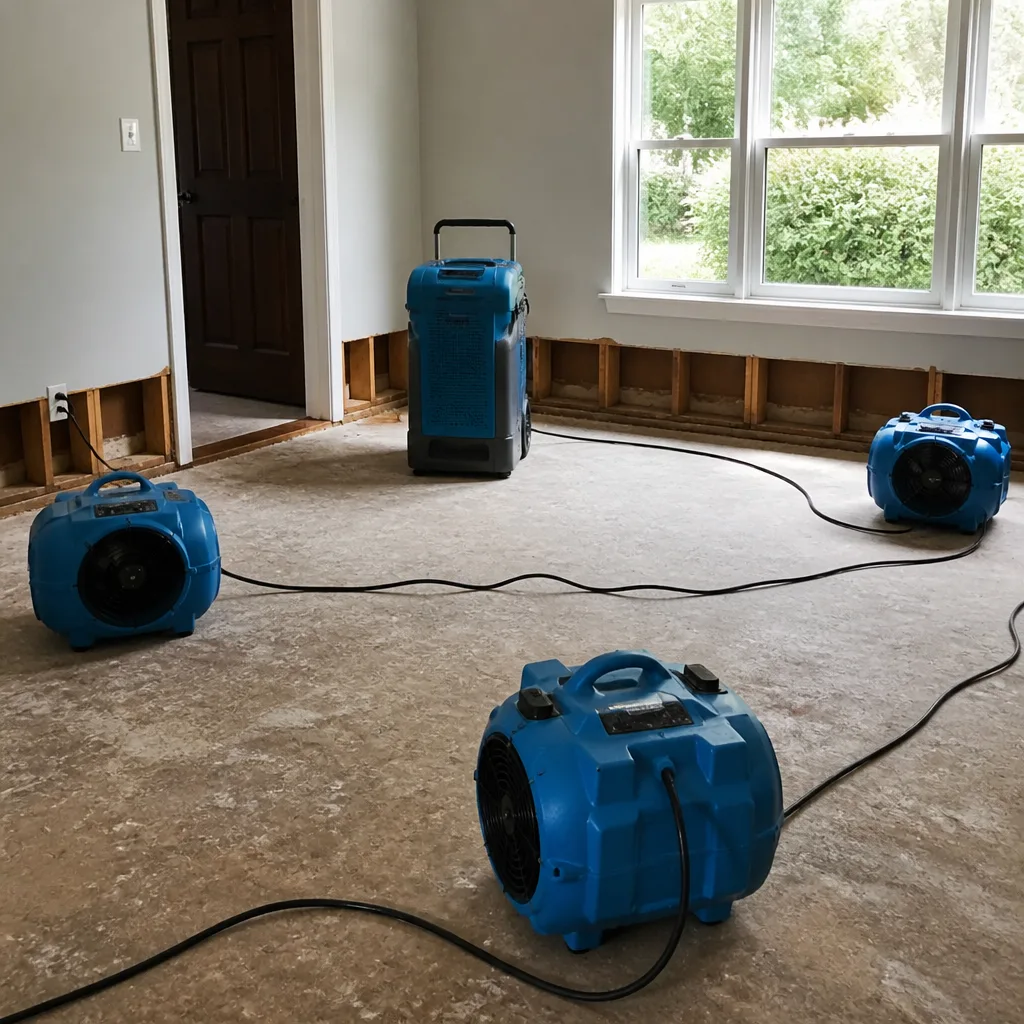
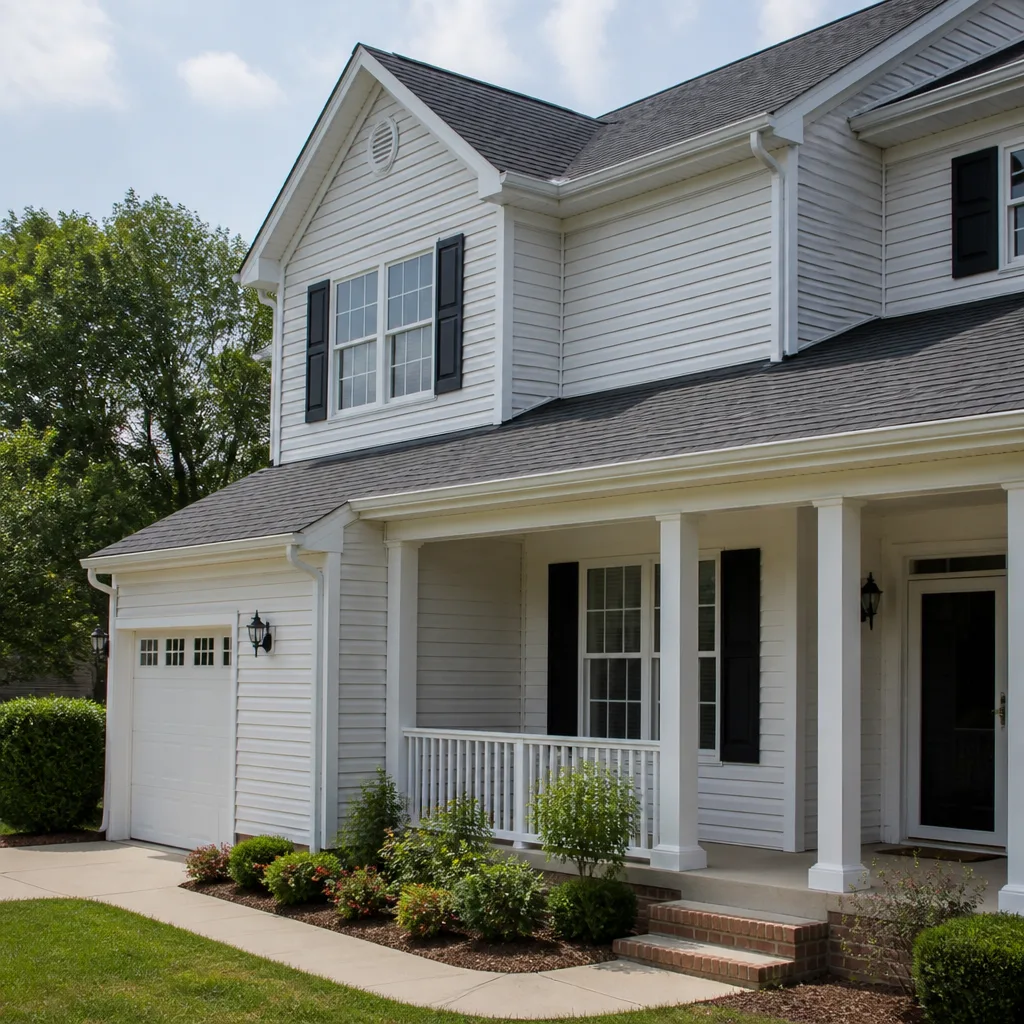
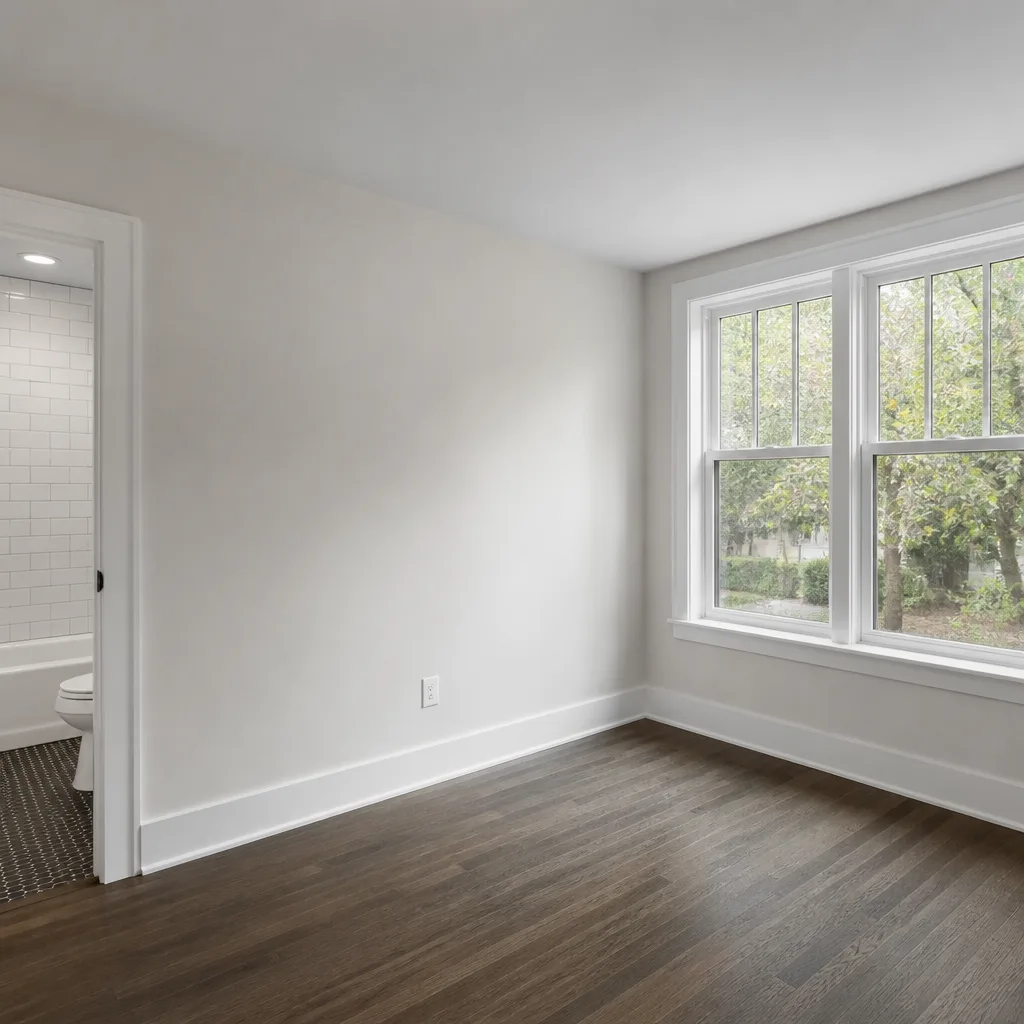
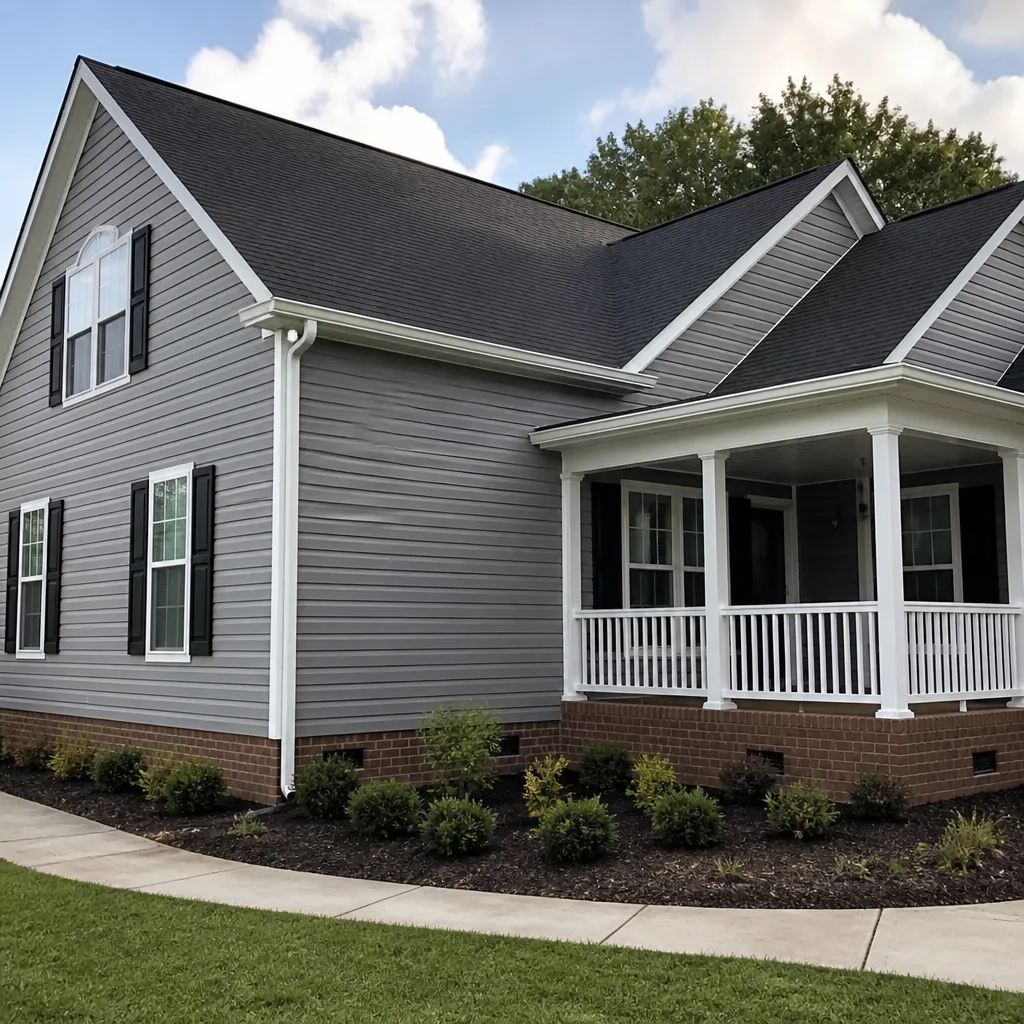
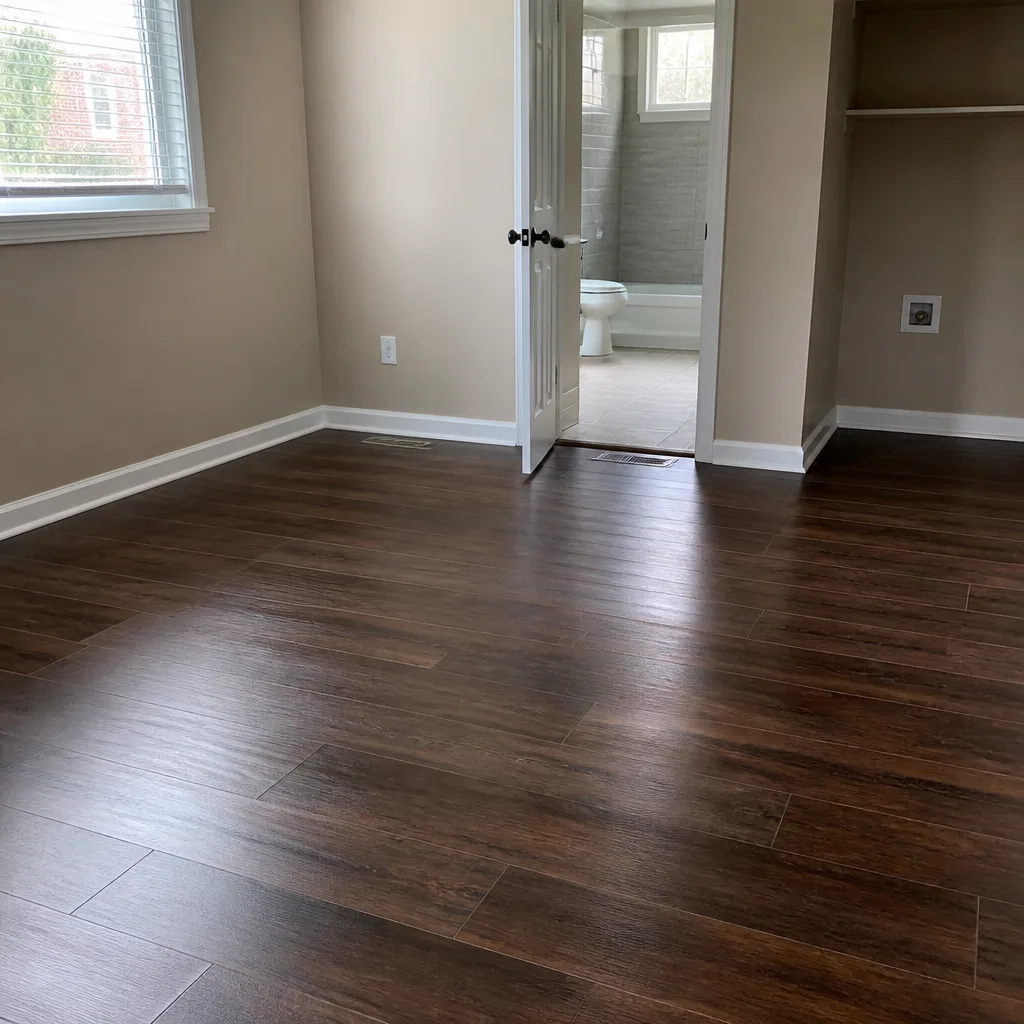
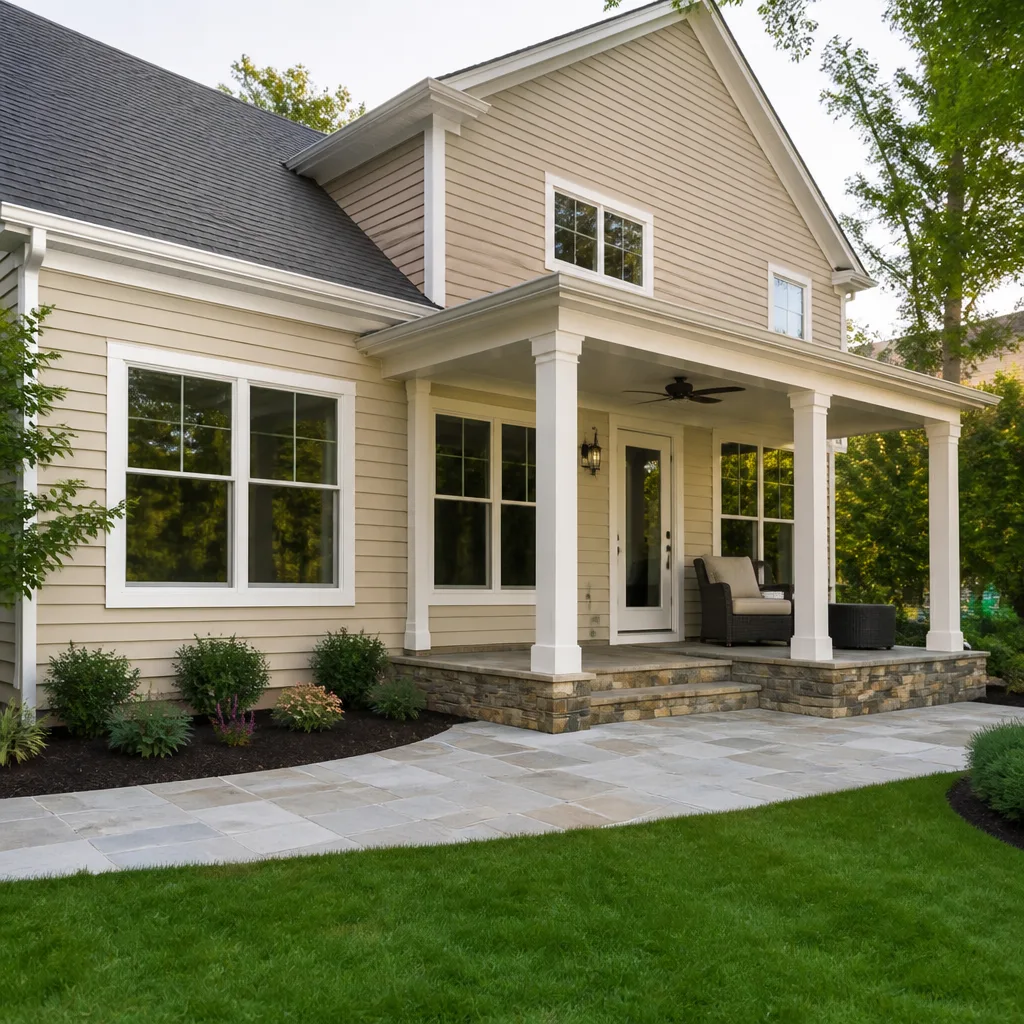
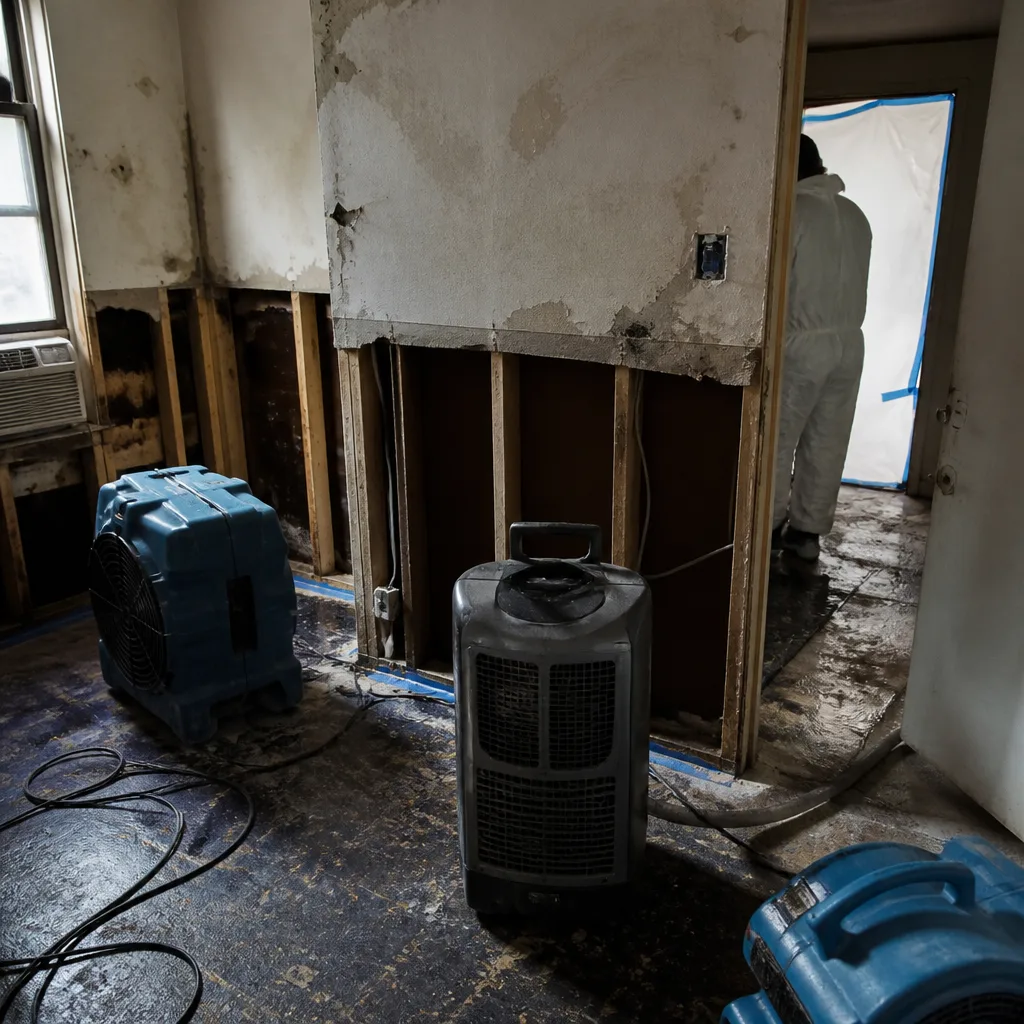 Before
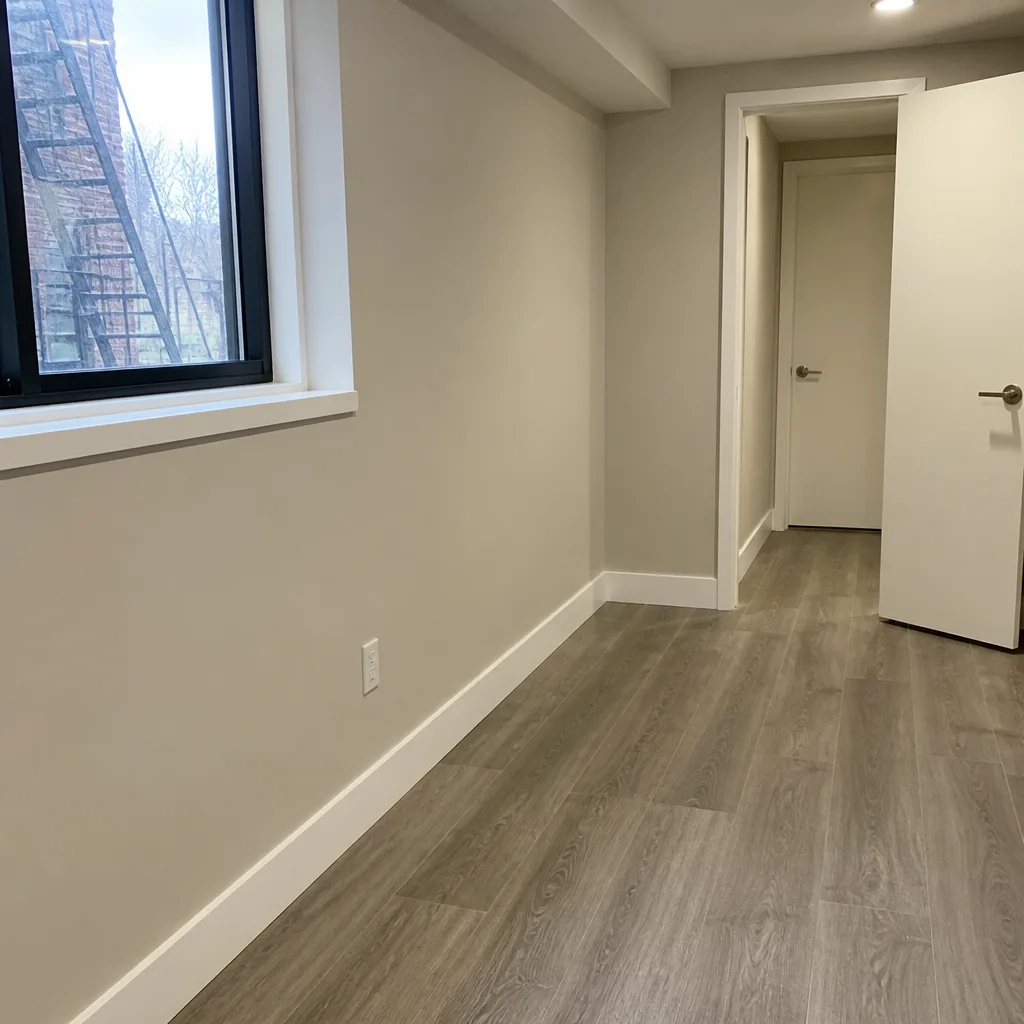 After
After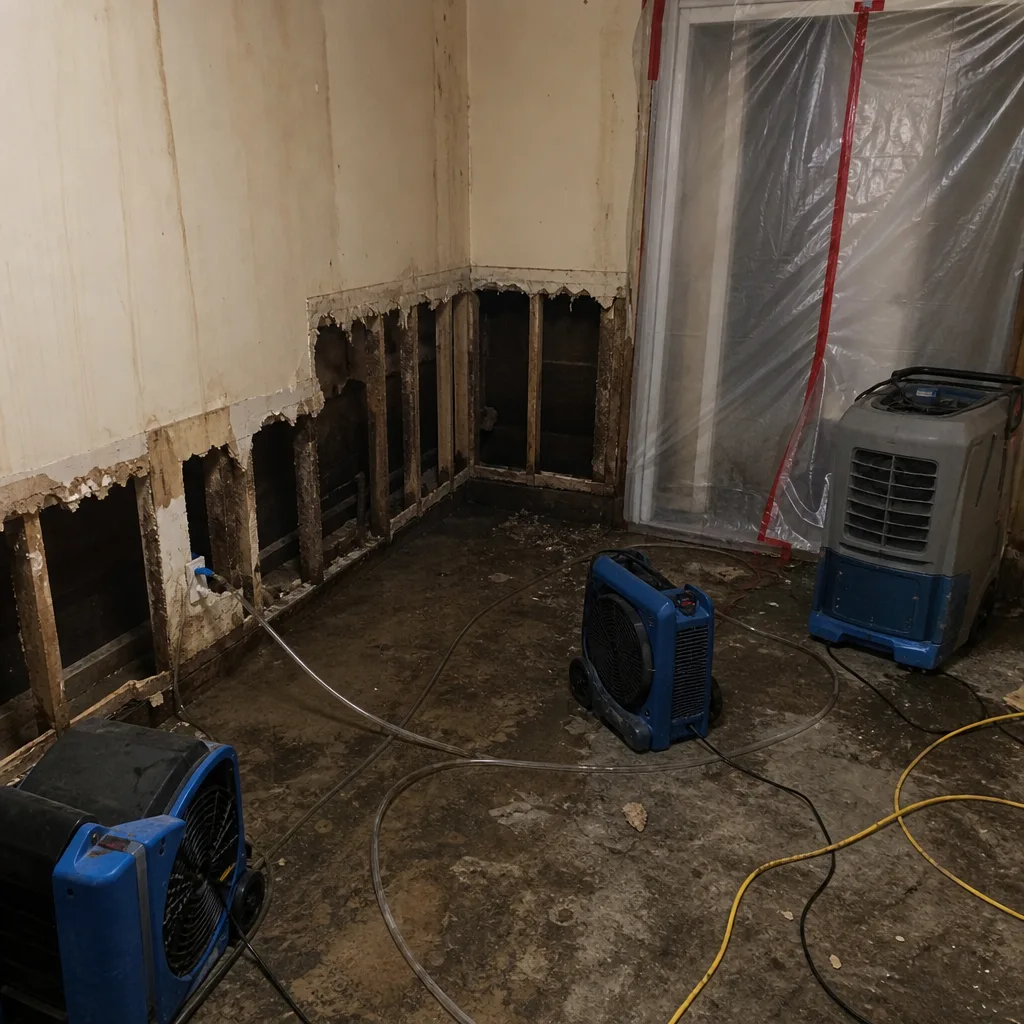 Before
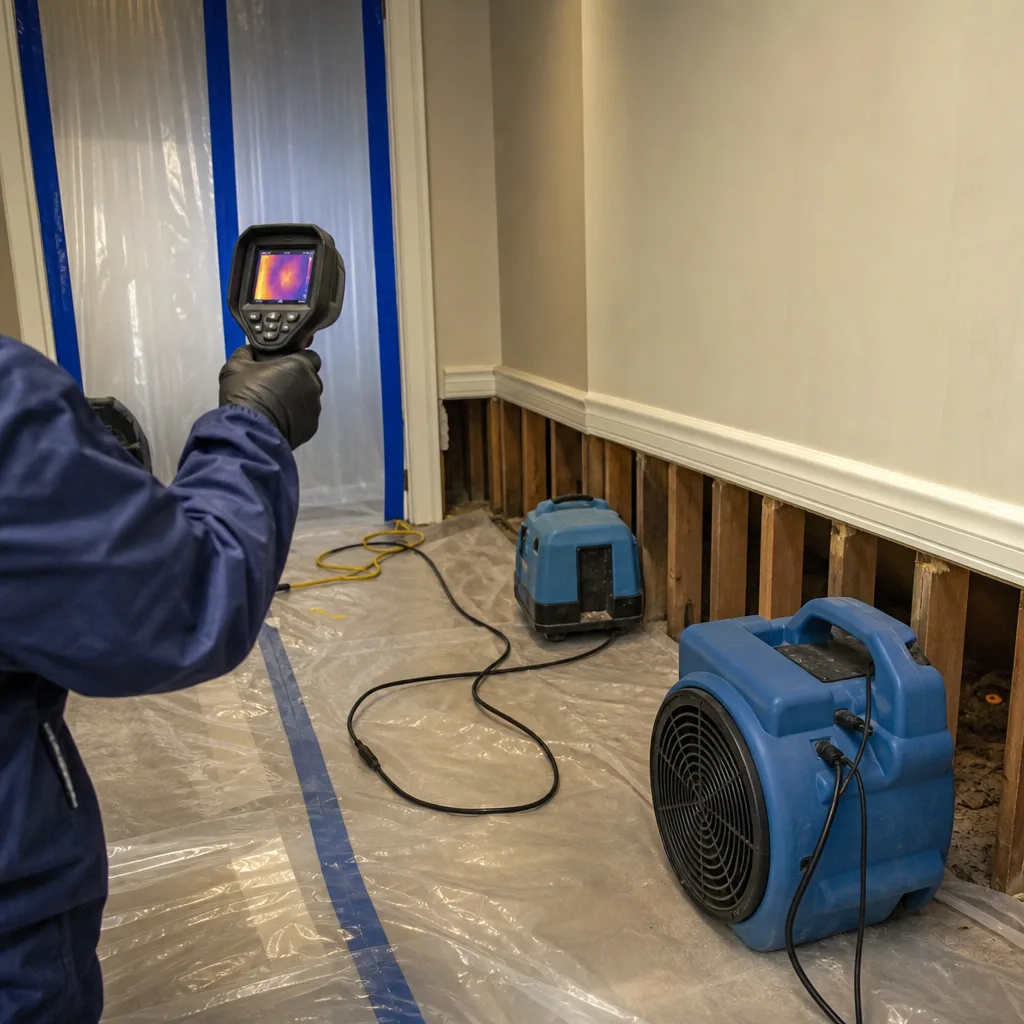 After
After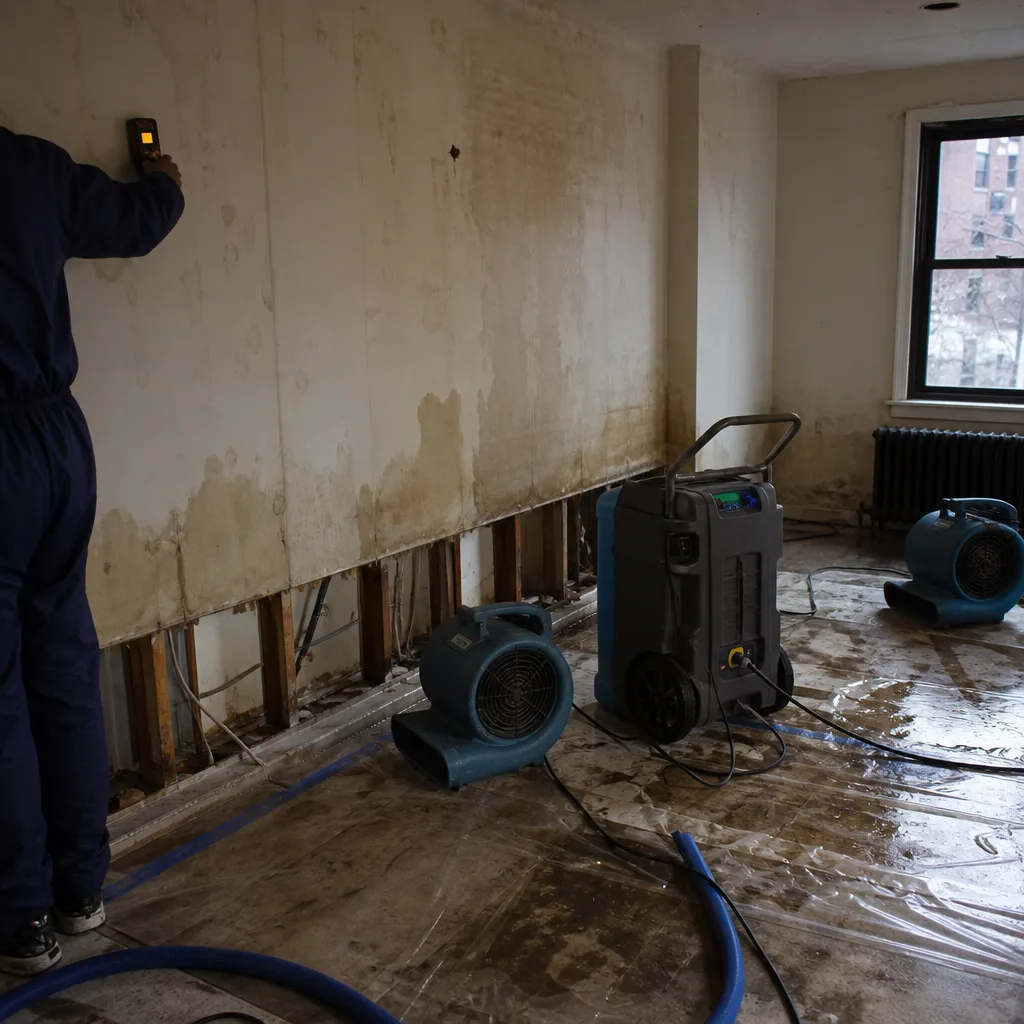 Before
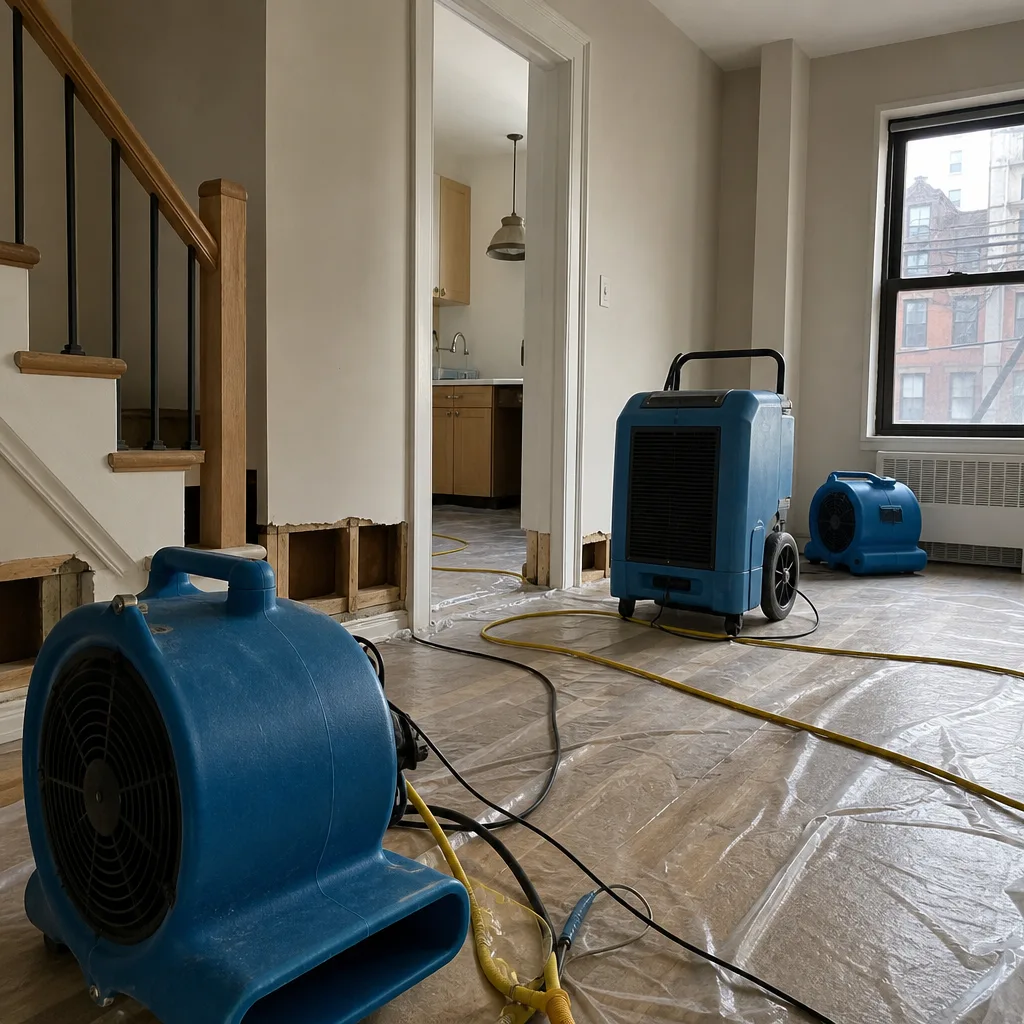 After
After24/7 Emergency Storm & Disaster Restoration in Ridgewood
Storm & Disaster Restoration in Ridgewood means fast water extraction, emergency board-up, roof tarping, and structural drying on the borough’s dense attached brick rowhouses. When a July storm floods ground floors through the combined sewer, or a January freeze-thaw cycle opens a parapet leak into your top-floor ceiling, you need a crew that understands 11385 and 11386 housing stock before they ever pull a meter. Call (716) 452-0798 any hour. A live dispatcher answers, and our certified Storm Damage Cleanup crews reach most Ridgewood addresses within 45 minutes, running extraction equipment the same visit.
Understanding Storm & Disaster Restoration Severity in Ridgewood Properties
Storm damage in Ridgewood rarely stays in one room or one apartment. The borough’s defining building type is the 2-3 story attached brick rowhouse, much of it built by Cord Meyer Development between roughly 1905 and 1930. Shared party walls, interconnected drainage lines, and century-old horsehair plaster mean that Category 3 water from a combined-sewer backup migrates laterally into adjacent units within hours. We classify every Ridgewood job by water category before touching a surface. Category 1 is clean supply-line water. Category 2 carries detergents or biological matter. Category 3 is black water, and in Ridgewood’s combined sewer system, street runoff and sewage mix, making ground-floor storm backups a Category 3 event by default. Moisture mapping with thermal imaging and hygrometers tells us where the water tracked, and we cut containment barriers at fire separations and party walls to stop cross-unit migration before structural drying begins. Mis-classifying a Ridgewood storm backup as clean is how insurance scopes get torn out and redone weeks later.
Why Ridgewood Property Owners Choose Floodline Restoration Co.
We are the Storm & Disaster Restoration company Ridgewood calls when a party wall has soaked three units and the adjuster needs a drying log they can actually read. Here’s why:
- 45-minute response commitment. Live dispatch gets a crew rolling toward Ridgewood immediately, and the time is logged, not estimated.
- 24/7 live answer. At 2 a.m. you reach a real dispatcher, not a menu. That person knows Ridgewood’s cross-streets and can route the nearest certified crew.
- IICRC-certified crews. Ridegewood teams hold WRT, FSRT, and AMRT certifications and carry Dri-Eaz and Phoenix equipment on every truck.
- Free visual inspection. We do not charge to walk your multi-unit building, read the water line, and tell you honestly whether you need full mitigation or a contained drying scope.
- Direct insurance billing. We bill your carrier directly and hand over photo documentation and moisture logs that meet adjuster standards.
- One team to the end. From first extraction through structural drying, antimicrobial treatment, and rebuild, the same crew holds the job. No handoff delays, no inherited subcontractors.
Our Storm & Disaster Restoration Process
Inspection & Assessment
We walk the full affected area, including the neighboring units on shared party walls, using thermal imaging and moisture meters. We identify the water category, map the migration path, and give you a written scope before work starts, not after.
Extraction & Stabilization
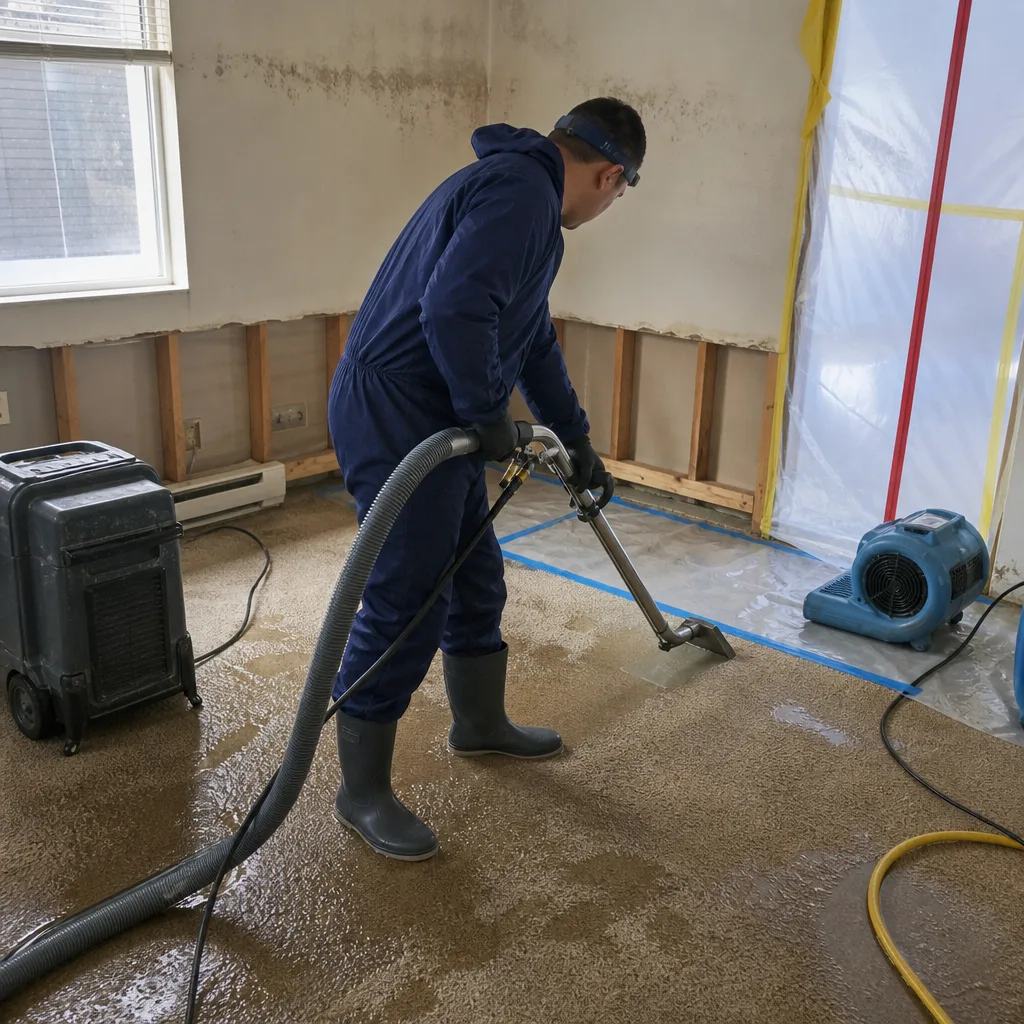
Standing water is pulled immediately with truck-mounted extraction units and salvageable contents are packed out. For wind damage, we board up broken windows and tarp compromised parapet roofs the same visit to stop further intrusion.
Drying & Dehumidification
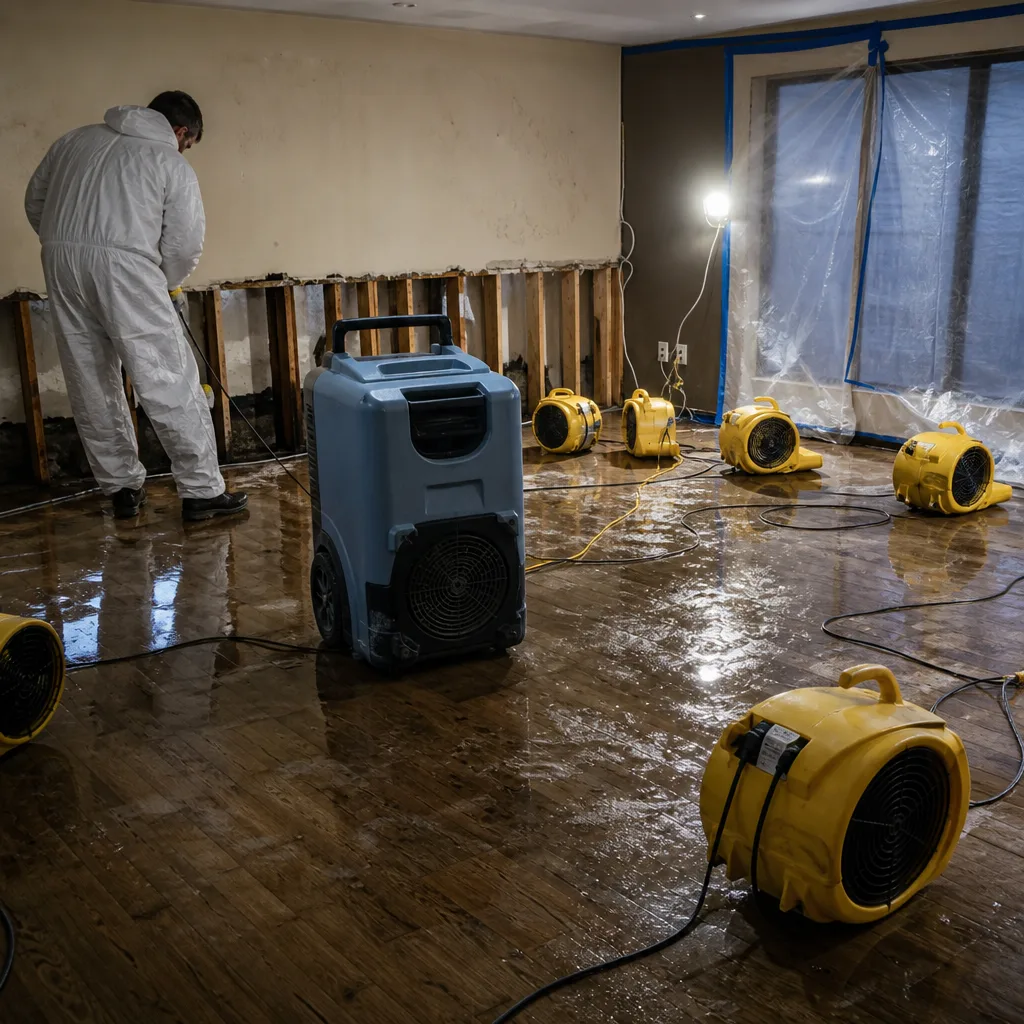
We set containment barriers at party walls and stairwells, then place Dri-Eaz air movers and Phoenix dehumidifiers in a calculated layout. Daily readings go into a log you and your insurer both receive.
Cleaning & Sanitization
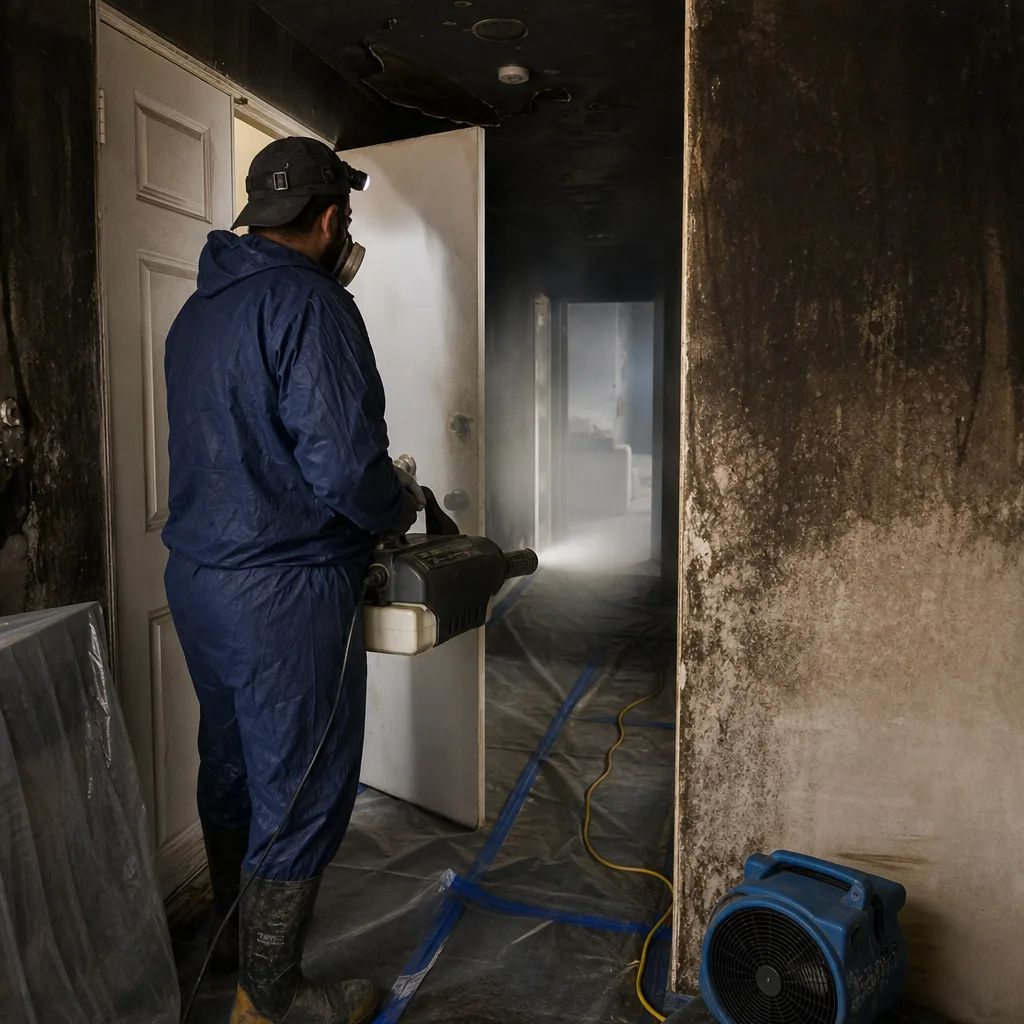
After drying to standard, we clean and sanitize all affected surfaces with our Ridgewood Sanitization Services. On Category 3 backups in Ridgewood, this includes antimicrobial treatment applied to porous masonry and mortar joints that older rowhouses expose.
Specialty Treatment
Ridgewood’s pre-war stock often requires targeted lead-paint and asbestos abatement coordination before tear-out proceeds. We identify suspect materials early and bring in certified abatement partners, so demolition never stalls mid-scope.
Repairs & Restoration
The same certified crew handles Reconstruction & Cleanup - Ridgewood, rebuilding what the storm took out: drywall, plaster, flooring, cabinetry. We finish with a moisture log in your hands and the 90-Day Done Right Promise in writing.
Need Emergency Storm & Disaster Restoration in Ridgewood Now?
Crews minutes away, answering live 24 hours a day. The sooner we start, the less it costs.
Working With Your Insurance Company
On a Ridgewood storm loss, the carrier wants documentation that matches the actual scope. We provide that from the first hour. Our crews photograph every affected room, every party wall, and every piece of equipment as it is placed. We write line-item scopes that reflect the real multi-unit complexity of an attached rowhouse, including containment at party walls and any NYC DOB borough split if your building sits near Cypress Avenue. You never play messenger between us and the carrier. We have been doing direct insurance billing for over 42 years, and we know what adjusters will approve and what they will challenge, because we document as we go, not after the fact.
What We Provide Your Insurer
- Thorough documentation of the loss
- Photos of all damage, room by room
- Moisture readings and drying logs
- A detailed, line-item scope of work
- Direct coordination with your carrier
Built for Ridgewood’s Loss Calendar
Ridgewood’s storm damage patterns are as predictable as the seasonal calendar, and we dispatch accordingly. In January and February, deep freezes burst the century-old cast-iron and galvanized supply lines that still run through many 11385 and 11386 rowhouses. Water cascades down through finished walls and across shared drainage lines, becoming a two-unit or three-unit mitigation before the ice even melts. Spring brings thaw and heavy rain, saturating below-grade spaces and basements that were never waterproofed when Cord Meyer built them a hundred years ago. Summer convective storms overwhelm Ridgewood’s combined sewer, forcing black water up into ground-floor drains and below-grade units on streets across both ZIPs. Fall brings nor’easter winds that peel roofing off low-pitched parapet rowhouses, driving rain into top-floor ceilings. The calendar does not change. Our response times do not either: live dispatch, certified crews, and Dri-Eaz and Phoenix equipment staged and ready, every month of the year.
Storm & Disaster Restoration Across Ridgewood’s Neighborhoods
Ridgewood is not one uniform grid, and our response routes reflect the differences. Around Myrtle Avenue and Forest Avenue, the commercial corridors with attached second-floor apartments above storefronts, a roof leak or pipe burst at 30 feet above the sidewalk means sidewalk shed coordination and DOB scrutiny before scaffolding goes up. In the residential blocks north of Myrtle Avenue toward Glendale, the single-family rowhouses have deeper backyards and private drains that back up less often, but when they do, access for extraction equipment means navigating narrow rear alleys and carrying units through shared interior stairwells. Along Catalpa Avenue near Cypress Avenue, the borough line itself runs through the middle of a block, meaning a storm loss on one side of that street may pull Queens DOB permits while the attached neighbor file through the Brooklyn office. And in the Madison Street and Onderdonk Avenue corridors where converted two-family rowhouses dominate, a single storm backup and waterproofing envelope is almost always scoped as two separate occupancy units, because the moisture map crosses a fire separation that legally divides the building. National franchise dispatchers sending a crew from Jersey do not think in these terms. Our crews grew up on these streets, which is precisely why our Storm & Disaster Restoration work in Ridgewood moves faster and dries cleaner.
Specialized Storm & Disaster Restoration Services We Offer in Ridgewood
Storm Damage Cleanup
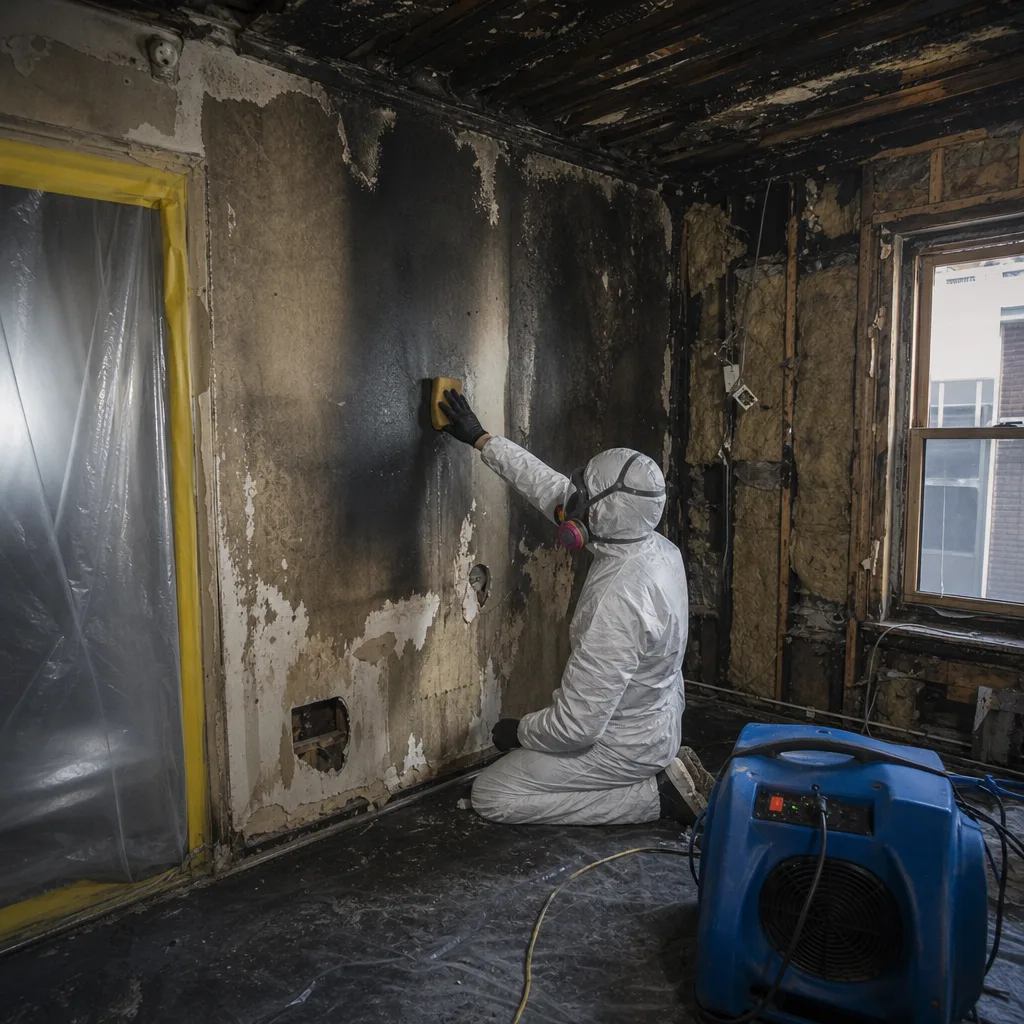
Ridgewood’s attached rowhouses punish delayed cleanup more than almost any other housing type. Wet horsehair plaster wicks moisture laterally through original lath, and mold can begin forming on saturated drywall within 24 to 48 hours. We cut drying containment early, treat the masonry and mortar, and log every reading until your walls and floor assemblies reach the dry standard.
Flood Damage Restoration
When Ridgewood’s combined sewer backs into a ground-floor unit or below-grade space during a heavy convective storm, that water is Category 3 by definition, not because it looks dirty, but because it has mixed with street runoff and sewage. We contain the affected space, extract with truck-mounted units, tear out contaminated porous materials, and rebuild with flood-resistant assemblies that stand up to the next storm. For severe contamination, we also coordinate Biohazard & Crime Scene Cleanup - Ridgewood protocols.
Roof Tarping
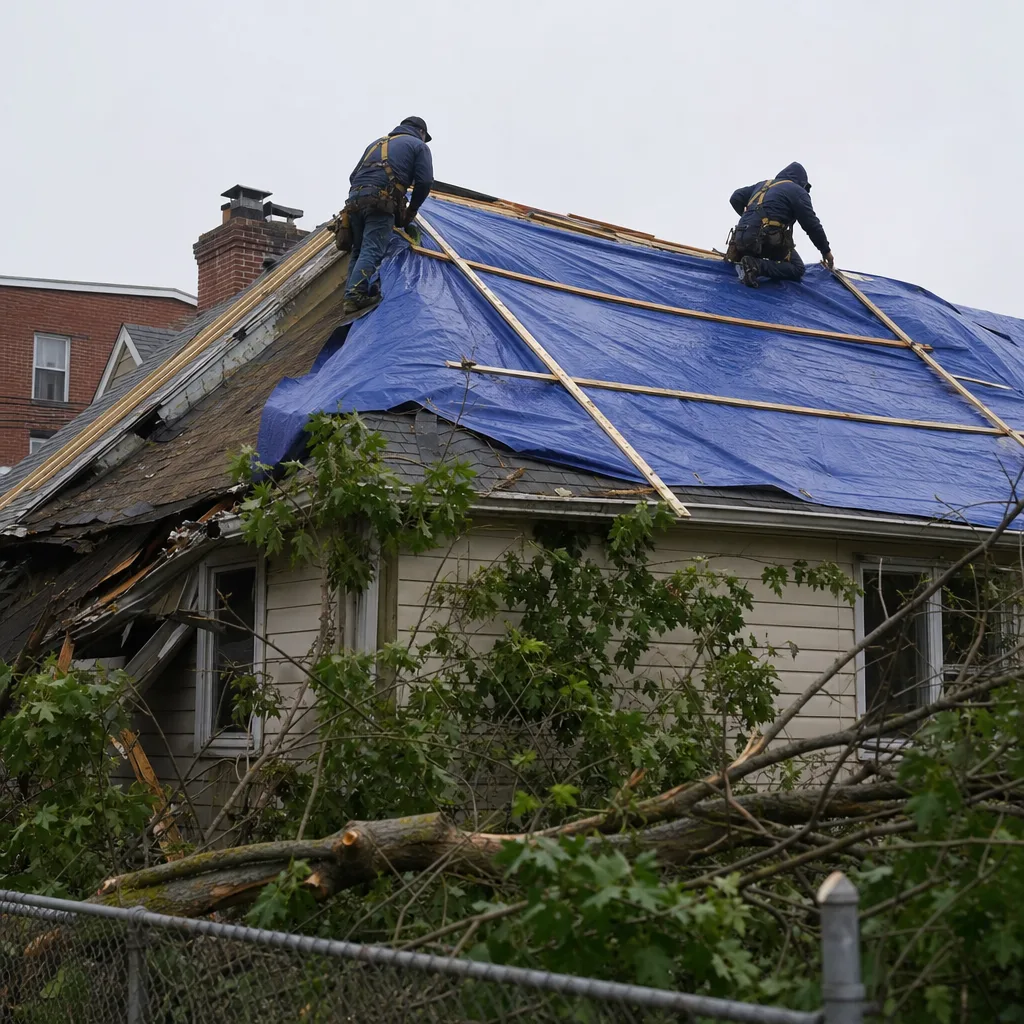
Ridgewood’s low-pitched parapet roofs pond water and leak at flashings during freeze-thaw cycles. We deploy reinforced tarping with mechanical attachments on the same visit, designed for the wind loads these rowhouse roofs face. After the tarp is secured, we run moisture readings inside the top-floor unit, because the water that entered during the storm has already moved down the wall cavity and into the ceiling assembly.
Emergency Board-Up
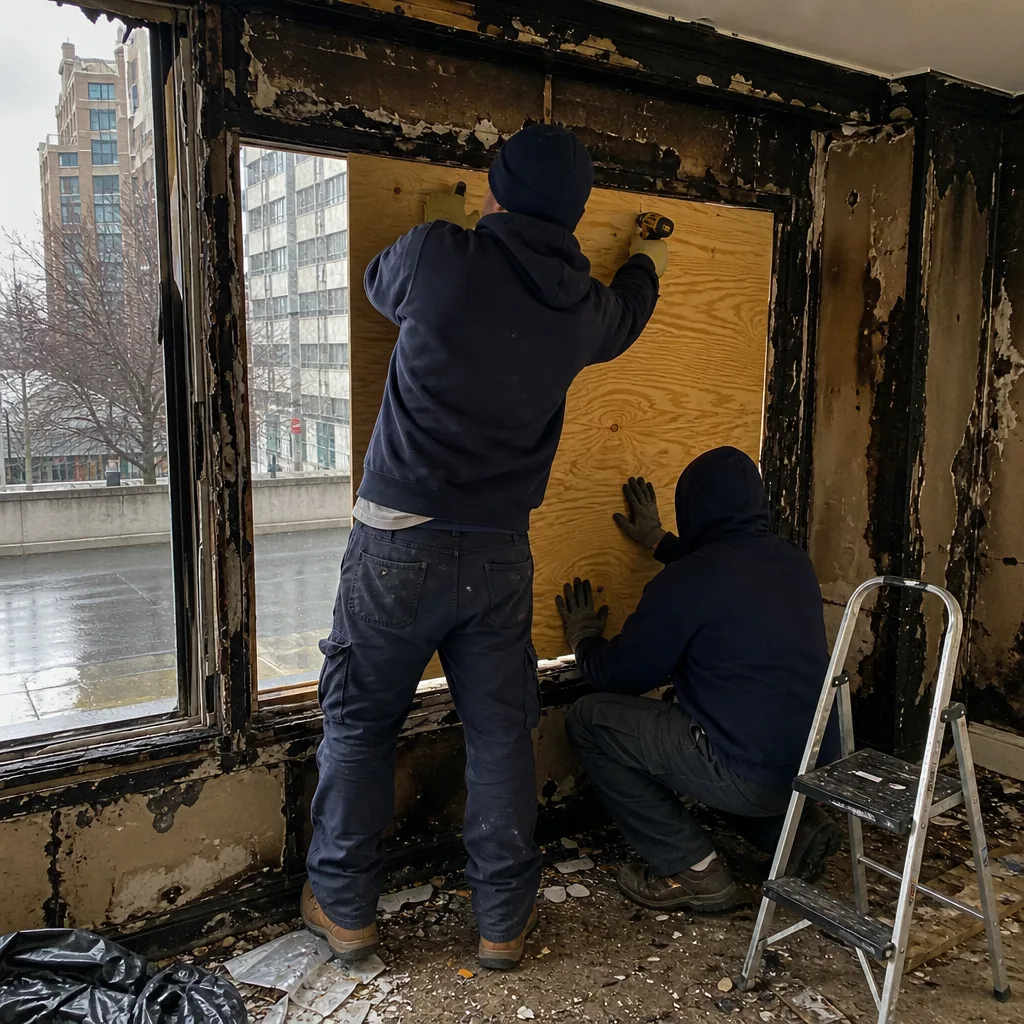
After wind damage or a fire, your rowhouse may have broken windows, compromised doors, or open roof penetrations. We board up and secure every entry point to stop rain, pests, and unauthorized entry from compounding the loss while your insurance scope is being written. All board-ups are done to NYC DOB standards.
Debris Removal
Storms bring down trees onto rowhouse roofs, rip off cornices and parapet caps, and fill backyards and air shafts with construction debris. We remove it safely, document it for your claim, and haul it away on the same visit so crews can begin the structural drying and repair work without tripping over what the storm left behind.
Wind Damage Repair
Ridgewood’s attached rowhouses present a unique wind-load profile: a long, continuous roofline shared with three or four neighbors. When wind lifts a section of roofing on your property, the flashing at the party wall is often compromised too. We inspect the full roofline, not just the visible damage, and rebuild with details that account for the shared wall condition.
What happens when you call
- 1
A real person answersNo phone trees - you reach a local pro.
- 2
You get an upfront price rangeHonest numbers before anyone is dispatched.
- 3
A background-checked tech heads outLicensed & insured, dispatched right away.
- 4
You approve before work beginsNothing starts until you say go.
Storm & Disaster Restoration Costs in Ridgewood, NY
Ridgewood prices reflect the complexity of working inside attached brick rowhouses with shared walls and borough-line quirks. A standard single-unit water extraction and 3-day structural drying in 11385 runs $3,200-$7,800, depending on how many rooms and whether containment had to be cut at the party wall. Roof tarping after a parapet leak runs $900-$2,600, including mechanical attachments and a follow-up moisture check. Emergency board-up after wind damage runs $700-$2,200 per opening. A multi-unit Category 3 backup, where we have to coordinate with two or three owners or landlords and permit through both borough offices near Cypress Avenue, can exceed $18,000-$35,000 once demolition, drying, and rebuild of each unit is factored. Almost all of these scopes are insurance-covered; our free visual inspection gives you an accurate number before any equipment gets unloaded. Call (716) 452-0798 for a firm quote, not a range.
We Also Serve Cities Near Ridgewood
Our Storm & Disaster Restoration crews respond through Ridgewood and into the surrounding Queens and Brooklyn neighborhoods, including Maspeth, Elmhurst, Long Island City, and Jackson Heights. Same dispatch board, same certified crews, same 45-minute response commitment.
Serving Ridgewood, NY - Our Local Coverage Area
We’re based in the Ridgewood area and know this community well. Use the map below to see our service coverage - if you’re nearby, we can almost certainly help.
Ridgewood Storm & Disaster Restoration Questions, Answered
How do Storm & Disaster Restoration technicians deal with Ridgewood’s shared party walls when only one rowhouse owner calls?
We start by moisture-mapping your unit, then we ask to inspect the neighboring units if the mapping shows moisture migration past your side of the party wall. In a legal sense, the work on your side is yours; the migration is everyone’s problem. We coordinate with the neighbors or their landlords before we cut any containment or begin demolition, so the drying protocol works across the entire building, not against itself. This is the multi-unit playbook that turns a three-day drying job into a five-day job only if everyone refuses to cooperate. Most Ridgewood owners cooperate once they see the moisture log.
Why do storm backups on my Ridgewood street always seem to be Category 3 black water?
Ridgewood sits above a combined sewer system, not a separated one. That means the same pipes carry household sewage and street-storm runoff, and when heavy convective storms overwhelm the system, the two mix before they push up into your ground-floor drain. The water was contaminated before it entered your home. Treating it as Category 1 or Category 2 fails your claim and leaves contaminated residue in porous surfaces. We classify any Ridgewood combined-sewer backup as Category 3 from the first inspection.
Is roof tarping enough for Ridgewood’s frost-driven parapet leaks, or do I need a full Storm Damage Cleanup inside?
The tarp stops more water from coming in; it does nothing about the water already inside your top-floor ceiling and wall cavities. In Ridgewood’s rowhouses with horsehair plaster and original lath, that trapped water migrates downward and sideways within a day or two. You need at minimum a moisture inspection and likely a contained drying scope inside, in addition to the tarp, to prevent mold and rot from developing behind finished surfaces. The tarp is the first step, never the whole job.
If my Ridgewood building straddles the Queens-Brooklyn line, does that change the Storm & Disaster Restoration permit process?
Yes. The borough line roughly follows Cypress Avenue through parts of Ridgewood. If your building sits on or near that line, repair permits may need to be pulled through two separate NYC DOB borough offices, one in Queens and one in Brooklyn. The administrative close-out can add days to a rebuild through no fault of the work itself. We handle that split for you, because we have done it enough times to know which office needs which document and when. An out-of-neighborhood contractor will discover this on day twelve.
Do I need to worry about lead paint or asbestos when Storm Damage Cleanup exposes old plaster in a Ridgewood rowhouse?
Almost certainly yes. Homes built between 1905 and 1930 with original plaster and pre-war electrical systems commonly contain lead paint and asbestos in insulation, pipe wrap, and flooring materials. When tear-out exposes these materials, NYC law requires certified abatement before work continues. We flag suspect materials during the initial inspection and bring in licensed abatement partners, so the job does not stop mid-demolition. Ignoring it is not an option, and doing it wrong gets the job red-tagged.
How fast can someone actually reach my Ridgewood rowhouse in a storm emergency?
In most cases, within 45 minutes. When you call (716) 452-0798, our live dispatcher routes the nearest certified crew based on current traffic and call volume. Crews are staged across the Queens-Brooklyn corridor for exactly this reason. The clock starts when you hang up, and the dispatcher logs the dispatch time so you can hold us to it.
Can we stay in our Ridgewood unit during Storm Damage Cleanup and structural drying?
It depends on the water category and how far the damage migrates. For a contained single-room Category 1 pipe break, you can often stay in other parts of the unit behind sealed containment. For a Category 3 backup that has crossed floor assemblies and party walls into multiple rooms, you should expect temporary relocation while we tear out contaminated materials and run antimicrobial treatment. We will tell you plainly in the first inspection, not after we have already started.
What should I do in the first 30 minutes after discovering storm water in my Ridgewood home?
Turn off the electrical breaker to the affected area if you can reach it safely, shut the main water valve if the source is a supply line, and call us at (716) 452-0798. Do not enter standing water that may be electrically charged or contaminated. Take photos on your phone before anything is moved. Then let our crew take over: we document, extract, and map moisture from the first hour onward. Every minute you wait, the water moves deeper into plaster, lath, and the neighbor’s unit.
Written by Curt Bowman, Owner at Floodline Restoration Co. Our Storm & Disaster Restoration crews serve Ridgewood, Maspeth, Elmhurst, Long Island City, and Jackson Heights, answering live 24 hours a day at (716) 452-0798.